

You’re in luck! June 2025 offers a couple of opportunities to observe the Moon and Mars in close proximity, creating what’s known as a conjunction. There’s even a special event called a lunar occultation for some observers.
Here’s a breakdown of the possible conjunctions in June 2025:
1. Early June Conjunction (around June 1st):
* When: Around June 1st, 2025.
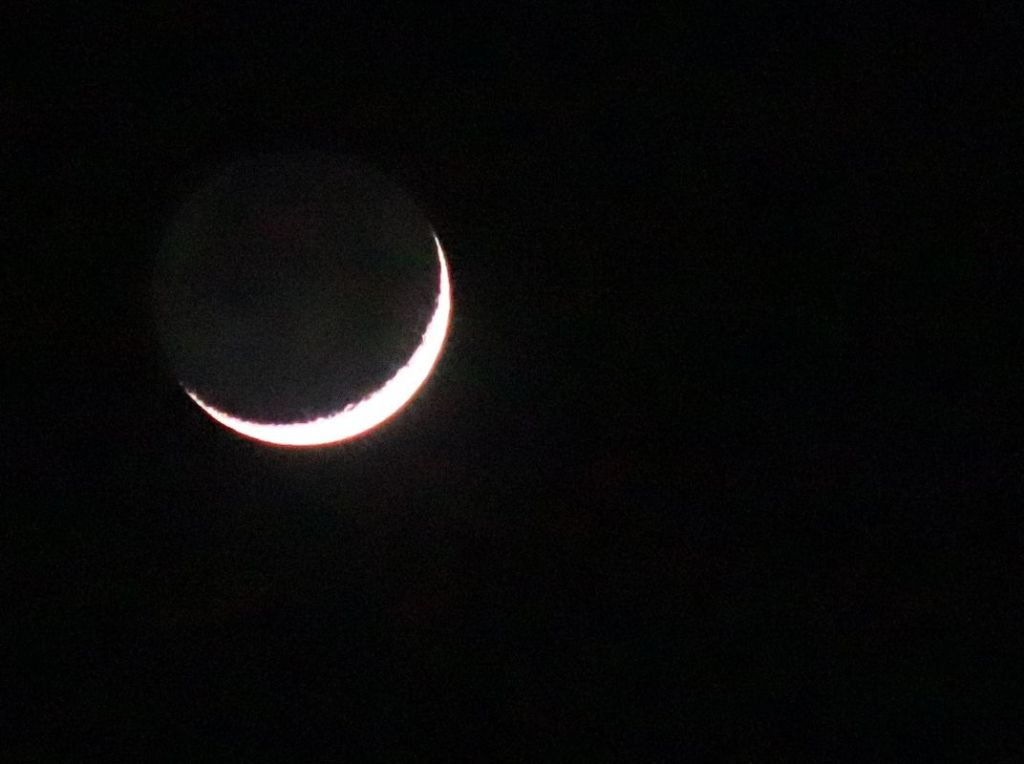
* What to expect: The waxing crescent Moon will appear close to Mars.
* Visibility: Look to the west just after sunset. This will be a good naked-eye or binocular event.
* Constellation: Both will be in the constellation Leo.
2. Late June Conjunction and Lunar Occultation (around June 29th-30th):
* When: On the night of June 29th, extending into the early hours of June 30th, 2025.
* What to expect: The waxing crescent Moon will again pass close to and just below Mars. This will be an even closer approach than the earlier conjunction.
* Special Event: For some regions, a lunar occultation of Mars will occur. This is when the Moon passes directly in front of Mars, temporarily hiding the Red Planet from view.
* Visibility of Occultation: This rare phenomenon will be visible from specific locations, including western Peru, Ecuador, western Colombia, and Clipperton Island.
* Visibility of Conjunction (worldwide): Even if you’re not in the occultation zone, the close conjunction of the Moon and Mars will be visible worldwide. Look to the western horizon just after sunset. They will set a few hours later in the Northern Hemisphere.
* Constellation: Both will be in the zodiac constellation Leo.
* Observation: The pair will be close enough to fit within the field of view of a telescope, but also easily visible to the naked eye or through binoculars. Mars will appear as a small, reddish-orange disk.
General Tips for Observing Conjunctions:
* Find a clear view: Choose a spot with an unobstructed view of the western horizon, especially after sunset.
* Check local times: The exact times for moonrise, moonset, and conjunctions will vary depending on your specific location. Use online sky maps or astronomy apps to get precise timings for Merritt, British Columbia.
* Binoculars or a small telescope: While visible to the naked eye, binoculars will enhance the view, making Mars appear brighter and its small disk more apparent. A small telescope will offer an even better view.
* Look for the “ecliptic”: These conjunctions occur because both the Moon and Mars travel along the “ecliptic,” which is the approximate path the Sun, Moon, and planets follow across the sky.
Enjoy the celestial show in June!
Wax and Wane no pain



 Kevin Griffiths
 percypaschal
 The Proprietor Review