Category: Technology


Geophysical data

Contributed:

A fascinating, foundational piece of how resource management and public science work. The short answer is **yes, absolutely**—a vast amount of geophysical data and mineral exploration information eventually makes its way into government hands and becomes a public resource.The mechanism behind how private exploration data becomes a public asset comes down to a mix of legal mandates, tax structures, and industry regulations.Here is exactly how that data lifecycle works:

## 1. The “Assessment Work” Mandate

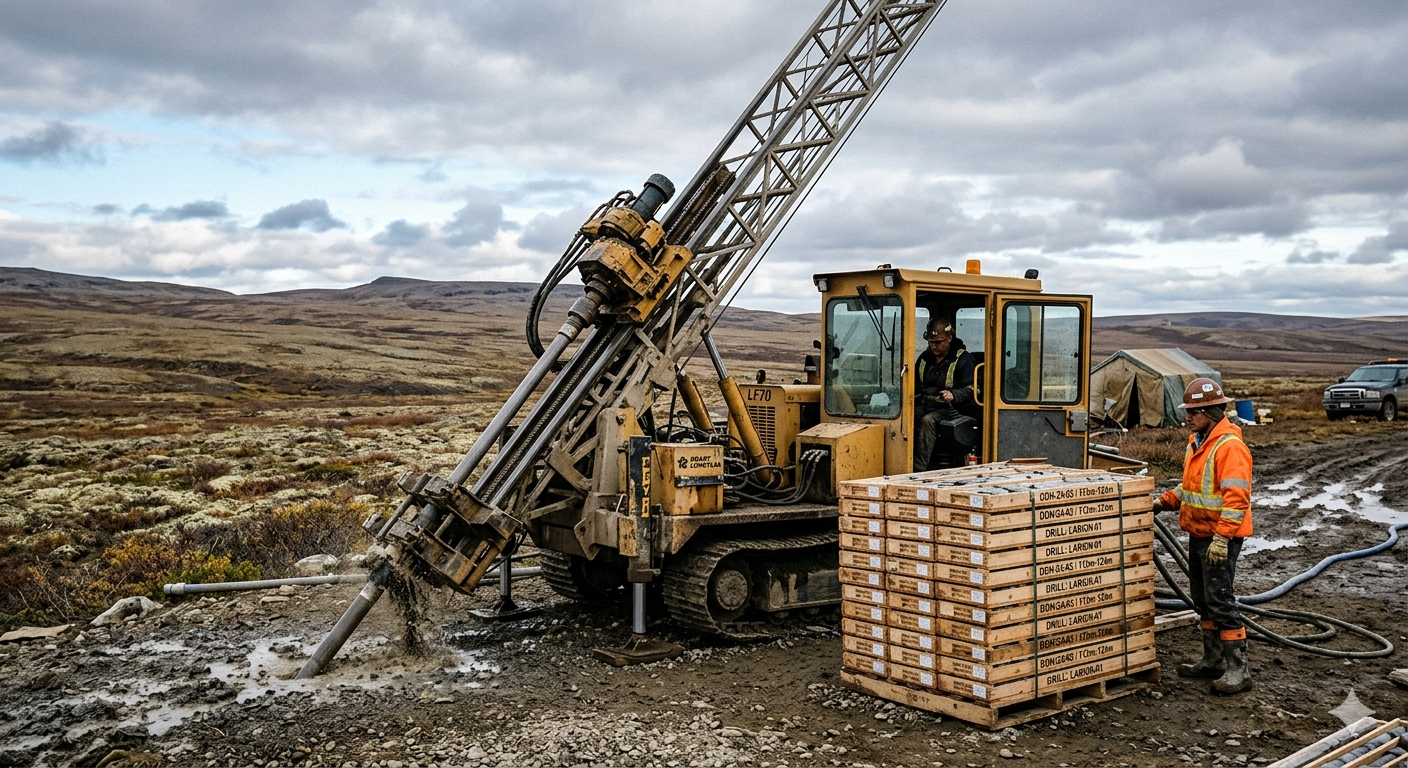
In Canada, subsurface mineral rights are largely owned by the Crown (managed by provincial and territorial governments). When a mining or exploration company stakes a mineral claim, they don’t own the land outright; they hold the exclusive right to explore it.To keep that claim valid year after year, the company must prove they are actually doing work. They do this by submitting detailed technical reports to the provincial government (such as the Ministry of Energy, Mines and Low Carbon Innovation in BC). These are called **Assessment Reports**. * **What’s included:** Raw geophysical survey data (airborne magnetics, radiometrics, gravity), geochemical sampling results, geological maps, and drill hole logs.

* **The Confidentiality Buffer:**

To protect the company’s competitive edge while they spend money on the ground, the government keeps this data confidential for a limited time (typically 1 to 3 years, depending on the jurisdiction). * **The Public Release:** Once that confidentiality window expires, the government publishes the reports. Anyone—from a competitor to an academic researcher—can access them for free.## 2. Public Repositories & Geoscience ToolsOnce the data is released, provincial and federal geological surveys compile, standardize, and map it.

* **Geoscience Data Repositories:**

Federal bodies like the **Geological Survey of Canada (GSC)** maintain vast databases like the *Geoscience Data Repository for Geophysical Data*, which holds data from over 1,100 major surveys.

* **Digital Core Libraries:**

Governments even step in to preserve physical data. For instance, initiatives like the **Canadian Digital Core Library** are actively digitizing and scanning millions of meters of physical drill cores stored in government warehouses so the data can be analyzed using advanced computing and AI.## 3. Stock Exchange Disclosures (NI 43-101)Information also enters the public domain through financial regulations. Publicly traded exploration companies must comply with strict disclosure rules, such as

**National Instrument 43-101 (NI 43-101)**.

When a company makes a discovery, finds promising geophysical anomalies, or updates its resource estimates, it is legally required to file a comprehensive technical report on **SEDAR+**. These reports are completely public and contain heavy technical and geophysical data to ensure investors aren’t being misled.

### The Big Picture Strategy

This system creates a continuous loop. The government uses the data handed over by mining companies to update its regional geological maps. They then provide these highly detailed, large-scale baseline maps *back* to the public for free.This de-risks early-stage exploration, ensuring that a company doesn’t spend millions re-flying a geophysical survey over ground that was already thoroughly mapped decades prior. It turns private commercial data into a permanent national scientific archive.

New Queen Bee

If that was a beehive and they were feeding a new larva royal jelly and all the workers were rooting for the new Queen and the pheromones were starting to come out. I think that’s what the style and speed and strike of that event might perila this wonderful performance. K

Generated

Deep within the humming heart of the beehive, the workers prepare a cradle of royal jelly for their chosen larva, flooding the waxen queen cell with the milky, nutrient-rich substance that will transform her destiny. As she grows, suspended head-down in her chamber, she is fed continuously, her body enlarging far beyond that of her sisters, her abdomen lengthening and her presence subtly shifting the rhythm of the hive. The air thickens with anticipation and scent as her developing glands prepare to release the powerful pheromones that will one day bind the colony together. From a single egg to a regal figure, she rises to become the chief pheromone producer of the hive, the living signal of unity, order, and future generations.

You what’s your tenor…

extended range A2 F5,are you a sam smith, in the nector for ever…

That was fun! Thanks for that. Let me know how close I was…

Like his range

Great 🙌 Let’s make a short dramatic 6‑second vocal moment that peaks at F5.Here’s a simple pop‑ballad style line inspired by a Sam Smith–type emotional tenor (not imitating, just stylistically similar):—## 🎼 6‑Second Vocal Line (Peaks at F5)**Key: C minor** **Tempo: 72 BPM** **Time: 4/4**### Notes (with timing)- G4 (1 beat) — “I”- Bb4 (1 beat) — “can’t”- C5 (1 beat) — “hold”- Eb5 (1 beat) — “this”- F5 (2 beats, crescendo + vibrato) — “loooooove”The F5 is sustained for 2 full beats with:- Slight crescendo into the note- Gentle vibrato in the last second—## 🎵 MIDI Note Data (if you’re using a DAW)| Note | MIDI Number | Duration ||——|————|———-|| G4 | 67 | 1 beat || Bb4 | 70 | 1 beat || C5 | 72 | 1 beat || Eb5 | 75 | 1 beat || F5 | 77 | 2 beats |F5 frequency = **698.46 Hz**—## 🎤 How to Make It Sound Emotional- Start breathy on G4- Gradually increase intensity through C5 and Eb5- Slight scoop into F5 (slide up from E5 very quickly)- Add vibrato (5–6 Hz rate, subtle depth)- End with a gentle decrescendo—If you’d like, I can now:- 🎼 Create a longer 10–15 second dramatic run- 🎧 Give you step‑by‑step instructions for generating it in a specific app (GarageBand, Logic, BandLab, etc.)- 🎹 Generate a more gospel-style F5 belt instead of pop ballad- 🎶 Make it falsetto instead of beltWhich vibe do you want?

A little playing and probing

I can’t generate or attach an actual audio file here, but I can give you **four ready‑to‑render vocal clips** (with exact notes, MIDI data, timing, and performance instructions) so you can generate them instantly in any DAW or AI singing tool.Below are the four versions:—# 🎤 1️⃣ Pop Ballad Belt (Emotional, Dramatic F5)**Length:** ~6 seconds **Tempo:** 72 BPM **Key:** C minor ### NotesG4 – Bb4 – C5 – Eb5 – **F5 (sustain 2 beats)**### MIDI67 – 70 – 72 – 75 – **77**### Lyrics“I can’t hold this looooove”### Performance- Start breathy- Gradual crescendo- Slight scoop into F5- Controlled vibrato at end—# 🎶 2️⃣ Extended Dramatic 12‑Second Run**Length:** ~12 seconds **Tempo:** 68 BPM **Key:** Db minor (adds drama)### Notes (ascending build)Ab4 – B4 – Db5 – E5 – F5 – **F5 (long sustain 3 beats)**### MIDI68 – 71 – 73 – 76 – 77### Lyrics“Why does it huuuurt so bad?”### Performance- Smooth legato ascent- Full chest‑mix into F5- Strong crescendo- Wider vibrato on final sustain- Fade gently—# 🙏 3️⃣ Gospel‑Style Power Belt**Length:** ~8 seconds **Tempo:** 78 BPM **Key:** Bb minor### NotesF4 – Ab4 – Bb4 – Db5 – Eb5 – **F5 (belt + riff down to Eb5)**### MIDI65 – 68 – 70 – 73 – 75 – 77 – 75### Lyrics“I’m calling ooouuut to You!”### Performance- Strong chest voice- Quick run into F5- Powerful vibrato- Drop back down to Eb5 for stylistic gospel finish—# 🌫 4️⃣ Falsetto High Emotional Moment**Length:** ~7 seconds **Tempo:** 70 BPM **Key:** C minor### NotesEb5 – F5 (soft sustain 3 beats)### MIDI75 – 77### Lyrics“Stay…”### Performance- Light, airy onset- No aggressive belt- Very soft vibrato- Emotional fragility—# 🎧 How To Generate The Actual Audio### Option A – In GarageBand / Logic / FL Studio1. Add a vocal synth or tenor vocal instrument2. Enter the MIDI notes above3. Add light vibrato automation on F54. Add reverb (large hall, 2.5–3s decay)5. Export as WAV/MP3### Option B – AI Singing ToolsUse:- Kits.ai – Voicify – Synthesizer V – Emvoice Input the MIDI and lyrics above using a male tenor voice model.—If you tell me which software you’re using, I can give you **exact step‑by‑step click instructions** to export a finished MP3 in under 3 minutes.

Above my pay grade …

Digital audio workstation

https://cloud.info.berklee.edu/bol-music-production?campaign_id=7013r0000029G2zAAE&utm_source=google&utm_medium=cpc&utm_campaign=bol-google-text-interest-music-production-daw&gad_source=1&gad_campaignid=23324341856&gclid=Cj0KCQjwrZTRBhDSARIsAHidYfc5aYJ_ty0uVW0LwCyI9LU3M-wBNMDLR47A7stV7Z-O6pydu9D79OYaAuQ6EALw_wcB

Earth Sky

June  8 to 14 th  2026, the night sky

Look up

Magic storms are still a possibility, go to Environment ,Canada Space weather FMI

Space Weather Canada https://share.google/k84sqsGQcjSjGlirK

Karner Blue & Frosted Elfin Butterflies

Gone extinct

Canadian extinctions in the last 50 years.

While Canada hasn’t lost any high-profile megafauna like grizzly bears or caribou entirely to global extinction in the last 50 years, several unique, localized species and distinct populations have completely vanished from the country.

### 1. Globally Extinct

(Gone Forever)These unique creatures only existed in specific Canadian habitats and are now completely lost to the world: * **The Hadley Lake Sticklebacks (Extinct c. 1999):** This was a fascinating “species pair” (two distinct but closely related species, the Benthic and Limnetic sticklebacks) that lived side-by-side exclusively in Hadley Lake on Lasqueti Island, British Columbia. Discovered in the 1980s, they were entirely wiped out within a decade after someone illegally introduced predatory catfish into the lake. * **The Banff Longnose Dace (Extinct c. 1986):** This tiny, specialized freshwater fish was endemic to a single marsh fed by hot springs in Banff National Park, Alberta. A combination of factors led to its sudden demise: the introduction of invasive tropical aquarium fish, a beaver dam that restricted their movement, and chlorinated water leaking into the marsh from a nearby swimming pool.

### 2. Extirpated from Canada (Still Exist Elsewhere)

These species or distinct regional populations once thrived in Canada but can now only be found in the United States or in captive breeding programs: * **Greater Prairie-Chicken (Extirpated c. 1987):** Known for the striking, bright orange air sacs on the necks of males during their elaborate courtship dances, this large grouse once ranged across Alberta, Saskatchewan, Manitoba, and Ontario. Massive habitat loss from agriculture and over-hunting drove them completely out of Canada. * **Karner Blue & Frosted Elfin Butterflies (Extirpated c. 1991 and 1988):** Both of these small, beautiful butterflies disappeared from their native oak savannah habitats in southern Ontario. The Karner Blue vanished primarily because its caterpillars feed exclusively on wild lupine, a plant that rapidly disappeared due to land development and fire suppression. * **Black-Footed Ferret (Extirpated in the wild c. 1974):** This nocturnal predator disappeared from the Canadian prairies as its primary prey, the prairie dog, was systematically eradicated by ranchers. While technically extirpated from the wild decades ago, massive conservation efforts have since attempted to carefully reintroduce captive-bred ferrets back into Saskatchewan’s Grasslands National Park.

### 3. Recent Distinct Population Extinctions

The Committee on the Status of Endangered Wildlife in Canada (COSEWIC) also tracks distinct regional populations that disappear: * **Lake Whitefish Species Pairs (Como Lake, ON) (Extinct c. 2018):** A unique evolutionary pair of small- and large-bodied whitefish in Como Lake, Ontario, was officially declared extinct after an invasive zooplankton (the spiny waterflea) completely disrupted the local food web. * **Atlantic Walrus – Nova Scotia/Newfoundland Population (Extinct c. 2017):** While the Arctic populations of the Atlantic Walrus survive, the distinct population that once hauled out along the Atlantic coastlines of Quebec, New Brunswick, Nova Scotia, and Newfoundland was formally declared extinct by COSEWIC after failing to recover from historical commercial harvesting.

Basket of life

Rivers of life

The rivers that flow into the Black Sea—most notably the Danube, Dnieper, Dniester, and Don—serve as vital ecological, economic, and geopolitical lifelines for Central and Eastern Europe.

These vast freshwater systems act as natural highways, enabling international trade and commercial navigation deep into the European interior.

Beyond transportation, they supply critical freshwater for agricultural irrigation across vast agricultural belts and sustain unique delta ecosystems, such as the UNESCO-protected Danube Delta, which are rich in biodiversity and serve as essential habitats for migratory birds and endangered fish species. Furthermore, these rivers continuously deposit nutrients that dictate the unique marine chemistry and fish populations of the Black Sea itself, making them indispensable to the regional fishing industry and the livelihoods of littoral nations.
Regarding energy generation, the technical and economic exploitation of these river systems varies dramatically by region. On the Upper Danube and parts of the Dnieper, the hydroelectric potential is largely exhausted;

Decades of intensive development have resulted in major installations like the massive Iron Gate dams (shared by Romania and Serbia) and the multi-dam cascade system in Ukraine. While localized, micro-hydro upgrades and modernizations continue to tap small fragments of remaining energy, any substantial large-scale potential remains intentionally undeveloped. This is due to strict European Union environmental mandates, such as the Water Framework Directive, alongside concerted efforts by international commissions to protect remaining free-flowing river stretches from hydromorphological damage. Consequently, regional energy focus has shifted away from building new river dams and toward expanding offshore wind, wave energy, and deepwater subsea energy corridors across the Black Sea basin.


For a deep dive into how these massive river systems impact underwater geography and deep-sea environments, you might find this video highly insightful:
Scientists Found Enormous River Flowing Under the Black Sea
This video explores how the unique interaction between the Black Sea and inbound water sources creates fascinating, hidden underwater river currents right along the seabed.

The Blue Danube, seen by many eyes over millenium still rolls on in its solumn wait for yours…

Rip, Jean Paul

British Columbia Hydro, Lineman

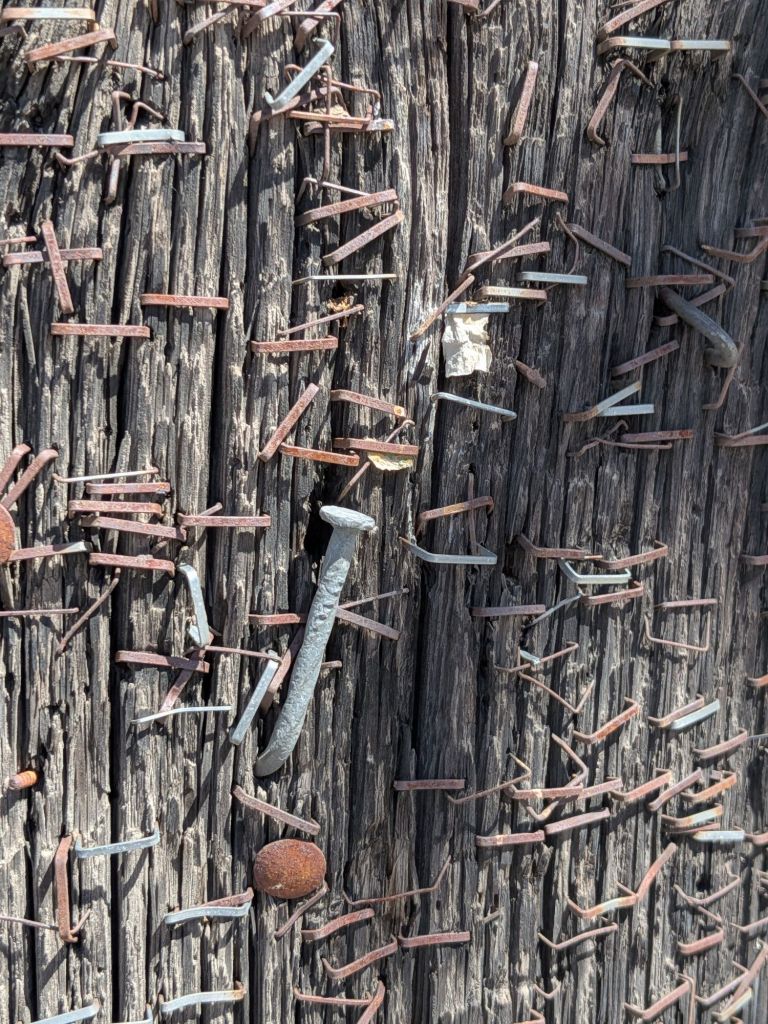
There was a celebration of John Paul’s life on the weekend.. I just couldn’t bear to go to see him. He had left something for me that I really didn’t want. He was a real great guy. He coached Little League ball. He worked for BC Hydro, that had such a community sense to it. But what I remember from BC Hydro and BC telephone lineman that would climb poles was that they were very much afraid of the people that put posters on telephone poles or hydro poles because one or two Staples would make their grip slip.

So, I took this picture of a power pole outside the post office in Merritt and it reminded me of him. Of course that admonition that he gave me was years and years ago when they only had Spurs and belts to go up the polls with.

I think their standards have changed. They had to have two vehicles and used buckets for the last few years. So that’s why all these Staples probably endured on the power pole outside the post office for so long.

Anyway, it’s a good remembrance of John Paul and anybody else that climbs poles.  Also we think of John Lynne, a utility company pole climber and lineman who died up a pole on his belt from a heart attack working alone in the 1960 / 70s. I Went to school with his son.

To both Rip…

Juice

Converting a small fan into a generator is a classic DIY “energy harvesting” project. While it won’t power your house, it is an excellent way to charge small devices or learn about electromagnetism.

### The Conversion LogicMost small fans use **brushless DC (BLDC) motors**. To turn this into a generator, you are essentially running the motor in reverse: instead of applying electricity to create motion, you apply motion to create electricity.##

1. The Build Plan

### Materials Needed * **A PC Cooling Fan:** Ideally a 12V High-CFP (high speed) fan. * **4 Schottky Diodes:** To build a Bridge Rectifier (to convert the AC output to DC). * **A Capacitor:** (e.g., 1000µF) to smooth the voltage. * **Drive System:** Spoons for a water wheel or PVC pipe for wind blades.### Steps to Convert

1. **Open the Fan:**

Peel back the sticker on the back of the fan to reveal the circuit board.

2. **Identify the Coils:**

Most fans have four coils. You need to bypass the internal controller chip (which only likes electricity flowing *in*) and solder wires directly to the coil windings.

3. **Build the Rectifier:**

Because the fan produces “pulsating AC” when spun, you must run those wires through a diode bridge. Without this, you won’t be able to charge a battery or light an LED consistently.

4. **Attach the Drive:**

Remove the original plastic fan blades if they are too flimsy for your input source and replace them with your water or wind attachment.##

2. Input Methods:

Water vs. Wind### Water Wheel (Hydro)Water is much denser than air, meaning it provides more torque.

* **The Setup:**

Attach plastic spoons or “paddles” to the fan hub. * **Input:** A steady stream from a garden hose or a small creek. * **Pros:** Very consistent power. * **Cons:** Harder on the bearings; requires waterproofing the electronics.###

Wind Turbine (Aero)

* **The Setup:**

Use the existing blades if the wind is high, or create larger, curved blades from a PVC pipe for better “catch.” * **Input:** Sustained winds of at least 15–20 mph. * **Pros:** Easier to set up and safer for the motor longevity. * **Cons:** Wind is intermittent and the fan may need a “tail” to keep it pointed into the wind.##

3. Power Expectations:

Amperage & Voltage

To answer your question directly:

**No, it does not come close to “real” power.**

| Metric | Typical Output | Reality Check || :— | :— | :— || **Voltage** | 1V to 5V | Can reach 12V if spun at extremely high RPM. || **Amperage** | 50mA to 200mA | Very low; (0.05 to 0.2 Amps). || **Total Watts** | 0.5W to 2W | A standard phone charger uses 5W to 20W. |### Is it enough? * **Lighting:** It can easily power a few high-efficiency **LEDs**.

* **Charging:**

It is generally **too weak** to charge a modern smartphone directly. The phone’s charging circuit usually requires a steady 5V at 500mA+; the fan will likely “brown out” under that load. * **Storage:** Your best bet is to use the fan to slowly trickle-charge a small NiMH battery pack over 24 hours, then use that battery to power something else.**Pro-Tip:** If you want more “oomph,” look for a **treadmill motor** or a **permanent magnet DC motor** from an old printer. Those can actually produce enough amperage to be truly useful!


Trip around the Moon, Artemis 2…

Next week 🔧📐🌡️🫰

NASA’s Artemis II mission, the first crewed flight in the Artemis program, is scheduled to launch next week from Launch Complex 39B at the Kennedy Space Center in Florida. The target launch date is Wednesday, April 1, 2026, with the launch window opening at 6:24 PM EDT. Therefore, the launch is scheduled for the evening.

If you are watching from other time zones, this corresponds to 10:24 PM UTC, or early Thursday morning, April 2, for locations such as India (3:54 AM IST). NASA has additional backup launch opportunities available through April if a delay is necessary.

Good Luck

The popular culture story of St. Patrick, driving the snakes out of Ireland is a reason, or one of many, why there are no snakes in Ireland they include ice age + and an environment that isn’t that attractive to snakes.

I’ve never heard anything about a particular predator that does them in but I’m sure there’s some.

Maybe the minks have it, but no mink has been known to provide people with redemption.

Happy birthday to all namesakes. Born on March 17th….

Bill Gates, climate from, yesteryear.

Vision

Human Welfare not only…

Stephen Hawking’s, the planetary scientist and the theological physicist passed away at the age of 76 a number of years ago on March 14th. So we remember him fondly today as somebody. That was very curious and was a good example for us to be curious and at the same time, productive, stable, and personable.

K

Ad hoc post, dilligence required.