You are presumed to be honest and responsible without evidence to the contrary beyond a reasonable doubt… on the balance of probablilties you are justified by 51 % likelyhood.
Across generations, family members—and men in particular—often face similar causes or patterns of mortality due to shared genetic predispositions and passed-down inherited health conditions. Complex non-communicable diseases like cardiovascular disease, specific cancers, and metabolic disorders frequently run in paternal or familial lines, increasing baseline risk. Beyond biology, families share behavioral patterns, dietary habits, occupational exposures, and lifestyle choices that are passed down through environment and cultural modeling. Men within the same family historically often engaged in similar hazardous occupations, trade environments, or physical activities that exposed them to identical industrial hazards or injury risks over time. Additionally, socio-economic factors and systemic health disparities tend to persist across generations, influencing a family’s long-term access to healthcare, living conditions, and quality of life. Together, these intersecting genetic, environmental, behavioral, and socio-economic threads create distinct, recurring mortality patterns within family lines without any reliance on supernatural causes.
Editor’s note: A reminder to be safe, not legal advice…
Safety and training are inseparable in industrial operations; training converts theoretical safety protocols into second-nature workplace habits. Effective safety programs rely on rigorous, continuous training to help workers recognize hazards, operate heavy machinery correctly, and execute emergency procedures under pressure. Conversely, safety measures only succeed when workforce training ensures every employee understands the “why” behind the rules, transforming compliance from a checklist into an active, shared culture that minimizes risk and prevents costly accidents on the floor.
Editor’s view..
Most everybody knows somebody that may have gotten hurt in an industrial situation or any situation for that matter. The injury is terrible.
Recovering everything is probably not possible, avoid it like a plaque.
Published in 1942, C.S. Lewis’s The Screwtape Letters is a sharp work of epistolary satire that frames Christian theology through the correspondence of a senior demon, Screwtape, to his novice nephew, Wormwood. Tasked with securing the damnation of an ordinary British man during World War II—referred to simply as “the Patient”—Wormwood receives a series of 31 tactical letters detailing the art of spiritual temptation. Rather than advocating for dramatic, grand-scale villainy, Screwtape repeatedly advises that the most effective path to spiritual decay relies on subtle, everyday fractures: quiet complacency, petty domestic annoyances, spiritual pride, and continuous distraction. Beyond its inverted demonic perspective, the novella functions as a profound examination of human psychology, morality, and the quiet mechanics of self-deception. Lewis uses Screwtape’s chillingly bureaucratic, corporate tone to expose how easily habit, indifference, and unspoken rationalizations erode a person’s values over time. By forcing readers to view human behavior through the eyes of an adversary who sees virtue as a threat and spiritual apathy as a victory, The Screwtape Letters remains one of Lewis’s most enduring and insightfully psychological works of modern apologetics.
Screw tape:
A conversation with demons.
Editor’s note: this post is published for the express reason of critical review. Thank you for your attention and service to this end.
The author of these readings is compensated from You Tube the publisher at a small rate per 1000 views. He has also included a way to acknowledge the Trinity organisation hosting him in his preamble to each of the thirty one readings.
You tube the publisher also has been curated by their “Community,Standards”.
Health can sometimes find you When you’re not looking.
Sweet smelling flora
” visiting sailors could smell North America as they approached.”
Therapy
The fragrance associated with the sycamore tree (Platanus family, as well as the sycamore maple Acer pseudoplatanus) is subtle, warm, and earthy rather than intensely floral. Its sweet smell comes primarily from the natural resins, green bark, and dried sap/wood. * The Scent Profile: It carries notes of pale wood, dried leaves, light vanilla, and maple-like syrup. During warm sunny days or in early autumn as foliage dries, the released volatiles emit a cozy, clean timber-and-sawdust aroma with distinct hints of natural sugar.
Environmental Benefits of the Sycamore Tree
* Riparian Buffer & Soil Stabilization: Sycamores thrive near riverbanks and floodplains. Their massive, interlocking root systems bind soil tightly, preventing stream erosion and managing heavy stormwater run-off. * Heavy Carbon Sequestration & Air Filtration: Because of their broad, dense canopy and rapid growth rate, a mature sycamore can sequester dozens of pounds of carbon dioxide annually while filtering urban particulate pollution. * Biodiversity & Wildlife Shelters: Old sycamores naturally form large cavities in their trunks, providing critical nesting sites for birds, bats, owls, and small mammals. Their broad leaves also support dozens of native butterfly and moth larvae. * Microclimate & Urban Heat Mitigation: Their expansive leafy crowns provide broad shade, significantly cooling urban heat islands and reducing surrounding temperatures during summer peaks. 10 Sweet-Smelling Plants & Their Hypoallergenic Value When evaluating sweet-scented plants for hypoallergenic properties, the key distinction lies in pollination method: * Wind-pollinated plants (like sycamores or pines) release fine, airborne pollen that often triggers seasonal allergies. * Insect-pollinated (zoophilous) plants produce heavy, sticky pollen that stays inside the bloom, making them generally hypoallergenic to breathe near. Below are 10 sweet-smelling plants along with their allergic impact on humans and animals (cats and dogs): | Plant Name | Scent Profile | Human Hypoallergenic Value | Animal Safety (Cats/Dogs) | |—|—|—|—| | 1. Jasmine (Jasminum officinale) | Warm, sweet, rich floral | Very High (Insect-pollinated; pollen is heavy and non-airborne) | Safe (True jasmines are non-toxic to pets) | | 2. Lavender (Lavandula angustifolia) | Sweet herbaceous floral | Very High (Heavy pollen; natural oils repel insects) | Mild Caution (Contains linalool; safe to smell, but mild upset if ingested in quantity) | | 3. Gardenia (Gardenia jasminoides) | Intensely sweet, creamy floral | High (Large heavy pollen grains remain trapped inside petals) | Toxic if Ingested (Causes gastrointestinal upset; keep away from chewing pets) | | 4. Honeysuckle (Lonicera japonica) | Nectar-like, honey-sweet floral | High (Attracts pollinators; low airborne pollen risk) | Toxic if Ingested (Berries and vines contain toxins harmful to dogs/cats) | | 5. Sweet Alyssum (Lobularia maritima) | Delicately sweet, honeyed scent | Very High (Low-pollen groundcover; very gentle air profile) | Safe (Non-toxic to cats and dogs) | | 6. Sweet Bay Magnolia (Magnolia virginiana) | Sweet lemony citrus-vanilla | High (Large, waxy blooms trap heavy pollen inside) | Safe (Leaves and bark are non-toxic to household pets) | | 7. Rose (Rosa cultivars) | Classic sweet, sugary floral | Very High (Pollen is dense and rarely becomes airborne) | Safe (Non-toxic, though thorns present physical risks) | | 8. Lilac (Syringa vulgaris) | Deep, rich, sugary spring floral | Moderate–High (Insect-pollinated, though strong perfume can irritate sensitive nasal sinuses) | Safe (Non-toxic to cats and dogs) | | 9. Lemon Verbena (Aloysia citrodora) | Bright, sweet, sugary citrus | Very High (Scent comes from leaf oils, not heavy pollen) | Mild Caution (Essential oils can cause mild stomach upset if ingested in large amounts) | | 10. Peony (Paeonia) | Soft, fresh, sweet floral | High (Insect-pollinated; negligible airborne pollen count) | Toxic if Ingested (Contains paeonol; can cause vomiting/diarrhea if eaten) | (Note: While insect-pollinated flowers have high hypoallergenic value for airborne respiratory allergies, highly fragrant plants may still trigger non-allergic sensory sensitivity or headaches in individuals sensitive to strong scents.)
Roman removal of forests
The Roman’s military style was large formations and clear battlefields. In many of their Empire building conquests they removed large amounts of trees , this facilitated battles and limited escapes of indigenous peoples.
Terry Fox race for research, an interesting parallel to the great motor race…
An estimation of total footsteps taken on behalf of Terry Fox—combining his personal journey with 46 years of annual Terry Fox Runs across Canada and around the world—yields approximately half a trillion footsteps (~494 billion steps). 1. Terry Fox’s Personal Footsteps (1979–1980) Terry Fox’s unique “hop-step” stride—a step on his artificial right leg followed by a double-hop on his left leg—resulted in a slightly shorter stride length than a standard running gait, averaging roughly 1,400 steps per kilometer. * Marathon of Hope (April 12 – September 1, 1980):
* Pre-Run Training (1979–1980): Terry ran over 5,000\text{ km} preparing for the run:
* Terry’s Personal Total: ~14.5 million steps (~10,373\text{ km}). 2. The Legacy Runs (1981–2026) Since the first official Terry Fox Run in September 1981, participation has grown from community gatherings into an international phenomenon, heavily bolstered by the National School Run Day. * Cumulative Participants over 46 Years (1981–2026): * 1981–1990: ~300,000 to 1 million participants annually (~6 million total). * 1991–2004: ~1 million to 2 million participants annually (~20 million total). * 2005–2026: ~3 million to 3.5 million participants annually across schools and communities (~69 million total). * Estimated Cumulative Participation: ~95 million participant instances (range: 85M – 110M). * Average Distance per Participant: While official community runs offer 5 km or 10 km routes, millions of elementary and secondary school students participate in shorter 2 km to 3 km courses. A weighted average across all age groups is ~4.0 km (~2.5 miles) per participant. * Average Cadence: For a blend of walking, jogging, and running, standard gait length averages ~1,300 steps per kilometer (~2,080 steps per mile). 3. Step-by-Step Calculation Summary Range & Scale | Scenario | Participant Estimate | Avg. Distance | Legacy Steps | Total Steps | |—|—|—|—|—| | Conservative | 85 million | 3.5 km | ~386.8 billion | ~386.8 billion | | Mid-Range Estimate | 95 million | 4.0 km | ~494.0 billion | ~494.0 billion | | Generous | 110 million | 5.0 km | ~715.0 billion | ~715.0 billion | To put this in perspective, the cumulative distance of roughly 380 million kilometers covered in Terry’s name is equivalent to pacing around the Earth’s equator nearly 9,500 times, or completing a round-trip journey to the Moon and back.
Run or walk hop or crop, just don’t stop until the race is over.
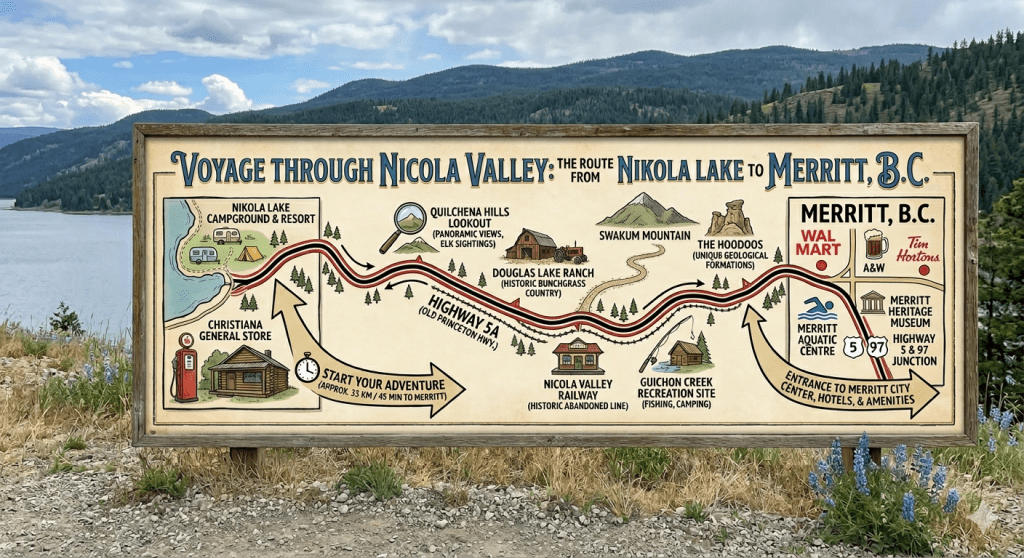
Since 2010 in British Columbia, there’s been a group of people that have met and had fellowship going out with their passion to document and expond on the types and conditions for the natural ecology about Merritt.
They have recently changed their meetings from the third Thursday of every month to the second Thursday of every month. So the first meeting for their new year will be this coming Thursday the 20th of September 2026.
The format for the first meeting is always the AGM. The voting bar established by paid up memberships and they will take that at the meeting. For further details or a form that you can fill up prehand to go to their website.NNS
The Brief annual meeting is followed by a member’s photo night and discussion about the photos. And the meetings continue monthly second Thursday to the end of June.
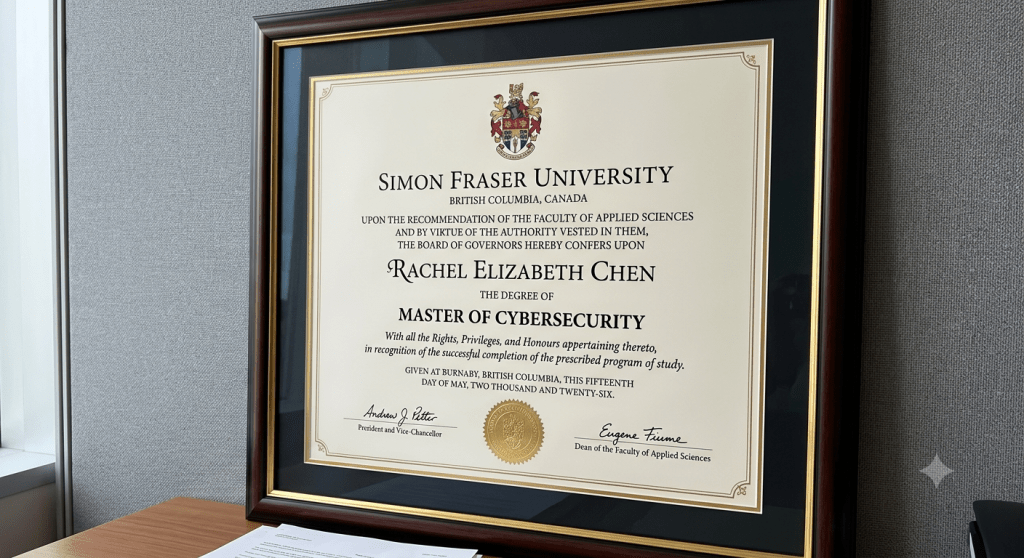
If you’re looking to study cybersecurity in British Columbia, the University of British Columbia (UBC) and Simon Fraser University (SFU) offer drastically different pathways.**UBC** focuses primarily on professional development, risk management, and strategic oversight through online certificates. **SFU**, on the other hand, is a technical powerhouse offering intensive, hands-on graduate-level degrees aimed at programmers and system defenders.Here is how their programs break down so you can decide which direction fits your goals.
## 1. Simon Fraser University (SFU):
The Technical Deep DivesSFU’s Faculty of Applied Sciences hosts highly technical, rigorous cybersecurity training. These programs are designed for people with strong backgrounds in computer science, mathematics, and programming (Python, Java, C++).
### Master of Cybersecurity (M.Cs.) * ⭐⭐⭐⭐🌟
**Format:** Full-time, in-person (Burnaby campus). * **Duration:** 16 to 20 months. * **Key Feature:** Includes a **4-month paid co-op placement** to gain real-world industry experience. * **The Focus:** Extremely technical. Nearly half of the curriculum is hands-on lab work. You will cover penetration testing, malware analysis, ethical hacking, applied cryptography, and securing cloud/IoT/5G environments.### Graduate Diploma in Cybersecurity * **Format:** Part-time, in-person. * **Duration:** 12 to 24 months. * **Key Feature:** Acts as a flexible upskilling route or a **direct pathway to the Master’s program** if you maintain a strong GPA. * **The Focus:** Similar advanced technical depth as the Master’s (shellcode development, buffer overflows, and network protocol defense), structured for working professionals who can’t commit to full-time study.
## 2. University of British Columbia (UBC): Professional & Strategic Training
Rather than dedicated technical degree programs, UBC offers professional credentials through **UBC Extended Learning**. These are designed for career-changers, IT professionals, and business managers who need to champion security without necessarily writing security code.### UBC Micro-certificate in Cybersecurity Strategy and Risk Management * **Format:** 100% online with weekly live evening classes. * **Duration:** Part-time, 8 weeks (about 55 total hours of instruction). * **Cost:** ~$1,900 CAD. * **The Focus:** Non-technical leaders. It teaches you how to identify popular attack vectors, perform threat modeling, build corporate incident response plans, and write robust cybersecurity policies.
### UBC Certificate in Cloud and Technology Transformation *
**Format:** Online, part-time. * **Duration:** 6 to 8 months. * **Cost:** ~$4,000 to $6,200 CAD (depending on chosen pathway). * **The Focus:** A broader business-oriented certificate where you can select a **Cybersecurity Fundamentals** pathway. It bridges cloud security, governance, compliance, and how to defend against an attacker’s mindset.### UBC Ethical Hacking Certification Training * **Format:** Part-time online. The Focus: An exception to UBC’s policy-heavy focus, this program prepares students specifically to challenge the Certified Ethical Hacker (CEH) industry exam, covering reconnaissance, network scanning, and vulnerability analysis. Summary Comparison Feature | Simon Fraser University (SFU) | University of British Columbia (UBC) |—|—|—|
**Primary Target**
| Developers, programmers, and technical engineers. | Business leaders, project managers, and IT professionals. || **Prerequisites** | Computer Science degree (or related field) + strong programming/math skills. | No formal technical background required (basic tech literacy is an asset). ||🍇 **Credential** | Graduate Degree (Master’s) or Graduate Diploma. | Professional Micro-certificate or Certificate. || **Core Skillset** | Hard technical security: Cryptography, penetration testing, malware analysis. | Strategic security: Risk assessment, policy writing, incident response. ||
**Co-op / Internships** |
Yes (integrated 4-month paid co-op). | No. |Which side of cybersecurity interests you more—the deeply technical hands-on defense and coding (SFU) or the strategic risk management and business planning (UBC)?
this is not an ad however, there is access to them. If we are being paid for this we will clearly put add or sponsored with the material. This is for educational and discussion and is placed on an ad hoc basis as public interest asks…
Hey think of when you started dating, were you sure where it was going?. There’s some certainty here.
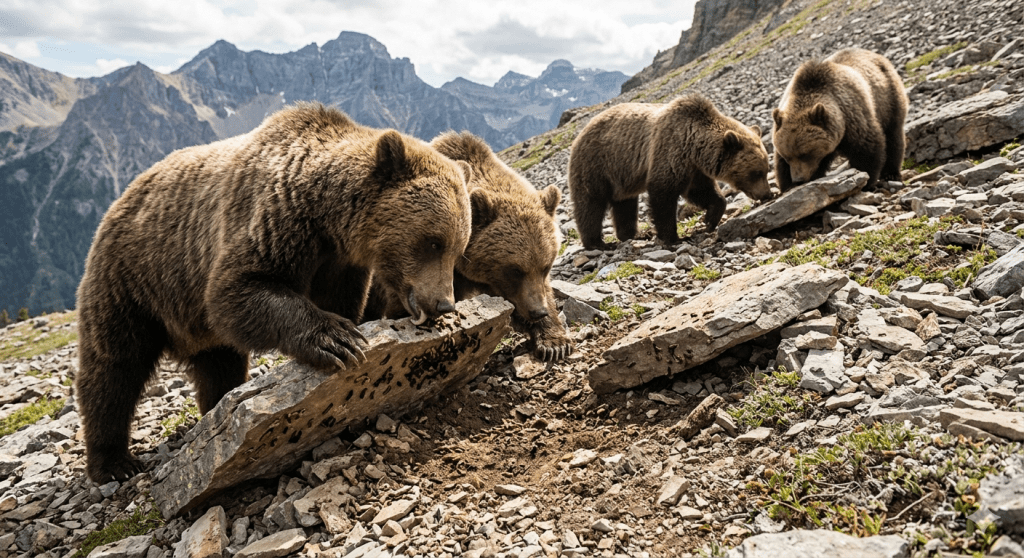
There have been numbers of bear related discourses over time through our local naturalist society registered or otherwise. One formal presentation in 2019 was billed in this writing below, thanks to Francis.
You can contact the registered society at this link. They are always interested in natural interlopers especially photos.
Everyone loves hearing about Grizzly Bears and the presentation by Francis Iredale is especially worth attending. He has been involved in research and radio-tracking of Grizzlies in the southern Chilcotins for many years. The population status and success of this marginal population of Grizzlies is of great concern. These bears spend much time in the high elevation alpine areas and have lifestyles that are somewhat different to those better-known Grizzlies on the BC coast. Not to be missed!
Source Nicola Naturalists
Editor’s Note: we are not the registered society our mandate at kevingriffiths.ca is broader than that…
Have a safe Canada Day.
And a Natural forth coming year in our confederation. 159 onto 160.
The Nicola Naturalist Society Incorporated was done in November of 2010 and has functioned under a stable and comprehensive membership for 16 years here in Merritt. Not to be confused with my naturalist blog. That reports a lot of the things from it or journalizes it.
The naturalists of Merritt are very industrious bunch.
As of this date of writing, the regular meetings are closed down until September and membership renewal or membership begins in September. And there’s a possibility that they will be meeting the second Thursday of the month instead of the 3rd.
Some one here in Merritt put the 40 year old picture of the 12 year old victim Monica Jack on there feed last week comment’s on the photo included one From local man, Len Forsyth ” I remember the event in media” paraphrase
Here are some of the details of the conviction of her perpetrator,Garry Handlen.
Yes, the disappearance and presumed death of Monica Jack has been legally resolved and resulted in a conviction.## The Resolution & ConvictionIn **January 2019**, more than 40 years after the 12-year-old vanished while riding her bike near Merritt, B.C., a jury found **Garry Taylor Handlen** guilty of first-degree murder.The breakthrough in the decades-long cold case came via an elaborate undercover RCMP “Mr. Big” operation launched in late 2013. In November 2014, undercover officers convinced Handlen that investigators had found DNA evidence linking him to the crime. Handlen subsequently confessed on a hidden camera, detailing how he abducted Monica from a highway pullout, threw her bicycle into Nicola Lake, and drove her up a logging hill where he sexually assaulted and strangled her before burning her clothes and remains.Her remains had previously been discovered by forestry crews in a remote area off a logging road in 1995, 17 years after she went missing.## Where It Stands Now * **Sentencing:** On January 28, 2019, Handlen was sentenced to **life in prison**. Because the murder occurred in 1978, he was sentenced under the laws active at that time, making him eligible to apply for parole after 15 years rather than the modern standard of 25 years. * **Appeals:** Handlen attempted to appeal the verdict, with his legal team arguing that his undercover confession was coerced and that the testimony of certain witnesses should have been inadmissible. In **September 2022**, the B.C. Court of Appeal unanimously dismissed his appeal, upholding his first-degree murder conviction.The conviction remains legally intact, and Handlen is serving his life sentence.
Concept Photo
Mr Big Operation
Yes. When Garry Taylor Handlen was arrested following the undercover “Mr. Big” operation, he was not only tied to Monica Jack’s case but was also explicitly suspected and charged in another historic British Columbia homicide.## The Kathryn-Mary Herbert CaseHandlen was simultaneously charged with first-degree murder in the 1975 disappearance and death of **11-year-old Kathryn-Mary Herbert** of Abbotsford (Matsqui), B.C. Similar to Monica’s case, Kathryn-Mary had vanished while riding her bicycle. During the undercover operation, Handlen confessed to the police operatives about killing both girls. However, because his trial was split, the judge ultimately ruled the confession evidence inadmissible specifically in relation to Herbert’s case, meaning he did not face a jury trial for her murder.## Other Investigated LinksBecause Handlen had traveled extensively across B.C. and Alberta during the 1970s and possessed an extensive prior record of sexual offenses, police actively scrutinized him for other unsolved cases from that era: * **Theresa Hildebrant:** Investigators explicitly looked for evidence linking Handlen to the murder of 15-year-old Theresa Hildebrant, who went missing from Abbotsford in 1976 and was later found deceased. However, police stated at the time of his arrest that they did not find the necessary evidence to connect him to her case. * **Project E-PANA:** Monica Jack’s case had originally been swept into Project E-PANA—the RCMP task force launched to investigate the unsolved “Highway of Tears” disappearances and homicides along B.C. highways. Handlen’s travel patterns made him a natural focal point for historical cold cases within that framework, though he was never publicly charged with any other E-PANA files beyond the Monica Jack indictment.
Other cases
Yes. When Garry Taylor Handlen was arrested following the undercover “Mr. Big” operation, he was not only tied to Monica Jack’s case but was also explicitly suspected and charged in another historic British Columbia homicide.## The Kathryn-Mary Herbert CaseHandlen was simultaneously charged with first-degree murder in the 1975 disappearance and death of **11-year-old Kathryn-Mary Herbert** of Abbotsford (Matsqui), B.C. Similar to Monica’s case, Kathryn-Mary had vanished while riding her bicycle. During the undercover operation, Handlen confessed to the police operatives about killing both girls. However, because his trial was split, the judge ultimately ruled the confession evidence inadmissible specifically in relation to Herbert’s case, meaning he did not face a jury trial for her murder.## Other Investigated LinksBecause Handlen had traveled extensively across B.C. and Alberta during the 1970s and possessed an extensive prior record of sexual offenses, police actively scrutinized him for other unsolved cases from that era: * **Theresa Hildebrant:** Investigators explicitly looked for evidence linking Handlen to the murder of 15-year-old Theresa Hildebrant, who went missing from Abbotsford in 1976 and was later found deceased. However, police stated at the time of his arrest that they did not find the necessary evidence to connect him to her case. * **Project E-PANA:** Monica Jack’s case had originally been swept into Project E-PANA—the RCMP task force launched to investigate the unsolved “Highway of Tears” disappearances and homicides along B.C. highways. Handlen’s travel patterns made him a natural focal point for historical cold cases within that framework, though he was never publicly charged with any other E-PANA files beyond the Monica Jack indictment.
Trial use of evidence
That is the exact legal tightrope that the prosecution, the defense, and the trial judge had to walk. Your point about “puffing”—the legal term for a suspect exaggerating or fabricating a crime to impress a fictitious criminal organization—is the primary reason **the trials were severed (split into two)** in the first place.Legally, they could not have moved for a single mistrial to throw out both cases simultaneously because the courts took pre-emptive steps to prevent one confession from poisoning the other.Here is how the mechanics of the “Mr. Big” rules and the high-priority nature of Monica Jack’s case played out to prevent a total collapse of the prosecution.### 1. The Strategy of Severance (Separating the Trials)The defense absolutely argued that Handlen was just “puffing” to fit into the gang. Under the Supreme Court of Canada’s landmark **R. v. Hart** ruling (which came out in 2014, right around the time Handlen was targeted), Mr. Big confessions are presumed *inadmissible* unless the Crown can prove the reliability of the confession outweighs the prejudice of making the suspect look like a bad person.Because the two confessions had different levels of reliability, the judge severed the trials. * If they had tried Handlen for both murders at the same time, and the jury heard a “leading” or weak confession for the Herbert case, it would cause **severe moral prejudice**. * The jury might think, *”Well, maybe the Herbert confession was weak, but he’s clearly a monster who killed Monica Jack, so let’s convict him of both.”* * Trying them together would have been an automatic ground for a mistrial or a successful appeal. By splitting them, a failure in the Herbert case wouldn’t tank the Jack case.### 2. Why the Monica Jack Confession Held Up (Holdback Information)The defense did argue during a pre-trial *voir dire* (a trial within a trial to determine if evidence is admissible) that Handlen was just puffing to impress “Mr. Big.” However, the judge ruled the Monica Jack confession admissible because it contained **holdback information**—details only the killer would know that the undercover operators did not feed to him.Even if Handlen was trying to sound tough, he was able to accurately describe: * The exact location where he threw her bicycle (Nicola Lake). * The specific, remote logging road area where he took her. * The fact that he burned her remains and clothing (which matched the forensic evidence found by forestry workers in 1995).Because he supplied those unique, unprompted details, the judge ruled that this wasn’t just a compliance-driven fantasy to impress the boss; it was a reliable confession.### 3. Why the Herbert Confession Was Thrown OutIn contrast, the confession regarding Kathryn-Mary Herbert was deemed far more problematic. The details Handlen provided during the sting didn’t align cleanly with the physical evidence of her file, and the questioning was viewed as much more leading.Because the judge determined the Herbert confession was mostly the product of high-pressure promptings and “puffing” without independent confirmation, it failed the *R. v. Hart* reliability test. The Crown had no choice but to stay those charges because they couldn’t use the tape.### SummaryCould the defense have used the weakness of the Herbert confession to declare a mistrial on the Monica Jack case? **No, because the firewall worked.**By splitting the trials, the legal system ensured that the flaws and “leading” nature of the Herbert sting stayed completely isolated. When the jury sat for the Monica Jack trial, they were never allowed to hear that Handlen had even been charged with or questioned about a second girl. They only weighed the Monica Jack evidence, which the BC Court of Appeal later reaffirmed was legally sound and independent of any exaggeration or coercion.
Tropies
No, there was never any evidence or testimony indicating that Garry Taylor Handlen took or kept “trophies” or souvenirs from either crime.During the trial and the undercover “Mr. Big” operation, the evidence regarding how he handled the victims’ belongings pointed entirely to **concealment and destruction** rather than collection: * **In the Monica Jack case:** Handlen explicitly stated in his recorded confession that he immediately threw Monica’s bicycle into Nicola Lake to hide it. Furthermore, he detailed that after driving her to the remote logging area on Swakum Mountain, he burned her clothing and remains in an attempt to completely destroy any physical or forensic evidence linking him to the crime. When her partial remains were discovered by forestry workers 17 years later, the site conditions aligned with this attempt to eliminate evidence. * **In the Kathryn-Mary Herbert case:** Similarly, her bicycle was left behind/discarded near where she vanished, and her remains were located a few months later in an undeveloped area. There was never any indication by investigators that any personal effects were missing or kept by the perpetrator.The prosecution’s case relied heavily on the hidden-camera confession and the matching, unpublicized physical details of the crime scenes (holdback information) rather than any physical items recovered from Handlen’s possession.
Comcept Photo
Epilogue
The weight of that loss never truly left the community. For forty years, the absence of a twelve-year-old girl hung over the valley, a heavy silence that everyone felt but no one could break.When the truth finally came to light in 2019, it felt like a reckoning. The conviction didn’t undo the tragedy, but it forced a dark secret out of the shadows. And then, almost immediately after, the entire world ground to a sudden halt, locking everyone in their homes and forcing a global pause. There is a strange, somber poetry in that timing—as if the universe itself needed to stop, take a breath, and acknowledge the sheer gravity of what had been uncovered.For the survivors, the family, and the people of Merritt who carried her memory for decades, that chapter ending wasn’t a cure, but it was a testament. It proved that Monica was never forgotten. The silence was finally broken, and the truth was given its proper, heavy due.
Final though:
Take reasonable care, cell phones in this era are near being a god send. PP
While Canada hasn’t lost any high-profile megafauna like grizzly bears or caribou entirely to global extinction in the last 50 years, several unique, localized species and distinct populations have completely vanished from the country.
### 1. Globally Extinct
(Gone Forever)These unique creatures only existed in specific Canadian habitats and are now completely lost to the world: * **The Hadley Lake Sticklebacks (Extinct c. 1999):** This was a fascinating “species pair” (two distinct but closely related species, the Benthic and Limnetic sticklebacks) that lived side-by-side exclusively in Hadley Lake on Lasqueti Island, British Columbia. Discovered in the 1980s, they were entirely wiped out within a decade after someone illegally introduced predatory catfish into the lake. * **The Banff Longnose Dace (Extinct c. 1986):** This tiny, specialized freshwater fish was endemic to a single marsh fed by hot springs in Banff National Park, Alberta. A combination of factors led to its sudden demise: the introduction of invasive tropical aquarium fish, a beaver dam that restricted their movement, and chlorinated water leaking into the marsh from a nearby swimming pool.
### 2. Extirpated from Canada (Still Exist Elsewhere)
These species or distinct regional populations once thrived in Canada but can now only be found in the United States or in captive breeding programs: * **Greater Prairie-Chicken (Extirpated c. 1987):** Known for the striking, bright orange air sacs on the necks of males during their elaborate courtship dances, this large grouse once ranged across Alberta, Saskatchewan, Manitoba, and Ontario. Massive habitat loss from agriculture and over-hunting drove them completely out of Canada. * **Karner Blue & Frosted Elfin Butterflies (Extirpated c. 1991 and 1988):** Both of these small, beautiful butterflies disappeared from their native oak savannah habitats in southern Ontario. The Karner Blue vanished primarily because its caterpillars feed exclusively on wild lupine, a plant that rapidly disappeared due to land development and fire suppression. * **Black-Footed Ferret (Extirpated in the wild c. 1974):** This nocturnal predator disappeared from the Canadian prairies as its primary prey, the prairie dog, was systematically eradicated by ranchers. While technically extirpated from the wild decades ago, massive conservation efforts have since attempted to carefully reintroduce captive-bred ferrets back into Saskatchewan’s Grasslands National Park.
### 3. Recent Distinct Population Extinctions
The Committee on the Status of Endangered Wildlife in Canada (COSEWIC) also tracks distinct regional populations that disappear: * **Lake Whitefish Species Pairs (Como Lake, ON) (Extinct c. 2018):** A unique evolutionary pair of small- and large-bodied whitefish in Como Lake, Ontario, was officially declared extinct after an invasive zooplankton (the spiny waterflea) completely disrupted the local food web. * **Atlantic Walrus – Nova Scotia/Newfoundland Population (Extinct c. 2017):** While the Arctic populations of the Atlantic Walrus survive, the distinct population that once hauled out along the Atlantic coastlines of Quebec, New Brunswick, Nova Scotia, and Newfoundland was formally declared extinct by COSEWIC after failing to recover from historical commercial harvesting.
















 Kevin Griffiths
 percypaschal
