You are presumed to be honest and responsible without evidence to the contrary beyond a reasonable doubt… on the balance of probablilties you are justified by 51 % likelyhood.
Published in 1942, C.S. Lewis’s The Screwtape Letters is a sharp work of epistolary satire that frames Christian theology through the correspondence of a senior demon, Screwtape, to his novice nephew, Wormwood. Tasked with securing the damnation of an ordinary British man during World War II—referred to simply as “the Patient”—Wormwood receives a series of 31 tactical letters detailing the art of spiritual temptation. Rather than advocating for dramatic, grand-scale villainy, Screwtape repeatedly advises that the most effective path to spiritual decay relies on subtle, everyday fractures: quiet complacency, petty domestic annoyances, spiritual pride, and continuous distraction. Beyond its inverted demonic perspective, the novella functions as a profound examination of human psychology, morality, and the quiet mechanics of self-deception. Lewis uses Screwtape’s chillingly bureaucratic, corporate tone to expose how easily habit, indifference, and unspoken rationalizations erode a person’s values over time. By forcing readers to view human behavior through the eyes of an adversary who sees virtue as a threat and spiritual apathy as a victory, The Screwtape Letters remains one of Lewis’s most enduring and insightfully psychological works of modern apologetics.
Screw tape:
A conversation with demons.
Editor’s note: this post is published for the express reason of critical review. Thank you for your attention and service to this end.
The author of these readings is compensated from You Tube the publisher at a small rate per 1000 views. He has also included a way to acknowledge the Trinity organisation hosting him in his preamble to each of the thirty one readings.
You tube the publisher also has been curated by their “Community,Standards”.
Would you like details regarding delegate registration, pre-COP events scheduled for October, or the specific negotiation roadmaps carried over from the last summit? [1, 3, 4]
Pip: Welcome to The Proprietor Review, where Merritt, British Columbia turns out to be a surprisingly rich dateline for questions about time, food, disease, and geopolitics — all in one week.
Mara: We're moving through dreamlike writing and photography, a local dining scene, a hantavirus update for the Nicola Valley, and some bigger-picture thinking on trade, infrastructure, and energy corridors.
Pip: Let's start with the writing — and the dreams.
Dreamlike Writing And Reflections
Mara: Kevin Griffiths is working in a mode that sits somewhere between street photography and prose poetry — the question both posts are circling is what it means to catch a moment before time takes it away.
Pip: His post Dream World frames it through a camera on Voght Street: "The camera created a dreamy sense for this traveler on Merritt BC" — and the image really does carry that quality, something caught mid-float.
Mara: The consequence is that the photograph isn't documentation — it's closer to a sealed instant, the kind Griffiths describes elsewhere as a "public statement that might be followed, an artist presenting, or accidental — it is called a moment."
Pip: That word "accidental" is doing a lot of work. The best street photography usually is.
Mara: Time Lapse picks up that thread and pushes it further. Griffiths argues the phrase itself is a contradiction — time isn't something that lapses, it's something you either inhabit or lose to measurement.
Pip: He writes, "Lapsed time is a nag — it never supports, it yells going going gone, you couldn't ever catch it saying I'll be waiting for you."
Mara: So the practical upshot is a reorientation: stop tracking time by duration and track it by enjoyment instead. He calls still photography the model for this — it "caresses you," he writes, rather than stalking you the way video does.
Pip: Which is a genuinely useful distinction between media that demand your schedule and media that wait for yours.
Mara: Both posts land on the same underlying argument — presence over measurement, the caught moment over the recorded sequence. The photography and the prose are making the same case from different angles.
Pip: One through a lens on Voght Street, one through a surreal glowing clock. Kevin Griffiths is consistent, at least, in his enemies list.
Mara: From the texture of a moment to the texture of a meal — the local scene in Merritt has its own kind of presence.
Local Dining And Market Scenes
Pip: Kevin Griffiths turns a Boston Pizza lunch into a brief, five-star dispatch — the whole bill lands at fifteen dollars and seventy-five cents, tip at the till.
Mara: The post is called BP $15:…Lunch, and the notation is almost accounting: "Coffee refill included, 75 cents tax added total bill $15:75" — Fiesta Salad, five stars, done.
Pip: Affordable, unpretentious, and apparently satisfying. The Merritt dining economy is not suffering.
Mara: Cuisine, the companion post, zooms out to the farmers market on a Saturday morning during the May long weekend — same town, same instinct to document what's available and who's gathering around it.
Pip: From hantavirus to hydroelectric — the health picture comes next.
Public Health And Wildlife Risk
Mara: The question percypaschal is answering in Deer Mice spread, Andie's Virus is the one residents were probably already asking: does the Andes hantavirus outbreak in the news actually affect Merritt?
Pip: The answer is direct: "The short answer is no, the risk to you and the general public in Merritt is currently very low."
Mara: The upshot is containment — four passengers from the MV Hondius cruise ship returned to British Columbia, one tested presumptive positive, and that person has had zero contact with the general public while in strict isolation.
Pip: The post also reminds readers that a local strain carried by deer mice already exists in rural B.C., and the precautions are practical — wet down droppings with bleach rather than sweeping them airborne.
Mara: Grounded, local, useful. Now for the larger infrastructure picture.
Trade, Energy, And Infrastructure
Mara: Three posts this week are thinking about what holds systems together — drilling industries, river corridors, and the cost of fuel — and the tension running through all of them is between development and its consequences.
Pip: The CDDA convention post covers the 81st Annual General Meeting of the Canadian Diamond Drilling Association, scheduled for Victoria under the theme "Viva Victoria" — workforce pipelines, mental health in high-stress sectors, safety awards.
Mara: percypaschal's Trade and Energy: Black Sea River Systems takes the longer view: "These vast freshwater systems act as natural highways, enabling international trade and commercial navigation deep into the European interior."
Pip: What that means in practice is that the Danube, Dnieper, Dniester, and Don are simultaneously ecological assets and geopolitical pressure points — and the post notes that large-scale hydroelectric development has largely stalled under EU environmental mandates, shifting focus toward offshore wind and subsea energy corridors.
Mara: Bridge over River Kwai brings it back to ground level — Kevin Griffiths writing about gas prices, planned obsolescence, and the cycle of militarism with a benediction at the end: "enjoy the moment, be in the present, you have the secret now."
Pip: From Black Sea river systems to a Merritt gas pump, the infrastructure question stays the same — who pays, and for whose decisions.
Mara: Moments, meals, containment, corridors — this week's posts keep returning to the same underlying question: what's worth measuring and what's worth just inhabiting.
Pip: Kevin Griffiths would say stop measuring. We'll see what next week's dateline brings.
Resolving conflict within a country is a multifaceted and complex undertaking that requires a comprehensive and adaptable approach. There isn’t a single “best” way, as the most effective strategies depend heavily on the specific context, the root causes of the conflict, and the willingness of all parties to engage in peaceful resolution. However, some key principles and approaches consistently prove valuable: 1. Addressing Root Causes: Sustainable peace requires identifying and addressing the underlying issues that fuel the conflict. These can be political, economic, social, cultural, or a combination thereof. Strategies include: * Promoting inclusive governance: Ensuring all groups have a voice in political processes and equitable access to power and resources. * Economic development: Reducing inequality and creating opportunities for all segments of society. * Social justice and reconciliation: Addressing historical grievances, promoting accountability for human rights abuses, and fostering understanding and empathy between communities. * Strengthening the rule of law: Establishing impartial and effective legal systems that ensure justice and protect human rights. 2. Fostering Dialogue and Negotiation: Creating platforms for communication and negotiation between conflicting parties is crucial. This involves: * Establishing inclusive dialogue processes: Ensuring that all relevant stakeholders, including marginalized groups, are represented. * Providing skilled facilitation and mediation: Utilizing neutral third parties to guide discussions, build trust, and help identify common ground. * Promoting Track I (official government-level), Track II (civil society and informal), and multi-track diplomacy: Engaging actors at various levels to create a comprehensive peace process. 3. Implementing Peacebuilding Initiatives: These are long-term efforts aimed at transforming relationships, institutions, and attitudes to prevent future conflict. Key components include: * Security sector reform: Establishing accountable and rights-respecting security forces. * Disarmament, demobilization, and reintegration (DDR) of ex-combatants: Providing pathways for former fighters to transition to civilian life. * Transitional justice mechanisms: Truth commissions, reparations programs, and judicial processes to address past abuses. * Education for peace: Promoting tolerance, empathy, and conflict resolution skills in schools and communities. * Civil society strengthening: Supporting local organizations working on peacebuilding, human rights, and reconciliation. * Interfaith and intercultural dialogue: Fostering understanding and cooperation between different religious and cultural groups. * Psychosocial support and trauma healing: Addressing the emotional and psychological wounds of conflict. 4. Ensuring Inclusivity and Participation: Peace processes are more likely to be successful and sustainable when they involve all segments of society, particularly those most affected by the conflict, including women, youth, and minorities. 5. Utilizing International and Regional Support: External actors can play a vital role by: * Providing financial and technical assistance: Supporting peacebuilding programs and institutions. * Facilitating dialogue and mediation: Offering neutral platforms and expertise. * Applying diplomatic pressure and targeted sanctions: Encouraging compliance with peace agreements and respect for human rights. * Deploying peacekeeping operations: Providing security and stability in conflict-affected areas (with careful consideration of their mandate and impact). 6. Building Trust and Confidence: Overcoming deep-seated mistrust is essential. This requires: * Transparency and accountability: Ensuring that peace processes and institutions operate openly and are held responsible for their actions. * Confidence-building measures: Small-scale initiatives that foster cooperation and communication between communities. * Consistent commitment to peace: Demonstrating a genuine willingness from all sides to find a peaceful resolution. 7. Adapting to the Specific Context: Each conflict is unique, and therefore, the resolution strategies must be tailored to the specific historical, political, social, and cultural dynamics at play. A flexible and adaptive approach is crucial. In conclusion, the “best” way to resolve conflict in a country involves a holistic approach that addresses root causes, fosters dialogue, implements long-term peacebuilding initiatives, ensures inclusivity, leverages international support, builds trust, and adapts to the specific context. It is a long and often challenging process that requires commitment, patience, and the willingness of all parties to work towards a peaceful and just future.
Well would a tariff opportunity speed things up … Tic…
The Artemis program is currently underway, with several missions planned to establish a sustainable presence on the Moon as a stepping stone for human missions to Mars. Here’s an update on its progress and the outlook for a Mars landing: Artemis Program Status: The Artemis program is organized into a series of increasingly complex missions. Here’s the current status of the initial missions: * Artemis I: This uncrewed test flight successfully orbited the Moon and returned to Earth in November 2022, serving as the first integrated test of the Space Launch System (SLS) rocket and the Orion spacecraft. * Artemis II: This mission will be the first crewed flight of the Orion spacecraft, sending a crew of four astronauts around the Moon. It is currently targeted for launch no earlier than April 2026. * Artemis III: This mission aims to land astronauts on the Moon’s South Pole region. It is currently scheduled for mid-2027. This mission will use the SpaceX Starship Human Landing System (HLS) to transport two astronauts to the lunar surface. * Artemis IV: This mission is planned for late 2028 and will involve docking with the Lunar Gateway, a small space station that will orbit the Moon. Astronauts will transfer through the Gateway to the HLS for their descent to the lunar surface. * Artemis V: Planned for March 2030, this mission will also dock with the Gateway and is expected to involve a longer stay on the lunar surface, contributing to the establishment of a permanent lunar habitat. When to Expect a Landing on Mars: The Artemis program’s long-term goal is to prepare for human expeditions to Mars. While there isn’t a specific date set, NASA’s planning indicates that a crewed mission to Mars could plausibly happen in the mid to late 2030s. * Some sources mention a potential three-year crewed expedition to Mars with a return planned between 2035 and 2038. The duration of the stay on Mars could vary from 90 to 500 Earth days, depending on favorable return windows. It’s important to note that the timeline for Mars missions is more fluid and depends on the success of the Artemis lunar missions, the development of necessary technologies, and continued funding. The experience gained from establishing a sustained presence on the Moon, including testing technologies and understanding the challenges of long-duration deep space missions, is crucial for the eventual human exploration of Mars.
1950 heavy metal itPhoto by Cliff Booth on Pexels.comBus itSevere weather it.Dam itNuke it
Carbon Tax
In Canada we have the advantage of a tax tied to a tangible commodity. The carbon tax no matter how pie in the sky it is, it’s still based on a tanagable.
Fraud not withstanding risk is better underwritten by this vehicle. So, the bubble of hard assets (oil reserves) that we are beginning to enjoy is timely for we all. Don’t waste this moment… Use it to transform ideas to near tangibles that will endure to our children’s children.
Published newspapers and periodicals have editoral staff and letters to the editors are a good way to get your message out. your submission will be curate in some ways, probably for briefity and accuracy on facts but your opinion as a view should remain.
Editors have time constraints and being sensitive to those will help. research the publication time and make the maximum effort to use that to advantage.
Letters to the editor are an effective way to express your views and opinions about specific topics in published newspapers and periodicals. They provide an opportunity for readers to engage with the publication and share their perspectives on various issues. While submitting a letter to the editor, it is important to keep a few things in mind:
Be concise: Editors often have limited space to allocate for letters, so it’s crucial to keep your submission brief and to the point. Focus on your main message and avoid unnecessary details or tangents.
Fact-check and be accurate: Ensure that the information you include in your letter is accurate and supported by credible sources. Editors prioritize accuracy, so double-check your facts before submitting your letter.
Research publication timing: Find out the publication schedule and try to time your submission accordingly. Sending your letter well in advance of the publication date increases the likelihood of it being considered.
Be respectful and constructive: While voicing your opinion, maintain a respectful and civil tone. Constructive criticism is more likely to be well-received by both editors and readers.
Follow submission guidelines: Different publications may have specific guidelines for submitting letters to the editor. Take the time to familiarize yourself with these guidelines and adhere to them when preparing your submission.
Remember, letters to the editor provide an opportunity for you to contribute your viewpoint and engage with your community. By following these tips, you can increase your chances of having your letter published and making an impact through your message.
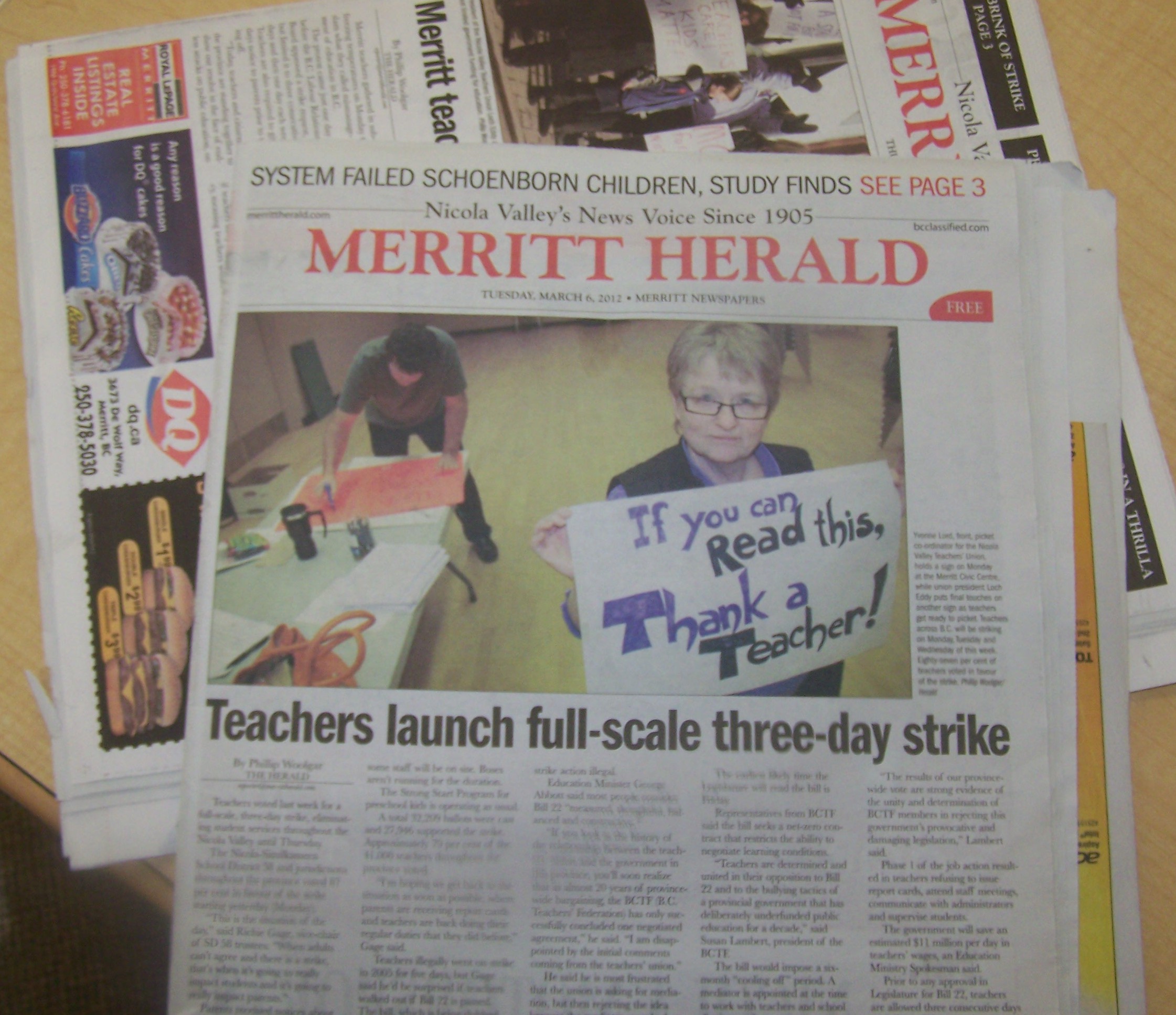
Local paper reports on strike !
File photo KDG
Add
It never hurts to buy an add when doing this as publication and editorial are separate in published works. They make an issue of it.
The British Columbia municipalities convention is on in Vancouver at this moment. Convention host Anne Kang is engaged with the work of work of overseeing her first convention has the host. The convention theme is balancing act, Anne is also the minister of municipal affairs in the British Columbia government and it’s been a member of the ubcm for 15 years.
Discussions untill this time have included the decriminalization of illicit drugs and it’s difficulties and $40,000 forgivable loans to build suites on single-family dwellings.
Both items are typified as crisis.The group hosted a housing summit earlier and this is the 20th year since and drug laws were liberalized in BC.
Declaritive forum
The UBCM is a forum for discussion and getting together of municipalities across a province it will be passing resolutions that are declarative in nature and are sometimes brought back to the legislature or to the home jurisdictions of all the mayors and councils in BC. On the agenda is resolution in respect to difficulties in getting permits and to access annual allowable cuts for the forest industry.


















![Light Show [Explored 2026-10-09]](https://live.staticflickr.com/65535/55578539818_958ce4fa9c_s.jpg "Light Show [Explored 2026-10-09]")


 Kevin Griffiths
 percypaschal
