

Its a lovely Planet
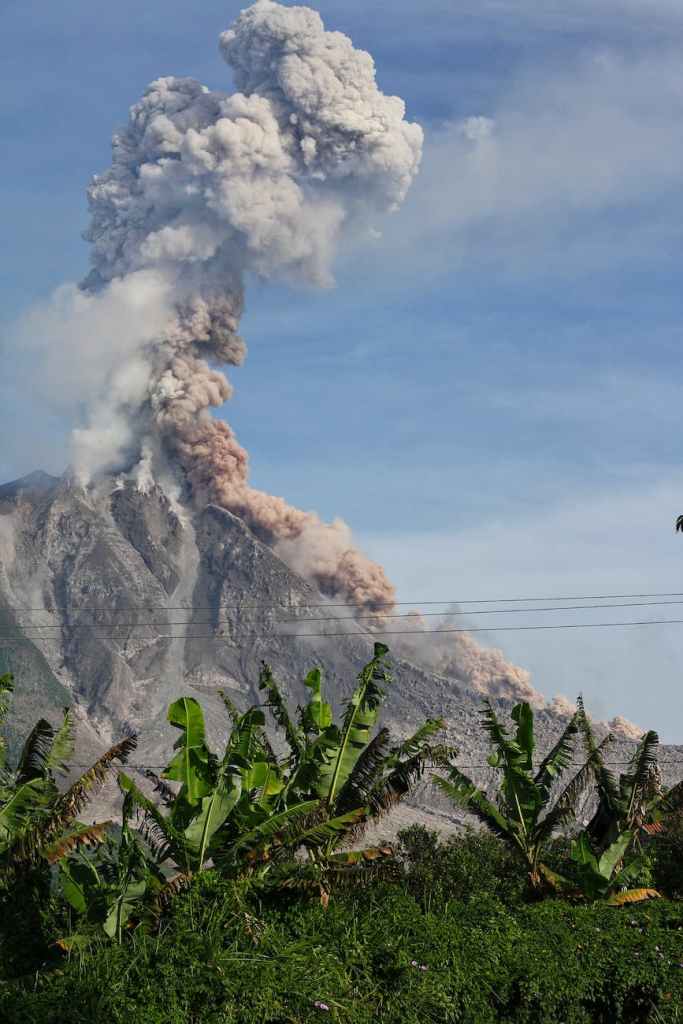
Who’s bigger now? Valcanos or hydrocarbon fuel burns by rockets and Jet craft.
In the complex creation of the Earth numbers of periods that went on for millions of years to create our atmosphere, luck or good grace, it happened that we had a nice bounce, oxygen, nitrogen and small amounts of various other elements for us to breathe.
If you want to get you a perspective, try some red peppers that are very hot and then wait for the hiccups. Water won’t help because of the interaction of the two elements. Milk or ice cream might help it helped me when I did it. But you’ll get hiccups and burning just from the interaction of two compounded chemicals that could take 1 or 3 weeks to clear. How much more is our atmosphere sensitive?
Not saying we shouldn’t but Musks rational of making the solar system more than a one planet habited by humans to save us, a reality in a self-fulfilling prophecy.
Eden a charm…
Watch this Letterman interview with Elon when his first Roadster was offered at a range of 244 miles per charge. Offered at 100 thousand dollars.
The Guardian reported this model to have a system air purification to protect from a “Biological Attack”
Global consumption of jet fuel:
hovers around 250 to 280 million metric tons (roughly 90 to 100 billion gallons) per year.Regional Breakdown: Canada, Europe, and AsiaAviation fuel consumption is heavily dictated by population, economic activity, and major international transit hubs.
* Canada: *
Canada consumes roughly 150,000 to 165,000 barrels per day (approximately 8.5 to 9 million metric tons annually). While domestic travel spans vast distances, Canada’s overall volume is lower than massive global transit corridors due to a smaller total population.
* Europe:
* Europe as a collective block is one of the world’s largest aviation markets. Major economies like the UK, Germany, Spain, France, and Italy each consume between 100,000 and 260,000 barrels per day individually. Combined, European nations account for roughly 20% to 25% of global jet fuel consumption, driven by dense intra-continental networks and massive international hubs (like London Heathrow, Frankfurt, and Paris Charles de Gaulle).
* Asia:
* Asia is the fastest-growing and largest regional consumer of jet fuel, spearheaded by China (the world’s second-largest consumer behind the US, burning over 750,000 barrels per day), along with heavy consumption from Japan, India, South Korea, and Southeast Asian transit hubs like Singapore. Asia collectively accounts for roughly 30% to 35% of global jet fuel demand and is scaling up rapidly.Effects on the AtmosphereAviation accounts for roughly 2% of global human-induced \text{CO}_2 emissions, but its total impact on global warming is estimated to be two to three times greater (roughly 3% to 5% of total climate warming) because of non-\text{CO}_2 high-altitude emissions.
The atmospheric effects break down into several distinct mechanisms:
* Carbon Dioxide (\text{CO}_2) Emissions:
* Burning jet fuel releases massive amounts of \text{CO}_2 directly into the atmosphere (roughly 3.16 kg of \text{CO}_2 per 1 kg of fuel burned). Because \text{CO}_2 is a long-lived greenhouse gas, this contribution persists for centuries, trapping heat uniformly across the globe regardless of the altitude at which it was released. * Contrails and Cirrus Clouds
(The Albedo Effect):
* At high cruising altitudes (usually above 30,000 feet), hot engine exhaust interacts with cold, humid air to form condensation trails (contrails). These trails can spread out into persistent artificial cirrus clouds. * These clouds trap outgoing longwave radiation from the Earth, creating a net warming effect. Nighttime flights have an even stronger warming impact because they trap heat without any offsetting daytime sunlight reflection.
* Nitrogen Oxides (\text{NO}_x) and Ozone:
* Jet engines emit \text{NO}_x, which reacts in the upper troposphere and lower stratosphere to form ozone (\text{O}_3), a powerful greenhouse gas at those altitudes. Conversely, these reactions also destroy some ambient methane, but the net result is a short-to-medium-term warming effect.
* Soot and Water Vapor:
* Soot particles and water vapor emitted directly into the upper atmosphere act as seeds for ice crystal formation, further driving cloud-formation processes that alter the Earth’s radiative balance.
Editors note:
Do a carbon trade off, take a train if you can, electric, hydro generated if possible.









 Kevin Griffiths
 percypaschal

Relevancy, DT, “sue Canada for not spraying for forest…”
Wild over maintained forest…
Donald Trump threaten to sue Canada for not using high-powered toxic sprays over our forests to keep the grasses and stuff down. So smoke wouldn’t go over to them. Them wanted to sue us as nuisance feasers.
so,
Compared to landscapes dominated by chemical agriculture or managed forestry, a wild forest functioning without pesticide intervention provides significant hydrological, ecological, and biochemical advantages to local water systems.While wild forests release natural organic emissions (such as dissolved organic carbon, tannins, humic acids, and fallen plant debris) into surface water, these biological inputs act as structural assets rather than environmental pollutants.
| Feature
| Wild Forest Ecosystem | Pesticide-Controlled Area ||—|—|—|| Primary Chemical Inputs | Tannins, humic substances, natural organic carbon | Synthetic herbicides, insecticides, fungicides || Impact on Aquatic Life | Builds base food webs, creates micro-habitats | Risks bioaccumulation, endocrine disruption, toxicity || Soil & Water Retention | Deep root networks retain water and prevent erosion | Soil compaction increases runoff and sedimentation || Nutrient Cycling | Slow, balanced natural breakdown | High risk of nutrient spikes and oxygen depletion |Key Advantages of Wild Forest Systems
* Natural Biochemical Buffering:
Natural organic emissions like humic and fulvic acids lower stream pH slightly and bind with heavy metals, locking them out of biological uptake and buffering downstream waters against sudden chemistry shifts
* Complex Food Web Support:
Forest emissions—like leaf litter breakdown and coarse woody debris—supply the primary carbon base that aquatic macroinvertebrates (such as stonefly and caddisfly larvae) rely on. This foundational carbon fuels the entire food chain, supporting wild fish stocks. * Elimination of Bioaccumulation Risks: Synthetic pesticides, particularly persistent organic pollutants and systemic insecticides, do not break down rapidly in cold stream environments. Wild systems eliminate the risk of sub-lethal chemical exposures that disrupt aquatic insect emergence and fish navigation.
* Superior Hydrological Filtration:
Undisturbed forest soils retain high porosity and organic matter, acting as massive sponge-like filters. They slow down peak rain events, minimize soil erosion, and drop sediment loads compared to cleared or chemical-maintained landscapes.
* Thermal Regulation and Habitat Structural Diversity:
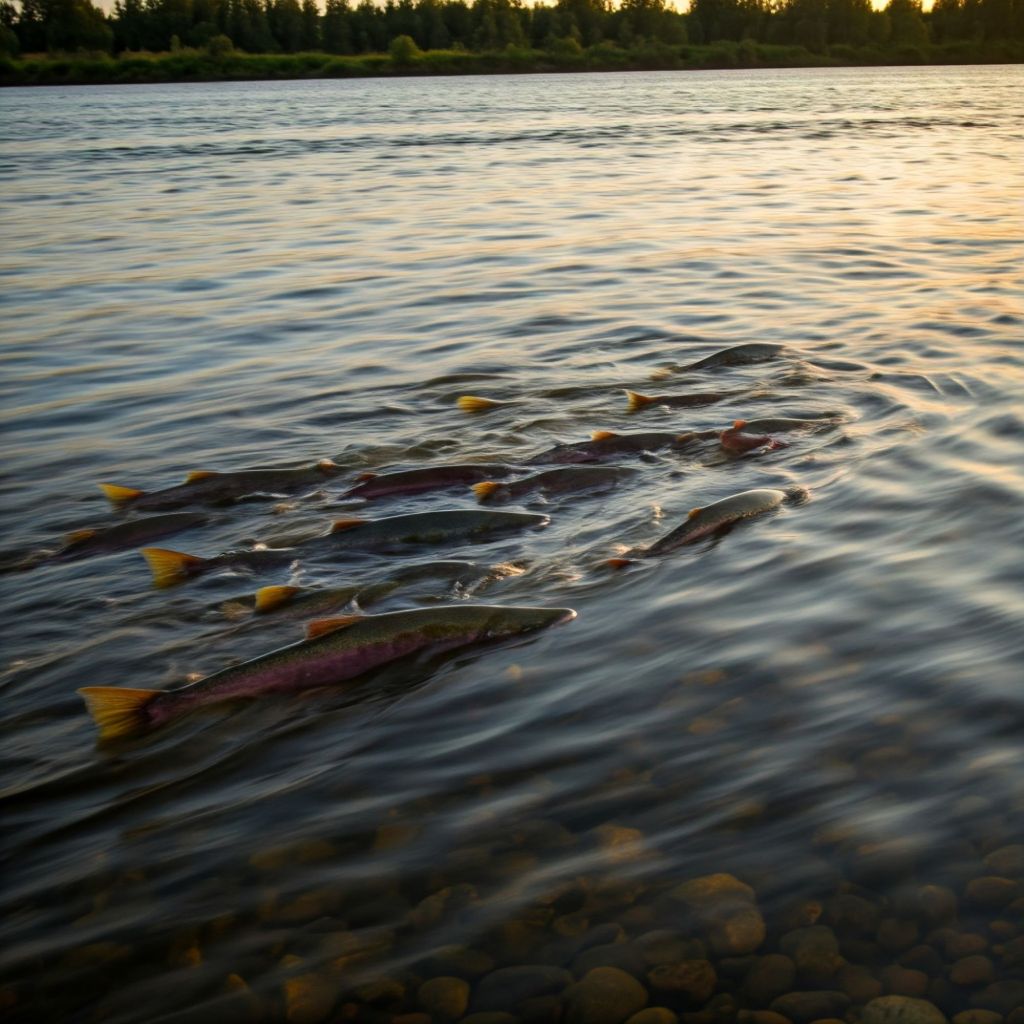
Wild forest canopies shade stream corridors, maintaining cold water temperatures critical for salmonids and native trout species, while fallen logs create deep pools and cover.While natural organic matter requires standard physical filtration when harvested for human municipal drinking water, it forms the fundamental framework of a self-sustaining, resilient freshwater ecosystem.
Well
Maybe we should have left Donald to rename the Gulf of Mexico to the Gulf of America.PP
Comet Cleanser
Rate this:
Share this: