You are presumed to be honest and responsible without evidence to the contrary beyond a reasonable doubt… on the balance of probablilties you are justified by 51 % likelyhood.
The Indigenous peoples of the Pacific Northwest Coast—including the Haida, Tlingit, Coast Salish, Nuu-chah-nulth, and Kwakwaka’wakw—developed one of the most complex and stratified non-agricultural societies in human history. Their culture was defined by the staggering abundance of the ocean and the towering cedar forests.Pre-Contact PopulationEstimating numbers before European arrival is difficult, but scholars suggest the Pacific Coast was one of the most densely populated areas north of Mexico. * Estimated Population: Between 200,000 and 500,000 people lived along the coast from Alaska to the Columbia River. * Density: Because the salmon runs provided such a reliable, “storable” food source, these groups could live in permanent winter villages rather than wandering as nomads.
Social Structure and Property
Unlike many interior tribes where land was often communal, Coastal First Nations had a highly developed sense of private and lineage-based property.Methods of Keeping Property SeparatedResource ownership was not about “territory” in a vague sense, but about specific functional sites. A high-ranking family didn’t just own a forest; they owned the specific spot where a salmon trap was placed or a particular berry patch. * Boundary Markers: While they didn’t use fences, geographic landmarks (rivers, specific rocks, or mountain peaks) served as clear borders. *
Heraldry:
Totem poles and house front paintings acted as “deeds.” By displaying certain crests (like the Raven or Bear), a family publicly asserted their ancestral right to the resources of that area.
* Oral Histories:
At gatherings, “speakers” would recite the lineage and history of a family, effectively renewing their legal claim to their lands and waters in front of witnesses.
Traditions:
The PotlatchThe Potlatch was the heartbeat of coastal culture. It was a massive feast used to mark births, deaths, or the raising of a totem pole.
* Wealth through Giving:
In this culture, status wasn’t measured by how much you had, but by how much you gave away. A chief would give away blankets, copper shields, and food to guests from other tribes. * Legal Validation: By accepting the gifts, the guests were essentially “signing” a contract, acknowledging the host’s new rank or claim to property.Hostilities and WarfareLife on the coast wasn’t always peaceful. The same wealth that allowed for great art also fueled intense competition.
* Motivations:
Warfare was rarely about seizing large swaths of land. Instead, it was about revenge (blood feuds), the acquisition of slaves, and the capture of prestige items or specific resource sites.
* Fortifications:
Many villages were built on “defensive sites”—steep bluffs or small islands with palisades—to guard against midnight raids. * The War Canoe: These were the “battleships” of the coast. Carved from a single cedar log, some could hold 50 to 60 warriors. They allowed for high-speed, long-distance raids along the “Inside Passage.”
Art
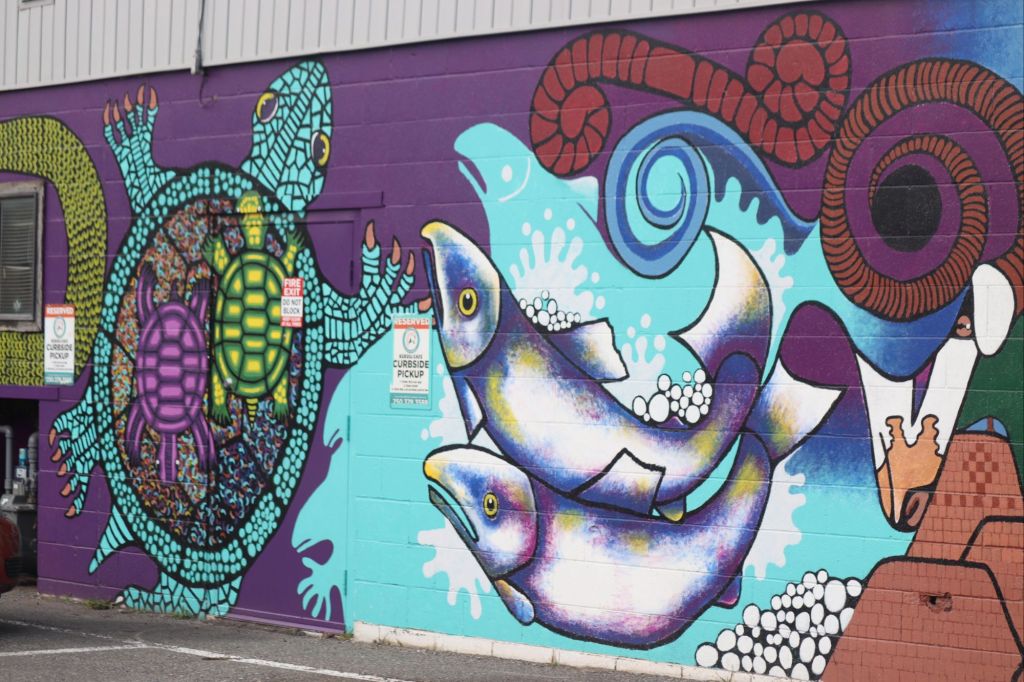
There are the specific artistic styles of the different coastal groups, such as the distinction between Haida and Coast Salish formline art.
Distinction
To understand the distinction between these groups, it helps to look at their Formline art—the sophisticated mathematical and aesthetic system that defines Pacific Northwest visual culture. While they share similarities, the Haida and Coast Salish represent two very different ends of the artistic and social spectrum.
Haida Art:
The “Northern” Style
The Haida (along with the Tlingit and Tsimshian) developed what is often called the “Classic” Northern style.
It is characterized by bold, interconnected lines and a strict adherence to traditional rules. * The Formline: This is the primary black outline that defines the subject. It flows continuously, varying in thickness to create a sense of tension and fluid movement. * Ovoids and U-Shapes: Almost all Haida art is composed of these two shapes. The Ovoid (a rounded rectangle) usually represents joints, eyes, or heads, while U-shapes represent feathers, ears, or fins. * Symmetry and Complexity: Haida art is often “packed,” meaning every available inch of a box, pole, or mask is filled with secondary and tertiary figures. This reflected their highly stratified social hierarchy—everything had its place.Coast Salish Art: The “Southern” StyleThe Coast Salish (from the area around modern-day Vancouver and Victoria) practiced a style that was historically more minimalist and spiritually focused compared to the bold, heraldic art of the North. * Primary Shapes: Instead of the Ovoid, the Salish used the Trigon, Circle, and Crescent. These shapes were often carved “out” of the wood to create negative space, rather than being painted as bold outlines. * Human-Centric:
Classic style
Southern
While Northern art focused heavily on crest animals (Ravens, Eagles, Wolves), Coast Salish art frequently featured human figures, often representing ancestors or spirit helpers. * Visionary Purpose: Much of this art was created for private spiritual use or to adorn functional items like spindle whorls (used for weaving) and house posts, rather than the massive public totem poles found further north.
Comparison
Haida (Northern)
Coast Salish (Southern)
The Cedar:
The Foundation of Both:
Regardless of the style, the Western Red Cedar was the “Tree of Life” for both groups.
* The Wood:
Rot-resistant and straight-grained, it was split into planks for longhouses or hollowed out for canoes.
* The Bark:
Women would harvest the inner bark in the spring, which was then shredded and woven into water-tight hats, baskets, and even clothing.
When it comes to the “Epstein files”—particularly the massive trove released in early 2026—the question of “belief” requires distinguishing between official records and unverified allegations.Because these files contain millions of pages from various sources (FBI reports, court depositions, and personal emails), they aren’t a single cohesive narrative.
Here is how to look at what’s coming out:
1. The “List” vs.
The Contact BookOne of the biggest sources of confusion is the idea of a “client list.” * The Reality: The Department of Justice (DOJ) stated in July 2025 and reaffirmed in 2026 that no official “client list” exists. * The Context: Most of the names appearing in the files are from Epstein’s personal address books or flight logs. Being “in the files” often just means Epstein had someone’s phone number or they sat on his plane. It does not automatically imply they participated in his crimes.
2. Verified vs. Unverified Content
The files are a “mixed bag” of evidence types: * Verified Documents: Things like flight logs, emails, and phone records are generally considered factual evidence of contact. For example, the 2026 release confirmed that Prince Andrew and Epstein remained in contact much later than previously admitted.
* Depositions and Allegations:
Many files contain testimony from victims (like Virginia Giuffre) or Epstein’s staff. While these are “real” legal documents, they contain unsworn statements or hearsay that were never tested in a criminal trial against the people mentioned. * FBI “302” Reports: These are summaries of interviews conducted by agents. They provide a “real” look at what people told the FBI, but they aren’t proof that those statements were 100% accurate.
3. Misinformation and “Fakes”
Since the Epstein Files Transparency Act was signed in late 2025, the internet has been flooded with doctored images and fake lists.
* The “Celebrity” Trap:
Many names seen on social media (like late-night hosts or certain actors) have been debunked as fabrications not found in the actual DOJ releases. *
The “Birthday Book”:
The 2025 release of a “birthday book” compiled by Ghislaine Maxwell contained crude jokes and drawings involving high-profile names. While the book itself is a real artifact, the “jokes” within it (like a fake receipt for a woman “sold” to a prominent figure) are often interpreted by investigators as dark humor or posturing rather than literal receipts of crimes.
How to Navigate the News
To avoid the “dives” into misinformation, it’s best to stick to reports from outlets that have actually sat down with the millions of pages—like the Associated Press or The Washington Post—which distinguish between a name appearing in an address book and a name appearing in a criminal allegation.>
Key Takeaway:
You can believe the files are authentic documents from the investigation, but you should not assume every allegation or name within them is proof of a crime.
Would you like me to look up the specific details regarding any particular person or event mentioned in the latest releases?
Reasons to not take literal.
Editors note:
Dark humour, Metaphor, Coding,discriptive language, sexual play…
Flip Wilson was noted as a comedian that always blamed things on the devil. Don’t get ahead of yourself or the FBI with physical verification. Nobody believed flip Wilson literally.
Well
That being said, until some of the missing people in British Columbia and Canada are accounted for,it would be good to warn young people and vulnerable people that they can’t take the luxury of doing that.
Stranger danger is one thing, double lives of authentic people is another you be the judge when you explain.
PS:
The movie the Wicker Man was out on the market in the early 2000s and even before. It would be reasonable to think that amongst celebrities and the nature available on these islands that conversations may have been scoped for excitement and not reality.
It could also be that play went too far, and some of it was true.
The United States president has recently stopped a construction of a bridge between Ontario and his country. Citing the fact that Ontario had curtailed some liquor sales or taken American liquor off Canadian shelves.
Reports also indicate that The premier of Ontario. Doug Ford was meeting with the Canadian prime Minister lately. Looking for a possible support mechanism that would make it possible for an election to be called in Canada to regain a government majority by the liberals.
This would be the minority government that was partially incurred by the recruitment of the former deputy prime Minister into the employment of the war engaged US supplied armed conflict of Ukraine President Zelinski against the alleged Russian aggression that saw the Russian state tried to protect Russian minorities within the boundaries of Ukraine.
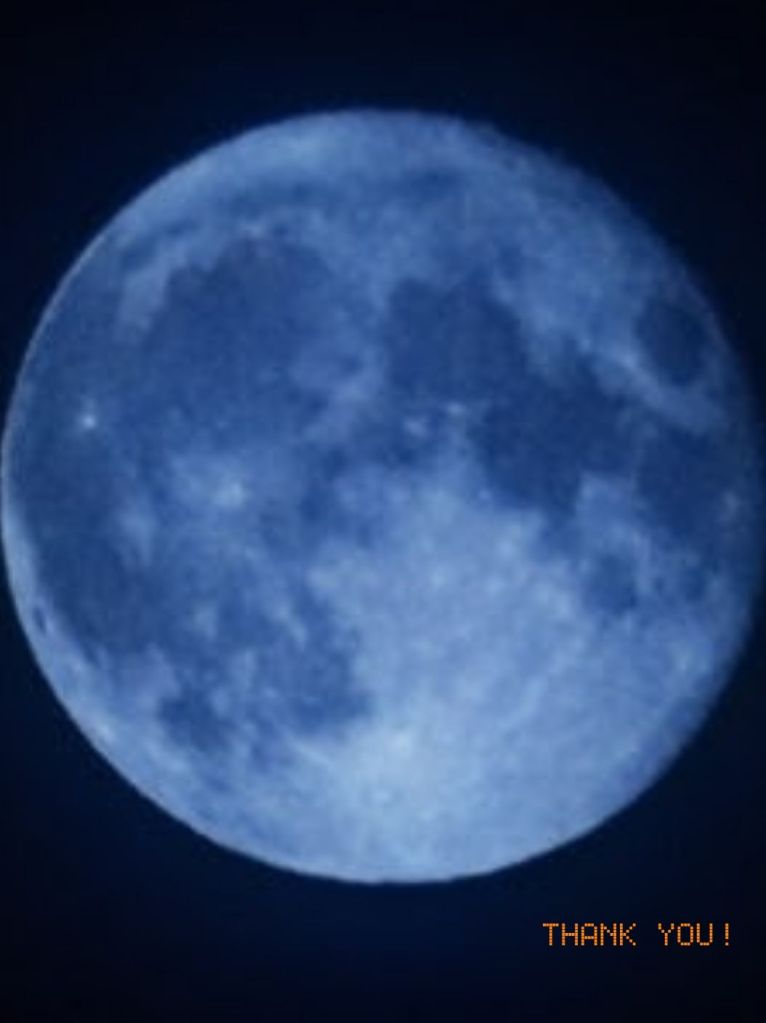
So while they’re looking at the same Moon that we’re looking at, in Canada, their objectives are different and we must console ourselves for being used. We should all agree that the Epstein thing should not be moved on from because it’s relevance is made more and more clear and pertaining to a striking home at our nation everyday.
Exploitive behavior and a disdain for the explotable, with the greater good of intangible fame a farce and it’s sister regret… Lost in shuffles it will not pass easily,if it continues to exploit moving on while expedient in some minds, it is just more appetite for the same lust.
Normal people stay close to your vulnerables. We have no simple platitudes for you today. Good luck! Just signs us out of here. We hope you do create your own luck though. Good night…
That bridge is a bridge too far, when it’s pillars support such things.
There is a Sea with Greenland on one side and Canada on the other. Because of ice it is very expensive to navigate. However, it’s worth billions in carbon credits as it is a major area that causes cold water to sink down and make the circulation of the ocean currents circular and back to the tropics.
North Atlantic Deep Water
From the Greenland area, the cold, deep water becomes part of the North Atlantic Deep Water (NADW). This massive current travels south through the western Atlantic, spanning thousands of miles before eventually mixing and resurfacing closer to the tropics and even entering the Indian and Pacific oceans, a journey that can take approximately 1,000 years.
Greenland puddle
The “Greenland Puddle” is a really interesting phenomenon, but it’s distinct from the deep circulation you were just thinking about. The “puddle” is not a permanent feature but rather a large, temporary pool of fresher, warmer water that can form near the surface of the Greenland Sea, often due to melting ice. It sits quite close to Greenland’s eastern coast, but its existence is more about the surface dynamics than the deep conveyor belt.
Strange coincidence
What do you see there?
We are all interconnected with the currents, water, air, and belief.
So I was walking down a trail the other day and I saw this thing and I was startled because of the head that looked like it was a alligator or crocodile or something.
Don’t, don’t, be! It turned out to be about a foot and a half long piece of rubber that had come off a tire on the highway, just above it. How’d that face got made on there is a strange one…
Face facts, life is full of mystery and this one is no exception. Anybody got any inputs on it?. Or like experiences?.
Navigating life’s intricate fabric, choices following old paths to the extraordinary, demanding creativity, curiosity, and courage for a truly fulfilling journey.
A few things to do one of the major things that could happen to you is your credit cards and debit cards may not be available for a time, so you may want to accommodate that with currency.
February is a month of transition, purification, and deep cultural roots. Despite being the shortest month of the year, its history is incredibly dense, spanning from ancient Roman rituals to modern global observations.
1. The Roots:
Purification and “Mud”The name February comes from the Latin word februum, meaning purification. * Roman Origins: In ancient Rome, Februa was a festival of ritual cleansing held on February 15th. Interestingly, February was originally the last month of the calendar year. It was seen as a time to purge the old and prepare for the new year (which began in March).
* Old English Roots:
Before the Latin name took over, Old English speakers called it Solmonath, which literally translates to “Mud Month.” This was a nod to the wet, thawing conditions of the late winter landscape in northern Europe.2. Culture and ObservationsFebruary 2026 is particularly vibrant, as it features several major religious and cultural “resets” overlapping. *
Black History Month:
Originally established in the U.S. and Canada, this month is dedicated to honoring the triumphs and struggles of African Americans throughout history. * Lunar New Year (February 17, 2026): In 2026, the Year of the Horse begins. This is one of the world’s most significant cultural celebrations, emphasizing family reunions, red envelopes for luck, and traditional feasts. *
Ramadan (Beginning approx. February 19, 2026):
The Islamic holy month of fasting, prayer, and reflection begins in mid-February this year, following the lunar cycle. * Mardi Gras / Shrove Tuesday (February 17, 2026): The “Fat Tuesday” celebrations precede the start of Lent (Ash Wednesday, Feb 18), a 40-day period of fasting and repentance in the Christian tradition. *
Valentine’s Day (February 14):
What began as a feast day for Christian martyrs (and possibly a Roman fertility festival called Lupercalia) has evolved into a global celebration of romantic love.
3. Three Notable People February is the birth or death month of some of history’s most influential figures.|
Individual | Significance | Event ||—|—|—|| Abraham Lincoln | The 16th U.S. President who led the country through the Civil War and abolished slavery. Born: Feb 12, 1809
|| Rosa Parks |
The “Mother of the Freedom Movement” whose refusal to give up her bus seat sparked the Montgomery bus boycott. | Born: Feb 4, 1913
|| Steve Jobs |
The co-founder of Apple Inc. and a pioneer of the personal computer and smartphone revolutions. | Born: Feb 24, 1955
Other interest…
“Year of the Horse” predictions for the 2026 Lunar New Year, or perhaps more details on the origins of Groundhog Day?