
Category: career and vocation


0 by

levels of security
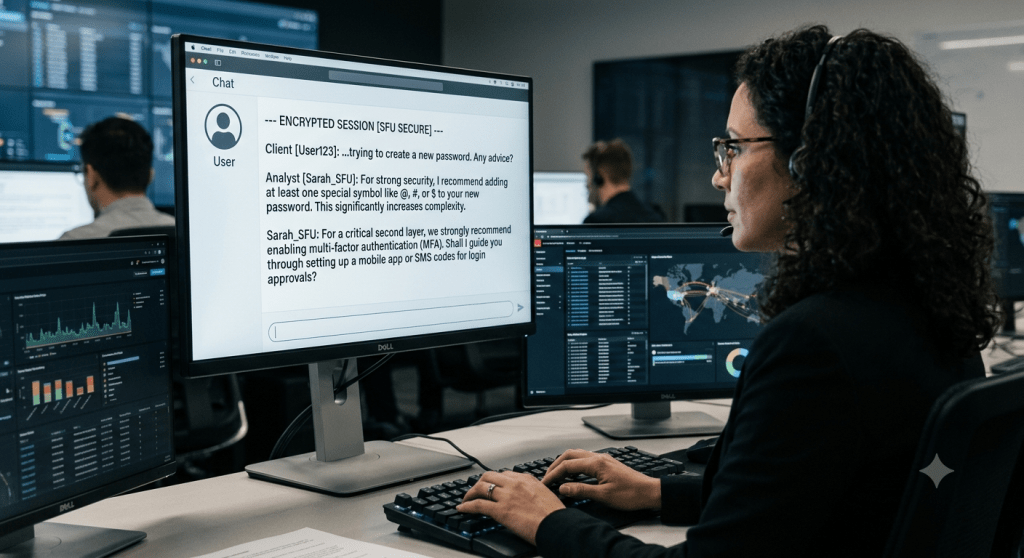
The future is calling, Ai answers not all there as yet.

Personal Development Cyber Security, BC

University of British Columbia, Simon Fraser University, British Columbia.

Read more: British Columbia Grace and Good Sence.

If you’re looking to study cybersecurity in British Columbia, the University of British Columbia (UBC) and Simon Fraser University (SFU) offer drastically different pathways.**UBC** focuses primarily on professional development, risk management, and strategic oversight through online certificates. **SFU**, on the other hand, is a technical powerhouse offering intensive, hands-on graduate-level degrees aimed at programmers and system defenders.Here is how their programs break down so you can decide which direction fits your goals.

## 1. Simon Fraser University (SFU):

The Technical Deep DivesSFU’s Faculty of Applied Sciences hosts highly technical, rigorous cybersecurity training. These programs are designed for people with strong backgrounds in computer science, mathematics, and programming (Python, Java, C++).
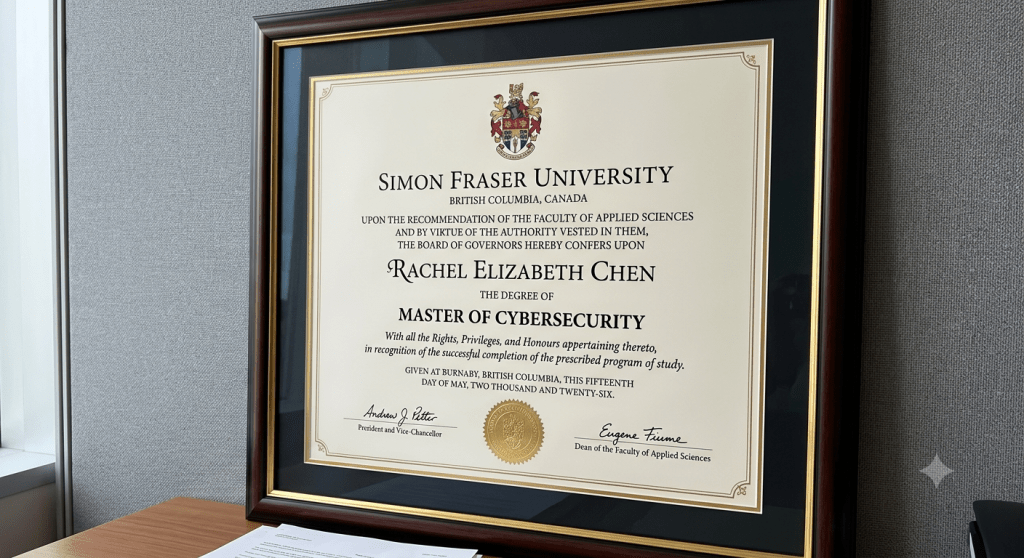
### Master of Cybersecurity (M.Cs.) * ⭐⭐⭐⭐🌟

**Format:** Full-time, in-person (Burnaby campus). * **Duration:** 16 to 20 months. * **Key Feature:** Includes a **4-month paid co-op placement** to gain real-world industry experience. * **The Focus:** Extremely technical. Nearly half of the curriculum is hands-on lab work. You will cover penetration testing, malware analysis, ethical hacking, applied cryptography, and securing cloud/IoT/5G environments.### Graduate Diploma in Cybersecurity * **Format:** Part-time, in-person. * **Duration:** 12 to 24 months. * **Key Feature:** Acts as a flexible upskilling route or a **direct pathway to the Master’s program** if you maintain a strong GPA. * **The Focus:** Similar advanced technical depth as the Master’s (shellcode development, buffer overflows, and network protocol defense), structured for working professionals who can’t commit to full-time study.

## 2. University of British Columbia (UBC): Professional & Strategic Training

Rather than dedicated technical degree programs, UBC offers professional credentials through **UBC Extended Learning**. These are designed for career-changers, IT professionals, and business managers who need to champion security without necessarily writing security code.### UBC Micro-certificate in Cybersecurity Strategy and Risk Management * **Format:** 100% online with weekly live evening classes. * **Duration:** Part-time, 8 weeks (about 55 total hours of instruction). * **Cost:** ~$1,900 CAD. * **The Focus:** Non-technical leaders. It teaches you how to identify popular attack vectors, perform threat modeling, build corporate incident response plans, and write robust cybersecurity policies.

### UBC Certificate in Cloud and Technology Transformation *

**Format:** Online, part-time. * **Duration:** 6 to 8 months. * **Cost:** ~$4,000 to $6,200 CAD (depending on chosen pathway). * **The Focus:** A broader business-oriented certificate where you can select a **Cybersecurity Fundamentals** pathway. It bridges cloud security, governance, compliance, and how to defend against an attacker’s mindset.### UBC Ethical Hacking Certification Training * **Format:** Part-time online. The Focus: An exception to UBC’s policy-heavy focus, this program prepares students specifically to challenge the Certified Ethical Hacker (CEH) industry exam, covering reconnaissance, network scanning, and vulnerability analysis. Summary Comparison Feature | Simon Fraser University (SFU) | University of British Columbia (UBC) |—|—|—|

**Primary Target**

| Developers, programmers, and technical engineers. | Business leaders, project managers, and IT professionals. || **Prerequisites** | Computer Science degree (or related field) + strong programming/math skills. | No formal technical background required (basic tech literacy is an asset). ||🍇 **Credential** | Graduate Degree (Master’s) or Graduate Diploma. | Professional Micro-certificate or Certificate. || **Core Skillset** | Hard technical security: Cryptography, penetration testing, malware analysis. | Strategic security: Risk assessment, policy writing, incident response. ||

**Co-op / Internships** |

Yes (integrated 4-month paid co-op). | No. |Which side of cybersecurity interests you more—the deeply technical hands-on defense and coding (SFU) or the strategic risk management and business planning (UBC)?

Cross the line

Google Cyber security certificates

From the editor:

this is not an ad however, there is access to them. If we are being paid for this we will clearly put add or sponsored with the material. This is for educational and discussion and is placed on an ad hoc basis as public interest asks…

Hey think of when you started dating, were you sure where it was going?. There’s some certainty here.


TCM event

Glad for the advancement of communications throughout the world by FF…

Happy Monday

Tennyson

Some notable individuals born on a Monday include:
1. Sir Winston Churchill (November 30, 1874) – British Prime Minister known for his leadership during World War II.
2. Charles Dickens (February 7, 1812) – Renowned English writer famous for his novels such as “A Christmas Carol” and “Great Expectations.”
3. Alfred Lord Tennyson (August 6, 1809) – Prominent English poet and Poet Laureate known for works like “The Charge of the Light Brigade.”

So, be an Alf and write me a poem.

To PR from ME

Well can’t wait to quote you… Use a comment though please. Okay K

First day of last time change in British Columbia…

Spring ahead one more time with feeling ….

Clock Shock to end

Staying on Pacific Time throughout the year would mean staying on Pacific Standard Time (PST) and not observing Daylight Saving Time (DST). Based on the image you provided, which captures a tranquil morning scene in a cafe, here are some distinct advantages, particularly in terms of well-being and daily rhythm.

1. Alignment with Natural Rhythms (Circadian Health)

The image depicts people enjoying a relaxed morning, bathed in the natural, warm light of early day. This soft light is more readily available on Pacific Standard Time. * A Natural “Wake-Up” Call: PST ensures that natural light appears as early as possible in the morning. This is crucial for regulating our internal clocks. Waking up with the sun is a primary cue that synchronizes our circadian rhythms, making us feel more alert and less groggy.

* Better Sleep Quality:

In the image, people seem rested and calm. Forcing school children and workers to commute in the deep dark of morning (as would happen with a year-round DST clock) goes against our biology, which expects light upon waking. Year-round PST prioritizes quality, naturally timed sleep.2. Mental and Emotional Well-beingThe peaceful, unhurried atmosphere in the image would be a daily reality. The anxiety that often peaks during “spring forward” is completely eliminated.

* Removing the “Clock Shock”:

Eliminating the need to switch clocks twice a year avoids the widespread disruption of sleep that occurs during the “spring forward” (switching to Daylight Saving Time). This biannual change is scientifically linked to increased levels of stress, anxiety, cardiovascular incidents, and workplace and car accidents.

* Increased Productivity and Focus:

When our sleep is better and our circadian rhythms are in sync, our overall focus and mood improve. The balanced light environment suggested by the image—waking to light rather than fighting darkness—means more consistent productivity.

3. Safety and Practicality

The bright, visible street outside the window suggests a safe and clear environment for pedestrians and commuters.

* Safer Commutes:

Dark mornings are significantly more dangerous for driving and walking, particularly for school children. Year-round Pacific Standard Time (PST) ensures that for the vast majority of people, the morning commute, even in the middle of winter, is done in daylight. The light you see in the image would be a common feature of mornings, making everyone more visible and alert.

In summary, the key benefits of year-round Pacific Time (PST) align with the image’s tranquil, natural, and human-centric atmosphere. It prioritizes health, sleep, and a safer, more stable environment over artificially prolonging afternoon light.

TGIF-Move over for Ai…

Why spend “$40,000 on writers when you can get AI for $20 a month.”

British Columbia jobs …

In 2026, the British Columbia job market is defined by a “flight to stability.” While the tech sector remains a major player, there is a massive shift toward regulated professions and infrastructure, where labor shortages are most acute.If you are looking for a degree that guarantees a job after graduation in BC right now, these are the most strategic paths based on the 2026 Labor Market Outlook.

1. Healthcare:

The “Guaranteed” PathBC’s aging population and recent provincial healthcare investments make this the most secure sector. * Top Degree: Bachelor of Science in Nursing (BSN). Registered Nurses are currently the #1 in-demand profession in BC. * Specialized Degrees: Occupational Therapy, Physical Therapy, and Respiratory Therapy. * Diploma/Certificate Option: Practical Nursing (LPN) or Health Care Assistant (HCA). * Outlook: High job security and significant signing bonuses in many health authorities (like Vancouver Coastal Health or Island Health).

2. Engineering & Tech:

The “Innovation” PathWhile entry-level general software roles have become more competitive, specialized engineering roles are still desperate for talent. * Top Degrees: Civil Engineering or Electrical Engineering. These are fueled by BC’s massive infrastructure projects and the push for “green” energy (Hydrogen and Clean Tech). * Specialized Tech: Cybersecurity or Data Science. As BC businesses integrate AI, the demand for people who can secure and interpret that data has outpaced general coding. * Outlook: Software engineers still command the highest median wages (approx. $60/hour), but specialized certifications (e.g., P.Eng or CISSP) are increasingly required to stand out.

3. Business & Finance:

The “Strategic” PathBC’s economy is shifting toward efficiency and compliance, making specialized business degrees highly valuable. * Top Degree: Bachelor of Commerce (Accounting Major). Becoming a CPA is one of the most stable career paths in Vancouver’s corporate landscape. * Supply Chain Management: With BC being Canada’s gateway to the Pacific, logistics and supply chain professionals are in high demand to manage port and transport systems. * Outlook: Financial Auditors and Accountants are consistently in the top 10 “High Opportunity” occupations list for the province.

4. Skilled Trades & Construction Management

BC is facing a housing crisis, and the government is subsidizing training for those who can build. * Top Degree/Credential: Construction Management or Red Seal Trades (Electrician, Plumber, Carpenter). * Outlook: This is the fastest route to a high-paying job. Many students are hired into management roles before they even finish their diplomas.

Summary Table:

Job Prospects in BC (2026)

| Field | Top Degree

| Starting Wage (Est.) | Primary Hub ||—|—|—|—|| Healthcare | Nursing (BSN) | $42–$50/hr | Province-wide || Tech | Cybersecurity / Data Science | $45–$60/hr | Metro Vancouver || Engineering | Civil / Electrical | $40–$55/hr | Interior & Vancouver || Business | Accounting (CPA track) | $35–$45/hr | Metro Vancouver / Victoria || Construction | Construction Management | $38–$52/hr | Lower Mainland |Pro-Tip for 2026:

The BC Provincial Nominee Program (BC PNP) currently prioritizes Healthcare, Childcare, and Tech workers. If you are an international student, choosing a degree in one of these “Priority Streams” significantly increases your chances of staying in the province after graduation.

U Victoria

Would you like me to look up specific BC universities that have the highest post-grad employment rates for one of these fields?

Good luck for 2026, PR…

Photo: KDG

Update: Merritt Cenntenials.9:21 PM

The Merritt Centennials hockey team is at this time in play with the Sicamous team.

The Cents lead 5 goals to 3