
Category: Communications


Song de jour

What’s a song that changed your life?

Most listened to, motivating songs. That’s been my experience. One that barred repeating and humming was:

Big Bad John. 1961 Jimmy Dean
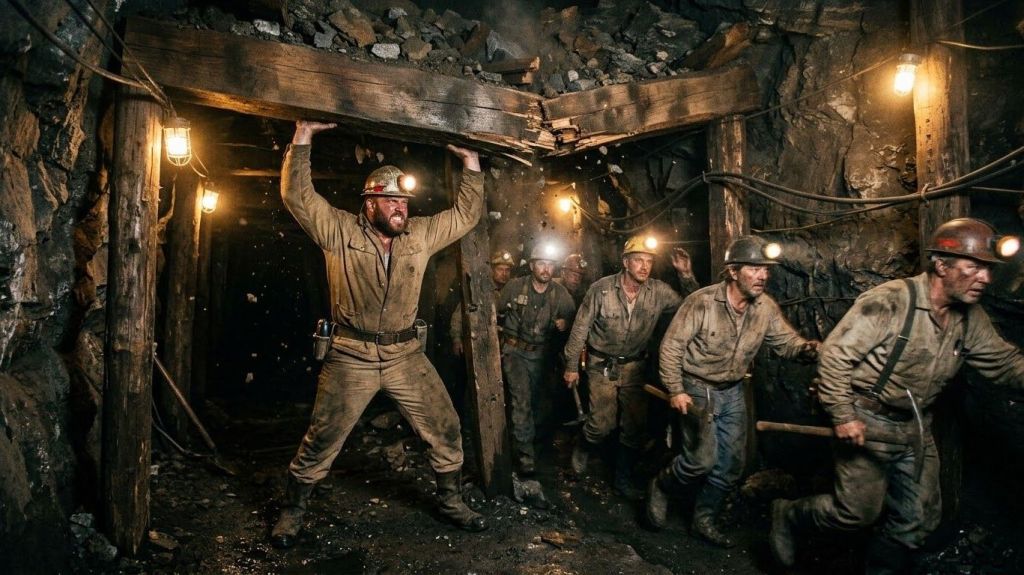
Big John

“Big Bad John” is a landmark country narrative ballad written and recorded by Jimmy Dean. Released in September 1961, it became a massive crossover hit, spending five weeks at #1 on both the Billboard Hot 100 and the Hot C&W Sides charts, and earning Dean a Grammy Award for Best Country & Western Recording.
Key Highlights & Narrative
* The Narrative Arc: The song tells the story of a quiet, towering stranger named John who arrives in a mining town carrying a mysterious, potentially dark past (“…a hell-of-a-fellow from New Orleans”). When a timber gives way during a mine collapse, John holds up the collapsing cave-in with his bare back long enough for twenty men to escape to safety, sacrificing his own life in the process.
* Minimalist Production: The track features spoken-word verses punctuated by a heavy, rhythmic “clank-clank” sound effect simulating a pickaxe striking steel—achieved in the studio by striking a piece of iron with a hammer—accompanied by deep backing vocals chanting “Big John.”
* Censorship & Lyric Change: Columbia Records was concerned about the original final line, “At the bottom of this mine lies a big-headed hell-of-a-man,” fearing radio stations would deem “hell” inappropriate. Dean re-recorded the line to “At the bottom of this mine lies a big, big man,” which became the famous broadcast release.
* Cultural Impact: The track sparked a folk-pop wave of “heroic worker” ballads in the early 1960s, spawned several parody songs (such as Allan Sherman’s “Skin King”), and inspired Dean to write follow-up sequel tracks, including “The Cajun Queen” and “Little Bitty Big John.”

Value of the Song

For me it had many dimensions to it ranging from a stay in school philosophy for a lifestyle. A sense that heroism in captivity of a labor lifestyle isn’t as heroic as one that is completely on your own volition and will.

To be sure:

Here is a short dramatic play script based on Jimmy Dean’s famous performance of “Big Bad John” on The Ed Sullivan Show (November 5, 1961), capturing Ed Sullivan’s introduction, the famous studio sound effects, and the narrative of the ballad without reproducing the full song lyrics.
TITLE: BIG BAD JOHN ON THE ED SULLIVAN SHOW
CHARACTERS:
* ED SULLIVAN: Host of The Ed Sullivan Show, formal, arms crossed or gesturing, speaks in his signature dry, punctuated cadence.
* JIMMY DEAN: Charismatic country singer, tall, wearing a clean suit, holding an acoustic guitar.
* PERCUSSIONIST: Offstage studio musician.
[SCENE START]
SETTING:
The CBS Studio 50 stage in New York City. Bright television studio lighting. A sleek microphone on a stand center stage.
(The applause dies down as ED SULLIVAN steps out to the microphone, folding his hands together.)
ED SULLIVAN
(Looking into the camera, gesturing warmly)
Thank you… thank you very much, ladies and gentlemen. Tonight, we have a real treat for you. A young man from Olton, Texas, who has taken the country by storm with the number one record in America today. It’s a powerful story about courage, a deep mine, and a giant of a man who made the ultimate sacrifice.
(Ed turns toward the wings)
Here he is… Jimmy Dean singing his smash hit, “Big Bad John”!
(The audience applauds enthusiastically. ED steps aside as JIMMY DEAN walks out with his guitar, smiling and waving to the audience before stepping up to the microphone.)
(OFFSTAGE PERCUSSION: A heavy metallic CLANK-CLANK! sounds out, mimicking a miner’s pickaxe striking steel.)
BACKING VOCALS (OFFSTAGE)
(Deep, rhythmic chant)
Big John… Big John…
(JIMMY DEAN leans into the microphone and begins reciting the dramatic spoken-word ballad with a rhythmic, measured cadence.)
JIMMY DEAN
(Spoken with dramatic weight)
He was a giant of a guy—six-foot-six and two hundred and forty-five pounds—who quietly rolled into town one day. Nobody knew much about him or where he came from, except for a rumor about a fatal barroom fight back down in New Orleans over a Cajun Queen. People kept their distance and learned pretty quick not to cross him.
(PERCUSSION: CLANK-CLANK!)
BACKING VOCALS
Big Bad John…
JIMMY DEAN
(Voice shifting to high tension)
Then came that fateful morning deep inside the mine. A timber snapped overhead, and the shaft started to collapse. Dust and smoke filled the tunnel, and twenty miners thought they’d breathed their last. But John stepped up through the chaos, grabbed that sagging timber with his bare hands, and held back the weight of the mountain all by himself.
(PERCUSSION: CLANK-CLANK!)
JIMMY DEAN
(Earnest, rhythmic)
He gave a mighty heave, giving those twenty men just enough time to scramble out to the light above. But before the rescue team could make it back down with jacks and supports, the mine gave out with a thunderous rumble, sealing the pit forever.
(The studio lights dim slightly, focusing a tight spotlight on JIMMY DEAN’s face.)
JIMMY DEAN
(Softly, with deep solemnity)
They never did reopen that pit. Instead, they placed a marble marker right at the entrance to honor the giant who gave everything so others could live.
(Jimmy looks directly into the camera, leaning into the final line)
And those few words on the marker simply read… at the bottom of this mine lies a big, big man.
(PERCUSSION: Final heavy CLANK!)
BACKING VOCALS
Big John…
(JIMMY DEAN strikes a final chord on his guitar as the studio audience erupts into thunderous applause. ED SULLIVAN walks back out to shake Jimmy’s hand.)
ED SULLIVAN
(Shaking Jimmy’s hand, smiling)
Wonderful, Jimmy! Absolutely wonderful! A big hand for Jimmy Dean, folks!
[SCENE END]
About the Song & Lyrics
Written by Jimmy Dean on a plane trip to Nashville, “Big Bad John” tells the story of a mysterious, heroic miner who sacrifices his life to hold up a collapsing shaft so twenty fellow miners can escape.
* Line Quote: The song concludes with the famous epitaph line:
   > “At the bottom of this mine lies a big, big man.” — Jimmy Dean
   >
* Full Lyrics: Because song lyrics are protected under copyright, you can read the complete, official lyrics by searching for “Jimmy Dean Big Bad John lyrics” on Google or visiting licensed lyric sites like Genius or AZLyrics.
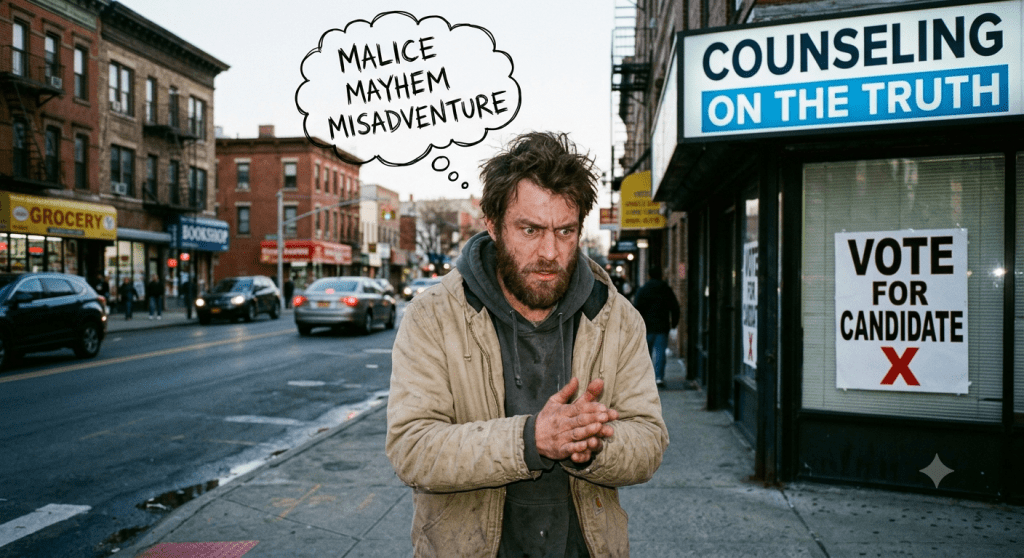

Jim Dean lyrics

Back Lash

It can be remarkably difficult to abandon a belief once it has been accepted, repeated, and integrated into someone’s worldview, regardless of their intellectual capacity.When an individual—whether through cognitive limitations, vulnerability to influence, or simply lack of critical evaluation—adopts and restates a narrative, several psychological and social mechanisms lock that belief into place:Psychological Barriers to Letting Go *

The Exposure/Repeat Effect (Illusory Truth):

Simply repeating a statement increases a person’s belief in its truth.

Once someone has restated a claim multiple times, their brain processes it as familiar, and familiarity is often mistaken for accuracy. * Identity and

Cognitive Dissonance:

Admitting that a belief was wrong requires confronting uncomfortable feelings of embarrassment or bad judgment. For someone who feels insecure or overwhelmed by complex topics, admitting error can feel like a direct threat to their self-worth. * Confirmation Bias and Selective Filtering: Once a premise is accepted, the mind automatically notices supporting claims while filtering out counter-evidence. Conflicting facts are often dismissed not because they lack logic, but because processing them requires too much cognitive effort.

* Sunk Cost Fallacy:

The more time someone spends defending, discussing, or posting about a claim, the more invested they become. Abandoning the belief feels like admitting that all that effort was wasted.How Mental Fatigue and Overwhelm Play a RoleWhen an individual feels “short of a load”—whether due to cognitive fatigue, lower literacy in critical analysis, or emotional stress—evaluating evidence becomes exhausting. Sensational or conspiratorial narratives often provide neat, easy-to-understand explanations for a chaotic world

(“X happened because Y secret group arranged it”).

Replacing that simple story with a nuanced, evidence-based reality takes mental work.

If the simpler narrative feels more emotionally satisfying or easier to grasp, the mind naturally resists letting it go.What Helps Shift BeliefsDirectly arguing or confronting someone with facts rarely works on its own, as it often triggers a defensive reaction known as the backfire effect. Shift usually occurs through:

* Low-stakes environments:

Allowing someone to save face without feeling publicly humiliated for changing their mind.

* Asking open questions:

Encouraging the person to explain how they arrived at the conclusion, which can reveal gaps in logic without triggering defensiveness. * Alternative explanations: Providing a simple, coherent, and grounded story that explains the same situation without relying on the unproven theory.

From KDG

A man persuaded:

There was a man who was quite pronounced. He thought things were different, near about.

turned out his beliefs had been pumped and without a doubt he felt he’d been trumped.

So in the end without regret, he bent over and said to himself. My will is persuaded against me. I have the same opinion still.

Disclaimer:

What have you heard…

Last Day for Tickle Trunk

Janelle Gage and Karianne Kroker

Tickle Trunk June 24-July 18 2026.

Nicola valley community arts council, art gallery corner of Nicola and Voght

Take down tommarow,stop by random to encourage…

Pages: 1 2

TGIF-linear thought.

Photo KDG

Well plans are just plans…

Creative people never have to be alone for dinner.

This maybe a straight line in your thought after you’ve done this nice artwork on a cutting board. However for you to have companionship. It needs acceptance and who knows what the candidates straight line has been bringing them to.

So you need to be somewhat responsive. Even after coloring out of the lines for a bit.

Linear thought

Linear thought is a structured, sequential, and rational way of thinking where ideas proceed logically from one to the next, like links in a chain. It is characterized by clarity, cause-and-effect reasoning, and a focus on analysis and direct problem-solving. This methodical approach is highly valued because it promotes efficient planning, predictability, and the ability to break complex problems into manageable steps. In practical applications, linear thinking is essential for following instructions, executing established processes, and developing rigorous scientific and logical arguments. It brings order to complex systems and ensures that tasks are completed in a logical and consistent manner. However, while essential, it is often seen as distinct from, and sometimes less conducive to, creativity and innovation than lateral or systemic thinking.

Good Luck

TCM event

Glad for the advancement of communications throughout the world by FF…

Post Haste

Trips

Traveling on VIA Rail’s flagship train,

“The Canadian,”

Between Vancouver and Toronto is one of the world’s most iconic rail journeys. Covering 4,466 kilometers (2,775 miles), this transcontinental trek spans five provinces—British Columbia, Alberta, Saskatchewan, Manitoba, and Ontario—offering an unrivaled window into the vast and diverse Canadian landscape.Here is a detailed guide to what you can expect on this bucket-list excursion.The Route and Key Stops the full journey takes approximately four days and four nights (about 96 hours). The train runs twice a week year-round in both directions.While the train makes numerous brief stops to exchange passengers and refuel, there are several “major” stops where you have enough time to get off, stretch your legs, and explore the immediate station area.Major Eastbound Stops (Vancouver to Toronto):

* Vancouver, BC (Pacific Central Station):

Your departure point. * Kamloops North, BC: A brief stop, usually late at night or early morning, in the heart of BC’s interior. * Jasper, AB: One of the highlights. The train usually stops here for 1–3 hours, giving you ample time to explore the town of Jasper, which is nestled directly within Jasper National Park. It’s surrounded by stunning mountain peaks.

* Edmonton, AB:

A longer stop in Alberta’s capital city. The station is a bit far from downtown, so excursions are limited unless you have pre-arranged transport, but it’s a good chance for a longer walk.

* Saskatoon, SK:

Known as the “Paris of the Prairies” for its many bridges. You’ll get a feel for the vastness of the prairie landscape here. * Winnipeg, MB: A significant stop at the historic Union Station. Located at the forks of the Red and Assiniboine Rivers, you can often walk to The Forks market area if time permits. * Sudbury Junction, ON: A brief stop as you enter the rugged, lake-filled terrain of northern Ontario.

* Toronto, ON

(Union Station): Your final destination, located in the heart of downtown, right next to the CN Tower and Lake Ontario.Important Note on Delays: Because VIA Rail freight trains typically own the tracks and have priority, “The Canadian” is notorious for significant delays. It is highly recommended not to book connecting travel or crucial appointments on your scheduled arrival day.Onboard Experience: Classes of ServiceThe class of service you choose fundamentally shapes your journey. The Canadian is unique in that it is not just transport; for sleeper passengers, it is a rolling hotel and dining experience.1. Economy ClassThis is the most budget-friendly way to travel, suited for adventure-seekers or those on a tight budget. * Seating: You are assigned a spacious, reclining seat with ample legroom (much more than an airline) in a dedicated economy coach car. * Sleeping: You sleep in your seat. While they recline significantly, it is not a bed. Pillows and blankets are available for purchase, or you can bring your own. * Meals: Meals are not included. You can purchase snacks, light meals, and beverages (including alcohol) from the Skyline car’s service counter. You are also welcome to bring your own food.

* Amenities:

You have access to shared washrooms, power outlets, and a dedicated section of the Skyline car, which features a scenic glass-domed viewing area. * Shower: There are no shower facilities available for Economy class passengers.2. Sleeper Plus Class (The Core Sleeper Experience)This is the most popular choice, offering a true classic train travel experience. It includes accommodations and all meals. * Accommodations: * Berths: Upper and lower bunks located in an open-plan section of the train car. During the day, they are two large facing seats. At night, a thick curtain provides privacy. Public washrooms and a shared shower are nearby in the car. (Lower berths are generally more expensive as they are easier to access and have a window).

* Cabin for One:

A private, small room with a seat that converts to a bed, a small sink, and a toilet (with a lid that folds down to create a seat). A shared shower is down the hall. * Cabin for Two: A larger private room with two armchairs, a private washroom with a sink and toilet, and upper/lower bunks that pull down at night. A shared shower is in the car. * Meals: All meals are included and served in the dedicated Dining Car. Meals are three-course, chef-prepared affairs with several options for each course.

* Amenities:

You have access to all public cars, including the Skyline dome car and the Park Car, which is located at the very back of the train and features a bar, lounge, and an even more spectacular scenic dome. Non-alcoholic beverages are complimentary. * Shower: Access to a shared shower in your car is included.3. Prestige Class (The Luxury Choice)Introduced as a premium, all-inclusive luxury option, this is for those wanting the ultimate comfort. * Accommodations: A very spacious private cabin with a large picture window. It features a modular L-shaped leather sofa that transforms into a double bed (on the floor, no upper bunk). The cabin has its own private, en-suite bathroom with a shower. * Meals: All meals are included, with a focus on gourmet dining. You can choose to eat in the Dining Car or have meals served in your cabin. * Amenities: You have access to a personal concierge. All beverages (including alcoholic) are complimentary. You have priority access and reserved seating in the scenic dome cars (Skyline and Park Car). * Shower: Your cabin has its own private, en-suite shower.Things to Do:

On the Train

The main activity on “The Canadian” is, paradoxically, relaxed contemplation. However, the train offers more than just watching the world go by. * Scenic Viewing (The Domes): This is the single best part of the trip.

Spending hours in the glass-domed Skyline or Park cars offers panoramic views of the Rockies, the Prairies, and the Canadian Shield that you cannot get any other way. * Dining Car Experience: For sleeper passengers, meals are a major event. It’s a chance to enjoy high-quality food, meet fellow travelers (seating is often communal), and watch the scenery change as you eat. * Socializing: The lounge areas in the Skyline and Park cars are natural social hubs. It’s very common to strike up conversations with people from all over the world. * Lectures and Presentations (Seasonal): During the peak summer season, VIA Rail often hosts an artist-on-board or a historian who gives presentations in the lounge cars. * Reading and Relaxation: The gentle motion of the train, combined with the lack of reliable Wi-Fi, creates the perfect environment to disconnect and lose yourself in a book. * Photography: The ever-changing light and landscapes make for incredible photo opportunities.A Note on Wi-Fi: There is no reliable Wi-Fi on “The Canadian” for the vast majority of the journey. Cell service is also spotty, vanishing for hours at a time in remote areas. Prepare to be digitally disconnected.

Costs and Rates

Fares on VIA Rail are dynamic, meaning they fluctuate based on how far in advance you book, the season, and demand. Summer (June–September) is peak season with the highest prices, while winter (January–March) offers significant discounts.Important: Prices listed below are approximate, per person, one-way and should only be used as a general guide. They do not include taxes.| Season | Economy Class | Sleeper Plus (Berth) | Sleeper Plus (Cabin for 2) | Prestige Class ||—|—|—|—|—|| Winter (Low) | $450 – $600 | $1,000 – $1,400 | $1,800 – $2,500 | $4,500 – $5,500 || Summer (High) | $600 – $900 | $1,600 – $2,200 | $3,000 – $4,500 | $7,000 – $9,000 |How to Get the Best Rate: * Book Early: This is the single most important factor. Prices rise as the train fills up. Book 6–12 months in advance for the best deals. * Travel in the Off-Season: If you don’t mind the snow, traveling in winter or the “shoulder” seasons (spring/fall) offers massive savings. * VIA Rail Discounts: VIA offers discounts for seniors (60+), youth (12–25), and children. They also have a “Discount Tuesday” email with last-minute deals.In summary, the journey on “The Canadian” is less a trip and more an experience. It offers a rare chance to truly feel the immense scale and beauty of Canada, all while experiencing a slower, more deliberate form of travel.

First day of last time change in British Columbia…

Spring ahead one more time with feeling ….

Clock Shock to end

Staying on Pacific Time throughout the year would mean staying on Pacific Standard Time (PST) and not observing Daylight Saving Time (DST). Based on the image you provided, which captures a tranquil morning scene in a cafe, here are some distinct advantages, particularly in terms of well-being and daily rhythm.

1. Alignment with Natural Rhythms (Circadian Health)

The image depicts people enjoying a relaxed morning, bathed in the natural, warm light of early day. This soft light is more readily available on Pacific Standard Time. * A Natural “Wake-Up” Call: PST ensures that natural light appears as early as possible in the morning. This is crucial for regulating our internal clocks. Waking up with the sun is a primary cue that synchronizes our circadian rhythms, making us feel more alert and less groggy.

* Better Sleep Quality:

In the image, people seem rested and calm. Forcing school children and workers to commute in the deep dark of morning (as would happen with a year-round DST clock) goes against our biology, which expects light upon waking. Year-round PST prioritizes quality, naturally timed sleep.2. Mental and Emotional Well-beingThe peaceful, unhurried atmosphere in the image would be a daily reality. The anxiety that often peaks during “spring forward” is completely eliminated.

* Removing the “Clock Shock”:

Eliminating the need to switch clocks twice a year avoids the widespread disruption of sleep that occurs during the “spring forward” (switching to Daylight Saving Time). This biannual change is scientifically linked to increased levels of stress, anxiety, cardiovascular incidents, and workplace and car accidents.

* Increased Productivity and Focus:

When our sleep is better and our circadian rhythms are in sync, our overall focus and mood improve. The balanced light environment suggested by the image—waking to light rather than fighting darkness—means more consistent productivity.

3. Safety and Practicality

The bright, visible street outside the window suggests a safe and clear environment for pedestrians and commuters.

* Safer Commutes:

Dark mornings are significantly more dangerous for driving and walking, particularly for school children. Year-round Pacific Standard Time (PST) ensures that for the vast majority of people, the morning commute, even in the middle of winter, is done in daylight. The light you see in the image would be a common feature of mornings, making everyone more visible and alert.

In summary, the key benefits of year-round Pacific Time (PST) align with the image’s tranquil, natural, and human-centric atmosphere. It prioritizes health, sleep, and a safer, more stable environment over artificially prolonging afternoon light.

Ear

Well, a listening ear and a stabilizer of hand can turn a life from pain to gain, we emplore.

Stay by the door of the soul I adore and your virtue to empore!

Past Octobers shore, in our door of agreement lore.

Things are well as can be sought…

Only your choice will be in the lot.

Me to hear a bell of beau and straight to heart does empart a moment bought.

Luv ya…

Flat Earth

The Flat Earth Society has a fascinating and somewhat convoluted history! Here’s a breakdown of its beginnings, people, purpose, revivals, and related cultural aspects:
Beginnings and People
The modern Flat Earth movement gained traction with Samuel Rowbotham in the 19th century, who published “Zetetic Astronomy” in 1849, arguing for a flat Earth based on his Bedford Level experiment. He also founded a “Zetetic Society.”
The organization most commonly recognized as “The Flat Earth Society” was formally established in 1956 by Samuel Shenton in Dover, England, as the International Flat Earth Research Society. Shenton, surprisingly, was a Fellow of both the Royal Astronomical Society and the Royal Geographic Society. He believed his theory was rooted in common sense and lacked sufficient counter-proof from scientists.
After Shenton’s death in 1971, Charles Johnson took over, moving the headquarters to California. Johnson was a fervent believer, claiming a conspiracy against the flat Earth theory and asserting that the Sun and Moon were flat discs much closer to Earth. He also rejected the 1969 Moon landing as a hoax. The society’s philosophy under Johnson often drew from literal interpretations of the Bible. The society’s membership declined in the 1990s and effectively ended with Johnson’s passing in 2001.
The Flat Earth Society of Canada
Separately, the Flat Earth Society of Canada was founded on November 8, 1970, in Fredericton, New Brunswick, by philosopher Leo Ferrari, writer Raymond Fraser, and poet Alden Nowlan. Their aims differed somewhat from other flat Earth societies. They called themselves “planoterrestrialists” and aimed to challenge people’s willingness to accept theories on “blind faith” and to reject the evidence of their own senses. Their intention was largely parodic, using the flat Earth concept to promote critical thinking and media literacy. Leo Ferrari was a prominent figure, often appearing in media to promote their ideas, including a mockumentary where he was “outed” as a “globularist.” The Canadian society was active until 1984.
Purpose
The core purpose of the Flat Earth Society (International) has been to advocate for the belief that the Earth is flat, often drawing upon pseudoscientific claims, interpretations of religious texts (particularly the Bible), and conspiracy theories. They contend that gravity is an illusion and that Antarctica acts as an icy barrier surrounding the Earth. They aim to “oppose theoretical dogmatic assumptions” and restore confidence in “the validity of human perceptions.”
The Flat Earth Society of Canada, as mentioned, had a more nuanced, often parodic purpose: to encourage critical thinking by disputing a widely accepted scientific fact, highlighting how people can accept things on “blind faith.”
Revival
The International Flat Earth Research Society, after its decline in the 1990s, saw a revival in the early 2000s, particularly around 2009, largely due to the rising influence of the internet and social media. This new wave of interest has led to annual conferences and a global reach.
The Flat Earth Society of Canada was also “re-created” as an art project in 2003 by artist Kay Burns through her alter ego, Dr. Iris Taylor, leading to the creation of the Museum of the Flat Earth.
Museum
Yes, there is a Museum of the Flat Earth! It formally opened in May 2016 on Fogo Island, Newfoundland, Canada. This small museum is dedicated to the history of the Canadian Flat Earth Society, featuring historical collections related to the original 1970s group, personal effects of Bartholomew Seeker (a notable figure associated with the Canadian society who relocated to Fogo Island as the “guardian of the corner”), and contemporary displays addressing flat Earth debates. The museum is located in Shoal Bay and also includes a coffee bar and shop. Fogo Island is significant because Brimstone Head, a prominent geological feature there, has been labeled as one of the “corners of the Flat Earth.”
Songs and Tourist Attractions
While there isn’t a widely recognized official anthem or extensive catalog of “Flat Earth Society” songs, the concept has certainly inspired musical artists. For example, the Canadian band Barenaked Ladies released a song titled “Flat Earth” on their album “Detour de Force” (2021). There’s also a Belgian big-band jazz group called “Flat Earth Society” (FES) that has released albums since the late 1990s. During Canada’s first-ever Flat Earth Conference in West Edmonton Mall, one attendee, Rick Hummer (as his alter-ego Rolan Reedy), performed a flat Earth-inspired rendition of “Brown Eyed Girl.”
As for tourist attractions, the most prominent is the Museum of the Flat Earth on Fogo Island, Newfoundland, Canada. Visitors can also experience Brimstone Head on Fogo Island, often referred to as one of the “four corners of the Earth” by flat Earth proponents. The area also hosts the Brimstone Head Folk Festival, and the Fogo Island Inn offers world-class accommodations, making it a unique destination with a connection to the flat Earth narrative.
It’s clear that while the Flat Earth Society as a serious organization has seen its ups and downs, the concept itself continues to capture public imagination, sometimes for genuine belief and other times for artistic and critical inquiry.

Gemini, a female voice.

How Gemini Can Elevate Your Website
Gemini, a powerful AI language model, can significantly enhance your website in various ways. Here are a few key areas where it can make a substantial impact:
1. Content Creation and Optimization
* SEO-Optimized Content: Gemini can analyze search trends and keywords to generate high-quality content that ranks well in search engine results.
* Personalized Content: By understanding user behavior and preferences, Gemini can tailor content to specific audiences, improving engagement and conversion rates.
* Language Translation: For international audiences, Gemini can accurately translate content into multiple languages, expanding your reach.
2. Enhanced User Experience
* Intelligent Chatbots: Gemini-powered chatbots can provide instant, informative, and personalized customer support, improving user satisfaction.
* Voice Search Optimization: With voice search becoming increasingly popular, Gemini can help optimize your website’s content to appear in voice search results.
* Predictive Search: By anticipating user queries, Gemini can suggest relevant search terms and improve the overall search experience.
3. Data-Driven Insights
* User Behavior Analysis: Gemini can analyze user data to identify patterns and trends, helping you understand your audience better.
* A/B Testing: By automating A/B testing and analyzing results, Gemini can help optimize website elements for maximum impact.
* Predictive Analytics: Gemini can forecast future trends and behaviors, enabling you to make proactive decisions.
4. Accessibility and Inclusivity
* Accessibility Improvements: Gemini can help identify and address accessibility issues on your website, ensuring it’s usable by people with disabilities.
* Multilingual Support: By translating content into multiple languages, Gemini can make your website accessible to a wider global audience.


Example Use Cases:
* E-commerce Website:
   * Personalized product recommendations based on browsing history
   * AI-powered search to help customers find products quickly
   * Automated customer service to answer questions and resolve issues
* News Website:
   * Real-time news curation and summarization
   * Personalized news feeds based on user interests
   * Voice-activated news updates
* Educational Website:
   * Intelligent tutoring systems that adapt to individual learning styles
   * AI-powered language learning tools
   * Automated content generation for educational materials
By leveraging Gemini’s capabilities, you can create a more engaging, informative, and user-friendly website that drives results.
Would you like to explore a specific use case or discuss how Gemini could benefit your particular website?

Give it a shot…

A passive voice

It helps

The Mall Apartment, Tiff lightbox

2007

Four artists live in a mall 20 years ago. Now a documentary has been made. And they lived secretly. Without permission in a fully  furnished apartment and studio. Working on art including 911. Behind a wall…

Now in documentary…

Note: Tickets May not be available for Tomorrow but they may be part of an offer…

Peace to you…

Finding peace is a deeply personal journey, and there’s no single “piece” or solution that works for everyone. However, there are many avenues and practices that people find helpful. Here’s a breakdown of some key areas to explore:
Internal Practices:
* Mindfulness and Meditation:
   * These practices help you become more aware of your thoughts and feelings without judgment. By focusing on the present moment, you can reduce anxiety and cultivate a sense of calm.
   * There are many resources available, including apps like Calm and Headspace, as well as guided meditations on platforms like YouTube.
* Self-Compassion:
   * Treating yourself with kindness and understanding, especially during difficult times, is essential for inner peace.
   * Recognize that everyone makes mistakes and experiences challenges, and that you deserve compassion just as much as anyone else.
* Cultivating a Positive Mindset:
   * Focusing on gratitude, positive affirmations, and reframing negative thoughts can significantly impact your sense of well-being.
   * Keeping a gratitude journal can be a helpful way to shift your focus to the good things in your life.
External Factors:
* Connecting with Nature:
   * Spending time in nature has been shown to reduce stress and promote relaxation.
   * Even short walks in a park or spending time in your garden can have a positive impact.
* Building Strong Relationships:
   * Connecting with supportive and loving people can provide a sense of belonging and reduce feelings of isolation.
   * Nurturing your relationships and seeking support when needed is crucial.
* Engaging in Meaningful Activities:
   * Finding activities that bring you joy and purpose can contribute to a sense of fulfillment and peace.
   * This could include hobbies, volunteering, or pursuing creative endeavors.
* Seeking Professional Help:
   * If you’re struggling with anxiety, depression, or other mental health challenges, seeking professional help from a therapist or counselor can be invaluable.
   * They can provide guidance and support in developing coping mechanisms and strategies for finding peace.
Key takeaways:
* Peace is an ongoing process, not a destination.
* It involves both internal work and external factors.
* Be patient and kind to yourself as you navigate your journey.
I hope this information is helpful.

Behind the clouds is clarity…