

0 by
levels of security
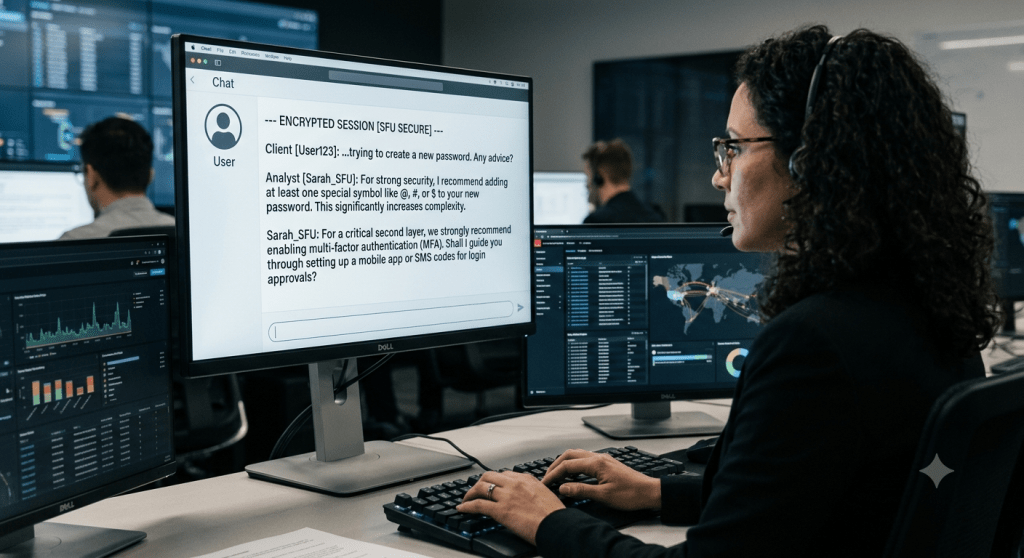
The future is calling, Ai answers not all there as yet.
Personal Development Cyber Security, BC
University of British Columbia, Simon Fraser University, British Columbia.
Read more: British Columbia Grace and Good Sence.If you’re looking to study cybersecurity in British Columbia, the University of British Columbia (UBC) and Simon Fraser University (SFU) offer drastically different pathways.**UBC** focuses primarily on professional development, risk management, and strategic oversight through online certificates. **SFU**, on the other hand, is a technical powerhouse offering intensive, hands-on graduate-level degrees aimed at programmers and system defenders.Here is how their programs break down so you can decide which direction fits your goals.
## 1. Simon Fraser University (SFU):
The Technical Deep DivesSFU’s Faculty of Applied Sciences hosts highly technical, rigorous cybersecurity training. These programs are designed for people with strong backgrounds in computer science, mathematics, and programming (Python, Java, C++).
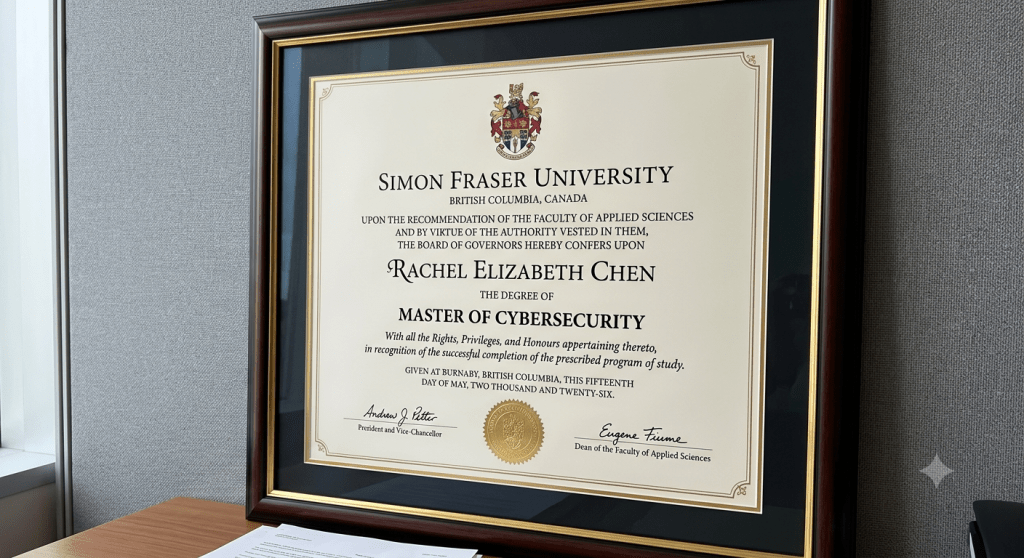
### Master of Cybersecurity (M.Cs.) * ⭐⭐⭐⭐🌟
**Format:** Full-time, in-person (Burnaby campus). * **Duration:** 16 to 20 months. * **Key Feature:** Includes a **4-month paid co-op placement** to gain real-world industry experience. * **The Focus:** Extremely technical. Nearly half of the curriculum is hands-on lab work. You will cover penetration testing, malware analysis, ethical hacking, applied cryptography, and securing cloud/IoT/5G environments.### Graduate Diploma in Cybersecurity * **Format:** Part-time, in-person. * **Duration:** 12 to 24 months. * **Key Feature:** Acts as a flexible upskilling route or a **direct pathway to the Master’s program** if you maintain a strong GPA. * **The Focus:** Similar advanced technical depth as the Master’s (shellcode development, buffer overflows, and network protocol defense), structured for working professionals who can’t commit to full-time study.
## 2. University of British Columbia (UBC): Professional & Strategic Training
Rather than dedicated technical degree programs, UBC offers professional credentials through **UBC Extended Learning**. These are designed for career-changers, IT professionals, and business managers who need to champion security without necessarily writing security code.### UBC Micro-certificate in Cybersecurity Strategy and Risk Management * **Format:** 100% online with weekly live evening classes. * **Duration:** Part-time, 8 weeks (about 55 total hours of instruction). * **Cost:** ~$1,900 CAD. * **The Focus:** Non-technical leaders. It teaches you how to identify popular attack vectors, perform threat modeling, build corporate incident response plans, and write robust cybersecurity policies.
### UBC Certificate in Cloud and Technology Transformation *
**Format:** Online, part-time. * **Duration:** 6 to 8 months. * **Cost:** ~$4,000 to $6,200 CAD (depending on chosen pathway). * **The Focus:** A broader business-oriented certificate where you can select a **Cybersecurity Fundamentals** pathway. It bridges cloud security, governance, compliance, and how to defend against an attacker’s mindset.### UBC Ethical Hacking Certification Training * **Format:** Part-time online. The Focus: An exception to UBC’s policy-heavy focus, this program prepares students specifically to challenge the Certified Ethical Hacker (CEH) industry exam, covering reconnaissance, network scanning, and vulnerability analysis. Summary Comparison Feature | Simon Fraser University (SFU) | University of British Columbia (UBC) |—|—|—|
**Primary Target**
| Developers, programmers, and technical engineers. | Business leaders, project managers, and IT professionals. || **Prerequisites** | Computer Science degree (or related field) + strong programming/math skills. | No formal technical background required (basic tech literacy is an asset). ||🍇 **Credential** | Graduate Degree (Master’s) or Graduate Diploma. | Professional Micro-certificate or Certificate. || **Core Skillset** | Hard technical security: Cryptography, penetration testing, malware analysis. | Strategic security: Risk assessment, policy writing, incident response. ||
**Co-op / Internships** |
Yes (integrated 4-month paid co-op). | No. |Which side of cybersecurity interests you more—the deeply technical hands-on defense and coding (SFU) or the strategic risk management and business planning (UBC)?
Cross the line
Google Cyber security certificates
From the editor:
this is not an ad however, there is access to them. If we are being paid for this we will clearly put add or sponsored with the material. This is for educational and discussion and is placed on an ad hoc basis as public interest asks…
Hey think of when you started dating, were you sure where it was going?. There’s some certainty here.



 Kevin Griffiths
 percypaschal
