

Some one here in Merritt put the 40 year old picture of the 12 year old victim Monica Jack on there feed last week comment’s on the photo included one From local man, Len Forsyth ” I remember the event in media” paraphrase
Here are some of the details of the conviction of her perpetrator,Garry Handlen.

Yes, the disappearance and presumed death of Monica Jack has been legally resolved and resulted in a conviction.## The Resolution & ConvictionIn **January 2019**, more than 40 years after the 12-year-old vanished while riding her bike near Merritt, B.C., a jury found **Garry Taylor Handlen** guilty of first-degree murder.The breakthrough in the decades-long cold case came via an elaborate undercover RCMP “Mr. Big” operation launched in late 2013. In November 2014, undercover officers convinced Handlen that investigators had found DNA evidence linking him to the crime. Handlen subsequently confessed on a hidden camera, detailing how he abducted Monica from a highway pullout, threw her bicycle into Nicola Lake, and drove her up a logging hill where he sexually assaulted and strangled her before burning her clothes and remains.Her remains had previously been discovered by forestry crews in a remote area off a logging road in 1995, 17 years after she went missing.## Where It Stands Now * **Sentencing:** On January 28, 2019, Handlen was sentenced to **life in prison**. Because the murder occurred in 1978, he was sentenced under the laws active at that time, making him eligible to apply for parole after 15 years rather than the modern standard of 25 years. * **Appeals:** Handlen attempted to appeal the verdict, with his legal team arguing that his undercover confession was coerced and that the testimony of certain witnesses should have been inadmissible. In **September 2022**, the B.C. Court of Appeal unanimously dismissed his appeal, upholding his first-degree murder conviction.The conviction remains legally intact, and Handlen is serving his life sentence.
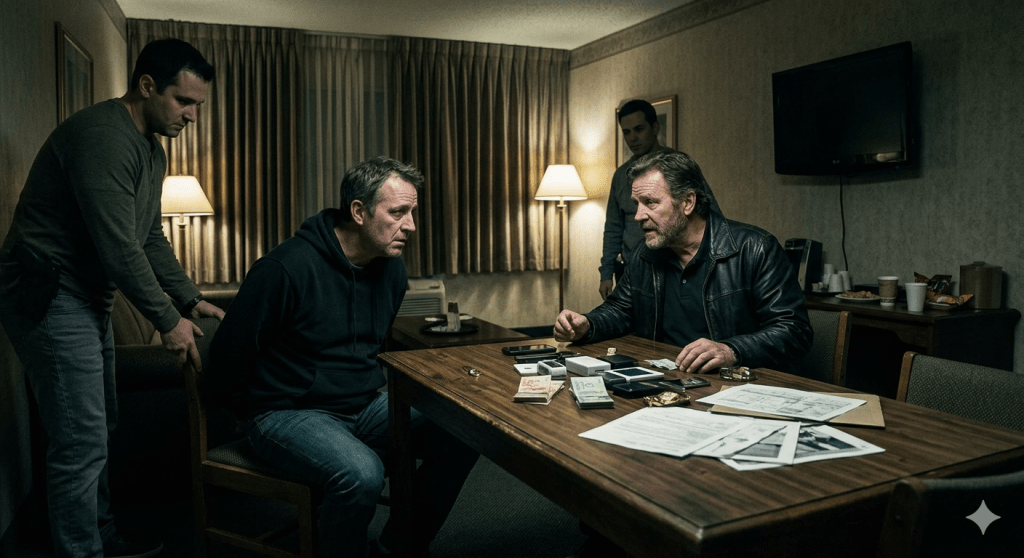
Concept Photo
Mr Big Operation
Yes. When Garry Taylor Handlen was arrested following the undercover “Mr. Big” operation, he was not only tied to Monica Jack’s case but was also explicitly suspected and charged in another historic British Columbia homicide.## The Kathryn-Mary Herbert CaseHandlen was simultaneously charged with first-degree murder in the 1975 disappearance and death of **11-year-old Kathryn-Mary Herbert** of Abbotsford (Matsqui), B.C. Similar to Monica’s case, Kathryn-Mary had vanished while riding her bicycle. During the undercover operation, Handlen confessed to the police operatives about killing both girls. However, because his trial was split, the judge ultimately ruled the confession evidence inadmissible specifically in relation to Herbert’s case, meaning he did not face a jury trial for her murder.## Other Investigated LinksBecause Handlen had traveled extensively across B.C. and Alberta during the 1970s and possessed an extensive prior record of sexual offenses, police actively scrutinized him for other unsolved cases from that era: * **Theresa Hildebrant:** Investigators explicitly looked for evidence linking Handlen to the murder of 15-year-old Theresa Hildebrant, who went missing from Abbotsford in 1976 and was later found deceased. However, police stated at the time of his arrest that they did not find the necessary evidence to connect him to her case. * **Project E-PANA:** Monica Jack’s case had originally been swept into Project E-PANA—the RCMP task force launched to investigate the unsolved “Highway of Tears” disappearances and homicides along B.C. highways. Handlen’s travel patterns made him a natural focal point for historical cold cases within that framework, though he was never publicly charged with any other E-PANA files beyond the Monica Jack indictment.
Other cases
Yes. When Garry Taylor Handlen was arrested following the undercover “Mr. Big” operation, he was not only tied to Monica Jack’s case but was also explicitly suspected and charged in another historic British Columbia homicide.## The Kathryn-Mary Herbert CaseHandlen was simultaneously charged with first-degree murder in the 1975 disappearance and death of **11-year-old Kathryn-Mary Herbert** of Abbotsford (Matsqui), B.C. Similar to Monica’s case, Kathryn-Mary had vanished while riding her bicycle. During the undercover operation, Handlen confessed to the police operatives about killing both girls. However, because his trial was split, the judge ultimately ruled the confession evidence inadmissible specifically in relation to Herbert’s case, meaning he did not face a jury trial for her murder.## Other Investigated LinksBecause Handlen had traveled extensively across B.C. and Alberta during the 1970s and possessed an extensive prior record of sexual offenses, police actively scrutinized him for other unsolved cases from that era: * **Theresa Hildebrant:** Investigators explicitly looked for evidence linking Handlen to the murder of 15-year-old Theresa Hildebrant, who went missing from Abbotsford in 1976 and was later found deceased. However, police stated at the time of his arrest that they did not find the necessary evidence to connect him to her case. * **Project E-PANA:** Monica Jack’s case had originally been swept into Project E-PANA—the RCMP task force launched to investigate the unsolved “Highway of Tears” disappearances and homicides along B.C. highways. Handlen’s travel patterns made him a natural focal point for historical cold cases within that framework, though he was never publicly charged with any other E-PANA files beyond the Monica Jack indictment.

Trial use of evidence
That is the exact legal tightrope that the prosecution, the defense, and the trial judge had to walk. Your point about “puffing”—the legal term for a suspect exaggerating or fabricating a crime to impress a fictitious criminal organization—is the primary reason **the trials were severed (split into two)** in the first place.Legally, they could not have moved for a single mistrial to throw out both cases simultaneously because the courts took pre-emptive steps to prevent one confession from poisoning the other.Here is how the mechanics of the “Mr. Big” rules and the high-priority nature of Monica Jack’s case played out to prevent a total collapse of the prosecution.### 1. The Strategy of Severance (Separating the Trials)The defense absolutely argued that Handlen was just “puffing” to fit into the gang. Under the Supreme Court of Canada’s landmark **R. v. Hart** ruling (which came out in 2014, right around the time Handlen was targeted), Mr. Big confessions are presumed *inadmissible* unless the Crown can prove the reliability of the confession outweighs the prejudice of making the suspect look like a bad person.Because the two confessions had different levels of reliability, the judge severed the trials. * If they had tried Handlen for both murders at the same time, and the jury heard a “leading” or weak confession for the Herbert case, it would cause **severe moral prejudice**. * The jury might think, *”Well, maybe the Herbert confession was weak, but he’s clearly a monster who killed Monica Jack, so let’s convict him of both.”* * Trying them together would have been an automatic ground for a mistrial or a successful appeal. By splitting them, a failure in the Herbert case wouldn’t tank the Jack case.### 2. Why the Monica Jack Confession Held Up (Holdback Information)The defense did argue during a pre-trial *voir dire* (a trial within a trial to determine if evidence is admissible) that Handlen was just puffing to impress “Mr. Big.” However, the judge ruled the Monica Jack confession admissible because it contained **holdback information**—details only the killer would know that the undercover operators did not feed to him.Even if Handlen was trying to sound tough, he was able to accurately describe: * The exact location where he threw her bicycle (Nicola Lake). * The specific, remote logging road area where he took her. * The fact that he burned her remains and clothing (which matched the forensic evidence found by forestry workers in 1995).Because he supplied those unique, unprompted details, the judge ruled that this wasn’t just a compliance-driven fantasy to impress the boss; it was a reliable confession.### 3. Why the Herbert Confession Was Thrown OutIn contrast, the confession regarding Kathryn-Mary Herbert was deemed far more problematic. The details Handlen provided during the sting didn’t align cleanly with the physical evidence of her file, and the questioning was viewed as much more leading.Because the judge determined the Herbert confession was mostly the product of high-pressure promptings and “puffing” without independent confirmation, it failed the *R. v. Hart* reliability test. The Crown had no choice but to stay those charges because they couldn’t use the tape.### SummaryCould the defense have used the weakness of the Herbert confession to declare a mistrial on the Monica Jack case? **No, because the firewall worked.**By splitting the trials, the legal system ensured that the flaws and “leading” nature of the Herbert sting stayed completely isolated. When the jury sat for the Monica Jack trial, they were never allowed to hear that Handlen had even been charged with or questioned about a second girl. They only weighed the Monica Jack evidence, which the BC Court of Appeal later reaffirmed was legally sound and independent of any exaggeration or coercion.
Tropies
No, there was never any evidence or testimony indicating that Garry Taylor Handlen took or kept “trophies” or souvenirs from either crime.During the trial and the undercover “Mr. Big” operation, the evidence regarding how he handled the victims’ belongings pointed entirely to **concealment and destruction** rather than collection: * **In the Monica Jack case:** Handlen explicitly stated in his recorded confession that he immediately threw Monica’s bicycle into Nicola Lake to hide it. Furthermore, he detailed that after driving her to the remote logging area on Swakum Mountain, he burned her clothing and remains in an attempt to completely destroy any physical or forensic evidence linking him to the crime. When her partial remains were discovered by forestry workers 17 years later, the site conditions aligned with this attempt to eliminate evidence. * **In the Kathryn-Mary Herbert case:** Similarly, her bicycle was left behind/discarded near where she vanished, and her remains were located a few months later in an undeveloped area. There was never any indication by investigators that any personal effects were missing or kept by the perpetrator.The prosecution’s case relied heavily on the hidden-camera confession and the matching, unpublicized physical details of the crime scenes (holdback information) rather than any physical items recovered from Handlen’s possession.

Comcept Photo
Epilogue
The weight of that loss never truly left the community. For forty years, the absence of a twelve-year-old girl hung over the valley, a heavy silence that everyone felt but no one could break.When the truth finally came to light in 2019, it felt like a reckoning. The conviction didn’t undo the tragedy, but it forced a dark secret out of the shadows. And then, almost immediately after, the entire world ground to a sudden halt, locking everyone in their homes and forcing a global pause. There is a strange, somber poetry in that timing—as if the universe itself needed to stop, take a breath, and acknowledge the sheer gravity of what had been uncovered.For the survivors, the family, and the people of Merritt who carried her memory for decades, that chapter ending wasn’t a cure, but it was a testament. It proved that Monica was never forgotten. The silence was finally broken, and the truth was given its proper, heavy due.
Final though:
Take reasonable care, cell phones in this era are near being a god send. PP






 Kevin Griffiths
 percypaschal
