Category: culture


TUESDAY’S CHILD

Full of Grace

Children born on Tuesday: examples.

According to the traditional nursery rhyme “Monday’s Child,” those born on a Tuesday are described as being “full of grace.” While the poem was historically used to help children learn the days of the week, the rhetoric surrounding “Tuesday’s child” often emphasizes refinement, manners, and a certain elegance or divine goodness.In keeping with your request to avoid private or sensitive topics not explicitly in the context, here are three notable individuals born on a Tuesday, along with their professional backgrounds and the “grace” or rhetoric often associated with them:

1. Barack Obama

* Born: Tuesday, August 4, 1961

* Background:

An attorney and community organizer who rose to become the 44th President of the United States. He graduated from Columbia University and Harvard Law School, where he was the first African-American president of the Harvard Law Review. * Accomplishments: He served as a U.S. Senator before his presidency. His tenure is noted for significant legislative milestones and a focus on community service and civic engagement.

* The Rhetoric:

He is frequently characterized by his oratory skills and composed demeanor. In the context of “grace,” he is often cited for his “grace under pressure” and a polished, intellectual approach to leadership.

2. Rihanna (Robyn Rihanna Fenty)

Born: Tuesday, February 20, 1988 Background:

A Barbadian singer, actress, and businesswoman. She moved to the United States to pursue a music career and quickly became a global pop icon.

* Accomplishments:

She has achieved numerous chart-topping singles and expanded her influence into the fashion and beauty industries with brands like Fenty Beauty. She is also recognized for her philanthropic work. *

The Rhetoric:

Rihanna is often celebrated for her unapologetic authenticity and artistic evolution. Her “grace” is seen in her ability to dominate multiple industries simultaneously while maintaining a distinct, trend-setting personal style and public persona.

3. Sidney Poitier

Born Tuesday, February 20, 1927

* Background: A Bahamian-American actor, film director, and diplomat. He grew up in the Bahamas before moving to New York to pursue acting with the American Negro Theatre.

* Accomplishments:

He was the first Black actor to win the Academy Award for Best Actor for his role in Lilies of the Field (1963). He starred in landmark films such as In the Heat of the Night and Guess Who’s Coming to Dinner.

* The Rhetoric:

Poitier is the quintessential example of the “Tuesday’s child” rhetoric of refinement and dignity. Throughout his career, he famously chose roles that challenged stereotypes, earning him a reputation for being a trailblazer who carried himself with immense gravitas and moral elegance.Would you like me to look up the birth days of any other specific historical figures to see if they fit the “Tuesday’s Child” description?

A Canadian

Adding a Canadian to this list brings a unique flavor to the “full of grace” rhetoric. One of the most fitting examples of a Tuesday-born Canadian who exemplifies refinement and global impact is Ryan Gosling.

Ryan Gosling

Photo: Child star 1980s concept

* Born: Tuesday, November 12, 1980 (London, Ontario) *

Background: Raised in Cornwall and Burlington, Ontario, Gosling started his career as a child star on The Mickey Mouse Club. He eventually moved into independent film and then major Hollywood blockbusters, becoming one of Canada’s most recognizable cultural exports.

* Accomplishments:

He is an Academy Award-nominated actor known for his versatility in films ranging from The Notebook and Drive to La La Land and Barbie. Beyond acting, he is a musician (Dead Man’s Bones) and has been involved in various humanitarian efforts, particularly concerning African refugees.

* The Rhetoric:

In the spirit of a Tuesday child, Gosling is frequently described by critics and fans as having a “cool, effortless grace.” Whether he is performing a complex jazz routine or delivering a stoic dramatic performance, the rhetoric surrounding him focuses on his understated charm and his ability to move between genres with a polished, humble professionalism that many attribute to his Canadian roots.

Coming soon

Someone o “full of woe” (Wednesday)?

Monday Child

Three Monday children,

Since you mentioned you’d like to bookmark these topics and take the word “dive” under advisement, let’s take a focused look at three historical figures born on a Monday.Interestingly, while history often remembers the “success,” the rhetoric surrounding these figures during their lives was often much more turbulent than the legends we know today.

1. Sir Isaac Newton

Born:

Monday, December 25, 1642

(Old Style)Newton is the architect of modern physics, yet his life was defined by deep isolation and a temperament that many found “prickly.” * Successes: He formulated the laws of motion and universal gravitation, co-invented calculus, and revolutionized our understanding of light and optics.

* Troubles:

Newton was born premature and fatherless. He was notoriously insecure and spent years embroiled in bitter “priority disputes”—most famously with Gottfried Wilhelm Leibniz over who invented calculus. He suffered two nervous breakdowns and spent much of his later life obsessed with alchemy and secret biblical codes.

* The Rhetoric:

During his time, he was often viewed as a hermit-like genius. While peers respected his intellect, they feared his wrath. Modern historians often discuss his rhetoric as being “autocratic,” as he used his position as President of the Royal Society to essentially “erase” his rivals from the scientific record.

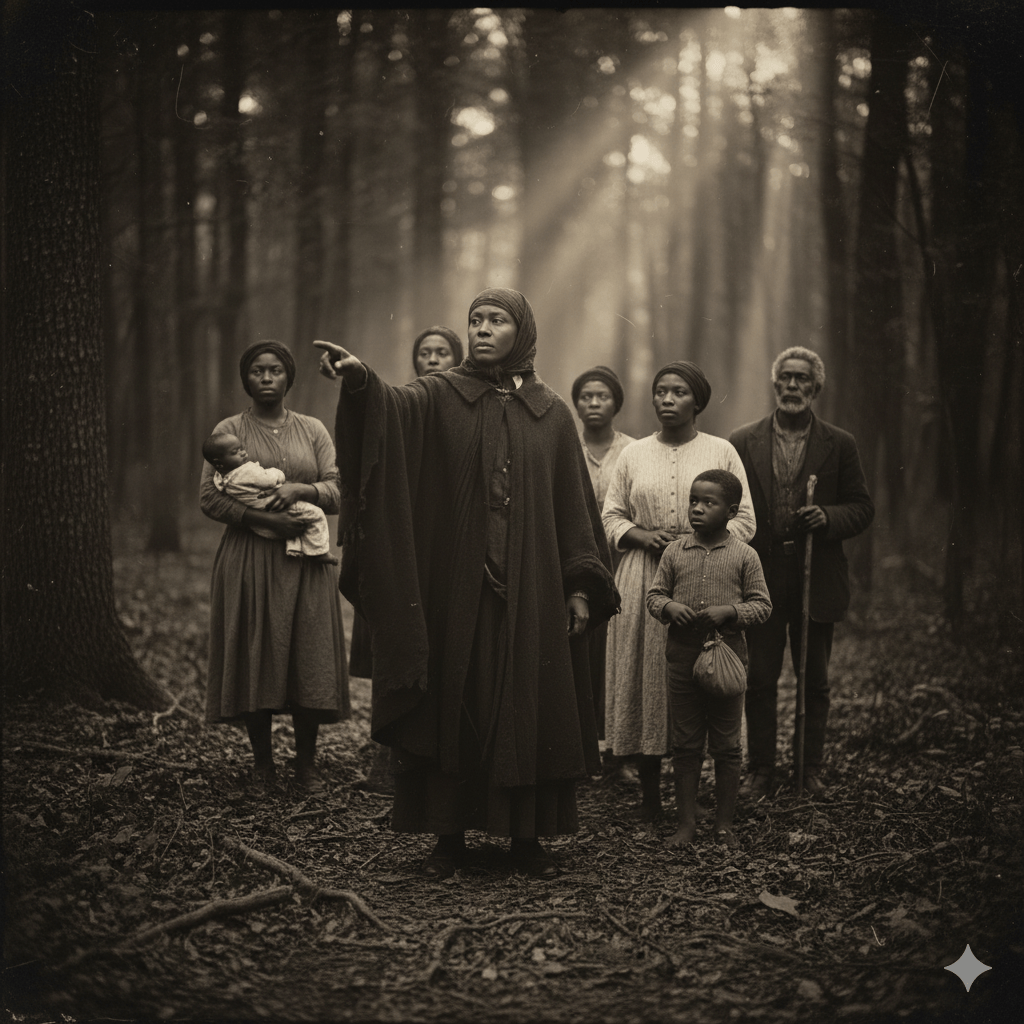
2. Harriet Tubman

Born: Monday, March (Estimated), 1822 Born into the horror of slavery, Tubman became the most famous “conductor” of the Underground Railroad. * Successes: She personally led approximately 70 enslaved people to freedom without ever losing a “passenger.” During the Civil War, she was a scout, spy, and the first woman to lead an armed assault (the Combahee River Raid), which liberated over 700 people.

* Troubles:

As a teenager, she suffered a traumatic head injury when an overseer threw a heavy metal weight at another person but hit her instead. This caused lifelong seizures, severe headaches, and narcoleptic episodes (which she interpreted as religious visions). She lived much of her post-war life in poverty, struggling to receive the government pension she was owed for her military service. * The Rhetoric: In the South, the rhetoric labeled her a “thief” and a high-value fugitive with a massive bounty on her head. Conversely, among abolitionists, she was called “Moses,” a rhetorical framing that elevated her from a fugitive to a divine liberator.

3. Alan Turing

Born: Monday, June 23, 1912

Turing is the father of theoretical computer science and artificial intelligence, yet his country repaid his genius with persecution. *

Successes:

He provided the theoretical framework for the modern computer (the Turing Machine). During WWII, his work at Bletchley Park cracking the German Enigma code is estimated to have shortened the war by at least two years, saving millions of lives.

* Troubles:

In 1952, Turing was prosecuted for “gross indecency” because he was gay. He was forced to choose between prison or chemical castration via estrogen injections. He chose the latter, which caused profound physical and emotional distress. He died of cyanide poisoning two years later, ruled a suicide.

* The Rhetoric:

During his life, the official rhetoric transformed him from a hidden war hero (whose work was Top Secret) to a “security risk” and a criminal. It wasn’t until 2013 that he received a posthumous Royal Pardon, shifting the national rhetoric from condemnation to a formal apology for “appalling” treatment.Would you like me to find more historical figures born on a specific day of the week, or perhaps generate an image of one of these individuals in their element?

Sunday Child…

Three SC well doers

Bonny and Blythe

The old nursery rhyme says, “The child that is born on the Sabbath day is bonny and blithe, and good and gay.” Throughout history, several figures born on a Sunday have embodied this “bright” reputation, though their lives often involved a bit more grit than the poem suggests.Here are three significant figures born on a Sunday, their achievements, and the rhetoric that defined them.

Sunday childs

1. Abraham Lincoln (February 12, 1809)

The 16th President of the United States was born on a Sunday in a one-room log cabin in Kentucky. * How he did well: Lincoln navigated the U.S. through its greatest moral, constitutional, and political crisis: the American Civil War. He successfully preserved the Union, abolished slavery via the Emancipation Proclamation, and strengthened the federal government.

* The Rhetoric:

During his life, his critics used harsh, populist rhetoric, calling him “The Illinois Ape” or a “Sectional President.” However, the rhetoric shifted dramatically after his assassination toward that of a secular saint or the “Great Emancipator.” He is often described with the rhetoric of the “Self-Made Man,” emphasizing his rise from frontier poverty to the White House.

2. Marie Curie (November 7, 1867)

The pioneering physicist and chemist was born Maria Skłodowska on a Sunday in Warsaw, Poland. * How she did well: She was the first woman to win a Nobel Prize, the first person and only woman to win the Nobel Prize twice, and the only person to win a Nobel Prize in two different scientific fields (Physics and Chemistry). She discovered polonium and radium and championed the use of portable X-ray units in WWI.

* The Rhetoric:

The rhetoric surrounding Curie often focused on her “martyrdom for science.” Because she died from radiation exposure, she was framed as a selfless seeker of truth. In a male-dominated era, she was also frequently characterized by the rhetoric of “transcendent genius,” being the “exception” that proved women were capable of the highest levels of intellectual rigor.

3. David Bowie

(January 8, 1947)

The legendary musician and cultural icon was born David Robert Jones on a Sunday in Brixton, London. * How he did well: Bowie reinvented the concept of the “rock star.” With a career spanning over five decades, he sold over 100 million records and pioneered genres from glam rock to soul to electronic music. He was a master of visual presentation and character-driven performance. *

The Rhetoric:

The rhetoric used for Bowie almost always centers on “reinvention” and “alienation.” He was the “Starman” or the “Chameleon of Rock.” Critics and fans alike spoke of him as a figure who was perpetually ahead of his time, using his music to make it “okay” for people to be outsiders. He was framed as a bridge between the avant-garde and the mainstream.

Comparison of Legacies

Sunday Trait (The Rhetoric)

Abraham Lincoln Politics

The “Honest” Martyr

Marie Curie

Science

The “Dutiful” Pioneer

David Bowie

Arts |

The “Blithe” Visionary

Culture Sabbath

It is widely believed that a child born on a Sunday was immune to the “Evil Eye” and could not be harmed by malevolent spirits or witchcraft.Seeing the Unseen: In some regions, folklore suggested they could see ghosts or hidden treasures that were invisible to those born on “workdays.”The “Lucky” Aura: Because Sunday is the Sabbath (the day of rest and divinity), the child was thought to be under a special layer of divine protection, leading to a life of inherent good fortune.

Curative

This folklore in the 18th and 19th centuries. Sunday’s children were sometimes sought out as natural healers.In some rural communities, it was thought that a “Sunday-born” person could cure minor ailments just by touch or by offering a blessing.They were seen as having a “sunny” disposition that wasn’t just a personality trait, but a physical vitality that could ward off illness.

Religious secular divid…

Some stricter religious circles, the “gay” and “blithe” description was actually seen as a warning. Critics argued that being born on a day of rest might lead to a life of idleness or vanity.

The “Wise” interpretation: However, the prevailing folk-logic won out: because they were born on the Lord’s Day, they were gifted with a natural wisdom and a “moral compass” that functioned without effort.

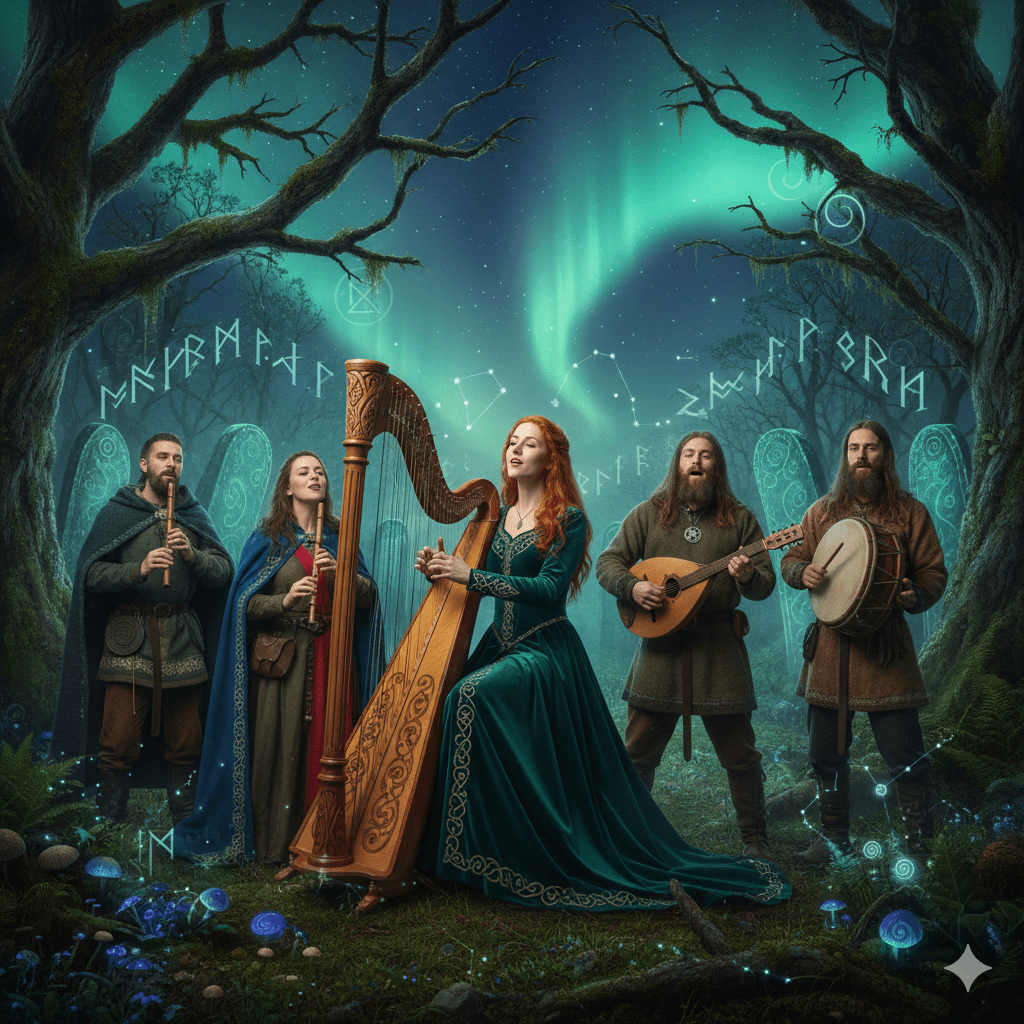
TGIF-Nordic resonance

The Nordic Irish Celtic residency songs, often rooted in ancient traditions, are a tapestry of musical expressions that date back to the early medieval period, showcasing a rich cultural heritage. These songs typically discuss themes of nature, community, and spirituality, reflecting the values of the society that created them. They serve to strengthen communal bonds, celebrate local history, and convey moral lessons, often performed during seasonal festivities or significant life events. Their enduring nature highlights their importance in preserving cultural identity and fostering a sense of belonging among the people.