


Neck guards
Adam Johnson is dead and four decades of neck guards in minor hockey have not persuaded broad usage in the big leagues.
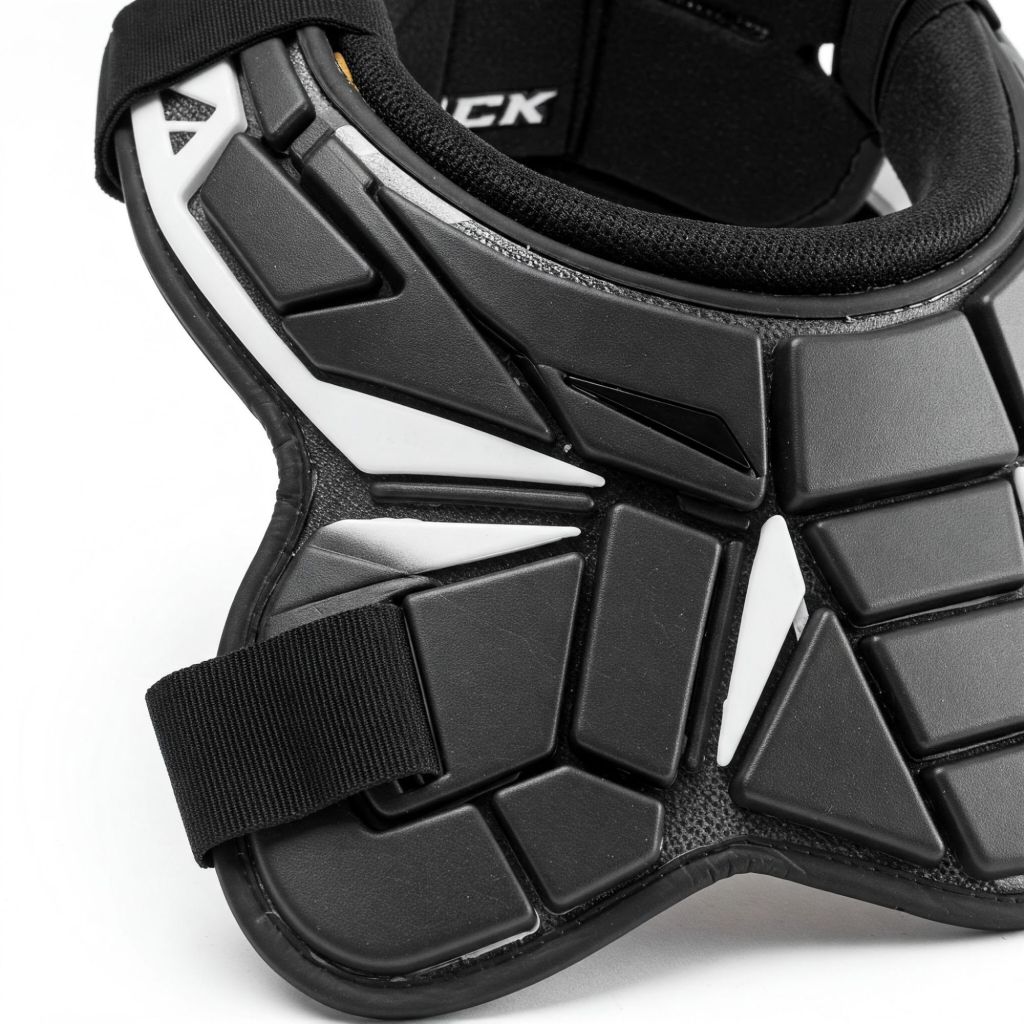
Neck guards in minor hockey have a history rooted in a tragic incident. In 1975, Ontario Junior A league goalie Kim Crouch suffered a severe neck laceration from a skate blade. Following this near-fatal injury, his father developed the first neck guard to allow Kim to return to playing. This event spurred the initial adoption of neck guards, particularly in Canadian minor hockey leagues.
Over the following decades, neck guards became increasingly common in minor hockey across Canada. Many provincial and local hockey organizations mandated their use for players under a certain age. The Bureau de normalisation du Québec (BNQ) certification became a standard, ensuring the quality and protective capability of neck guards used in Canada.
In the United States, the adoption of mandatory neck guards in minor hockey has been less uniform historically, often varying by state or local association. However, following the death of Adam Johnson, who suffered a fatal neck cut in a professional game in England in October 2023, there has been a significant push for mandatory neck protection at all levels. As a result, USA Hockey mandated neck laceration protection for all players under the age of 18, effective August 1, 2024.
Use in Professional Hockey:
Currently, neck guards are not mandatory in the National Hockey League (NHL). While some players choose to wear them, the majority do not. Concerns about comfort, potential hindrance to performance, and tradition are often cited as reasons for this resistance.
However, the conversation around neck guards in professional hockey has intensified following recent serious neck injuries in hockey globally. Some NHL players have begun to wear neck guards voluntarily, and there is ongoing discussion about whether the league and the NHL Players’ Association might eventually agree to make them mandatory, similar to the evolution of helmet and visor rules.
Other professional leagues, such as the American Hockey League (AHL) and leagues in Europe (Germany, Sweden, Finland, and England), have implemented mandatory neck guard policies. The International Ice Hockey Federation (IIHF) also mandates neck guards for all its tournaments, including the World Junior Championships and the World Championships.
Effectiveness and Usefulness:
Neck guards are designed to protect the vulnerable neck and throat area from lacerations caused by skate blades, hockey sticks, and pucks. They are typically made of cut-resistant materials like Kevlar or Spectra fibers, often encased in a comfortable fabric.
Studies and real-life incidents suggest that neck guards can be effective in preventing or reducing the severity of neck lacerations. While no protective equipment can guarantee complete safety, neck guards provide a crucial barrier against sharp objects that could otherwise cause life-threatening injuries to major blood vessels and nerves in the neck.
Have they ever saved anyone from catastrophic injury?
Yes, there are documented cases where neck guards are believed to have saved players from severe or fatal injuries:
* The case of Kim Crouch: His injury in 1975 directly led to the development and subsequent use of neck guards, preventing similar incidents for countless players.
* Recent youth hockey incident in Eastern Ontario: Following Adam Johnson’s death, a young player was reportedly saved by a neck guard after being cut by a skate.
While less publicized, it is plausible that neck guards have prevented numerous other less severe but still significant neck injuries over the years.
In conclusion, the history of neck guards in hockey began with a serious injury that prompted their invention. They have become a standard and often mandatory piece of equipment in minor hockey, particularly in Canada, and are now gaining increased attention and mandatory status in youth hockey in the United States. While not currently mandatory in the NHL, the effectiveness and potential life-saving benefits of neck guards are becoming increasingly recognized, leading to more players choosing to wear them and ongoing discussions about a potential league-wide mandate in the future.
Sportsmen need Sportsmanship all ways.



 Kevin Griffiths
 percypaschal
 The Proprietor Review