

August 24 Pluto Dwarfed
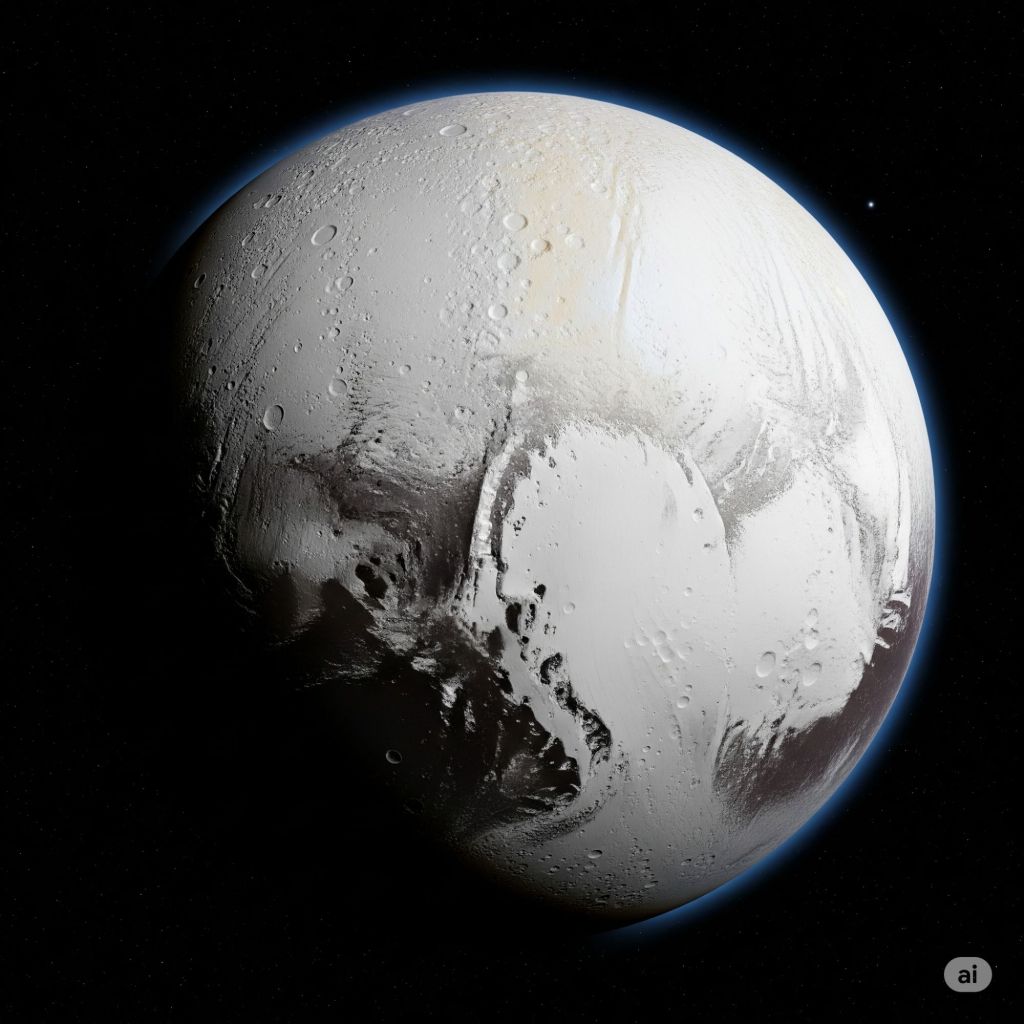
Pluto was discovered in 1930 and was immediately classified as the ninth planet in our solar system. However, its status was questioned over time as new discoveries were made, leading to its demotion to a dwarf planet in 2006.
The Demotion of Pluto
The International Astronomical Union (IAU), the official body for naming and classifying celestial objects, established a new, more specific definition of a planet in August 2006. To be considered a planet, a celestial body must meet three criteria:
* It must be in orbit around the Sun.
* It must have sufficient mass to be nearly round due to its own gravity.
* It must have “cleared the neighborhood” around its orbit, meaning it has become gravitationally dominant and there are no other similarly-sized objects (other than its own moons) in its orbital path.
Pluto satisfies the first two criteria, but it fails the third. It orbits in the Kuiper Belt, a region of icy objects, and its orbit is shared with many other celestial bodies. The discovery of Eris in 2005, a trans-Neptunian object that was initially thought to be larger and more massive than Pluto, was a major catalyst for the IAU to clarify its definition of a planet.
Pluto’s Current View in the Solar System
Pluto is now classified as a dwarf planet and a plutoid. It is considered a prototype for a new class of objects in the outer solar system. This reclassification reflects a more accurate understanding of Pluto’s nature as one of the largest members of the Kuiper Belt, rather than as a primary planet in the same category as Earth or Jupiter.
This new classification doesn’t diminish Pluto’s importance; it simply places it in a different, more fitting category. The New Horizons mission in 2015 provided us with detailed images and data, revealing Pluto to be a complex world with mountains, glaciers, and a surprising atmosphere.
Effect on Other Orbiting Bodies
Pluto’s effect on other orbiting bodies is limited. Its small mass, roughly one-sixth of our moon’s, means its gravitational influence is not significant enough to affect the orbits of the primary planets. It does, however, have a unique orbital resonance with Neptune. Pluto completes two orbits around the Sun in the same amount of time that Neptune completes three orbits. This specific relationship prevents the two bodies from ever colliding and helps to stabilize Pluto’s orbit.
Within its own system, Pluto has a significant effect on its largest moon, Charon. The two are so close in size that their center of mass lies in the space between them, causing them to orbit a point in space rather than Charon orbiting Pluto. This is a characteristic more common in binary systems and is a testament to the unique nature of the Pluto-Charon pair.



 Kevin Griffiths
 percypaschal
 The Proprietor Review