

//Friction causing a need to ask what money is being used for.
The short answer is that while there isn’t an Executive Order (EO) “sanctioning” Canada in the traditional sense (like the US does with Iran or Russia), there has been a massive spike in economic friction and regulatory scrutiny that is hitting correspondent banking hard.Since early 2025, the relationship has shifted from “trusted neighbor” to a more “transactional” one. Here is the breakdown of what is actually happening.
1. The “Border Security” & Fentanyl Narrative
The primary driver isn’t a direct financial sanction, but rather a series of EOs and trade actions tied to border security. President Trump issued orders in early 2025 (and refined them in early 2026) that link trade and financial flows to Canada’s “performance” in stopping fentanyl and illegal migration.
* The Result:
US banks are now under immense pressure from the Treasury to perform “enhanced due diligence” on Canadian transactions. This makes transferring money slower and more expensive, as US banks treat Canadian flows with a higher risk profile than they used to.
2. The Tariff “Yo-Yo” and
Banking UncertaintyYou might have heard about the 25% tariffs and the recent Supreme Court ruling.
* In February 2026, the US Supreme Court ruled that the President cannot use the International Emergency Economic Powers Act (IEEPA) to unilaterally impose broad tariffs on allies like Canada.
* The Catch:
While the court struck down those specific “Emergency” tariffs, the administration immediately pivoted to other laws (like Section 122 of the 1974 Trade Act) to maintain a 10% global tariff.
* Why this hits banking: This legal “whack-a-mole” creates compliance chaos. Correspondent banks hate uncertainty. When the legal basis for trade keeps shifting, US banks often “de-risk” by pulling back from certain Canadian regional banks or increasing the paperwork required for every cross-border wire.
3. Increased Scrutiny on “Indirect” Sanctions
The US Treasury is currently aggressive about secondary sanctions.
They are worried that Canada is being used as a “backdoor” for goods or money from sanctioned countries (like Russia or China). * The Pressure: Large Canadian banks (like RBC, which was recently questioned by the Senate Banking Committee) are being scrutinized for how they handle funds that might touch US-sanctioned interests.
* Even if Canada isn’t the target, the pipes (the correspondent accounts) are being inspected much more closely for any trace of illicit activity.
Summary of the “Sanction” Feeling
While you won’t find a list that says “Canada is sanctioned,” the US is using its financial leverage to force Canada into compliance on non-financial issues (tariffs, border security, and energy). For a regular person or business, this feels like a sanction because:
* Wire transfers take longer.
* Fees for CAD/USD conversion and transfer have risen.
* Compliance requests (asking for more info on “what is this money for?”) have become the norm.
Would you like me to look into how specific Canadian banks are responding to these US compliance pressures, or perhaps find more details on the current status of the 10% global tariff?
Central Bank Roles
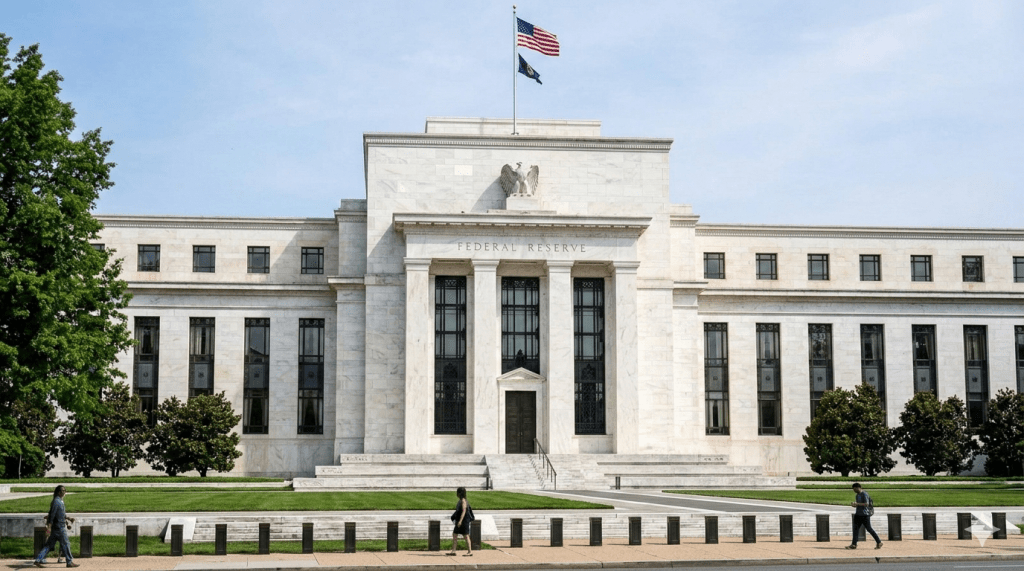
Based on the information provided in the image, here is a description of the roles of the Federal Reserve (the US Central Bank) and the Bank of Canada, as they relates to the interaction between the two countries’ economies:
Both the Federal Reserve and the Bank of Canada are central banks with a core responsibility to conduct monetary policy in their respective countries. The infographic highlights their shared objectives of maintaining stable prices (targeting 2% inflation) and supporting economic growth (maximum employment).
How their roles relate and interact:
* Macroeconomic Stability and Spillover Effects:
Because the US and Canadian economies are deeply integrated, the actions of one central bank significantly impact the other.
* From the US perspective
(The Fed): The Fed’s decisions on interest rates influence global financial markets and capital flows. A large-scale quantitative easing program or sharp rate hikes by the Fed can directly impact Canadian financial conditions, exchange rates, and economic activity. The Fed must consider these international spillover effects when making policy.
* From the Canadian perspective (Bank of Canada):
The Bank of Canada must constantly monitor the Fed’s actions. Changes in US interest rates can put pressure on the Canadian dollar (CAD/USD exchange rate). If the Fed raises rates, it can attract capital to the US, weakening the Canadian dollar. The Bank of Canada may then have to adjust its own policy to maintain economic stability and its 2% inflation target in response to these external forces.
* Trade and Supply Chains:
The infographic notes that the US and Canada have the largest bilateral trade relationship in the world, totaling $718 billion. The Federal Reserve’s management of the US economy directly impacts the demand for Canadian exports (like autos, energy, and machinery). Conversely, economic health in Canada is important for US businesses and consumers who rely on Canadian goods and components for supply chains.
* Cross-Border Investment:
There is massive cross-border investment ($426 billion from the US to Canada and $589 billion from Canada to the US). The stable financial environment and transparent monetary policies maintained by both the Fed and the Bank of Canada are crucial for facilitating this flow of capital, which drives innovation, job creation, and economic growth in both nations.
* Energy Markets:
Canada is a major supplier of energy to the US ($85 billion). The health of the US industrial sector, influenced by Fed policy, drives demand for Canadian energy resources.In essence, while each central bank is independent and focuses on its domestic mandate, they are deeply interconnected. The Federal Reserve’s actions create the broad global economic climate in which the Bank of Canada operates, requiring constant monitoring, policy coordination, and consideration of the mutual economic impact.



 Kevin Griffiths
 percypaschal
 The Proprietor Review