

Photo KDG
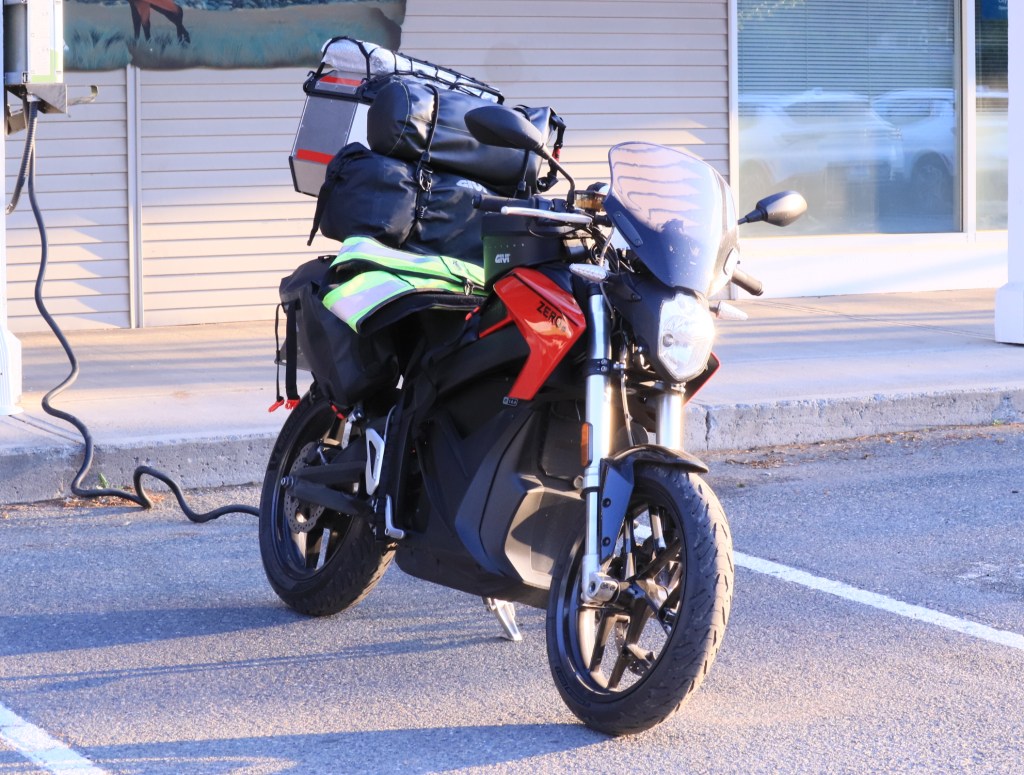
An attender of the Bass Coast vet together took the back way to Merritt to attend the annual Bass Coast Art, Music and Nature event.
Enthusiastic about trip
The Duthy lake road Lilloet and Ashcroft and the highland valley to Merritt graced his adventure this July weekend.
“Forty five” minutes to charge.
On a class two 200 volt charger.
Happily using a city charger the man was able to rest briefly and prepare for more travel.
$3000.00 incentive
The operator said he was able to access a $3,000 incentive Grant from the government for this particular vehicle.
Return by highway.
On returning the plan is to combine with friends and investigate the value of non emoting cycles in column back home.
Looking at BC EB
Infrastructure support
Based on current trends and expert analysis, here are five types of places where people would like to see more infrastructure for EV charging: * Rural and Remote Areas (including Northern Communities and Indigenous Communities): These regions often have very limited or no public charging infrastructure. This creates “charging deserts” and significant range anxiety for EV owners, hindering adoption. While urban centers attract most private investment, building out reliable networks in rural areas is crucial for equitable access and to enable longer-distance travel. * Multi-Unit Residential Buildings (MURBs): A significant portion of the population lives in apartments, condominiums, or other multi-unit dwellings without dedicated home charging. This forces them to rely on public charging, and the lack of readily available and convenient options is a major barrier to EV ownership for these residents. Retrofitting existing buildings and requiring new ones to be “EV ready” are key solutions. * Highway and Travel Corridors (especially in less populated stretches): While progress is being made on major highways, there are still “pinch points” and long distances between chargers in some regions, particularly in countries with vast geographies like Canada. Reliable fast-charging along these routes is essential to alleviate range anxiety and enable inter-city and inter-provincial travel. * Workplaces: Many EV owners without home charging would benefit greatly from workplace charging. Currently, a significant percentage of those without home charging also lack a workplace charging option, increasing their reliance on public stations. Providing charging at workplaces can significantly enhance convenience and encourage EV adoption. * Lower-Income and Disadvantaged Communities: Research indicates that EV chargers are disproportionately concentrated in wealthier areas. Many low-income and disadvantaged communities have very few, if any, public chargers. This creates an accessibility gap and can hinder the transition to electric vehicles for a broader demographic. Initiatives are needed to ensure equitable distribution of charging infrastructure.
Sold out Festival ends Sunday the 14th.
Directions Festival gates
Editor’s notes: the Bass Coast Festival. It’s the right place to be having a discussion about the validity of bikes like the zero.





 Kevin Griffiths
 percypaschal
 The Proprietor Review