
Look up to the light.
Electric charge
Charge your web for the best prey stickyess effect.
The best defence is a strong offence: in your web “don’t waste the protein , Look up and use the light”.
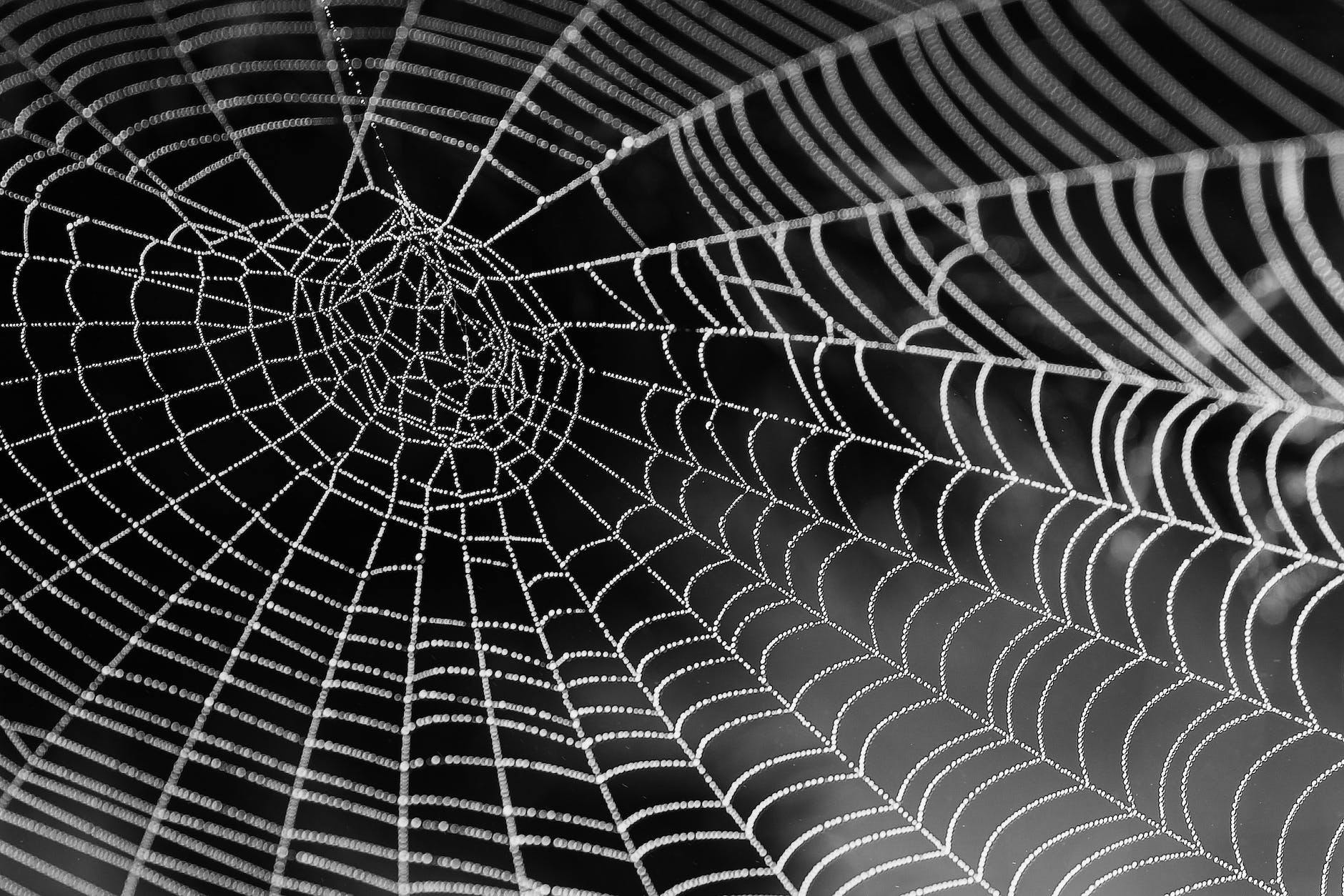
Spider webs are fascinating structures created by spiders to capture prey and provide shelter. They are made from silk, which is produced by special glands in the spider’s abdomen. When a spider spins its web, it uses different types of silk with varying strengths and stickiness.
The architecture of spider webs can vary greatly among species, but they all serve the same purpose of catching prey. Some spiders create intricate orb-shaped webs, while others weave tangled cobwebs or funnel-shaped webs. The design and location of the web depend on the spider’s hunting habits and the types of prey it targets.
Spider webs are incredibly strong and elastic, capable of trapping insects and even small birds or bats. The silk is thin and transparent, making it nearly invisible to unsuspecting prey. When an insect comes into contact with the web, the spider can sense the vibrations and quickly immobilize its prey with a venomous bite.
Additionally, spider webs have inspired scientists and engineers in various fields. The intricacy and efficiency of spider web design has influenced the development of materials such as super-strong fibers and lightweight construction techniques. By studying spider webs, researchers hope to unlock new possibilities for applications in areas such as medicine, robotics, and aerospace.
If you would like to learn more about spiders or their remarkable webs, I recommend watching the video you shared: Electric Charge – Look up to the Light.
Remember, spiders play an important role in controlling insect populations and maintaining a balanced ecosystem, so next time you come across a spider web, take a moment to appreciate its beauty and marvel at the incredible abilities of these arachnids.
Stronger then steel
The web is stronger then steel by volume….


 Kevin Griffiths
 percypaschal
 The Proprietor Review