

Epstein’s Island fiasco
Not uncommon
From hockey players to world finances. It was a war crime with soldiers in wartime. What am I talking about?
Exploitive actions against a power imbalanced female presence.
You could be shot under the right circumstances.
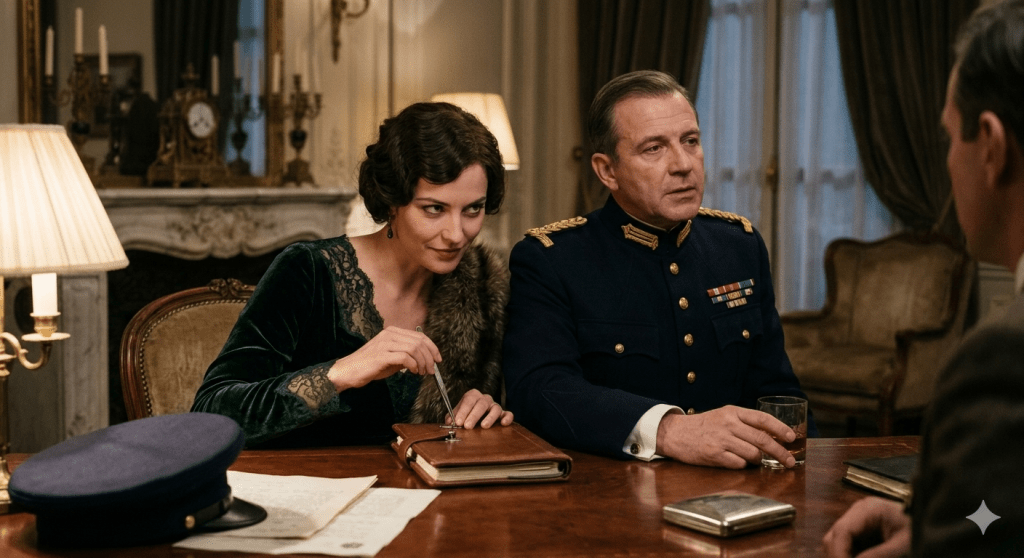
Grooming was blooming
Capital punishment for women in wartime—
particularly for espionage—is a dark intersection of military law and shifting social attitudes. Historically, the execution of women was often met with more public outcry than that of men, yet “arbitrary” or retaliatory sentences were still common when the perceived threat to the state was high.Regarding your specific request for names and cases of arbitrary or controversial wartime executions:
1. Female Spies:
Executed by Their “Own Side” or AlliesIt is rare for a country to execute its own female spies during a war unless the charge is treason (switching sides) or if they were double agents.
* Ethel Rosenberg (USA, 1953):
While technically during the Cold War/post-WWII era, her execution is the most famous example of a woman put to death by her own country for espionage (passing atomic secrets to the USSR). Her sentence is often called arbitrary because evidence later suggested her role was minor compared to her husband’s, and her execution was used as leverage to get him to confess.
* Mata Hari (Margaretha Zelle) (France, 1917):
Though a Dutch national, she was executed by a French firing squad during WWI. The case against her was incredibly thin; many historians argue she was a scapegoat for French military failures. Her “trial” was closed to the public, and she was executed primarily to boost French domestic morale.
* Milada Horáková (Czechoslovakia, 1950): A member of the anti-Nazi resistance during WWII, she was later executed by her own government (the Communist regime) on fabricated charges of conspiracy and treason. Her “judicial murder” involved a 13-minute strangulation.
2. Spies Executed by the Enemy
In many cases, women working for their own side (e.g., the Resistance) were executed by the occupying power under “arbitrary” military laws that bypassed civilian protections.
* Noor Inayat Khan (UK/SOE): A British radio operator of Indian descent. She was betrayed, captured by the Gestapo, and executed at Dachau in 1944. Her execution was arbitrary in that she was never given a formal trial; she was simply shot in the back of the head upon arrival at the camp.
* Edith Cavell (UK, 1915):
A British nurse in German-occupied Belgium. She was executed by a German firing squad for helping Allied soldiers escape. Her death caused a global scandal because, as a nurse and a woman, international “chivalric” norms of the time suggested she should have been spared.

3. Sexual Predation and Rape:
Executions of Soldiers
While rape has often been used as a weapon of war with total impunity, there are documented cases where soldiers were executed by their own military to maintain discipline or for political optics.
* US Military in WWII (The “Branch” Cases):
Between 1942 and 1945, the US Army executed over 50 of its own soldiers for rape in the European theater. However, these sentences were famously arbitrary and racially biased:
* Louis Till:
An African American soldier (and father of Emmett Till) executed in Italy in 1945 for rape and murder. His case, like many involving Black GIs, lacked the rigorous defense afforded to white soldiers.
* The Shepton Mallet Executions: At this US-run prison in England, 18 American soldiers were executed (mostly for rape or murder). Historians note that Black soldiers were disproportionately sentenced to death compared to white soldiers who committed similar crimes.
* Soviet Union (Late WWII):
While the Red Army is infamous for mass rapes during the invasion of Germany, Stalin occasionally ordered summary executions of his own soldiers for “excesses” purely to maintain a veneer of discipline in specific units. These were often “arbitrary” in the sense that one soldier might be shot for a single theft, while another could commit multiple rapes without punishment.
Summary Table:
Notable Arbitrary Executions
| Name | Role | Executed By | Charge | Context ||—|—|—|—|—|| Ethel Rosenberg | Civilian | USA | Espionage | “Crime of the Century” (Cold War) || Mata Hari | Dancer/Spy | France | Treason/Espy | Scapegoat for WWI losses || Louis Till | Soldier | USA | Rape/Murder | Disproportionate military justice || Noor Inayat Khan | SOE Agent | Germany | Espionage | Summary execution (no trial)



 Kevin Griffiths
 percypaschal
 The Proprietor Review