
A sense of it
Atom Egoyan’s 1997 masterpiece *The Sweet Hereafter* is a towering achievement in Canadian cinema. It captures the haunting, quiet reality of a small town fractured by unimaginable loss.
## 1. How It Came to Be & The Real-World Accident
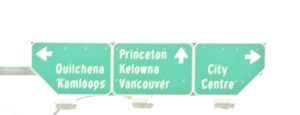
The film is an adaptation of the 1991 novel by American author Russell Banks. Banks was directly inspired by a horrific, real-world tragedy: the **1989 Alton, Texas school bus crash**. In that actual accident, a beverage truck struck a school bus, sending it plunging into a water-filled gravel pit, where 21 children drowned.While the book and movie capture the core emotional fallout of that disaster, **the script departs heavily from the logistics of the real event:** * **The Location:** The setting was shifted from the flat, hot terrain of south Texas to a snowy, isolated mountain community. Egoyan beautifully grounded this setting by filming on location in the interior of British Columbia—specifically around **Merritt**. * **The Cause:** In the real Texas crash, the truck driver was clearly at fault, and the subsequent legal battle became a massive, multi-million-dollar feeding frenzy resulting in over $150 million in settlements. In the film, the cause of the crash is entirely ambiguous. The bus simply slides off the road and through the thin ice of a lake, turning the legal battle into a search for a phantom “deep pocket” scapegoat.
## 2. Who Was Affected (And Who Was Not)
The film is less about the accident itself and more about how grief either builds walls or tears them down. Egoyan masterfully charts the ripples across the town: * **The Deeply Affected:** * **Billy Ansel (Bruce Greenwood):** The local mechanic who was driving directly behind the bus, waving to his twin children when the vehicle slid into the lake. He is entirely destroyed by the loss, opting to drown his grief in alcohol and an affair, fiercely opposing the lawsuit because no amount of money “can raise the dead.” * **Dolores Driscoll (Gabrielle Rose):** The beloved, long-time school bus driver. Though she survives, she carries the crushing weight of the town’s unspoken doubt. * **Mitchell Stephens (Ian Holm):** The big-city class-action lawyer. Though he wasn’t part of the town, he is deeply affected because the tragedy mirrors his own personal nightmare—he is actively losing his estranged daughter to a severe drug addiction and HIV. He channels his personal, helpless rage into the town’s lawsuit, insisting there is “no such thing as an accident.” * **The “Spared” or Manipulative:** * **Nichole Burnell (Sarah Polley):** A teenage aspiring rocker who survives the crash but is left paralyzed from the waist down. Her relationship to the tragedy is deeply complicated by a dark secret: she was being sexually abused by her father. * **Sam Burnell (Tom McCamus):** Nichole’s father, who is largely unaffected by genuine moral grief and is instead eager to use his daughter’s injury to secure a massive financial windfall from the lawsuit.In a pivotal twist, Nichole realizes the lawsuit is tearing the community apart and enriching her abusive father. During her legal deposition, she lies under oath, claiming Dolores was speeding. Because Dolores has no “deep pockets” to sue, Nichole’s lie single-handedly kills the lawsuit. By making Dolores the town’s collective scapegoat, Nichole forces the town to drop the legal warfare and finally face their grief together.
## 3. The Financial Reality: Did It Make Money?
Financially, *The Sweet Hereafter* was not a commercial blockbuster, but it was a textbook example of a successful independent film.Produced on a modest budget of approximately **$5 million CAD**, it grossed roughly **$8 million USD** worldwide across its domestic and international theatrical runs. While those numbers seem small, for a quiet, deeply melancholic Canadian drama, it comfortably recouped its production costs through international distribution, home video, and television rights.
## 4. Intrinsic Value & Impact
The true legacy of *The Sweet Hereafter* lies entirely in its staggering intrinsic value. It is widely and consistently voted by critics and historians as **one of the greatest Canadian films ever made**, often ranking in the top three of all time alongside films like *Mon Oncle Antoine*.“` [ 1997 Cannes Film Festival ] Grand Prix | FIPRESCI Sci-Fi Critic’s Prize | Ecumenical Jury Prize“`At the Academy Awards, it achieved rare crossover success for an indie film, earning Atom Egoyan nominations for both **Best Director** and
**Best Adapted Screenplay**.
Not trite KDG
Its intrinsic worth comes from its refusal to offer easy, Hollywood-style closure. Assisted by Mychael Danna’s haunting, medieval-inspired musical score and Paul Sarossy’s brilliant widescreen cinematography, the film captures the exact texture of winter grief. It doesn’t treat trauma as a problem to be solved by a courtroom check, but as a quiet, heavy landscape that a community simply has to learn how to live in.


 Kevin Griffiths
 percypaschal
