

Photo KDG
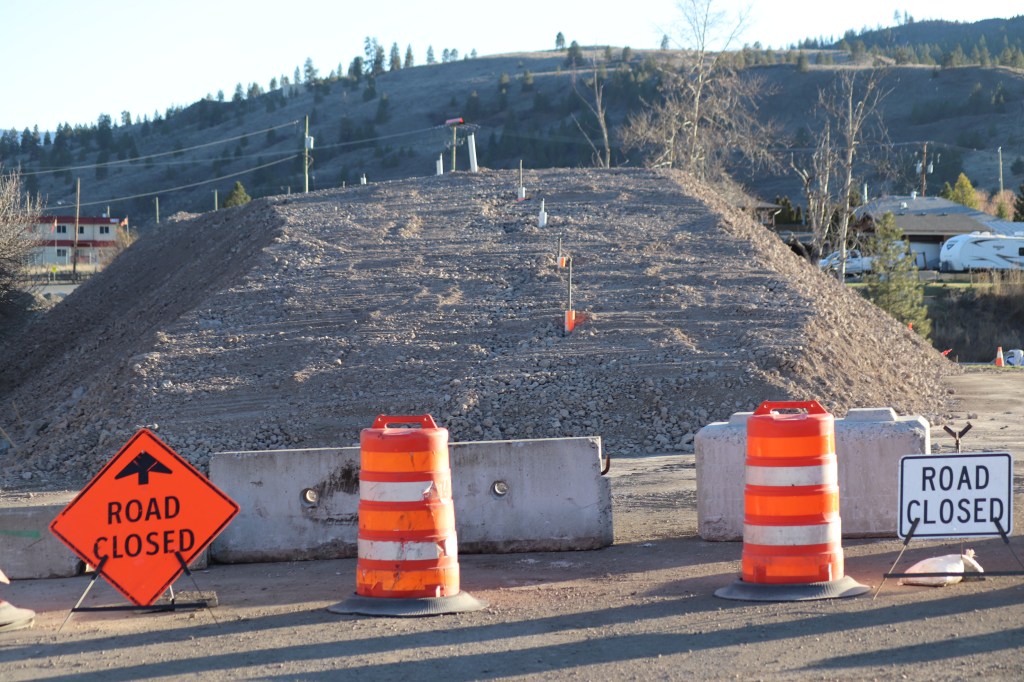
The Colletville/ Midday valley road bridge on the city of Merritt’s Voght street is under works by a local contractor. A pile of crushed rock on the approach is using time and pressure to test for compaction.
To the piles left is the remains of the city RV park (Claybanks RV) both the park and the bridge were destroyed by a flood on November 14th 2021.
Funding
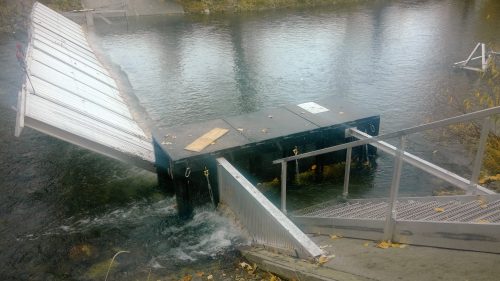
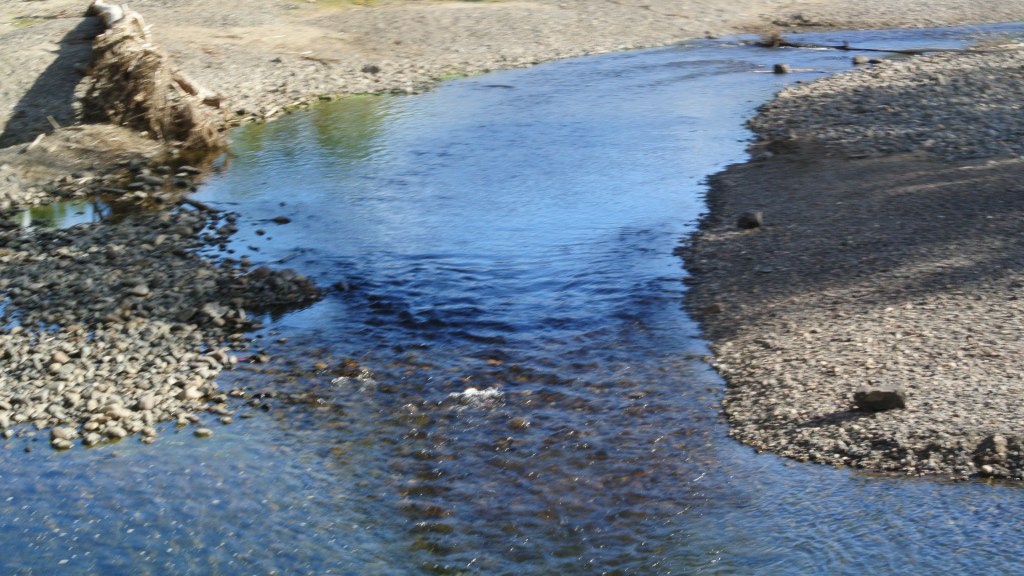
The city was funded by the province with Nine million dollars of targeted monies to replace the bridge. The replacement will be two lanes as before. While the river is usually very controllable the wet front coming from the sea collided with a cold artic outflow going to sea over the mountains to the west of Merritt causing what is hoped to be a once in a life time dump that did huge damage to the province including the lower mainland. The fish trap was also destroyed for the second time in a fall event. the river looks inoculus in its summer best however it remains a less then reliable Friend.
Slide show
Flash floods
Flash floods can wreak havoc in various parts of Canada, posing a significant threat to infrastructure, communities, and the environment. One example is the devastating impact of the November 14th, 2021 flood in Merritt, British Columbia. This event caused extensive damage, including the destruction of the Colletville Midday valley road bridge on Voght street and the city RV park (Claybanks RV). The subsequent reconstruction efforts, funded by the province with nine million dollars, highlight the substantial financial resources required to address the aftermath of such natural disasters.
In addition to infrastructure damage, flash floods can also lead to the destruction of vital structures like the Fish trap Coldwater river in Merritt, BC. The unpredictability and destructive potential of flash floods necessitate both short-term responses, such as rebuilding efforts, and long-term strategies for mitigating future risks. Despite the inherently challenging nature of flash floods, recognizing and understanding the patterns and contributing factors behind these events can aid in developing proactive measures to protect communities and vital resources.
The images depicting the aftermath of the flood serve as poignant reminders of the power and impact of natural disasters, underscoring the need for comprehensive preparedness and response plans to minimize the potential devastation caused by flash floods.



 Kevin Griffiths
 percypaschal
 The Proprietor Review