

British Columbia
Farmers’ Markets in British Columbia and Canada
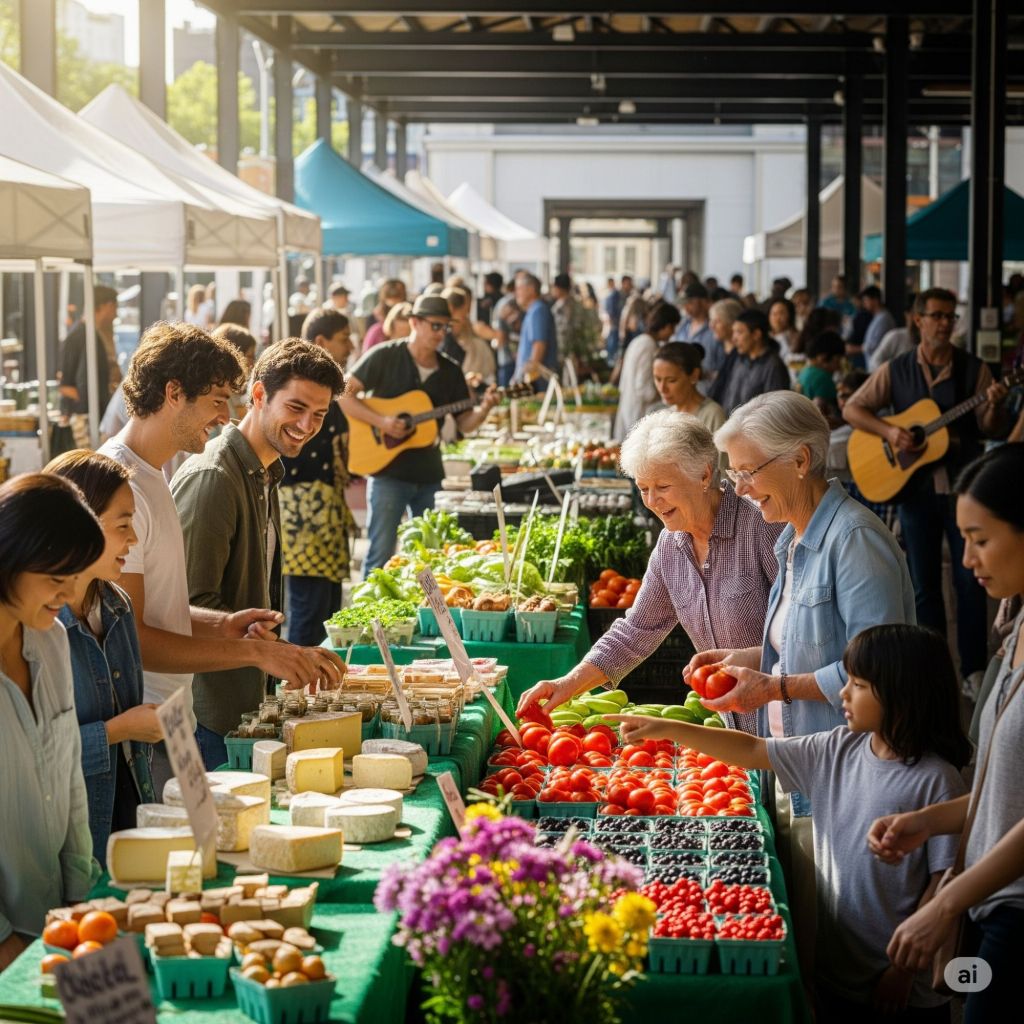
While an exact, single number for all of Canada is not readily available, data from the BC Association of Farmers’ Markets (BCAFM) indicates a robust and growing market scene in British Columbia. As of recent studies, there are over 145 farmers’ markets across British Columbia.
Effect on Farmgate Price
Farmers’ markets have a significant and positive effect on the “farmgate price,” which is the price a farmer receives for their product at the farm gate, before any processing or distribution costs. Here’s how:
* Direct-to-Consumer Sales: By selling directly to consumers, farmers eliminate the need for intermediaries such as wholesalers, distributors, and grocery retailers. This allows them to capture a much larger portion of the final retail price, often receiving 100% of the price paid by the customer.
* Pricing Flexibility: Unlike a large grocery chain with standardized pricing, farmers at a market have the flexibility to set their own prices based on a variety of factors, including the quality of their product, the cost of production (e.g., whether it’s organic), and the local demand.
* Economic Impact: A 2023 study by the BCAFM found that member markets in British Columbia generated $155.3 million in direct sales. This revenue goes straight to local farmers and food producers, contributing to a substantial economic impact on the local community. Farmers who sell directly are also more likely to patronize other local businesses, creating a positive multiplier effect.
Disposition of Food
Farmers’ markets change the “disposition” of food by influencing its distribution and what happens to unsold products.
* Alternative Distribution Channel: Farmers’ markets provide a vital alternative to the conventional food supply chain. This is particularly beneficial for small-scale farmers who may find it difficult to meet the high volume and standardization requirements of large retailers. Markets also foster a direct relationship between producers and consumers.
* Community-Based Programs: Many farmers’ markets, such as the ones in Vancouver, have “Donation Station” programs. At the end of a market day, farmers and vendors can donate any unsold fresh produce, which is then distributed to local food banks, community food pantries, schools, and other programs that support low-income and food-insecure individuals.
* Reduced Food Waste: Farmers have more control over their inventory and can bring only what they believe they can sell. While some food may still go unsold, the direct sales model and donation programs help to minimize waste compared to the large-scale distribution system, where a single rejected shipment can result in a massive loss. Unsold produce can also be used for animal feed or composted.



 Kevin Griffiths
 percypaschal
 The Proprietor Review