

In British Columbia, the climate of work conditions for nurses, ambulance staff, and medical practitioners is marked by both challenges and advancements. The increasing demand for healthcare services due to an aging population has led to high workloads, which can result in burnout and stress among staff. Additionally, issues like staffing shortages and long hours often exacerbate these conditions. However, there have been efforts to improve work environments, including better support systems, competitive salaries, and enhanced mental health resources. The province is also investing in technology and training opportunities to streamline processes and improve patient care, aiming to create a more sustainable and supportive workplace for healthcare professionals. Overall, while the healthcare sector faces significant pressures, ongoing initiatives are working towards a more positive and resilient workforce.
Not only health care but all engagement of public has risk.
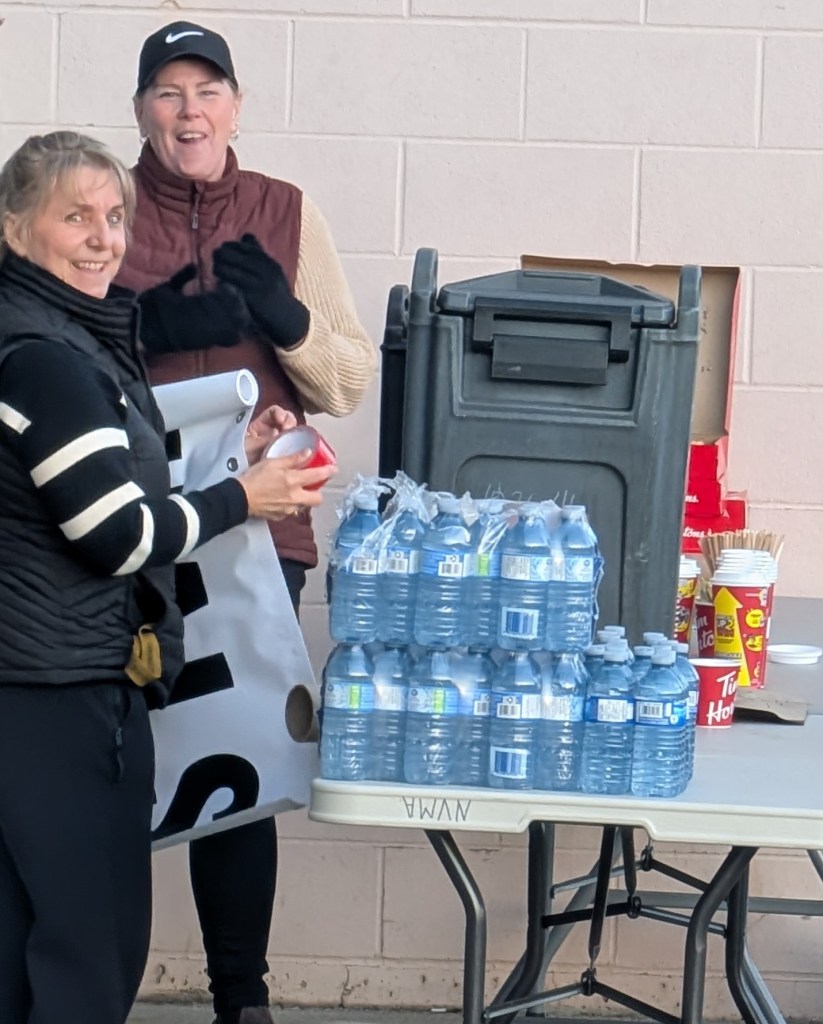
These two people were meeting the public outside a hockey game. There’s always a risk when you meet the public that somebody is a little off. Be careful. Be aware and don’t be vulnerable.
What to do…(Never deny someone’s feelings). And…
Dealing with potentially volatile individuals requires a careful balance of de-escalation tactics and safety awareness. Here’s a breakdown of strategies to help you navigate such situations:
Disarming Techniques:
* Maintain Calm and Respect:
* Speak in a calm, even tone. Avoid raising your voice or displaying aggressive body language.
* Show respect, even if you don’t agree with the person’s behavior. Acknowledge their feelings without necessarily validating their actions.
* Use open and non-threatening body language. Keep your hands visible and avoid crossing your arms.
* Active Listening:
* Pay attention to what the person is saying. Let them vent without interrupting excessively.
* Use reflective listening, which involves summarizing and restating what they’ve said to show that you understand.
* Empathy can be a great tool. Try to see things from their perspective, even if you don’t agree.
* De-escalation Strategies:
* Create space. Give the person physical space. Avoid crowding them.
* Redirect their focus. Try to shift the conversation to a neutral topic or offer a solution.
* Avoid arguing or contradicting. Instead, use phrases like, “I understand,” or “I can see how that would be frustrating.”
* Offer choices, when possible, to give them a sense of control.
* Verbal Judo:
* This technique emphasizes using words to redirect behavior.
* Start by introducing yourself and explaining your role.
* Ask open-ended questions to encourage them to talk.
* Use persuasive language to gain their cooperation.
Safety Measures:
* Situational Awareness:
* Be aware of your surroundings and identify potential escape routes.
* Notice any signs of escalating aggression, such as clenched fists, raised voices, or rapid breathing.
* Trust your instincts. If a situation feels unsafe, remove yourself from it.
* Set Boundaries:
* Clearly communicate your boundaries. Let the person know what behavior is unacceptable.
* Be firm but polite.
* If their behavior continues, be prepared to disengage.
* Prioritize Your Safety:
* Your safety is paramount. Do not hesitate to remove yourself from a dangerous situation.
* If you feel threatened, call for help.
* If possible, position yourself so you have an escape route.
* If you are able to, and feel it is needed, remove yourself from the area.
* Documentation:
* If possible, and if it is safe to do so, document any interactions that made you feel unsafe. This can be helpful if you need to report the incident.
Important Considerations:
* People who are upset or abusive may be experiencing mental health issues or substance abuse.
* These strategies are not foolproof. Some individuals may be beyond reason.
* It’s crucial to prioritize your safety and seek help when necessary.
By combining disarming techniques with safety precautions, you can increase your ability to navigate challenging interactions and minimize the risk of harm.



 Kevin Griffiths
 percypaschal
 The Proprietor Review