

Nicola river these salmon are 200 meters up stream from the Voght St bridge.
Spawning
The salmon in the photo seem to be very lively and actively spawning.
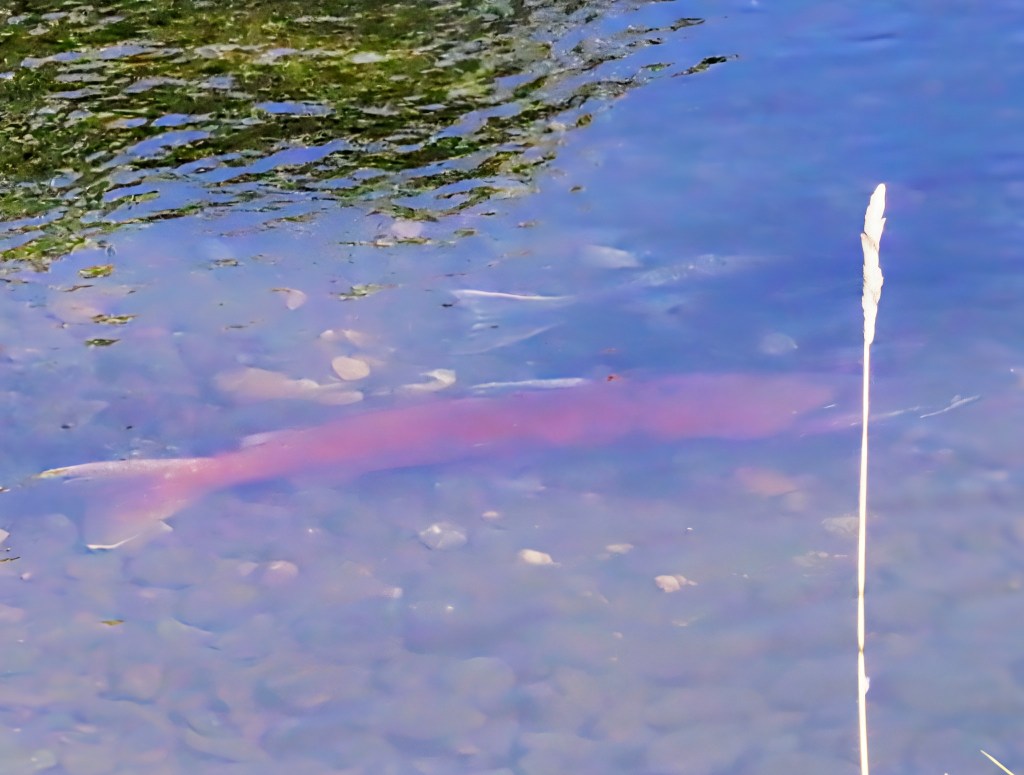
Salmon
Photo KDG, September 21 2025, Merritt BC…
Nicola River System
The Nicola River system, located in the Thompson-Nicola region of British Columbia, is a vital watershed for several species of Pacific salmon. The annual salmon runs are not only a spectacular natural event but also a crucial part of the ecosystem and hold deep cultural significance for local First Nations.The Salmon SpeciesThe Nicola River and its tributaries support runs of several salmon species, including: * Chinook Salmon: Considered a prized species, Chinook are one of the largest and most sought-after salmon. * Coho Salmon: These are known for being a bit more elusive, which makes them a challenge for anglers. * Pink Salmon: Pink salmon are the smallest species and are known for the distinctive hump that develops on the back of the males during their spawning migration. * Sockeye Salmon: Although their presence has been less consistent in recent years, sockeye were historically a significant part of the Nicola system.The timing of the salmon runs can vary by species, but generally, the main runs occur in the late summer and early fall, as the fish make their incredible journey from the ocean to their natal spawning grounds.Environmental ChallengesThe health of the salmon runs in the Nicola River is a significant concern due to various environmental pressures. The Thompson-Nicola region is particularly susceptible to the effects of climate change, which has led to: * Drought: Lower-than-average snowpack and reduced summer rainfall can lead to low stream flows and higher water temperatures. This can trap fish in isolated pools, increase their vulnerability to predators, and cause a loss of critical habitat. * Wildfires: The increasing frequency and severity of wildfires can damage the watershed, leading to increased sediment runoff that can smother salmon eggs and alter the river’s habitat.These factors, combined with historical impacts from logging and water withdrawals for agriculture, pose a serious threat to the persistence and recovery of salmon populations.Cultural SignificanceFor the First Nations of the Nicola Valley, particularly the Nlaka’pamux and Secwepemc peoples, salmon are far more than just a food source. Salmon are an integral part of their identity, culture, and social structure. * Sustenance and Trade: For thousands of years, salmon have been a foundational food source and a key item for trade, sustaining large and vibrant communities. * Spiritual and Cultural Connection: In many traditional beliefs, salmon are considered gift-bearing relatives and are treated with immense respect. The return of the salmon each year is a powerful symbol of life, endurance, and the cyclical nature of the world. Traditional stories, songs, and ceremonies celebrate this deep connection. * Stewardship: Indigenous knowledge and traditional practices have historically played a vital role in managing and protecting the salmon populations. This includes using methods like dipnetting and establishing agreements between communities to ensure the sustainability of the resource for all.Efforts are underway, often led by First Nations communities and conservation groups, to address the challenges facing the Nicola watershed and its salmon. These initiatives focus on habitat restoration, sustainable water management, and integrated decision-making to protect this irreplaceable resource for future generations.



 Kevin Griffiths
 percypaschal
 The Proprietor Review