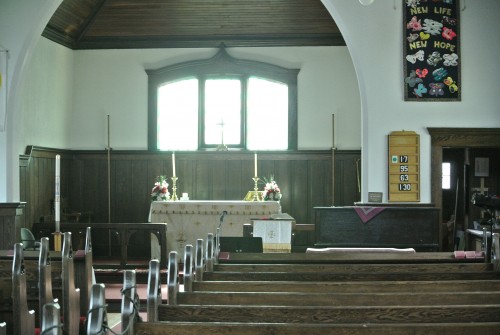
Think about visiting a faith community this holiday season.
Today in history: December 19th 2001
Record barometric pressure of 1085.6 is recorded in Mongolia.
To the seasons of life

Think about visiting a faith community this holiday season.
Today in history: December 19th 2001
Record barometric pressure of 1085.6 is recorded in Mongolia.
Taking a position for the sake of argument has been a useful and productive method to improve an end result of a doctrine, law, or statement. We have been involved in taking the status quo position in debates and find it a little uncomfortable and difficult. We can imagine that in an opposition in government if you played devils advocate with out a conviction its merit you could be stained be the perception that you have poor alternative to the movement.
In common parlance, a devil’s advocate is someone who, given a certain argument, takes a position they do not necessarily agree with (or simply an alternative position from the accepted norm), for the sake of debate or to explore the thought further. In taking this position, the individual taking on the devil’s advocate role seeks to engage others in an argumentative discussion process. The purpose of such a process is typically to test the quality of the original argument and identify weaknesses in its structure, and to use such information to either improve or abandon the original, opposing position. It can also refer to someone who takes a stance that is seen as unpopular or unconventional, but is actually another way of arguing a much more conventional stance. The background of this word comes from an official position within the Catholic Church, in which a canon lawyer called the Devil’s Advocate, also known as the Promoter of Faith, “argued against the canonization (sainthood) of a candidate in order to uncover any character flaws or misrepresentation evidence favoring canonization.”[1]
Discussion is always better then unilateral action. Compromise amongst people of good faith is desirable in most all situations.
Taking the position late in a debate can put you in the place of folding the tent up for those that have done the lions share of work and may cause some resentment, however if serious error is prevented it may be the right thing to do.
Today in history: December 16th 1707
The last recorded eruption of Mount Fuji in Japan.
Free trade has been a world opener for us in Canada however it has also brought with it a lot of unpleasentness that we Canadians could have avoided. If it is not possible to get cooperation then perhaps a tarriff regime is once again the best course for Canada. PR
Compare and contrast.
Prime Minister Stephen Harper, recently in the House of Commons:
“Frankly, Mr. Speaker, under the current circumstances of the oil and gas sector, it would be crazy, it would be crazy economic policy to do unilateral penalties on that sector. We’re clearly not going to do that,” Harper told the House as Conservative MPs roared their approval.
“In fact, nobody in the world is regulating their oil and gas sector. I’d be delighted if they did. Canada will be there with them.”Jim Prentice, then federal minister of the environment, not quite five years ago:
“For those of you who doubt that the government of Canada lacks either the willingness or the authority to protect our national interests as a ‘clean energy superpower,’ think again,” he warned darkly. “We do and we will. And, in our efforts, we will expect and we will secure the co-operation of those private interests which are developing the oil sands. Consider it a responsibility that accompanies the right to develop these valuable Canadian resources.”
Back then, it was possible to believe the federal government would impose regulations on the oil and gas industries. The government certainly said it would, often enough. (Peter Kent in February, 2013: “We are now well into, and very close to finalizing, regulations for the oil and gas sector.”) But, as Chris Turner reminds us in his book The War on Science, Prentice quit as environment minister in November 2010, and the Harper government’s periodic attempts to demonstrate environmental virtue, even at some hypothetical cost to the resource sector, pretty much came to an end.
Of course, it can be hard to tell where the notion of oil and gas regulations ended. Prentice himself has been sounding much like Harper since he became premier of Alberta:
“Environmental performance is important, but so, too, is our industrial competitiveness . . . I think this low-price environment is a reminder . . . that we have to be careful laying on costs, including regulatory costs, on our industry, because we need to remain competitive.”
But is even that new? From my 2010 article, linked above:
“We will only adopt a cap-and-trade regime if the United States signals that it wants to do the same. Our position on harmonization applies equally to regulation. Canada can go down either road—cap and trade or regulation—but we will go down neither road alone.”
So the paper trail on the government’s oil and gas policy is a bit of a mess. The feds will only impose regulations in concert with the Americans? Well, there are two problems with that story. First, as Bruce Cheadle points out:
An Environment Canada briefing memo revealed last month by the Globe and Mail shows that the United States, in fact, placed what were called “significant” limits on its oil and gas sector in 2012.
“For oil and gas, recent air pollution regulations are expected to result in significant greenhouse-gas reduction co-benefits, comparable to the reductions that would result from the approach being developed for this sector in Canada,” states the June 2013 memo obtained by Greenpeace under an Access to Information request.
Mcleans
Yep!
Today in history: December 12 1911
Deli replaces Calcutta as the Capital of India.
The Nicola Valley Indian Administration building is getting a new roof. The building build in 1971 is at the corner of Garcia and Coutlee, in down town Merritt. Tom Tar Roofing and Sheet metal no address on the door is doing the work and crews have worked all week in – double-digit weather to do the job. The Indian administration administers for 6 bands in the valley and has put together corporations to hold businesses in partnership including the Days INN ( destroyed in a fire several years ago). The Indians of the Nicola valley are considered progress by many including attitudes toward addiction and self-improvement.
Today in history: December 5th 63 BC
Cicero gives his last discourse on warfare.
Ed Hendricks the owner of Ponderosa sports says that tonight there will be an offical of the local RCMP office on CBC saying that cutting locks on gates to ranch land is considered mischief. The broadcast is at 6:PM according to Hendricks. Ed is an advocate of access to lakes as it affects his interests in recreation and fishing access. He and others have published a brochure that shows a number of lakes the public have lost access to. The brochure is at his Merritt Sport shop on Voght Street downtown Merritt.
Editors note:
Locked gates can be an indication of a drive that is private and there is no right of way to anyone other then the land owner and their associates.
The Forestry and lands part of the government maintains many recreational sites on lakes in this area and ensures access to them for public enjoyment. The right to quiet enjoyment is also safe guarded by the government where lawful activities are carried out.
Right of way is a term used to describe “the legal right, established by usage or grant, to pass along a specific route through grounds or property belonging to another”, or “a path or thoroughfare subject to such a right”.[1] A further definition is that it is a type of easement granted or reserved over the land for transportation purposes, this can be for a highway, public footpath, railway, canal, as well as electrical transmission lines, oil and gas pipelines.[2]
As well this phrase describes “the legal right of a pedestrian, vehicle, or ship to proceed with precedence over others in a particular situation or place”,[3] and in hiking etiquette, where when two groups of hikers meet on a steep trail, a custom has developed in some areas whereby the group moving uphill has the right of way.[4]
The right of way may be limited. When one person owns a piece of land which is bordered on all sides by lands owned by others, a court will be obliged to grant that person a right of way.
In some countries, especially in Northern Europe, where the freedom to roam has historically taken the form of general public rights, a right of way may not be restricted to specific paths or trails. A similar right of access also exists on some public land in the United States and in Canada, Australia and New Zealand (where it is called Crown land). source Wikipedia
Merritt’s Chamber of Commerce in the past has had the theme A lake a day as long as you stay. Ed from the sport shop says that there are two roads in contention, the Raspberry and Loon lake roads, both roads received large cattle guards after the construction of the Coquihalla highway, he says they are public roads as they are both maintained by the government.Douglas Lake Cattle Company has locked the gates on them perhaps in anticipation of a decommissioning of public maintained status, Kim Robinson and a grazing rights holder still need access through them, says Hendricks. He also adds that he can see the other view points but would like the process to be more open as well as stay legal, and accountable.
We trust that Staff SGT White and SGT. Fleming will give a good accounting of the authorities duties in these situations on CBC news tonight.
Click to access DV03S%20-%20Site%20Aspen%20Grove%20-%2027-046NS%20-%20N%20on%2009-27-2006.pdf
Today in history: November 18th 2013
NASA launches its Maven probe to Mars.

Today the hydro news letter is saying another increase in generating ability is being done on the 40 year old WAC Bennett dam on the Peace river in north eastern BC. The Gordon M. Shrum Generating Station is getting attention :
“There’s nothing else like it,” says Gammer. “There are lots of other dams and generating stations in the province, of course, but this is the biggest one we have.” Keeping GMS operational at all times is critical to maintaining provincial power reliability. That’s the thinking behind continual maintenance programs that aim to keep dam and generating station equipment in good working order. Staff work year-round to maintain the day-to-day reliability, but as with all facilities, the time comes when regular maintenance just isn’t enough. “GMS is more than 40 years old and large parts are starting to wear out and need replacement,” says Gammer. One way to think of it, he says, is to think of maintenance on your home. Good maintenance like repairing cracks, cleaning gutters and updating appliances is necessary all the time, but eventually, he says, you’re going to need to do major repairs, such as replacing your roof. “And we did that very thing at Peace Canyon.” There’s a lengthy and complex capital program underway at GMS and W.A.C. Bennett to complete these major repairs. Along with maintaining the critical reliability, these heritage facilities are benefiting from the improved technology and equipment available today. Just like you’ll get more out of a laptop manufactured today compared to a computer manufactured in the 1980’s, new equipment such as transformers and turbines perform more efficiently today compared to those installed when GMS first went into service.
Replacing transformers at GMS. Transformers increase the voltage at the station to 500,000 volts to efficiently carry electricity over long distances, and 12 of the 30 transformers at GMS have been replaced over the last five years.
Replacing five turbine runners at GMS. Through the power of falling water, the turbines rotate at 150 rpm, spinning the connected equipment in the generator to produce electricity. This multi-year project will wrap up in 2017.
Upgrading the control system for the generating station. The unit controls on all 10 generating units needs to be replaced. Work is already underway on the second unit in this multi-year project.
Rip-rap upgrade on the outside of the dam face. Large rock (rip-rap) protects the upstream face of the WAC Bennett Dam from wave erosion. The current plan is to start rip-rap replacement in the summer of 2016, after obtaining all permits and regulatory approvals.
Spillway Chute Upgrade. Upgrades and repairs are required to improve the condition of sections of the spillway, which is 680 metres long and 30 metres wide. source http://www.bchydro.com/news/conservation/2014/gm-shrum-generating-station.html?WT.mc_id=c-14-11_upgrades
Four and a half million people in BC get some power from the station and as a lot of hydro infrastructure, it needs attention, and hydro is going strong on projects about the province. Pick up trucks and crews are out and about all over here and from replacing cedar poles with pine treated poles with arsenic and copper to new 500 KV lines electricity is big stuff here. BC hydro power and authority has a legislated monopoly on every drop of water in the province for power generation and has had difficulty in recent years in licencing out some of that ability ( the run of the rivers sub licencing) and keeping the cost of that cogeneration down. A co generation project here in Merritt will see a green energy project ( burning green wood waste ) use the public electric grid to sent that recapture into the grid. But at what price we wonder. Missing here are wind turbines ( wrong kind of wind, to gusty) and solar energy capture. We are on the EV charging station grid and hope it is more then just public relations. The most successful public relations program Hydro ever had in our view was the `it works like a dam `conservation project and to the prudent it should still be in the mind of all rate payers in the province. The production of hydro power while attractive in its lack of smokestacks does not add to the nitrogen cycle as properly managed petro chemicals do. Fertilizer for crops and stirred up nutrients for food chain are important as well. Toxic substance should be removed and carbon sinks of large crop lands enhanced as well as conservation. Thrift in waste is an economic opportunity as shown in places like California in recent years.
Today in history: November 5th 2003:
Green River Killer, Gary Ridgeway pleads guilty to 48 murders.

Local ranchers are saying that their cattle have come home from summer grazing here in Merritt BC Canada. A local rancher says he is looking forward to the cycle again that will see him put his spring calf’s born in March and April out on some good grass grazing in some meadows he has on Iron Mountain. Iron Mountain is within sight of the city and has some residences on the south east side. He says his calf’s always do well on the grass lands there. Keeping calf’s and selling them as yearlings can be profitable but timing , weight and the length of time to keep them is a risk that needs some expertise. The Local ranchers voiced concerns about the return of wolfs in this area. as ” some where seen by some naturalists on the Thompson River side of Styoma mountain” in recent years. Bruno Mailloux, of Douglas lake agrees that loss of calf’s however it happens can be a hardship on ranchers.

Wolfs in British Columbia were hunted to near extinction under a bounty system by Government, in recent years their value to the overall ecology has been reinforced by science and in particular the health of Elk heards coexisting with wolfs in Yellowstone park in the US.
Merritt has recently seen a change to feed lots for dairy cattle. The dairy cows having a two year stay in feed lots before being returned to the lower mainland to produce milk. Grass grown here for feed lots puts grazing land in high pastures at a more interesting level of use.
Today in history: November 6th 1869
In new Brunswick the first American, intercollegiate Football game New England Rutgers College defeats Princeton University.
Aboriginal Title and the future of British Columbia, October 29th 3 pm to 5 PM:
The NVIT visiting speakers series has three guest speakers coming for a panel discussion on Aboriginal title. Dr. Rosan Danesh, Ba ,LLb, SJD is a lawyer and does conflict resolution, Douglas S. White BA, ID and former chief of the Suneymuxw First Nations near Nanaimo BC, is a graduate of the faculty of law of the University of Victoria, Matthew S. Pasco B.Administration MBA a citizen of the Nlaka’pamux Nation and a member of the Oregon Jack Creek band near Ashcroft BC.
The panel discussion will explore the meaning of the recent Supreme court decision giving title to a BC Band and some of the broader implications for First Nations,Crown governments, industry and individuals:
NVIT is at 4155 Belshaw avenue in Merritt BC , Canada.
Today in history: October 29th 1960
Cassius Clay ( later Mohammed Ali ) wins his first professional prize fight.
Trans Mountain pipeline the operator for Kinder Morgan and its pipeline from Edmonton to Burnaby BC has a proposal for a twinning of the line. the line will bring tar snads crude to an ocean port facility.They operate existing lines in Provincal parks, and this fall intend to submit an application for a temporary relaxation of Park ruiles while construction occurs.
Trans Mountain Pipeline has submitted a draft Stage 2 Boundary Adjustment Detailed Proposal to the Province of BC for review. If approved, the Boundary Adjustment would result in the removal of land required for the Trans Mountain Pipeline Expansion right-of-way (RoW) from the provincial park or protected area for the period of construction and until restoration is complete. If the lands required for the Project are removed from the Finn Creek, North Thompson River and Bridal Veil Provincial Parks, the Ministry of Environment may seek government approval to establish those lands as a protected area under the Environment and Land Use Act to allow the Minister of Environment to continue to manage those areas.
Following completion of Project construction, the lands removed from the parks through the boundary adjustment may be returned to park or protected area status with operations authorized under a park use permit.
Four BC parks and protected areas are addressed in Trans Mountain’s Boundary Adjustment Application. BC Parks will review the application and make a decision about each location separately. Public comments are an important consideration for BC Parks in considering any boundary amendment proposal. Detailed information and maps for each location are available below.
Trans Mountain Pipeline intends to submit an application in the fall of 2014 for a resources use permit (RUP) to authorize the construction of the Trans Mountain Pipeline expansion through Coquihalla Summit Recreation Area. The RUP application will include a similar degree of assessment as the four parks and protected areas.
If approved, implementation of the temporary boundary adjustment and RUP will be subject to the National Energy Board’s approval of the Trans Mountain Expansion Project.
The existing Trans Mountain pipeline traverses an additional three provincial parks that are NOT impacted by the proposed Trans Mountain Expansion Project. These parks are Coldwater River Provincial Park, Coquihalla River Provincial Park and Rearguard Falls Provincial Park.
The RUP application has a local effect on users of the Coquihalla highway, and visitor s to Merritt BC Canada, open comments are closed with BC parks , comments to your local MLA are always relevant at any time.
BC Parks operations are considerably less stringent then a national park, like the one proposed for the South Okanagan Similkimeen. http://action.sumofus.org/a/bc-parks-open-oil-gas-mining/?sub=fb
SOSnationalpark.com
Doreen Collins spoke to the Nicola Naturalists Thursday the 16th and outlined the need to get the province back on board for the National park proposal,” the MLA is blocking support do to a hunters lobby”. The SOS brochure outlines a phasing out of hunting, ATVs and industrial activities such as minerals and oil.
The Nicola Naturalists are a four year old Non profit, president Alan Burger U vic.
You do the math!
Today in history: October 21st 2013
Record smog levels closes public facilities in Harbin China.
The local Naturalists had there AGM on September 18th, they reported 63 members after its 4th Year of operation. they have a schedule of monthly meetings in the non summer part of what they do. Speakers included Bruce Archibald ( Fossils of the BC interior),Richard Doucette, ( mine reclamation) Barbara Pryce ( nature conservancy of Canada) and they reported others. The group had outings over the year including the Christmas bird count, Spius Creek Hatchery, and many frogging outings. They had two nature presentation in elementary schools by members. They report their website as having 5 50 visits on average per month, http://www.nicolanaturalists.ca/ .They report a healthy balance sheet with a three fold increase in income over last year to $14,119.11 after paying $11,259.62 in expenses they had a net income of 2,859.49. The club has a balance of $6,936.02 in cash and $4,310.26 in assets, with outstanding liabilities of 75 dollars in cheques to clear, and 1500 dollars in liability to BC nature. they report 15 dollars in petty cash reserve. Directors for 2014/15: Alan Burger Norm Hanson D. Kerridge Anne Pang Chris Lepsol Margret Carlson
The next meeting is on October 16th 2014 with Doreen Olson on the Similkameen Natural park proposal, the presentation starts at 7:00 in the NVIT Lecture Theater
Today in history, October 8th 1904 The Canadian City of Edmonton Alberta is incorporated.
The local fire men were in front of the downtown community policing office with an information table on Monday. They were promoting National Fire Prevention week. One of the fire fighters when asked about a national statistic said that 50 percent of people who die in fires did not have a smoke detector. He said that people should have them and make sure they are in working condition.The young man thought that the average live of a smoke detector is 10 years; ” they don”t always chirp when that batteries are low” he cautioned.
The man in response to the question are fires in beds and couches are caused by smoking he replied< "they are down as less people smoke" National Fire Protection Week is coordinated between Canada and the US and always occurs in the week that October 9th is in. this year it is October 5th through 11th, however it should never end.
Today in history: October 7th 1987
Jeremy Brockie, New Zealand , footballer born
The local coffee watering hole Tim Hortons has two large tents in its parking lot. The Barista at the Starbucks across the highway says that they are to be there for 6 weeks while Tims undergoes a renovation. The drive through is going to be open for the renovation however tents are there to accommodate sit down patrons.
Weather or not this is a global warming support remains to be seen, the schedule puts it into the second week of November and a time that we here at 2000 feet above sea level get our first snow.
Today in history: September 30th 1955
Movie star James Dean dies in a road accident at the age of 24.
We strive to be accurate.When we say sources say that means an unconfirmed source. Confirmed source is one confirmed by someone in authority eg: an official. When we name the source eg agent of the govt that means it is on their credibility. All reporting is factual. Editorial bias is small c conservative.
Copy right remains with Kevin D.Griffiths, Merritt BC Canada.
We indemnify and save harmless all levels of copy right for sale.