You are presumed to be honest and responsible without evidence to the contrary beyond a reasonable doubt… on the balance of probablilties you are justified by 51 % likelyhood.
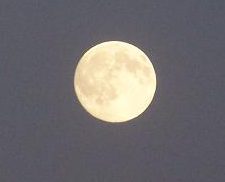
Sunday saw a total lunar eclipse of the moon high in the sky because of the season. It resulted in a great dark sky. The total eclipse lasted 61 minutes as the moon sat like a washed pearl in a black abyss .
A moon coming to within 90 percent of its closest approach or 364,740 Kilometers of earth is super moon according to a 1979 definition.The next one is next week On January 21st. The year 2019 will see 3 more, August 1st and 3oth, and September 28th!
January’s moon a blood moon.
Next weeks moon is to be a blood moon where the shadow of the earth gets on the moon when all lined up with the sun and makes an eclipse.
Farmers Almanac take:
Totality will last a bit longer than average: 1 hour and 2 minutes. The eclipse will actually begin when the Moon enters the faint outer portion (called the penumbra) of the Earth’s shadow about an hour before it begins moving into the umbra. The penumbra, however, is all but invisible to the eye until the Moon becomes deeply immersed in it. Sharp-eyed viewers may get their first glimpse of the penumbra as a faint “smudge” on the left part of the Moon’s disk about a half hour after it first enters the penumbral shadow.
Source Farmers Almanac, Joe Rao
On this Day: January 16th 1964
Hello Dolly opens on Broadway to begin a run to nearly 3000 performances.
The month of January is shaping up good for sky watchers. One event is a full moon on the 20th – 21st with a lunar eclipse.
Totality, or total coverage of the moon, will begin at 11:41 p.m. ET on January 20 (4:41 UT on January 21) and will last for 62 minutes. The entire 3.5-hour event—including partial eclipses before and after totality—will be visible from the Americas, Greenland, Iceland, western Europe, and western Africa. Sky-watchers in eastern Europe and eastern Africa will witness only the partial eclipse, while people in most of Asia will not see any part of the sky show.
Source :National Geographic
Kamloops start,6:36 PM January 20th,19.6 degrees. Totality begins 8:41 PM, pacific time, altitude 38 degrees.
West of the Behive Cluster
The eclipse will take place in the Cancer Constellation, a little west of the Beehive Cluster,Five hours 12 minutes from start to finish if you include the penumbral events preceding the event.
Done Kamloops time 11: 48 PM, 58.3 degrees altitude.
The winter solstice is on us again, December 21st at 2:23 PM pacific time the earth will begin its swing to equal daylight and night in March and then its 23 degree tip toward the sun giving us the longest daylight hours on the June summer solstice. The trip to spring is 88.99 days.
Voyager 2 left the solar system on December 5th 2018, it becomes the second interstellar craft to leave on an observation and contact mission. Voyager 1 preceded it on August 25th 2012 after doing its primary mission of data collection from Jupiter and Saturn. It also collected data on the Saturn’s moon Titan. The December 5th entry in to the Interstellar medium was reported by NASA on December 10th. the two twin probes were launched 16 days apart.
Voyager 2 now is slightly more than 11 billion miles (18 billion km) from Earth. Mission operators still can communicate with Voyager 2 as it enters this new phase of its journey, but information – moving at the speed of light – takes about 16.5 hours to travel from the spacecraft to Earth. By comparison, light traveling from the sun takes about eight minutes to reach Earth. Together, the two Voyagers provide a detailed glimpse of how our heliosphere interacts with the constant interstellar wind flowing from beyond.
Source NASA
Golden records
Each Voyager space craft carries a golden record that could last billions of years and carrying photos, recordings and messages for possible contact.
On this Day: December 11,1962
Bill Wilson a principal founder of Alcoholics anonymous enters treatment for the last time.
As reflected in NASA’s Exploration Campaign, the next step in human spaceflight is the establishment of U.S. preeminence in cislunar space through the operations and the deployment of a U.S.-led Gateway. Together with the Space Launch System (SLS) and Orion, the Gateway is central to advancing and sustaining human space exploration goals and is the unifying single stepping off point in our architecture for human cislunar operations, lunar surface access and missions to Mars. The Gateway is necessary to achieving the ambitious exploration campaign goals set forth by Space Policy Directive 1. Through partnerships both domestic and international, NASA will bring innovation and new approaches to the advancement of these U.S. human spaceflight goals Source NASA
Nasa official site May 2018
On this Day: November 21st, 2004
The Paris club writes off up to a 100 billon dollars of Iraq’s debt.
The people at Nasa have recently reinforced their commitment to space, the moon, and other planets by a new public relations display. The above statement is from May and you tube video from last week.
The people of earth are enriched by knowledge aquired every day by the fellowship of the discovery of the unknown and we should be grateful for its free and unfettered access. It truly is a shared goal. Good luck to the people of planet earth and may all new knowledge find place in attending the problems of this world.
The higher the latitude the greater the effect of the harvest moon. The northern hemisphere were we are has the benefit of diminishing daylight at this time making the effect more pronounced.
On this Day: September 25th 1977
Four thousand + people run the first Chicago Marathon.
The fall equinox is on tomorrow and at some point around 6:45 PM the balance of sun light and dark will be equal. Daylight will be diminishing to the winter solstice coming at 5:23 December 21st.
On this Day: September 21st 1981
The US government confirms Sandra Day O’Connor to the SC.
The sun west of Merritt, Red from smoke, of the 2017 fire season in the Sothern interior of BC File Photo KDG
Nasa launched a probe to go into the atmosphere of the sun this week. The Parker probe is named after the scientist that first came up with the idea of solar winds. The probe is expected to go within 6.4 million KM of the sun and take data readings from instruments behind a new heat shield. Space weather will be the main focus of the 7 year mission.
The red planet is visible to the naked eye at night now, it will be closest to the earth since 2003 tonight, July 31st 2018.
On July 30-31, 2018, Mars and Earth are closer than since their historically close approach in 2003. Mars was closer in 2003 than in some 60,000 years, and it’s now only slightly farther from Earth now than then. It’s about 35.78 million miles (57.59 million km) away at its closest on July 31 at 08:00 UTC. That time places Mars’ closest approach before sunrise on July 31 for North American time zones – Earth sky news
Look to the right and down a little from the waning moon tonight. The red dot is visible, that is Mars from Merritt BC. Ca.
On this Day: July 31st 2012
Michael Phelps sets new record for most Olympic medals in one game.
The local art walk project is on its final weekend. The Arts Council and the Chamber as well as the City has endorsed the walk about town to see the local artists work. Passports are still available at the walk sponsored business locations including the Olde Court House Gallery 1840 Nicola avenue. The council says get your passport stamped to enter a draw for prizes.
Locations:
Community futures
Merritt Civic center
Courthouse Gallery
Community Policing Office, Spirt Square
Earth Walker Spiritual Shop
Expresso Etc.
Lynda’s Café
Blacks Pharmacy
Spanner and Webb
Vision Quest optical
Breathe Bikes
Home hardware,
Purity Feed
Save on foods
Nicola Valley Museum and Archives
The walk goes to July 31st. Quality reasonable community event!
Watch the moon as an eclipse down under will color it red, Mars in opposition, partnered with Saturn for close approach to earth as well. Nasa live