You are presumed to be honest and responsible without evidence to the contrary beyond a reasonable doubt… on the balance of probablilties you are justified by 51 % likelyhood.
Since you’re looking for a solid brunch option, a Savory Dutch Baby is a fantastic choice. It’s essentially a giant, puffed-up pancake baked in a cast-iron skillet. It looks impressive but requires very little active prep time, leaving you more room to enjoy your morning.Savory Herb and Parmesan Dutch BabyThis version leans into earthy flavors and works perfectly as a standalone meal or paired with a side of thick-cut bacon.
Prep time:
10 mins
| Cook time:
20 mins |
Serves: 2–4Ingredients| Category | Item | Quantity ||—|—|—|| The Batter | Large eggs (room temperature) | 3 || | Whole milk (room temperature) | ½ cup || | All-purpose flour | ½ cup || | Grated Parmesan cheese | ¼ cup || | Fresh herbs (chives, thyme, or parsley) | 1 tbsp, minced || | Salt and Black pepper | To taste || The Pan | Unsalted butter | 3 tbsp |Instructions * Preheat the Oven: Place a 10-inch cast-iron skillet inside the oven and preheat to 220°C (425°F). Getting the pan bone-searing hot is the secret to the “lift.” * Whisk the Batter: In a blender or a medium bowl, combine the eggs, milk, flour, salt, and pepper. Process or whisk until completely smooth with no lumps. Stir in the minced herbs and half of the Parmesan by hand.
* Melt the Butter:
Once the oven is ready, carefully remove the hot skillet. Drop the butter in and swirl it until it’s melted and foamy (be careful not to let it burn). * Pour and Bake: Quickly pour the batter into the center of the skillet. Sprinkle the remaining Parmesan over the top. * The Rise: Slide the skillet back into the oven. Bake for 15–20 minutes until the edges are high, puffed, and a deep golden brown. Do not open the oven door during the first 15 minutes, or it might deflate!
* Serve:
Remove from the oven and serve immediately. It will start to settle as it cools, which creates a perfect “bowl” for toppings.Variation IdeasIf you want to branch out from the savory side, you can easily pivot this into a Sweet Classic: * Omit the herbs, pepper, and cheese. * Add a teaspoon of vanilla extract and a tablespoon of sugar to the batter.
* Top with fresh lemon juice and a heavy dusting of powdered sugar once it comes out of the oven.
Would you like me to find some local spots in the Nicola Valley that serve a great traditional brunch if you’d rather head out?
Art of Photography, be a bird of a feather will you..
Context: National day of morning for injured and killed in accidents.
Pedestrian deaths in Canada.
On This day of morning,we consider those lost in pedestrian 🚸 actions. On average 300. Pur anum
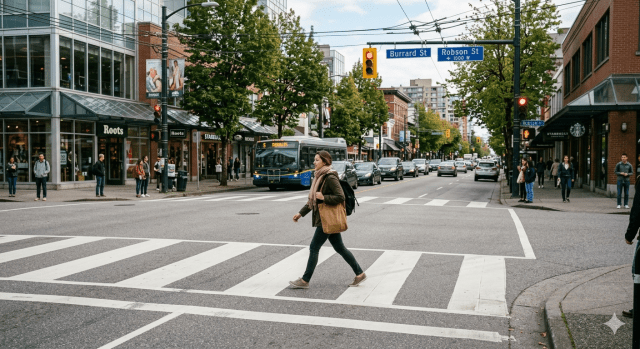
Welcome, and thank you for seeking clarification on safe street crossing practices and the crucial (and often misunderstood) bylaw regarding a pedestrian’s lack of right of way. Crossing the street safely is a fundamental life skill that, when performed correctly, ensures the smooth flow of traffic and, most importantly, protects you from harm.Let’s dive into the specifics, starting with the bylaws and then expanding on the physical act of crossing.###
Part 1: Deciphering the Right of Way Bylaw
The concept of ‘right of way’ is the cornerstone of traffic safety, but its application can be nuanced. Many municipalities have specific bylaws regarding where and when pedestrians *lose* their right of way. It’s important to research the exact laws of your city or region, as terminology (like “jaywalking”) varies, but here is a detailed, general overview of the critical distinction:####
The General Rule
Generally speaking, when you are in a **designated crosswalk** (whether marked with white lines or unmarked at a T-intersection, 3-way, or 4-way intersection), and **traffic is required to stop for you,** you have the right of way once you have stepped into that crossing.####
The “Between Intersections” Bylaw
(Where You Do Not Have Right of Way)This is the rule that often trips people up and can lead to dangerous situations and tickets.**The core concept is this: In most urban and suburban areas, pedestrians are prohibited from crossing a street anywhere *between* intersections, and if they do so, they must yield to all vehicular traffic.**Think of it this way:
* **Intersection to Intersection:**
This is the segment of road between two legal crossing points. * **The No-Go Zone:** This entire middle section is where vehicles are travelling and generally do not expect pedestrians to be crossing.**Why does this bylaw exist?**This bylaw isn’t meant to make your walk inconvenient; it’s about predictability.
1. **Driver Expectations:**
Drivers are trained to look for pedestrians at intersections and crosswalks. They are *not* expecting someone to step out from behind a parked car or dart across the middle of the road.
2. **Speed:**
Vehicles are often travelling at higher, consistent speeds between intersections. This reduces their stopping distance and significantly increases the severity of an impact.
3. **Visibility:**
Parked cars, delivery trucks, and even trees can obstruct a driver’s view of someone trying to cross mid-block.**The Implications for You** * **NO RIGHT OF WAY:** When you cross between intersections, **all traffic has the absolute right of way.** This means vehicles are *not required to stop* for you, and it is your responsibility to ensure the way is completely clear. * **Liability:** If you cross mid-block, fail to yield, and get hit by a vehicle, you are likely to be found at fault (or partially at fault) for the accident, which has massive legal, medical, and financial consequences. * **Tickets:** In many places, “crossing where prohibited” is a fineable traffic offense.
### Part 2:
How to Safely Cross the Street
Now that we understand the legal landscape, let’s explore the physical, step-by-step process of safely crossing a street. These steps apply whether you are at a marked crosswalk or an intersection, but they are absolutely non-negotiable if you are forced (or choose, despite the rules) to cross elsewhere.####
1. Preparation and Location *
**Always Cross at Corners or Crosswalks:** This is the gold standard. Use a marked crosswalk (with the white ‘Zebra stripes’) or a legal, unmarked intersection crossing. Look for intersections with traffic lights or “Pedestrian Crossing” signs. * **Utilize Crosswalk Buttons:** If the crosswalk has a button (actuator), PRESS IT. This triggers the signal cycle to include your crossing time and alerts drivers that a pedestrian is waiting.####
2. The Golden Rule:
Stop, Look, and Listen
This isn’t just for children; it is the single most important safety protocol. * **STOP at the Curb (Not in the Road):** Always come to a complete stop on the sidewalk or shoulder before entering the roadway. Do not wait with one foot already on the asphalt. * **LOOK Both Ways (Repeatedly):** Look left, then right, then left *again* before you even consider stepping out. Why “left again”? Because in countries that drive on the right side of the road (like Canada), the traffic closest to you is coming from your left. A lot can change in the 3 seconds it takes to look right. * **LOOK for Turning Vehicles:** Don’t just look straight down the street. Check all corners of the intersection for cars making right or left turns. Many pedestrian incidents occur when a vehicle turns into a crossing pedestrian because the driver was focused on other cars and not people.
* **LISTEN:**
Traffic noise can sometimes give you warnings before you see a car. Electric vehicles are quiet, so this is especially important now. Turn down any loud music and remove earbuds if you need to be acutely aware of your surroundings.####
3. Establish Eye Contact
This is your safety confirmation. * **Do Not Assume a Driver Sees You:** Even if a car is slowing down, or even if it has stopped, do not assume they know you are there. * **Look at the Driver:** Look for the driver’s eyes. Wave at them or give a nod. Wait for them to acknowledge you—either by a wave, a nod, or a clear, complete stop. * **Only Proceed After Confirmation:** If you cannot make eye contact (e.g., heavily tinted windows), proceed with extreme caution, or, better yet, wait for another car.####
4. The Crossing
* **Walk, Do Not Run:** Crossing is not a sprint. Step out deliberately and walk at a steady pace. Running increases your risk of tripping, and it’s actually harder for a driver to track a fast-moving object. * **Walk straight across, not diagonally.
** * **Maintain Awareness:**
Continue to look left and right as you cross, specifically scanning the traffic that is approaching you in each lane you are entering. Be especially cautious of the “second lane” threat—when one car in the closest lane stops for you, a second car in the adjacent lane might not be able to see you and might pass without stopping.###
Part 3: Crossing without Causing Difficulty for Others
The hallmark of a safe pedestrian is being respectful and predictable. This minimizes risk and avoids creating hazardous situations for drivers and other road users.
#### How to Be “Difficulty-Free” * **Be Predictable:**
Follow the steps above. When you walk, do so deliberately. When you stop, stop completely on the curb. Drivers panic when they cannot predict your next move. * **Cross When the Coast is Clear (If Necessary):** If you are at an unmarked crossing and cars are coming, wait. It is much better (and more “difficulty-free”) for you to wait 30 seconds for a gap in traffic than it is to step out and force five cars to slam on their brakes. * **Be Visible:** This is crucial, especially in poor weather or at night. * *
*Nighttime:**
Wear bright clothing or something with reflective strips. Carrying a small flashlight or turning on your phone’s flashlight can significantly improve a driver’s ability to see you. * **Wet Weather:** Rain and wet pavement significantly increase a vehicle’s stopping distance. Be extra patient and cautious. Don’t assume a driver *can* stop quickly.
* **Put the Distractions Away:**
This is non-negotiable. Texting, looking at maps, browsing social media, or talking animatedly on the phone while crossing are incredibly dangerous activities. They significantly reduce your reaction time and your ability to “Stop, Look, and Listen.” Your complete focus must be on the road.
* **Don’t Step into a Vehicle’s Path:**
This is the essence of yielding right of way. If you see a vehicle coming and you can’t be sure you can cross *well ahead* of it (especially if it has the legal right of way between intersections), DO NOT Cross. A vehicle cannot stop on a dime.
**Conclusion:**
Safe street crossing is not complicated, but it does require mindfulness, patience, and a clear understanding of traffic laws. By prioritizing crossing at intersections, knowing that you lose your right of way when crossing between intersections, and consistently applying the
“Stop, Look, and Listen”
protocol, you ensure your own safety and contribute to a more efficient and harmonized traffic flow for everyone. Your walk will be safer, less stressful, and completely “difficulty-free.”
Disclaimer: this is not legal or professional advice.
We have reviewed this from a non expert view. And would add that you should govern yourself accordingly. Rely on the rules of the road that got you your driver’s license.
Including discernment that would involve participants that don’t have that capacity whether young or old.
Not a clear photo of the moon I snaped. But in unblur mode, goggle photos; it came out with land and oceans. Poetry, no green cheese at all, or is that Atoll.
Editors Note:
The Chinese robotic mission on the dark side of the Moon is interested in the amount of hydrogen that’s captured in the soils up there. At this time there’s a bit of excitement about that.
Careful with facts
If it’s sensational it’s worth a another look at sources.
While NASA is currently working to establish a **sustained human presence** on the Moon through the Artemis program, the idea of “rehabilitating” it (terraforming it into a lush, Earth-like world) is considered significantly more difficult than terraforming Mars. As of 2026, the consensus is that the Moon cannot support a global ecology with current or even near-future technology. Here is why: ### 1. The Gravity Problem (The “Leaky Bucket”) The Moon’s most fundamental limitation is its size. Its gravity is only about **16.5%** (1/6th) of Earth’s. * **Atmospheric Escape:** To have an ecology, you need an atmosphere. However, the Moon’s gravity is so weak that gas molecules move faster than the Moon’s “escape velocity.” * **The Result:** Even if we created a thick atmosphere today, it would drift off into space almost immediately. Unlike Mars, which might hold an atmosphere for millions of years, the Moon would lose its air in a geological heartbeat. ### 2. The Radiation and Shielding Issue The Moon lacks a global magnetic field and a thick atmosphere to block cosmic rays and solar flares. * **Current Strategy:** NASA’s 2026 plans involve burying habitats under several meters of **lunar regolith** (Moon soil) or placing them in deep lava tubes to protect astronauts from radiation. * **Ecology Barrier:** You cannot have a “surface ecology” (like forests or open lakes) because the radiation would sterilize the soil and kill most complex life forms. ### 3. The 708-Hour Day/Night Cycle The Moon rotates very slowly. One “day” (sunrise to sunrise) lasts about **29.5 Earth days**. * **Extreme Temperatures:** This results in two weeks of blistering heat (up to **127°C**) followed by two weeks of total darkness and freezing cold (down to **-173°C**). * **Biological Stress:** Most Earth plants and animals cannot survive 14 days of total darkness followed by 14 days of direct, unfiltered solar radiation. ### Comparison: Moon vs. Mars for Life Support | Feature | The Moon | Mars | |—|—|—| | **Gravity** | 1.62 \text{ m/s}^2 (Very Low) | 3.71 \text{ m/s}^2 (Moderate) | | **Atmosphere Potential** | None (Escape velocity too low) | Low (Needs massive CO_2 input) | | **Day Length** | ~708 hours (1 month) | ~24.6 hours (Similar to Earth) | | **Water Availability** | Ice in dark polar craters only | Subsurface ice and polar caps | ### NASA’s 2026 Reality: “Pockets of Life” Instead of rehabilitating the whole Moon, NASA and its partners (like SpaceX and Blue Origin) are focused on **In-Situ Resource Utilization (ISRU)**. * **Oxygen from Dust:** We have the technology to bake oxygen out of lunar rocks (which are about 45% oxygen). * **Lunar Bases:** By 2028, NASA aims to have the first permanent “basecamp” at the South Pole. * **Closed-Loop Systems:** Life will be sustained in **artificial ecologies**—pressurized greenhouses and pods where air and water are recycled with 98% efficiency. **Summary:** We have the technology to put “life” **on** the Moon inside pressurized cans, but we do not have the technology to make the Moon itself a “living” world.
Mars Rehabilitation
As of April 2026, **NASA’s official position** remains that rehabilitating Mars’s atmosphere and ecology (terraforming) is **not possible with current technology**. While science fiction often makes it look like a matter of willpower, NASA-funded studies and current mission data highlight several “hard stops” that we cannot yet overcome. ### 1. The Carbon Dioxide Shortage The most significant hurdle is a lack of raw materials. To make Mars warm enough for liquid water and life, we would need to thicken its atmosphere using greenhouse gases, primarily CO_2. * **The Problem:** A 2018 NASA-sponsored study concluded that there simply isn’t enough CO_2 trapped in Mars’s polar ice caps or soil to create a thick enough atmosphere. * **The Reality:** Even if we successfully vaporized every bit of CO_2 on the planet, the atmospheric pressure would only rise to about **7%** of Earth’s—not enough to prevent your blood from boiling or to keep the planet warm. ### 2. The Missing Magnetic Shield Even if we could magically “import” an atmosphere (by crashing comets into the planet, for example), Mars has no global magnetic field to protect it. * **Atmospheric Erosion:** Without a magnetosphere, the **solar wind** (a stream of charged particles from the sun) would eventually strip any new atmosphere away into space, just as it did billions of years ago. * **Current Research:** NASA’s **ESCAPADE** mission (which launched in late 2025 and is currently en route) is specifically studying this “atmospheric escape” to better understand how the sun interacts with the Martian environment. ### 3. “Living Off the Land” vs. Terraforming NASA has shifted its focus from **rehabilitating the planet** to **sustaining human life in small pockets**. This is known as **In-Situ Resource Utilization (ISRU)**. * **MOXIE:** The Mars Oxygen In-Situ Resource Utilization Experiment on the Perseverance rover proved we can extract oxygen from the Martian CO_2 atmosphere. * **2026 Strategy:** NASA’s current “Moon to Mars” objectives focus on building pressurized habitats and using local ice for water and fuel, rather than trying to change the entire planet’s climate. ### Comparison: Current vs. Required Technology | Feature | Current Capability (2026) | Needed for Rehabilitation | |—|—|—| | **Atmospheric Pressure** | ~0.6% of Earth’s | ~100% of Earth’s | | **Oxygen Production** | Small-scale (grams per hour) | Planetary-scale (billions of tons) | | **Protection** | Lead-lined habitats / Underground | Artificial Global Magnetic Shield | | **Temperature** | Average -62°C (-80°F) | Average ~15°C (59°F) | > **Bottom Line:** NASA views Mars as a place where humans might live in “indoor” colonies within the next few decades, but “rehabilitating” the planet’s exterior ecology is considered a task for the distant future—likely centuries away—requiring technologies that do not yet exist. >
Keeping your senseability may be a challenge however many people successfully relieve anxiety and keep on an even keel. And as you would imagine, you never hear too much about them.
They are not usually on the on the 6:00 news.
Another option that some people try is rage rooms but below is an opinion on reliability and usefulness. We’ve never tried one but we don’t particularly recommend them. The immediate relief might become some sort of a go-to and when challenged in traffic or some other thing. Hey, you may resort to some kind of violence.
We would suggest also that not everything happens for a reason in a linear sense, you have sense of your own and you can take your own destiny, particularly as it results to stress into your own hands and there’s help available.
Rage rooms
Entertainment
The practice we are describing is commonly referred to as **Rage Rooms** (or “Smash Rooms”). Participants pay for a set amount of time to put on protective gear and use sledgehammers, baseball bats, or crowbars to demolish items like glassware, electronics, and—in some larger venues—old cars.Whether this is “legitimate therapy” or just a high-energy fundraiser depends on how you define the term, as there is a significant divide between its popularity and its clinical endorsement.
### 1. The Clinical Perspective: Does it work?Most mental health professionals view rage rooms as **entertainment** or **stress relief**, rather than a legitimate therapeutic modality.
* **The Catharsis Myth:
** Many psychologists argue that “venting” through physical destruction can actually be counterproductive. Research into the **Catharsis Theory** often suggests that practicing aggressive behavior to relieve anger can reinforce that same aggression, making a person more likely to react with anger in the future rather than less.
* **Missing Skills:**
Traditional therapy focuses on “bottom-up” (calming the nervous system) or “top-down” (changing thought patterns) approaches. A rage room doesn’t teach emotional regulation or how to address the source of the stress.
### 2. Is it Endorsed?While you won’t find “Sledgehammer Therapy” in the Diagnostic and Statistical Manual of Mental Disorders
(DSM-5), some therapists acknowledge its value as a **temporary physical release**, provided it is paired with actual cognitive work.
* **Validation:**
For some, the act of “breaking” something feels like a physical manifestation of an internal struggle, which can feel validating in the moment.
* **Safety:**
It provides a controlled, legal environment for those who feel an overwhelming physical urge to lash out, preventing them from damaging their own property or hurting others.### 3. Usage in Fundraisers and Community EventsYou are correct that these activities are frequently used as **fundraisers** (often called “Car Smashes”).
* **The Appeal:**
They are high-visibility, cathartic, and draw a crowd. * **Context:** In these settings, it is almost purely for entertainment and community bonding rather than any claim of psychological healing.
### Summary Table| Feature | Rage Rooms / Car Smashes | Professional Therapy ||—|—|—||
| Mostly seen as recreation | Peer-reviewed clinical methods |In short, if you find yourself with a sledgehammer in front of an old sedan, it’s likely a great workout and a satisfyng way to spend twenty minutes, but it’s generally considered a “band-aid” rather than a cure for deep-seated stress.
Good Luck
Try art therapy first or after or:
Disclaimer this is not medical advice. If you are having difficulties affecting your health, seek medical attention.
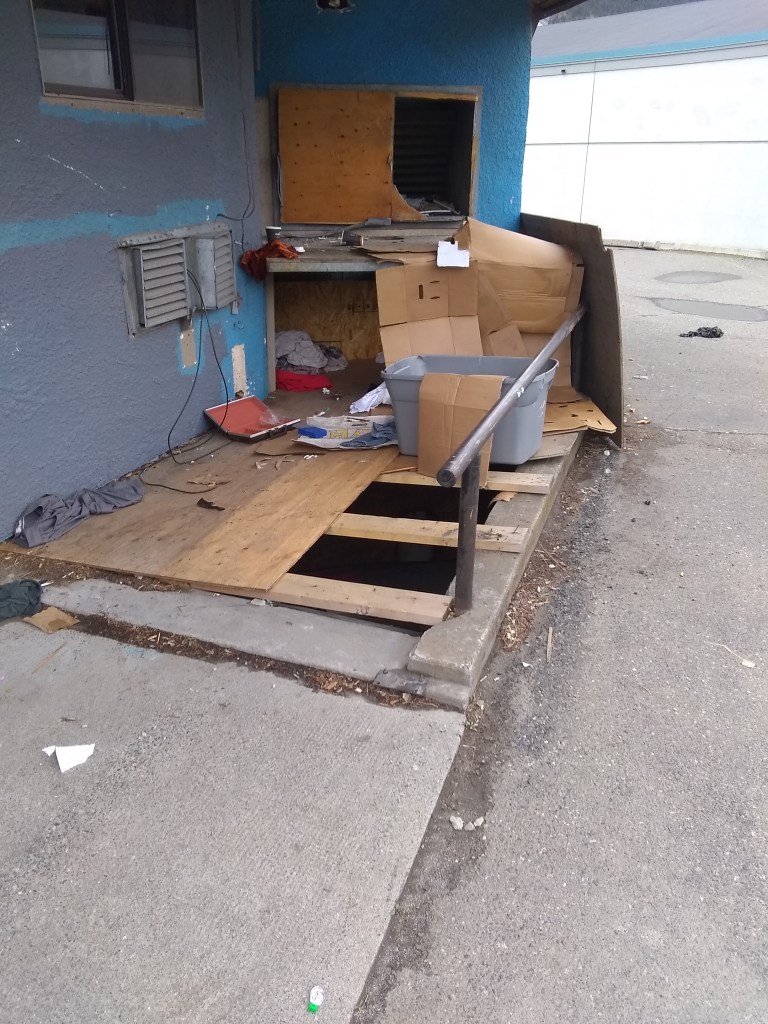
So somebody had been sleeping in this makeshift shelter. And it also allegedly removed all the copper tubing from the air conditioning system and according to the installers of the new air conditioning system probably sold it for Scrap.
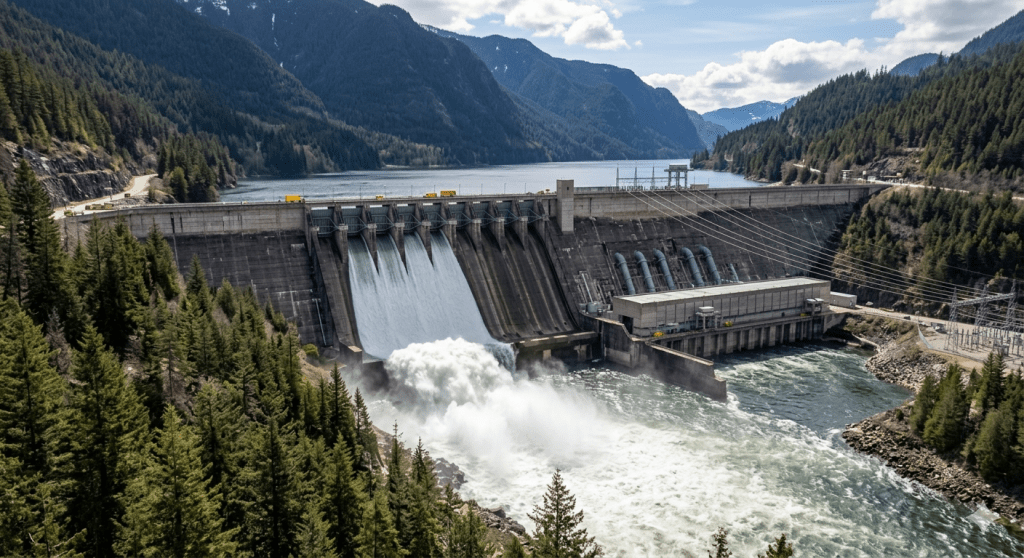
The **Columbia River Treaty**, signed in 1961 and implemented in 1964, is a cornerstone of transboundary water management between Canada and the United States. Its primary goal was to harness the Columbia River for massive hydroelectric power generation and to provide coordinated flood control following the catastrophic Vanport flood of 1948. Under the agreement,
British Columbia constructed three major dams—**Mica, Duncan, and Keenleyside (Arrow)**—while the U.S. was permitted to build the **Libby Dam**, which floods into Canadian territory. These projects effectively tamed the river’s seasonal volatility, providing enough storage to protect downstream cities like Portland and generating roughly half of B.C.’s potential hydroelectric power. The U.S. pays Canada a “Canadian Entitlement,” which is half of the estimated downstream power benefits made possible by Canadian water storage.However, these benefits came with significant human and environmental costs.
The creation of vast reservoirs inundated approximately **110,000 hectares** of Canadian land, displacing over 2,000 residents and several First Nations communities while permanently burying historical sites, farms, and local infrastructure. Ecologically, the dams severely disrupted salmon and steelhead migration and altered the natural flow of the river, impacts that the original treaty largely ignored in favor of economic gain.
As of **April 2026**, the treaty is in a critical transition period. While an Agreement-in-Principle was reached in 2024 to modernize the pact, formal negotiations have faced recent pauses.
Current efforts are focused on rebalancing power benefits and, for the first time, formally incorporating ecosystem health and Indigenous cultural values into the river’s future management.
Editors view
Be encouraged that a life is within reach of us and our neighbors.K However we should take the privilege of the preservation of culture and historical sites as more important now than it was when we were just breaking trail.
*Acrothesia** refers to a localized increase or abnormality in tactile sensitivity, often manifesting as an intense or heightened perception of touch in the extremities, such as the fingers or toes. Unlike general hyperesthesia, acrothesia specifically targets the distal portions of the limbs and is frequently linked to underlying peripheral nerve irritation or early-stage neuropathy. When the nervous system is compromised, the threshold for sensory input drops, causing ordinary contact—such as the brush of clothing or a cool breeze—to be interpreted by the brain as exaggerated or even uncomfortable sensations.
## The Role of Infections and Mold
In the context of systemic or localized infections, acrothesia often serves as a clinical indicator of **neurotropism**, where a pathogen or its metabolic byproducts affect nerve endings. Certain fungal infections, particularly those involving toxicogenic molds like:
*Stachybotrys chartarum*
(black mold)
or specific species of *Aspergillus*, can release **mycotoxins** that are potent neurotoxins. These toxins can trigger inflammatory responses or oxidative stress within the myelin sheath of peripheral nerves, leading to the sensory distortions characteristic of acrothesia.
In chronic inflammatory response syndrome (CIRS) caused by water-damaged buildings, the persistent exposure to these mold spores can result in sustained nerve hypersensitivity, making acrothesia a common, albeit distressing, neurological symptom of mold-related illness.










 Kevin Griffiths
 percypaschal
