Featuring Ryan Bellville,season 29
break a bone:a funny bone…

The Best of the Halifax Comedy Festival
Photo: Pexels.com

To the seasons of life

Featuring Ryan Bellville,season 29
break a bone:a funny bone…
Photo: Pexels.com


Today is World Alzheimer’s day. It’s a disease. It affects many people,it is more than just a senior’s moment. It’s a degenerative disease. Organic in its nature and debilitating.
Stephen King born September 21st +…September 21st marks several significant moments in geopolitical history, severe natural disasters, and the births of influential figures across literature, music, and screen.
Major Historical Events & Catastrophes
* 1921 Oppau Chemical Explosion (Catastrophe): A tower silo containing 4,500 tonnes of a mixture of ammonium sulfate and ammonium nitrate fertilizer exploded at a BASF plant in Oppau, Germany. The blast killed an estimated 500 to 600 people, injured thousands, and destroyed much of the surrounding town.
* 1938 Great New England Hurricane (Catastrophe): One of the most destructive tropical cyclones in U.S. history made landfall as a Category 3 hurricane on Long Island and Southern New England. Travelling at high speeds, it caught the region by surprise, causing 500 to 700 deaths and widespread destruction.
* 1999 Chi-Chi Earthquake in Taiwan (Catastrophe): A powerful 7.7-magnitude earthquake struck central Taiwan near Chi-Chi. It resulted in over 2,400 deaths, thousands of injuries, and billions of dollars in damage, making it Taiwan’s second-deadliest earthquake in recorded history.
* 2013 Westgate Shopping Mall Attack (Major Event): Armed militants associated with the extremist group al-Shabaab attacked the Westgate shopping center in Nairobi, Kenya. The multi-day siege resulted in 67 deaths and highlighted global security threats.

Notable Birthdays
* H.G. Wells (1866 – 1946)
An English author often called the “father of science fiction.” His foundational works—including The Time Machine, The War of the Worlds, The Invisible Man, and The Island of Doctor Moreau—pioneered core sci-fi tropes that still shape literature and film today.
* Leonard Cohen (1934 – 2016)
A legendary Canadian singer-songwriter, poet, and novelist. Celebrated for his deep bass baritone voice and complex lyricism surrounding romance, faith, and grief, he authored iconic songs such as “Hallelujah” and “Suzanne.”
* Stephen King (Born 1947)
An prolific American author dubbed the “King of Horror”. He has published dozens of bestselling novels, including The Shining, IT, Carrie, and Misery, selling hundreds of millions of copies worldwide and spawning dozens of film and television adaptations.
preseason and reg schedule
At this writing, the Merritt centennials are playing with a five to one lead over The Columbia Rockies… 12 minutes left in the 3rd period.
Overview of our systems and anti systems.
Size, Causes, and FixesThat reel you saved nails the core story — and it’s exactly what NOAA watches every summer.You saved a breakdown from late August that maps it out: the Mississippi drains 41% of the lower 48, from Montana to Ohio. All that rain, snowmelt, and especially fertilizer runoff carries nitrogen and phosphorus south into the Gulf.Why the Mississippi creates it
Farms, cities and sewage across 22 states leak excess nitrogen and phosphorus into the river system.Algae explosion: When those nutrients hit the warm, stratified Gulf, they supercharge algae growth.Oxygen crash: The algae die, sink, and decompose — bacteria eating them use up the oxygen near the bottom. Oxygen drops below 2 mg/L, so fish, shrimp and crabs have to swim out, and anything that can’t move gets stressed or dies.That’s why it happens every summer and fades in fall when storms mix the water.
For summer 2026, NOAA’s June ensemble forecast was about 7,027 square miles — bigger than the long-term average of 5,223 sq miles and the largest projection since 2017. For context, that’s larger than Connecticut, close to New Jersey in bad years.The forecast is based on May river discharge and nutrient loads from USGS. The actual measured size comes from the July research cruise — NOAA will confirm it in early August. Last year’s measured zone, for example, was 6,705 sq miles, the 12th largest in 38 years of mapping.
The long-term goal set by the Mississippi River/Gulf Hypoxia Task Force is to get the 5-year average down to 1,900 sq miles by 2035 — we’re still more than double that.What actually shrinks itIt’s not about cleaning the Gulf itself, it’s about keeping nutrients out upstream:On farms: cover crops, buffer strips along streams, wetlands restoration, precision fertilizer timing — so less nitrogen and phosphorus leaves the field. USGS shows nitrogen has stabilized since the 80s, but phosphorus rose for a while.
upgraded wastewater treatment to strip nutrients.System-wide: The Task Force is using $60M from the Bipartisan Infrastructure Law to scale those state nutrient-reduction strategies.Less May-June nutrient load = smaller algae bloom = less oxygen loss in July. Hurricanes can also break it up temporarily, but they don’t solve the cause.Your saves have been tracking this river-to-ocean connection for a while — that’s the exact link NOAA models: river nutrients in spring predict Gulf oxygen in summer.
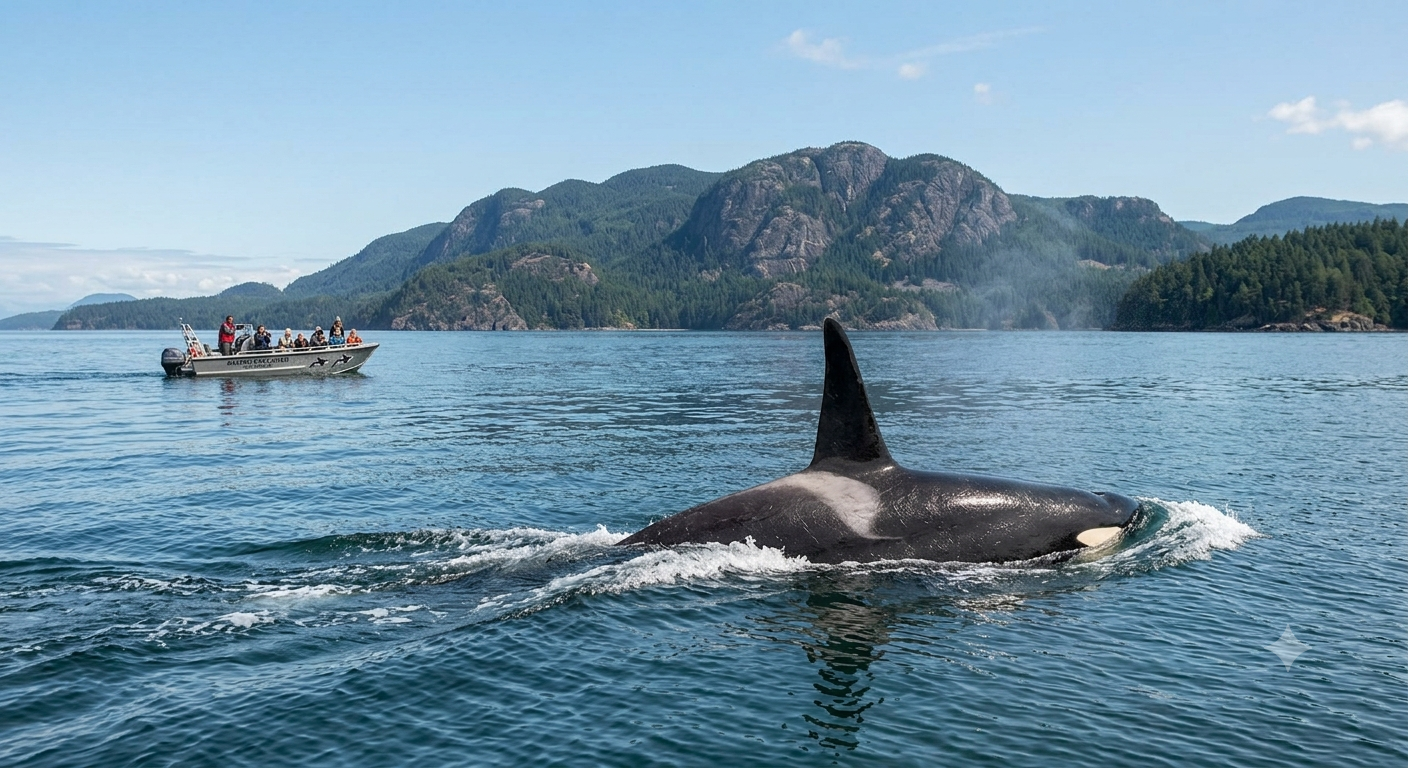
Nitrogen pollution in the ocean triggers cascading environmental damage. Runoff—primarily synthetic agricultural fertilizers, livestock waste, and urban wastewater—enters river systems and flows into coastal waters.
Excess nitrogen acts as a massive fertilizer for marine phytoplankton and algae, causing explosive, uncontrolled population blooms. * Hypoxia: When these vast algae blooms die, they sink to the ocean floor. Bacteria consume immense amounts of dissolved oxygen to decompose the organic matter, leaving the water severely depleted of oxygen (hypoxic). *
The Mississippi River watershed drains over 40% of the contiguous United States, channeling tons of nitrogen directly into the Gulf. Every summer, this creates a hypoxic “Dead Zone” spanning thousands of square miles off the coast of Louisiana and Texas where most marine life cannot survive.Impact on Marine Life & WhalesWhales breathe air, so they do not suffocate directly from low water oxygen levels. However, nitrogen pollution impacts cetaceans—including killer whales (orcas)—through ecological cascading effects: * Prey Displacement & Food Web Collapse: Fish, shrimp, and mobile marine organisms flee the hypoxic zones, while immobile bottom-dwellers die off. This shifts prey distribution, forcing apex predators like killer whales and baleen whales to travel farther, expend significantly more energy, and alter their natural hunting grounds to find food. *
Nitrogen fuels toxic algae species, such as Pseudo-nitzschia (which produces domoic acid). Small fish and krill consume these toxic algae, and the neurotoxins concentrate as they move up the food chain. Top predators like killer whales ingest lethal or debilitating doses through bioaccumulation, leading to neurological damage, seizures, reproductive failure, and strandings. * Habitat Degradation: High nitrogen levels alter coastal ecosystems, bleaching offshore coral reefs (like the Flower Garden Banks in the northern Gulf) and killing off sea grass beds, destroying nursery grounds for key whale prey.Note on Killer Whales in the Gulf:While killer whales are most famous in cold coastal waters like the Pacific Northwest, a distinct, resident population of Gulf of Mexico killer whales inhabits the deep waters off the continental shelf. Because apex predators rely heavily on healthy, multi-tiered food webs, toxic algae outbreaks and widespread prey displacement represent major long-term stressors to their survival and reproductive success.
ho’s up for it?.
Planet paradise, “go, be fruitful and multiply subdue the Earth”
Mystro Kevin Griffiths recommends
20 September 2026. Ad info…
My name sake has been productive back in Europe with concerts. The culture of sounds, its resonator does pursue listeners to enjoy an evening of soul stirring reflection.

Music has charm to settle…
Think of those suffering this weekend, winter coming on, be an escape for them… by hitting the high note when ever things start to go flat PP

All great Runs Start…

somewhere …
Here you go, Kevin — you in car #7 battling Tony Curtis in #21, right on the ice with the floes closing in behind you, just like the Great Race finale.Want to refine it further?
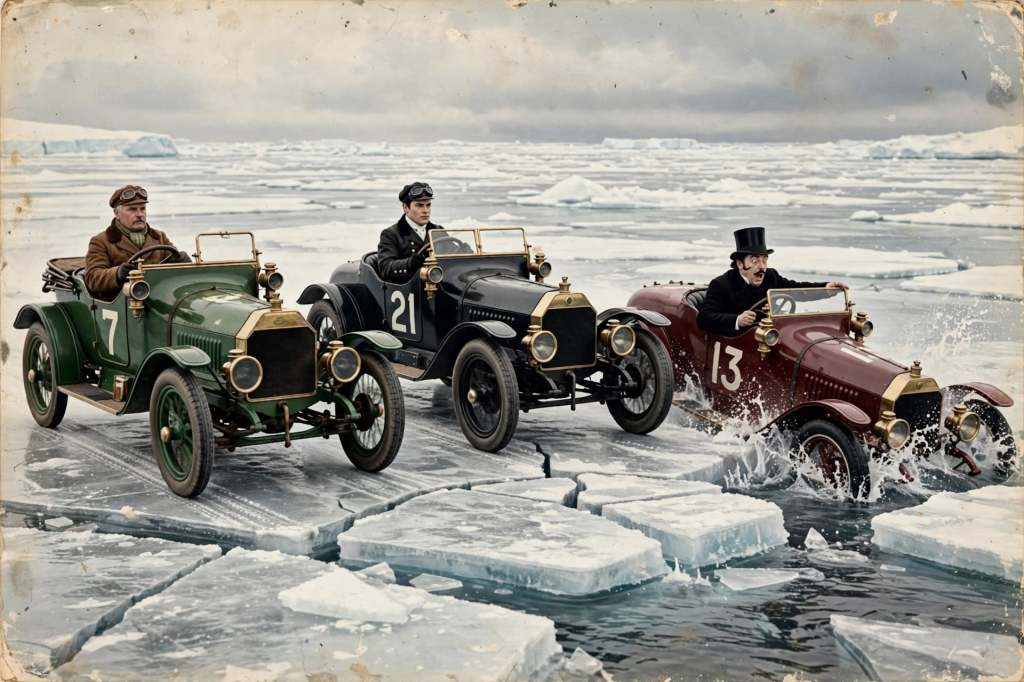
Perfect — classic slapstick justice. You and Tony sailing clean across the solid plates in #7 and #21, while old #13 with the top-hat villain goes down nose-first through the cracking floe, mouth wide open.That’s the exact beat the Great Race always played — the good guys race on, the villain gets the icy bath
Many thanks to Amber Papou who’s sneaker bottoms I admired for decades as her tanasity that ran her clear to being CEO of the Tourist Industry Association of British Columbia. Was every step an inspiration.

By the By, creativity is always in dynamic flux.
Three dots means story continuous and ongoing and progressive.
By physical definition, a solar eclipse cannot occur at night because it requires the Sun to be above the horizon so that the Moon can block its light relative to an observer on Earth. If you were witnessing a dramatic celestial alignment overhead in the night sky over Merritt, British Columbia, it was actually a lunar eclipse—where the Earth passes directly between the Sun and the Moon, casting a deep reddish shadow across the lunar surface. While daytime observers in the Nicola Valley most recently caught a minor partial solar eclipse on the morning of August 12, 2026, any nocturnal eclipse seen locally is always lunar in nature.
For a fascinating look into how visual shadows behave during solar alignments, check out The LAST Eclipse in History, which explains the unique twilight lighting conditions caused by moon shadows.
British Columbia has moved on to a permanent daylight saving time, meaning November 1st will not be a time change. We will stay on this particular Pacific time for one more time change on March 8th 2027 and that’ll be it.
Today 46 Percent of global market belongs to Canon…
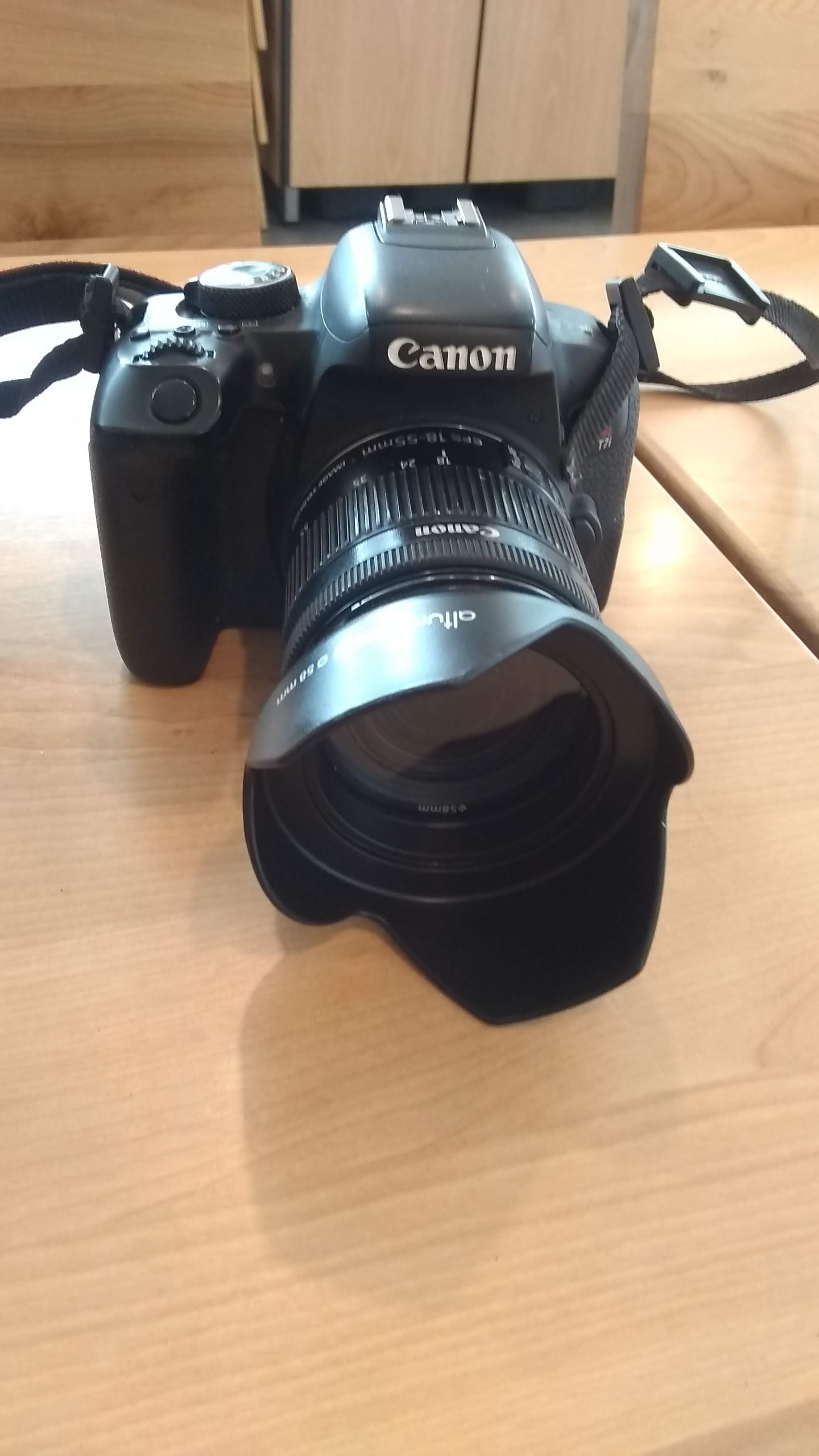
In November 1933, a small group of visionary tinkerers ****—Goro Yoshida, Saburo Uchida, and Takeo Maeda—came together in a rented room in Tokyo’s Azabu district to establish the Precision Optical Instruments Laboratory. Yoshida, a skilled self-taught technician who repaired motion picture equipment, had disassembled a high-end Leica camera out of curiosity and realized its internal components were made of standard brass, iron, and aluminum, rather than precious metals. Convinced that Japan could produce a world-class 35mm rangefinder camera locally at a fraction of the cost of imported German models, he partnered with his brother-in-law, Uchida, who managed the business and financing alongside Maeda, who brought crucial organizational expertise.Together, the team built Japan’s first 35mm camera prototype with a focal-plane shutter in 1934, naming it the Kwanon after the Buddhist goddess of mercy. While Yoshida drove the early mechanical innovations, bringing the camera to full commercial viability required scaling up operations and navigating complex German patents. Uchida secured key backing from Dr. Takeshi Mitarai—an obstetrician who later took over management—and arranged a partnership with Nippon Kogaku (later Nikon) to supply high-quality Nikkor optics. By 1935, the team refined the brand name to “Canon”—a word signifying precision standards—and launched their first production model, the Hansa Canon, in late 1935, successfully laying the foundation for modern global camera manufacturing.

Hey Merit what do you say?


 Kevin Griffiths
 percypaschal

