

Land on moon,oceans…
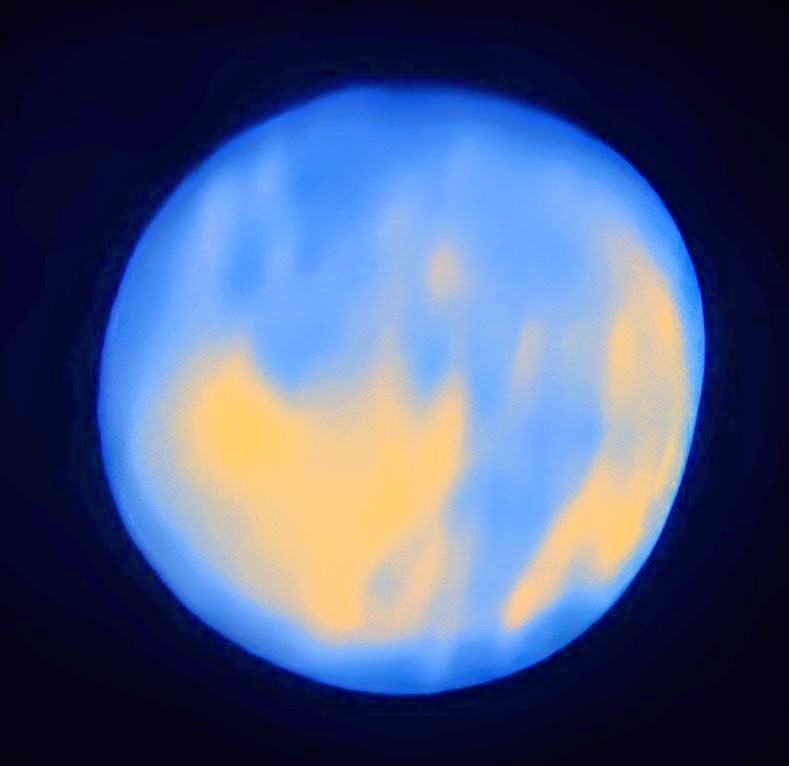
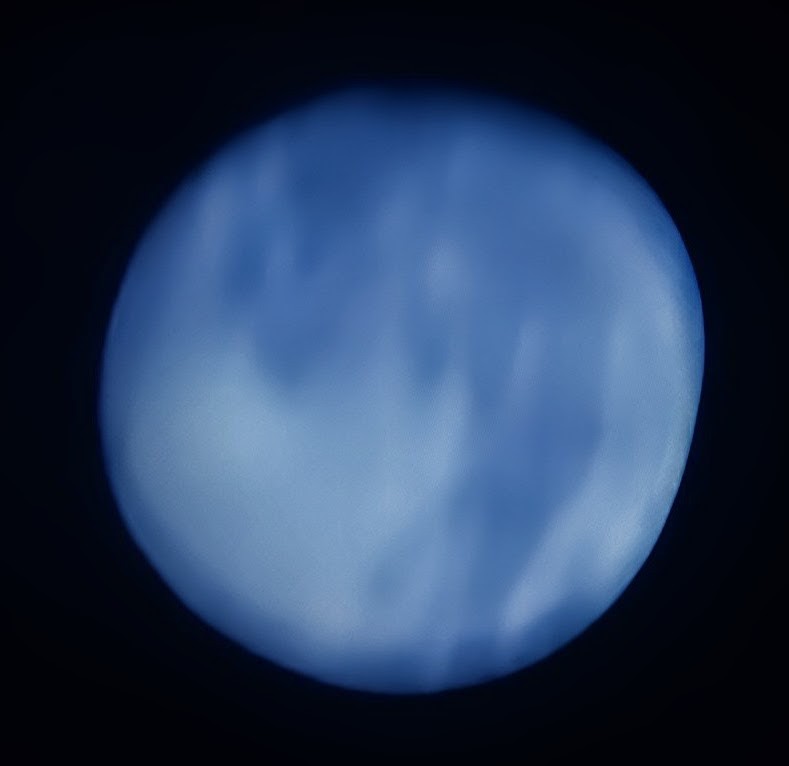
Not a clear photo of the moon I snaped. But in unblur mode, goggle photos; it came out with land and oceans. Poetry, no green cheese at all, or is that Atoll.
Editors Note:
The Chinese robotic mission on the dark side of the Moon is interested in the amount of hydrogen that’s captured in the soils up there. At this time there’s a bit of excitement about that.
Careful with facts
If it’s sensational it’s worth a another look at sources.
*NASA Mars lightning,
Our moon
While NASA is currently working to establish a **sustained human presence** on the Moon through the Artemis program, the idea of “rehabilitating” it (terraforming it into a lush, Earth-like world) is considered significantly more difficult than terraforming Mars.
As of 2026, the consensus is that the Moon cannot support a global ecology with current or even near-future technology. Here is why:
### 1. The Gravity Problem (The “Leaky Bucket”)
The Moon’s most fundamental limitation is its size. Its gravity is only about **16.5%** (1/6th) of Earth’s.
* **Atmospheric Escape:** To have an ecology, you need an atmosphere. However, the Moon’s gravity is so weak that gas molecules move faster than the Moon’s “escape velocity.”
* **The Result:** Even if we created a thick atmosphere today, it would drift off into space almost immediately. Unlike Mars, which might hold an atmosphere for millions of years, the Moon would lose its air in a geological heartbeat.
### 2. The Radiation and Shielding Issue
The Moon lacks a global magnetic field and a thick atmosphere to block cosmic rays and solar flares.
* **Current Strategy:** NASA’s 2026 plans involve burying habitats under several meters of **lunar regolith** (Moon soil) or placing them in deep lava tubes to protect astronauts from radiation.
* **Ecology Barrier:** You cannot have a “surface ecology” (like forests or open lakes) because the radiation would sterilize the soil and kill most complex life forms.
### 3. The 708-Hour Day/Night Cycle
The Moon rotates very slowly. One “day” (sunrise to sunrise) lasts about **29.5 Earth days**.
* **Extreme Temperatures:** This results in two weeks of blistering heat (up to **127°C**) followed by two weeks of total darkness and freezing cold (down to **-173°C**).
* **Biological Stress:** Most Earth plants and animals cannot survive 14 days of total darkness followed by 14 days of direct, unfiltered solar radiation.
### Comparison: Moon vs. Mars for Life Support
| Feature | The Moon | Mars |
|—|—|—|
| **Gravity** | 1.62 \text{ m/s}^2 (Very Low) | 3.71 \text{ m/s}^2 (Moderate) |
| **Atmosphere Potential** | None (Escape velocity too low) | Low (Needs massive CO_2 input) |
| **Day Length** | ~708 hours (1 month) | ~24.6 hours (Similar to Earth) |
| **Water Availability** | Ice in dark polar craters only | Subsurface ice and polar caps |
### NASA’s 2026 Reality: “Pockets of Life”
Instead of rehabilitating the whole Moon, NASA and its partners (like SpaceX and Blue Origin) are focused on **In-Situ Resource Utilization (ISRU)**.
* **Oxygen from Dust:** We have the technology to bake oxygen out of lunar rocks (which are about 45% oxygen).
* **Lunar Bases:** By 2028, NASA aims to have the first permanent “basecamp” at the South Pole.
* **Closed-Loop Systems:** Life will be sustained in **artificial ecologies**—pressurized greenhouses and pods where air and water are recycled with 98% efficiency.
**Summary:** We have the technology to put “life” **on** the Moon inside pressurized cans, but we do not have the technology to make the Moon itself a “living” world.
Mars Rehabilitation
As of April 2026, **NASA’s official position** remains that rehabilitating Mars’s atmosphere and ecology (terraforming) is **not possible with current technology**.
While science fiction often makes it look like a matter of willpower, NASA-funded studies and current mission data highlight several “hard stops” that we cannot yet overcome.
### 1. The Carbon Dioxide Shortage
The most significant hurdle is a lack of raw materials. To make Mars warm enough for liquid water and life, we would need to thicken its atmosphere using greenhouse gases, primarily CO_2.
* **The Problem:** A 2018 NASA-sponsored study concluded that there simply isn’t enough CO_2 trapped in Mars’s polar ice caps or soil to create a thick enough atmosphere.
* **The Reality:** Even if we successfully vaporized every bit of CO_2 on the planet, the atmospheric pressure would only rise to about **7%** of Earth’s—not enough to prevent your blood from boiling or to keep the planet warm.
### 2. The Missing Magnetic Shield
Even if we could magically “import” an atmosphere (by crashing comets into the planet, for example), Mars has no global magnetic field to protect it.
* **Atmospheric Erosion:** Without a magnetosphere, the **solar wind** (a stream of charged particles from the sun) would eventually strip any new atmosphere away into space, just as it did billions of years ago.
* **Current Research:** NASA’s **ESCAPADE** mission (which launched in late 2025 and is currently en route) is specifically studying this “atmospheric escape” to better understand how the sun interacts with the Martian environment.
### 3. “Living Off the Land” vs. Terraforming
NASA has shifted its focus from **rehabilitating the planet** to **sustaining human life in small pockets**. This is known as **In-Situ Resource Utilization (ISRU)**.
* **MOXIE:** The Mars Oxygen In-Situ Resource Utilization Experiment on the Perseverance rover proved we can extract oxygen from the Martian CO_2 atmosphere.
* **2026 Strategy:** NASA’s current “Moon to Mars” objectives focus on building pressurized habitats and using local ice for water and fuel, rather than trying to change the entire planet’s climate.
### Comparison: Current vs. Required Technology
| Feature | Current Capability (2026) | Needed for Rehabilitation |
|—|—|—|
| **Atmospheric Pressure** | ~0.6% of Earth’s | ~100% of Earth’s |
| **Oxygen Production** | Small-scale (grams per hour) | Planetary-scale (billions of tons) |
| **Protection** | Lead-lined habitats / Underground | Artificial Global Magnetic Shield |
| **Temperature** | Average -62°C (-80°F) | Average ~15°C (59°F) |
> **Bottom Line:** NASA views Mars as a place where humans might live in “indoor” colonies within the next few decades, but “rehabilitating” the planet’s exterior ecology is considered a task for the distant future—likely centuries away—requiring technologies that do not yet exist.
>



 Kevin Griffiths
 percypaschal
