

File Photo KDG
The BCHC,league.
In Summerland
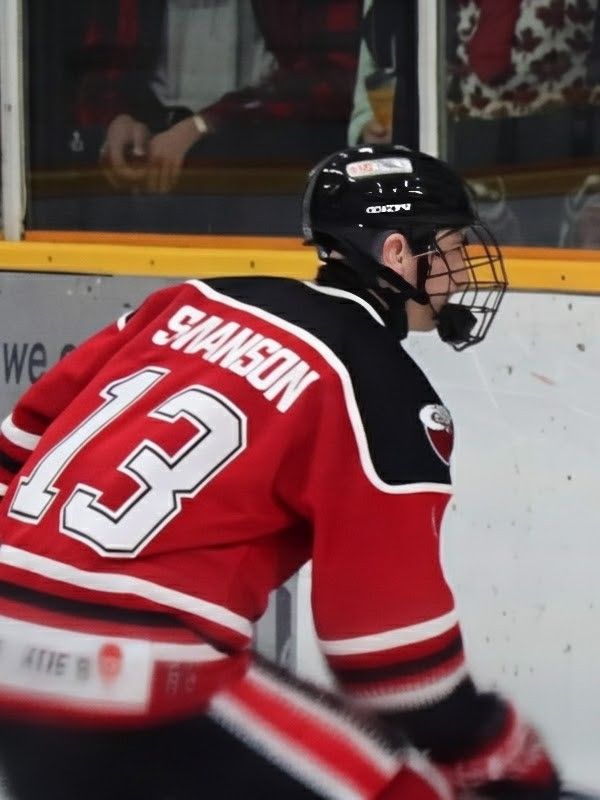
Twenty year olds in the BCHC…
The paths taken by two 20-year-old veterans illustrate the contrast in outcomes at this level:
1. The Collegiate / Minor-Pro Bound Veteran * Player Profile: Brady Magarrell (Forward, Beaver Valley Nitehawks) *
The Trajectory: Highly productive 20-year-old top scorers and league MVPs routinely leveraged their dominant final season to secure spots at the next level. Players like Magarrell—who put up over 70 points in a 44-game regular season—showcase elite hockey IQ, leadership, and readiness for physical play. * Next Chapter: Players on this tier typically commit to U Sports programs (like Simon Fraser University or the University of Victoria) or high-level ACAC / ACHA Division 1 college teams. A select few use their momentum to land contracts or tryouts with lower-tier European professional clubs or North American minor-pro leagues (such as the SPHL).
2. The Career Transition / University Student * Player Profile: Logan McCabe (Defenseman, Grand Forks Border Bruins)
* The Trajectory: Solid, dependable 20-year-old core veterans—often blue-liners or depth leaders—play a crucial stabilizing role for their junior clubs while nearing the end of their competitive hockey arcs. After anchoring a defense and taking significant penalty minutes over a multi-year junior career, the 20-year-old season serves as a ideal closing chapter. * Next Chapter: Players in this group typically “hang up their competitive skates” after their final game. They transition directly into full-time post-secondary education (entering university or trade apprenticeships) using league education scholarship funds. While they step away from Junior A, many continue to play casually in competitive Senior A circuits or local adult leagues while building their post-hockey careers.
Numbers
Across the 22 teams in the British Columbia Hockey Conference (BCHC) Junior A league, roster limits strictly regulate the number of 20-year-olds (referred to as “age-outs”) to ensure opportunities remain open for younger developmental players.Below is the approximate breakdown of how many 20-year-olds complete their junior eligibility each year and where they transition afterward:1. How Many 20-Year-Olds Complete Their Junior Careers? * Roster Caps: BCHC rules generally limit each team to carrying a maximum of 6 to 8 twenty-year-olds on an active roster. * Total Players: Across 22 member teams, that means roughly 130 to 175 twenty-year-olds complete their final season of junior eligibility each spring across the league.
2. How Many Move On to Play Higher-Level Hockey?
Out of those ~150 aging-out players, approximately 25% to 35% (about 35 to 55 players) continue playing competitive organized hockey: * U Sports & Canadian Colleges (~15–25 players): The primary pathway for top BCHC age-outs is Canadian post-secondary hockey—such as USports programs (e.g., SFU, UBC, or Prairie schools), ACAC (Alberta Colleges Athletic Conference), or BCIHL (BC Intercollegiate Hockey League). * NCAA Division III & ACHA (~10–20 players): Some players secure commitments to American college programs in NCAA D-III or high-level ACHA Division 1 club programs. * Minor Pro & Overseas (~5–10 players): A small handful of standout veterans earn professional tryouts or contracts in North American minor-pro leagues (SPHL, FPHL) or lower-tier European leagues (Germany, Sweden, UK).
3. How Many “Hang Up Their Skates”?Roughly 65% to 75% (about 90 to 120 players) transition away from competitive, full-time hockey after their 20-year-old season. * Transition to University/Trades: Most leverage their junior hockey background, discipline, and league education funds to pursue full-time degrees or skilled trade apprenticeships. * Senior A & Recreational Leagues: Many do not stop playing hockey entirely—they transition into high-caliber Senior A leagues (like the CIHL in BC) or competitive local adult leagues while starting their post-hockey careers.
Overview of the British Columbia Hockey Conference (BCHC) Junior A Pathway:
* Leagues Involved: The BCHC itself operates as 1 unified Junior A league. It was formed through the restructuring of former Tier 2/Junior B circuits (the KIJHL and PJHL) into a consolidated BC Hockey-sanctioned Junior A circuit. * Number of Teams: There are 22 member teams competing in the inaugural 2026–27 BCHC season, split across four geographical divisions (Interior, Kootenay, Mainland, and Valley). * Number of Players: Junior hockey rosters typically carry between 20 to 25 players per team at any given time. Across the 22 teams in the league, that accounts for approximately 440 to 550 active rostered players total. * Games per Team: Each team will play a 50-game regular season schedule (25 home games and 25 away games), resulting in 550 total regular season games across the league. * The Championship Cup: BCHC teams compete for the historic Mowat Cup, awarded to the Junior A champion of British Columbia.Best Outcome for a 20-Year-Old “Ager-Out” PlayerFor a 20-year-old playing his final year of junior eligibility, the pathway depends heavily on his long-term goals, both on and off the ice: * U Sports (Canadian University Hockey): * The Goal: Earn a spot on a Canadian university roster (e.g., USports programs like UBC, SFU, or schools across Canada) or ACHA Division 1 / ACAC college teams. * Why it’s top tier: A strong final season allows 20-year-olds to showcase their leadership, maturity, and physical completeness, opening doors to post-secondary education backed by athletic performance. * Pro Opportunities (Minor Professional / European Leagues): * The Goal: Transition directly into professional contracts in leagues like the ECHL, SPHL, or lower-tier European professional divisions (e.g., in Sweden, Germany, or the UK). * Why it’s top tier: Pro scouts look for age-outs who dominate physically and consistently deliver at the Junior A level to fill depth roles on minor-pro rosters. * Championship Hardware & Personal Legacy: * The Goal: Capping off a junior career by winning the Mowat Cup. * Why it’s top tier: Winning a championship as a 20-year-old leader provides an undeniable high point to close out a competitive youth career, establishing personal legacy and local prestige within the community.



 Kevin Griffiths
 percypaschal
