

https://www.cbc.ca/news/canada/ottawa/alto-high-speed-rail-study-economy-productivity-9.7430154
Big Bucks Fast trains…
Start in 2029, After decades of promise…
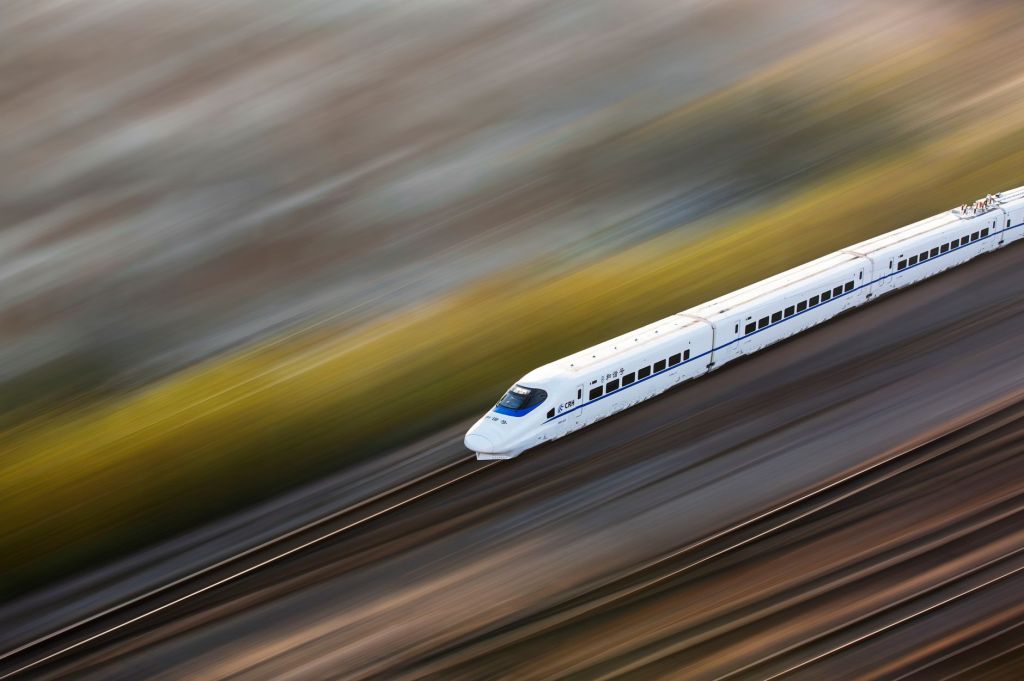
High-speed rail (HSR)—typically defined as trains operating at 250 km/h or more on dedicated, grade-separated tracks—is expensive because its engineering geometry and right-of-way requirements leave almost no room for shortcuts. To run safely at 300 km/h+, curves must have wide radii, gradients must stay gentle, level road crossings are eliminated, and tracks generally cannot be shared with heavy freight trains.
1. Why Fast Trains Are Expensive: Capitalisation vs. Amortisation
Economists and infrastructure planners separate the money spent on HSR into two distinct buckets:
* Capital Cost (Upfront Capitalisation): This is the massive upfront bill to acquire land, clear environmental and Indigenous consultations, grade terrain, pour concrete viaducts, bore tunnels, build stations, and install electrification and signaling. On Canada’s proposed ~1,000 km Toronto–Québec City corridor (Alto), capital estimates sit around $60 billion to $90 billion, with international per-kilometre benchmarks varying sharply depending on how much tunneling, bridging, and urban land acquisition is required.
* Operating & Maintenance (O&M) vs. Amortisation: Day-to-day running costs—electricity, train crews, station staff, inspections, and ongoing track/rolling-stock upkeep—are separate from the capital bill. Many high-speed lines worldwide cover their operating costs and sometimes generate an operating surplus, yet farebox revenue rarely amortises (pays back) the original capital cost on its own.
* How Amortisation Actually Works in Public Infrastructure: Unlike a commercial factory evaluated purely on net ticket profit, long-lived rail civil works (which can last 50–100+ years with periodic track/system renewals) are usually “amortised” across society through broader economic and fiscal returns—productivity gains, time savings, labor-market integration, tax revenues, and avoided highway/airport expansion—rather than ticket sales alone. Even then, critics and budget watchdogs frequently scrutinize whether projected economic spinoffs and “avoided road spending” are overstated or double-counted against ongoing municipal and highway maintenance.
2. The Value for the Second-Largest Country in the World
Canada is the second-largest country by land area, yet its population is concentrated in narrow southern bands and urban corridors separated by vast, sparsely populated shield, prairie, or mountain regions. That geography creates a sharp divide between corridor value and transcontinental economics:
* Where High-Speed Rail Makes Sense (Dense Corridors): High-speed rail shines over roughly 150 km to 800 km between major population centers—where door-to-door travel beats driving and rivals short-haul flights, and where ridership density justifies high fixed costs. In Canada, the prime candidate is the Windsor–Toronto–Ottawa–Montréal–Québec City corridor (or regional pairs like Calgary–Edmonton), which carries heavy intercity business and leisure travel.
* Why a Coast-to-Coast High-Speed Line Is Tough: Stretching 300 km/h tracks across thousands of kilometres of low-density terrain—through the Canadian Shield, across the Prairies, or over mountain passes—drives capital costs sky-high per rider. Over very long distances (such as Vancouver to Toronto or Montréal), aviation remains far more cost-effective per kilometre of infrastructure because aircraft don’t require a continuous, weather-hardened physical right-of-way across empty territory.
* Broader Strategic & Climate Value: Where demand is strong, electrified HSR shifts medium-distance trips off highways and short flights, reduces carbon intensity per passenger-kilometre when paired with clean electricity grids, and links regional job markets—though it does not solve local intra-city rush-hour congestion on its own.
3. Realistic Timelines for Proposed High-Speed Trains
Building high-speed rail from a blank map is a multi-decade undertaking, rarely a single political term:
* Feasibility, Planning & Co-Development (3–7+ years): Corridor definition, environmental assessments, engineering design, procurement, and consultations. Canada has seen decades of studies and starts-and-stops since the 1970s, with the Alto initiative moving into its co-development phase with private partner Cadence and conducting corridor studies and surveys in the mid-2020s.
* Land Acquisition, Permitting & Utility Relocation (3–6 years, often overlapping): Securing continuous 60-metre-wide alignments, negotiating property and Indigenous agreements, and moving power/telecom/road crossings.
* Heavy Civil Construction, Track, Systems & Testing (8–15+ years, often phased): Building bridges, tunnels, embankments, stations, overhead catenary/power systems, and signaling, followed by months of high-speed safety testing and commissioning. Segments typically open in stages rather than all at once.
In practice, once a project has firm funding and a locked-in alignment, going from serious pre-construction design to first revenue service generally takes 10 to 20 years—and even longer if political priorities shift between election cycles.
Are you looking at this from a broad economic/policy angle, or thinking about a specific corridor like Toronto–Montréal or Calgary–Edmonton?



 Kevin Griffiths
 percypaschal

