You are presumed to be honest and responsible without evidence to the contrary beyond a reasonable doubt… on the balance of probablilties you are justified by 51 % likelyhood.
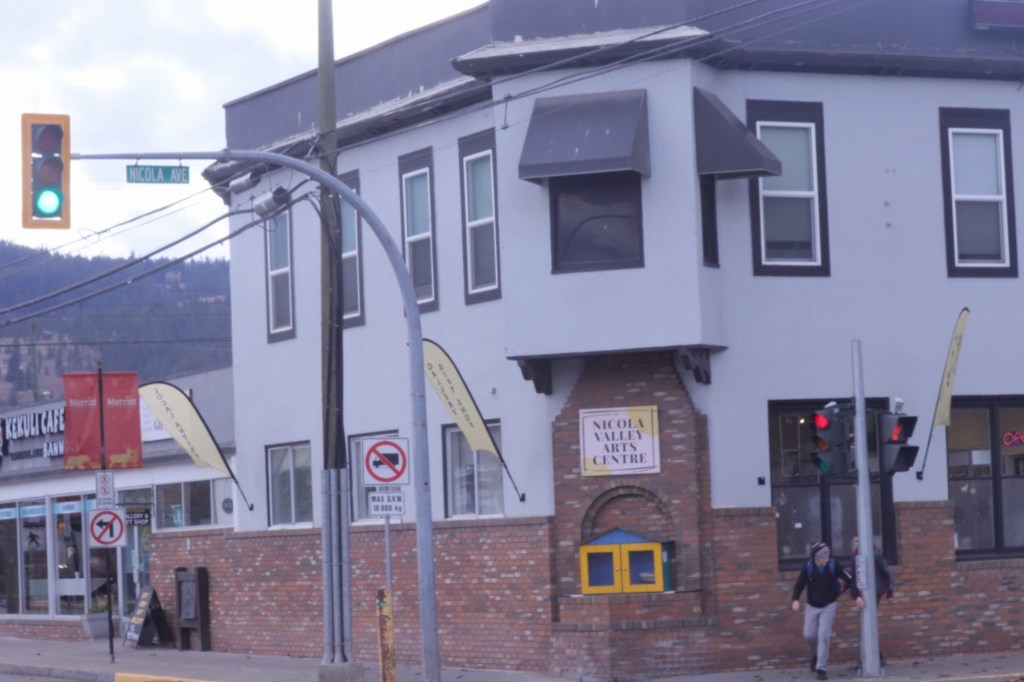
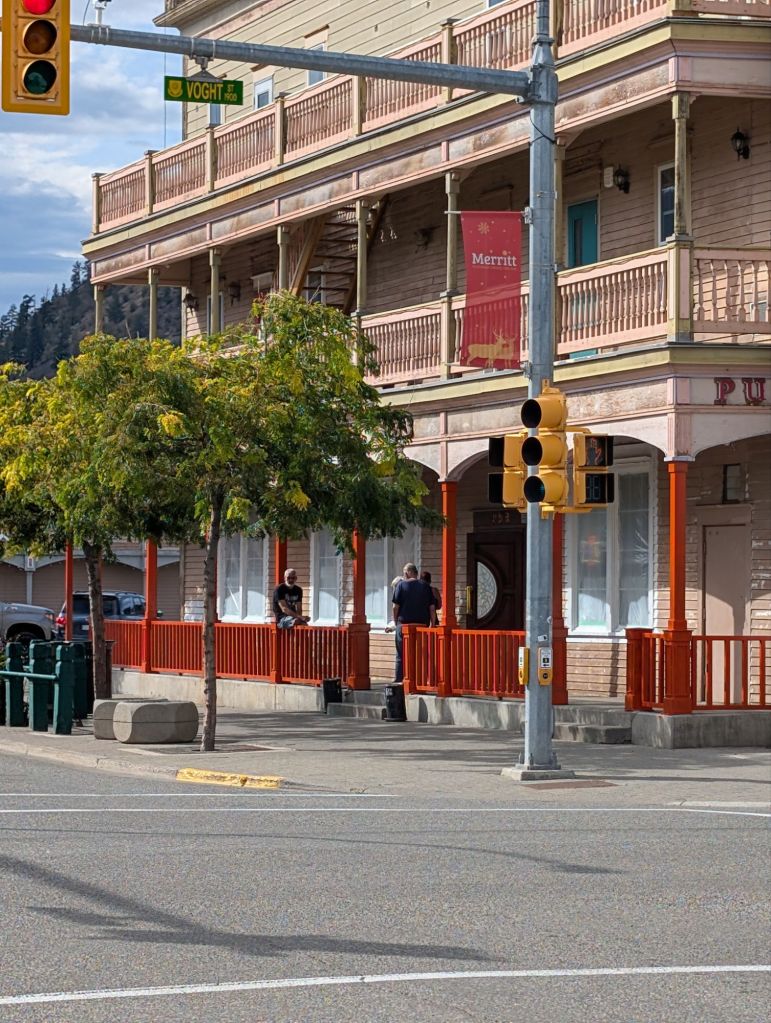
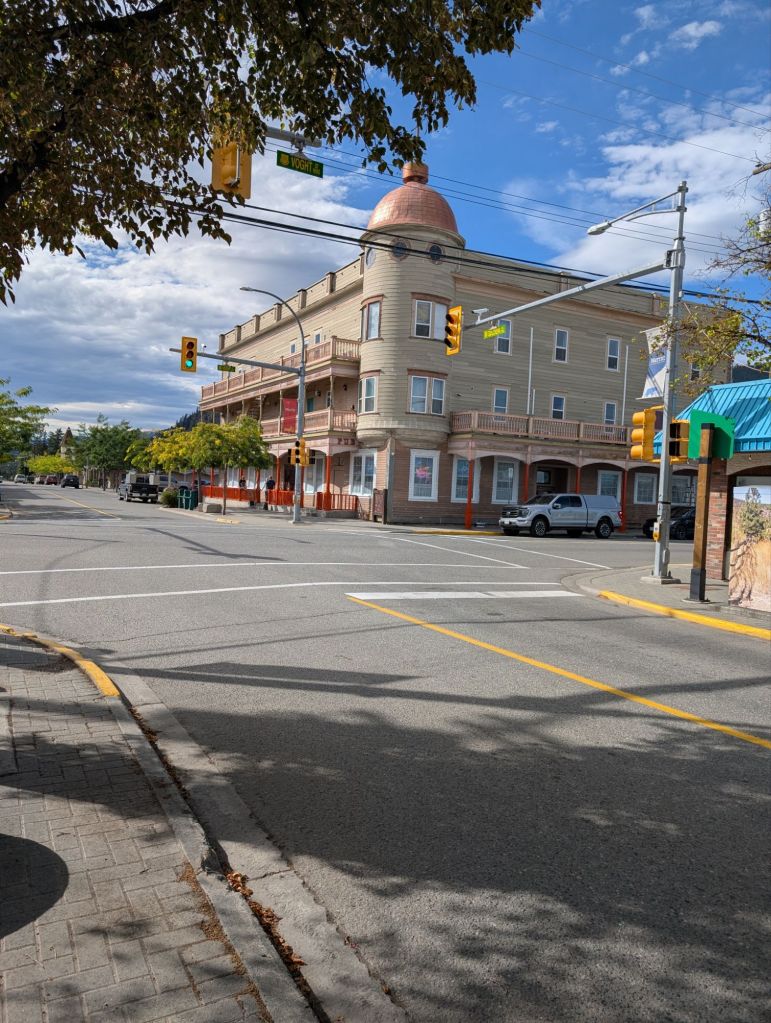
Merritt BC Canada, The corner of Voght Street and Nicola avenue.
A Brief History
The Nicola Valley Community Arts Council (NVCAC) has been a central force in fostering arts and culture in Merritt, BC, for over four decades.History of the Nicola Valley Community Arts Council * Founding in 1982: The NVCAC was established in 1982 as a non-profit society, with a primary focus on the performing arts. * Launching the Community Concert Series: One of its founding and initial major projects was the Community Concert Series, which brought various musical concerts to Merritt. The Council also fundraised to purchase and maintain a grand piano for community use at the Civic Centre. * Expansion into Visual Arts (2005): In March 2005, the Arts Council moved into the historic Old Courthouse Building. This move allowed them to expand their mandate into the visual arts and open the Courthouse Art Gallery, giving them a permanent home for the first time in many years. * Major Relocation to the Jackson Building (2020): After 15 years, the NVCAC moved in the fall of 2020 to the more visible, downtown Jackson Building (at 2051 Voght Street). This new location, now known as the Nicola Valley Arts Centre, provided a larger, more accessible space for a gallery, an artisan gift shop, and a dedicated program space. * Focus on Community Programming: The NVCAC continues to champion the arts through year-round activities, including a monthly changing art gallery, operating an artisan gift shop featuring local crafts, and hosting various arts classes and workshops for adults and youth. * Public Art Initiatives and
Volunteerism: Who Done It
The Council actively engages in community projects, such as public art installations (like murals) and the Little Free Art Gallery, all powered by a dedicated group of volunteers who are the backbone of the organization.
Please come, we look forward to you in the spring when you break the ground again. And your life spills over into ours and radiant beauty and silent pose, causing us to think that we will not propose any harm come to us or our friends and family, and we will keep the faith until the end.
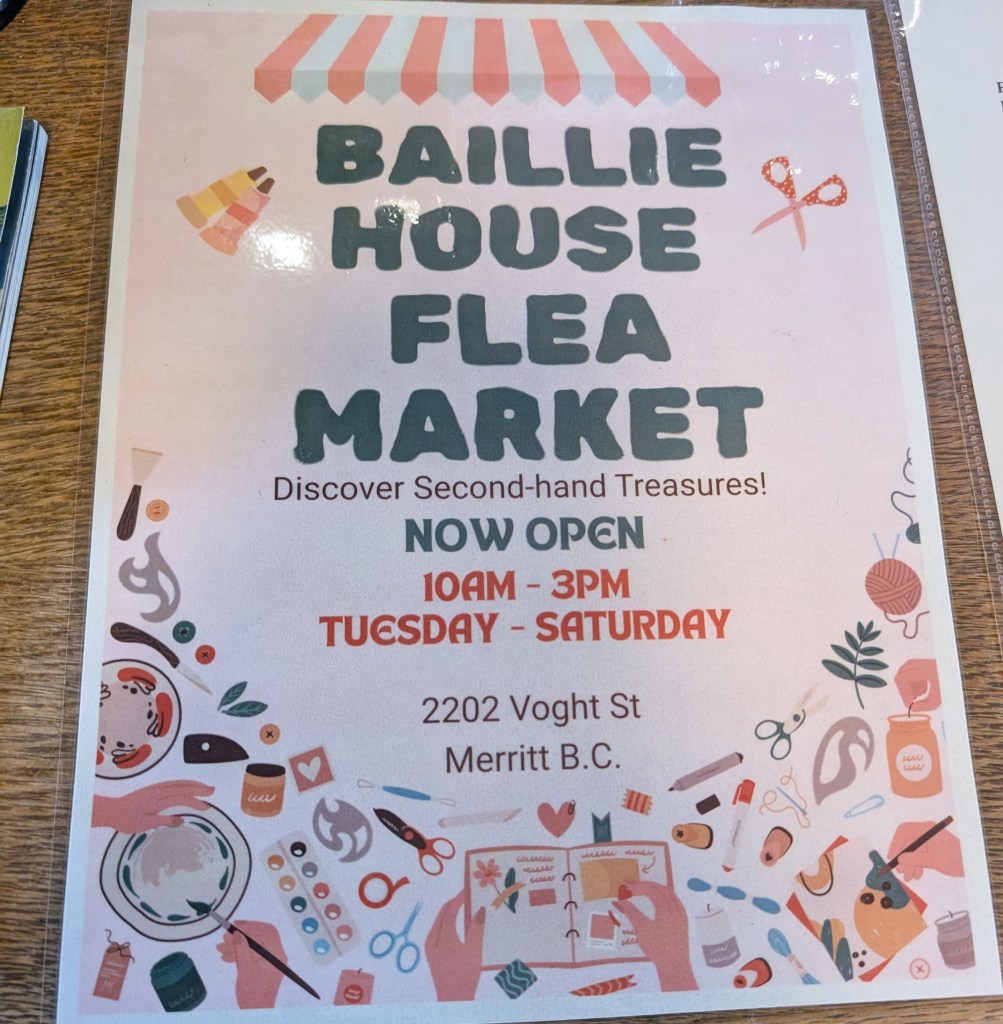
The Bailey house, home of the Nicola valley historical society and a dream of a immigrant. Is open different hours now; from 10:00 in the morning to 3:00 in the afternoon of the historic house has put reclaimed treasures into the house that would usually be used as a touring site has become an opportunity to reclaim some treasures in thrift. The sale will remain at n effect for the winter, Five days a week Tuesdays through Saturdays.
Art
We assert that the care that was taken in presenting these donated goods, as well as the context of being in the site makes it a presentation worthy of being called art.
Stop by this weekend
Say hello the the manger Angie and her ten volunteers and have a historical weekend.
The Red top burger shop in Merritt has been renovated. The restaurant closed for years and once operated by the famed Edna Taylor with her husband Al as an independent after being a Mr. Mike’s franchise, the relationship with Mr Mike’s soured and contributed to Als death. Edna operated Red Top as a widow withots of support from local business including her brother-in-law. The famous Ted Taylor who had a jewelry store and was a legion member extraordinaire.
The recent items included steel doors and trap closures that prevented it from being a hovel for dispossessed people.
It looks like it is ready for tenancy. It appears to be unlisted. A source says an first Nations band was the renovator and they’re going to use it for office space.
Edna Taylor had the same middle name, Marion; as John Wayne’s name, The Duke from cowboy fame had it as his real first name.
So, born in Salmon arm in 1927, Edna passed from this life in 2005.
Downtown tourist information center 2202 Voght Street, Merritt BC.
Today, October 24th 2025 The tourist center also known as the Bailey house is changing its format for the winter. It will be open 10:00 to 3:00 5 days a week, and tours will be unavailable in the heritage House. However, an ongoing thrift sale will be in place for the winter season.
Ice cream
Ice cream numbers of flavors available? Picnic tables still shade?
Leonard’s choice flavor available as well as Maple, Walnut and others.
The Nicola Naturalist Society Incorporated have begun their fall and winter program again since 2010 in Merritt, British Columbia, the group have been going out doing projects in association with some government and Nature BC.
Lichen outing:
On Saturday September 27 th 2025. With Christine, You need to be paid up member to go.
The September equinox is a specific astronomical moment when the Sun crosses the celestial equator, moving from the Northern Hemisphere to the Southern Hemisphere. In the Northern Hemisphere, this event marks the beginning of astronomical fall (the autumnal equinox), while in the Southern Hemisphere, it marks the start of astronomical spring (the vernal equinox). Time and Duration of the Equinox The September equinox occurs at a precise moment in time, not over an entire day. In 2025, the equinox will occur on Monday, September 22, at 18:19 UTC (Coordinated Universal Time). The Sun is not “on” the equator for a duration but crosses it at that single moment. At this instant, the Sun’s rays shine directly on the equator. Daylight and Its Erosion The word “equinox” comes from the Latin for “equal night,” suggesting that day and night are of equal length. While this is a common approximation, it’s not perfectly accurate. Due to the way sunrise and sunset are defined (when the upper edge of the Sun’s disk appears on the horizon) and the refraction of sunlight by Earth’s atmosphere, the day is slightly longer than 12 hours everywhere on the planet on the day of the equinox. After the September equinox, daylight hours begin to erode in the Northern Hemisphere. The rate of this daylight loss is not constant. It is most rapid around the time of the equinox. For locations in the Northern Hemisphere, the amount of daylight lost can be several minutes per day, with the rate of loss increasing as you move farther north.
Daylight loss until September end.
Here is a list of the daylight hours for Merritt, British Columbia from September 17 to September 30, 2025. | Date | Sunrise | Sunset | Daylight Hours | |—|—|—|—| | Sep 17 | 6:42 AM | 7:11 PM | 12h 29m | | Sep 18 | 6:44 AM | 7:09 PM | 12h 25m | | Sep 19 | 6:45 AM | 7:06 PM | 12h 21m | | Sep 20 | 6:47 AM | 7:04 PM | 12h 17m | | Sep 21 | 6:48 AM | 7:02 PM | 12h 14m | | Sep 22 | 6:50 AM | 7:00 PM | 12h 10m | | Sep 23 | 6:51 AM | 6:57 PM | 12h 06m | | Sep 24 | 6:53 AM | 6:55 PM | 12h 02m | | Sep 25 | 6:54 AM | 6:53 PM | 11h 58m | | Sep 26 | 6:56 AM | 6:51 PM | 11h 55m | | Sep 27 | 6:57 AM | 6:49 PM | 11h 51m | | Sep 28 | 6:59 AM | 6:46 PM | 11h 47m | | Sep 29 | 7:00 AM | 6:44 PM | 11h 44m | | Sep 30 | 7:02 AM | 6:42 PM | 11h 40m |
Social distancing got this and another across the street when COVID was in charge, it seems to have remained.
Off-street parking regulations for restaurants are a complex and evolving topic, with significant differences between big cities and smaller towns. These rules are generally found in a city’s zoning or parking bylaws and are designed to manage traffic, ensure accessibility, and shape the urban environment. How Off-Street Parking Regulations are Determined The amount of required off-street parking for a restaurant is typically not based on the height or value of a building, but rather on metrics that correlate to the number of patrons and employees. Common units of measurement include: * Gross floor area (m^2 or ft^2): This is a very common method. For example, a regulation might require “1 space for every 20 square meters of gross floor area.” * Seating capacity: Some regulations use the number of seats as the basis, for instance, “1 space for every 3 seats.” This can be more precise for sit-down restaurants. * Number of employees: Less common, but sometimes factored in to account for staff vehicles. These regulations often specify other requirements, such as the minimum size of a parking space, the width of aisles, and setbacks from the street. The Impact on Big Cities In large, dense urban areas, off-street parking requirements have been a major source of debate and have a significant impact: * Increased Development Costs: Requiring a certain number of parking spaces, especially in a dense city, can be extremely expensive. Land is at a premium, and building multi-story or underground parking garages adds significantly to the cost of a new development. These costs are often passed on to the restaurant owner or, ultimately, the consumer. * Discouraging Walkability and Public Transit: An oversupply of parking can encourage people to drive, even for short trips, which leads to more traffic congestion and pollution. It can also make a city less pedestrian-friendly, as large surface parking lots break up the streetscape. * Inefficient Land Use: Large parking lots, particularly in downtown areas, are often empty for a significant portion of the day or week, representing a poor use of valuable urban land that could be used for housing, public parks, or other businesses. This can also contribute to urban heat island effects, as asphalt absorbs and radiates heat. In response to these issues, many large cities have begun to reform their parking regulations by: * Eliminating Minimums: Cities like Calgary and others have removed minimum parking requirements for new developments. This gives developers and businesses the flexibility to build the amount of parking they believe is necessary based on their specific context and customer base. * Implementing Maximums: Some cities are now setting maximum parking requirements to prevent an oversupply of parking and encourage alternative modes of transportation. * Parking Cash-Out Programs: Some cities encourage employers to “cash out” the value of a parking space for employees who choose to commute by bike, public transit, or carpool. How to Fix the Problem in Little Cities While big cities are often trying to reduce their parking supply, smaller cities and towns can face different challenges, such as a lack of downtown parking that hurts local businesses. Here are some strategies for smaller cities to address these issues: * Shared Parking: Many businesses have different peak hours. For example, a bank is busy during the day, while a restaurant is busy in the evening. Creating shared parking facilities allows businesses to make more efficient use of a single parking lot, reducing the need for each business to build its own. * Centralized Parking: Instead of requiring each restaurant to have its own parking, a small city can create centralized, well-marked public parking lots. This creates a “park once and walk” environment that encourages visitors to explore more of the downtown area. * Improved Public Transit and Walkability: While a small city may not have a subway, it can still invest in more frequent bus service, safe bike lanes, and pedestrian-friendly sidewalks. This provides people with viable alternatives to driving and reduces parking demand. * In-lieu Fees: Some cities allow developers to pay a fee instead of providing the required parking spaces. This money can then be used by the municipality to build public parking structures or invest in public transit. * Mixed-Use Development: Encouraging buildings with a mix of residential and commercial uses can help address parking problems. Residents can walk to nearby restaurants, and the parking demand for both uses can be shared since residential parking is typically needed at night, while commercial parking is needed during the day. The Influence of Environmental Concerns Environmental concerns have significantly altered the conversation around parking regulations. The traditional model of minimum parking requirements has been widely criticized for its negative environmental impacts: * Urban Sprawl and Habitat Loss: Large surface parking lots require vast amounts of land, contributing to urban sprawl and the loss of green spaces. * Stormwater Runoff: Impermeable surfaces like asphalt prevent rainwater from being absorbed into the ground, leading to increased stormwater runoff, which can carry pollutants into local waterways. * Heat Island Effect: Parking lots absorb solar radiation and contribute to the “urban heat island effect,” making cities and towns hotter than surrounding rural areas. * Encouraging Driving: Perhaps most importantly, an oversupply of free or low-cost parking encourages people to drive, leading to more traffic congestion and increased greenhouse gas emissions. In response, many cities are now re-evaluating their parking policies as a key component of their climate action plans. They are moving away from the “one-size-fits-all” approach of parking minimums and adopting more flexible and context-sensitive solutions that prioritize people and the environment over vehicles.
Drive trough
Mobile ordering and drive through are popular, however, they don’t address the number one issue for stopping when you’re driving and that’s usually washrooms.
The hotel has seen generations of rural cowboys farmers and workers dine dance and socialize.
Coldwater Hotel
The historic Coldwater Hotel, a prominent landmark in downtown Merritt, British Columbia, has a rich and complex history. It has played a central role in the community since its establishment, experiencing periods of growth, decline, and adaptation. History The first Coldwater Hotel was built in 1908 by William McIntyre. It was a modest two-story, 12-room structure. However, with the booming economy driven by the local coal mines and ranching, a grander building was needed. The current, more lavish Coldwater Hotel was officially opened in May 1910. Constructed for around $6,000, the three-story building was considered one of the finest “dollar-a-day” hotels in BC’s interior. It featured a large barroom, a ladies’ parlor, and initially, 30 guest rooms which were later expanded to 60. The hotel’s most distinctive feature is its conspicuous copper dome, which is a recognizable landmark throughout the city. Throughout its existence, the hotel has had numerous owners and has been a continuous gathering place for residents and travelers. Cultural High Points * Community Hub: Since its opening, the Coldwater Hotel has been a central meeting place for Merritt’s residents. It has served as a social and entertainment venue with its pub, restaurant, and banquet facilities. * Architectural Landmark: The hotel’s architecture, particularly its copper dome, is a significant part of Merritt’s historical identity and is considered a heritage building. * Cultural Preservation: The hotel’s interior and restaurant are lined with antique artifacts, bottles, and other items that reflect the area’s history, providing a unique “taste of historical flavour” for visitors. * Tourist Attraction: The hotel attracts European and Australian tourists, who come to experience its historical atmosphere and continuous service, which has been ongoing for over a century. Low Points * Historical Scandals: The hotel’s history includes notable incidents, such as a report in the Merritt Herald in 1969 of a dead man found in one of the rooms by a chambermaid. * Economic Fluctuations: The hotel, like the city of Merritt itself, faced ups and downs tied to the local economy, particularly during periods when industries like logging and mills hit “rock bottom.” * COVID-19 Exposure: In more recent times, the hotel was listed by Interior Health as a public exposure site for COVID-19 in September 2020. Future The Coldwater Hotel’s future is centered on preservation and modernization. In 2020, new owners Carson Wang and Grace Jiang began significant renovations. Their plans included: * Structural and Interior Upgrades: Bringing in engineers to assess the building’s integrity, installing new flooring in the pub and restaurant, and converting long-term rental spaces back into functional hotel rooms. * Exterior Makeover: The owners sought community input for an exterior renovation, considering different types of siding to upgrade the building’s look while preserving its historical character. The ongoing efforts to renovate and restore the hotel, with community collaboration, suggest a commitment to maintaining its status as a vital part of Merritt’s downtown core. The hotel’s long history and continued operation indicate a strong desire within the community for it to remain a cherished historical and social landmark.
The local historical Society, the sponsor of the Bailey House downtown information center has an interesting bit of artisan art and comfort on the desk of manager Angie.
Artisan work by a local, they are a conversation piece worthy of your and yours attention.
The soft material also works well as an accent to ones wrist and its soft support can relieve the stress of hand and wrist when writing the next letter, or card, to your friends or colleagues.
The reign of crime is always an investigation away…
Sherlock Holmes, the iconic detective created by Sir Arthur Conan Doyle, epitomizes the art of deduction and forensic investigation. With unparalleled observational skills and a deep understanding of human psychology, Holmes represents the ideal detective mentality that provides a shield against criminal masterminds.
Holmes’s methods hinge on the meticulous gathering of evidence and the ability to interpret seemingly trivial details. His famous phrase, “When you have eliminated the impossible, whatever remains, however improbable, must be the truth,” encapsulates the scientific approach he applies to uncovering the truth. This method not only allows him to solve intricate cases but also serves as a deterrent to criminals who underestimate the capabilities of law enforcement and the intelligence of dedicated detectives.
The detective mentality exemplified by Holmes emphasizes several key traits:
Attention to Detail: Detectives observe their surroundings meticulously, recognizing patterns and anomalies that can lead to the identification of a perpetrator.
Logical Reasoning: Holmes is known for his logical approach to solving crimes, often laying out a clear path from evidence to conclusions, which helps in dismantling convoluted criminal schemes.
Understanding Human Behavior: Holmes’s insights into human motivations and behaviors help him predict and outmaneuver criminals, highlighting the psychological aspect of crime prevention.
Collaboration: Holmes does not work in isolation; his partnership with Dr. Watson exemplifies the importance of collaborative efforts in tackling crime.
Through the lens of Holmes, we see how a sharp mind and logical reasoning can not only unearth criminal activity but also foster a sense of security within the community, reinforcing the belief that justice can prevail even in the face of cunning minds.














 Kevin Griffiths
 percypaschal
 The Proprietor Review