Category: Business


TGIF-Fishing

Is fishing back?

Based on the search results, here’s information regarding fishing licenses on the BC Coast:
Tidal Waters (Saltwater) Recreational Fishing Licenses:
* In the 2023 to 2024 season (April 1 to March 31), a total of 333,478 tidal waters sport fishing licenses were issued to residents of British Columbia. This includes various types of licenses such as annual, 5-day, 3-day, and 1-day for adults, as well as annual licenses for seniors and juveniles.
* For the 2022 to 2023 season, the total number of tidal water sport fishing licenses issued to BC residents was 302,179.
* Approximately 300,000 license holders participate in tidal recreational fishing in British Columbia.
* Juveniles (under 16 years old) are required to obtain a free tidal waters sport fishing license.
* A separate Salmon Conservation Stamp is required for anglers of all ages who wish to retain any species of Pacific salmon.
Commercial Fishing Licenses:
* The number of individual annual commercial license holders in the Pacific region has been declining. In 2023, there were 4,057 individual license holders, which is a 74% decrease from the peak in 1987.
* These individual license holders were issued a total of 5,512 species-specific commercial licenses in 2023.
It’s important to note the distinction between recreational (sport) fishing licenses and commercial fishing licenses, as they are managed and tracked separately. The data provided above gives a recent snapshot of the number of licenses issued for both categories on the BC Coast.

Most jurisdictions in Canada have been lifting the carbon tax off the consumer price of gasoline. Along with that, the carbon credit may be on its way out. Hard to say when everything fits together but it seems to be the moniker that is driving it.

Well, if people feel empowered by it, It’s probably the right thing to do.

So, We wonder where the next excise taxes will be stuck into, some consumer things somewhere. I wonder if it’ll be cars or are they going to be relying on tariffs?

Don’t bring your tariffs to town. Billy boy Billy boy.

Taxidermied? skinned, cleaned, hung out to dry.

The premier of Alberta has doubled her bacon consumption + has her eye on beef. In the sense that made in Canada a solution to sales can be achieved, so bacon up.

Beef and pork production by country

Five Largest Beef Producing Countries

  1. United States
  2. Brazil
  3. European Union
  4. China
  5. Argentina

Five Largest Pork Producing Countries

  1. China
  2. United States
  3. European Union
  4. Brazil
  5. Russia

Consumers

Five Greatest Beef Consuming Countries

  1. United States – Approximately 26 million metric tons
  2. Brazil – About 10 million metric tons
  3. China – Roughly 10 million metric tons
  4. Argentina – Around 3 million metric tons
  5. Mexico – Approximately 2 million metric tons

Five Greatest Pork Consuming Countries

  1. China – Roughly 54 million metric tons
  2. United States – About 12 million metric tons
  3. European Union – Approximately 12 million metric tons
  4. Russia – Around 3 million metric tons
  5. Brazil – About 3 million metric tons

Good Luck

Farms and Rancheswith Beef Cattle2021 Census of Agricuiture11,1millionTotal Cattle and CalvesDary 1, 20242.1% fromJanuary 1, 2023(includes 1.4 million dairy cattle)Statistics Canada3.46millionBeef CowsJanuary1, 2024Down 2.4% fromJanuary 1, 2023Statistics CanadaQuebec 40Atlantic 2020 40 60#of Head (May 11, 2021)2021 Census of AgicultureBeef Cows by ProvinceJanuary 1,2024Statistics Canade: inventory x 1000 headPercentages may not add to 100% due to rounding5% 45%28% 11%1831.556 L 6% 1980 381 215117Average Cost of Production vs.Average Returns on anAlberta 550 Ib Calf*Price S/cwt EST. Total Costs per cwt3.1262.1161.1.690 92 94 96 98 00 02 04 06 08 10 12 14 16 18 20 22Canfax Research Services23% of farms havebetween 47 and 122 cows.with 956,118 beef cows, 26%of the herd.15% of farms have1% of the farms between 123 and 499 cows.have 13% of the with 1.21 million beef cows,45% of the herd.beef cows, between 2021 Census of Agriculture500 and 2,499 on Results rounded to nearesteach farm. whole numberCanada fed 3.1 million cattle in2023 (finished to market weight)down 4.4% from 2022.Canfax, Statistics Canada, AAFCWestern Canada finishes 79%of all fed cattle in Canada. canfaxIn 2023, Canadaproduced 3.44bilion pounosnof beef,offals), down 4.6% 3.44from 2022. BillionCanfax Research Services PoundsCattle and calf cash receiptsin 2023 totaled $15.0 billion,up 26% from 2022. statistics CanadaBeef production contributed$29 billion to Canada’s GDP(2021-2023 average).Canfax Research ServicesWHERE CANADA TRADESBeef Exports – 20231.1 billion pounds (499 million kg)75.2% United States2.9% South Korea9.1% Japan6.5% Mexico3.4% Other3.0% Southeast AsiaBeef Imports – 2023411 million pounds (187 milion kg)53.0% United States9.7% New Zealand6.4% Uruguay10.9% Australia6.2% Mexico13.8% otherStatistics CanadaIn 2023, Canada exported 51% of totalbeef and cattle produced in Canada.Statistics Canada, Canfax, AAFCIn 2023, 45% of Canadian productionwas exported (excluding slaughter cattle).Statistics Canada, Canfax, AAFCCanadian beef exports were valued at$5.02 billion in 2023, up 7.4% from$4.68 billion in 2022.Statistics CanadaCANADIAN BEEF What are wecONSUMPTION really eating?35.8 Ibs(16.2 kg)per person yearlyDown 7.2% versus last year.1 metric tonne = 2,204.6 lbs.Statistics Canada, Retail weight, 2023WHERE CANADA FITSTop 10 Beef Producing Nations – 2024fUnited States 19.72%Brazil 18.57%China 12.769%EU 10.65%India 7.57%Argentina a 5.20%Australia Canada 3.97%has 1.2% of theMexico world’s 942 million, 3.75%cattle.Russia 2.29%Canada 2.16%59% 10% 15% 20% 25%Canada produces 2% of the world’s beef supply. Worldwide beefproduction is forecast to be 60.4 million metric tonnes in 2024.USDATop 10 Beef Exporting Nations- 2024fAPvoorts)(excludes live slaughterBrazil 23.75%India 13.82%United States 12.97%Australia 10.31%Argentina 7.46%New Zealand 5.59%EU 4.86%Canada 4.54%Uruguay 3.85%Paraguay 3.65%5% 10% 15% 20% 25%Total world exports in 2024 are forecast to be 12.3 million metric tonnesand Canada is projected to be the 8th largest beef exporter in the world(excluding live slaughter exports).USDACanadian Beef ConsumptionDomestic Imports1.2001.00080060040020002 04 06 08 10 12 14 16 18Canadians consumed 924,283 metric tonnes of beef in 2023.Statistics Canada

Farms and Rancheswith Beef Cattle2021 Census of Agricuiture11,1millionTotal Cattle and CalvesDary 1, 20242.1% fromJanuary 1, 2023(includes 1.4 million dairy cattle)Statistics Canada3.46millionBeef CowsJanuary1, 2024Down 2.4% fromJanuary 1, 2023Statistics CanadaQuebec 40Atlantic 2020 40 60#of Head (May 11, 2021)2021 Census of AgicultureBeef Cows by ProvinceJanuary 1,2024Statistics Canade: inventory x 1000 headPercentages may not add to 100% due to rounding5% 45%28% 11%1831.556 L 6% 1980 381 215117Average Cost of Production vs.Average Returns on anAlberta 550 Ib Calf*Price S/cwt EST. Total Costs per cwt3.1262.1161.1.690 92 94 96 98 00 02 04 06 08 10 12 14 16 18 20 22Canfax Research Services23% of farms havebetween 47 and 122 cows.with 956,118 beef cows, 26%of the herd.15% of farms have1% of the farms between 123 and 499 cows.have 13% of the with 1.21 million beef cows,45% of the herd.beef cows, between 2021 Census of Agriculture500 and 2,499 on Results rounded to nearesteach farm. whole numberCanada fed 3.1 million cattle in2023 (finished to market weight)down 4.4% from 2022.Canfax, Statistics Canada, AAFCWestern Canada finishes 79%of all fed cattle in Canada. canfaxIn 2023, Canadaproduced 3.44bilion pounosnof beef,offals), down 4.6% 3.44from 2022. BillionCanfax Research Services PoundsCattle and calf cash receiptsin 2023 totaled $15.0 billion,up 26% from 2022. statistics CanadaBeef production contributed$29 billion to Canada’s GDP(2021-2023 average).Canfax Research ServicesWHERE CANADA TRADESBeef Exports – 20231.1 billion pounds (499 million kg)75.2% United States2.9% South Korea9.1% Japan6.5% Mexico3.4% Other3.0% Southeast AsiaBeef Imports – 2023411 million pounds (187 milion kg)53.0% United States9.7% New Zealand6.4% Uruguay10.9% Australia6.2% Mexico13.8% otherStatistics CanadaIn 2023, Canada exported 51% of totalbeef and cattle produced in Canada.Statistics Canada, Canfax, AAFCIn 2023, 45% of Canadian productionwas exported (excluding slaughter cattle).Statistics Canada, Canfax, AAFCCanadian beef exports were valued at$5.02 billion in 2023, up 7.4% from$4.68 billion in 2022.Statistics CanadaCANADIAN BEEF What are wecONSUMPTION really eating?35.8 Ibs(16.2 kg)per person yearlyDown 7.2% versus last year.1 metric tonne = 2,204.6 lbs.Statistics Canada, Retail weight, 2023WHERE CANADA FITSTop 10 Beef Producing Nations – 2024fUnited States 19.72%Brazil 18.57%China 12.769%EU 10.65%India 7.57%Argentina a 5.20%Australia Canada 3.97%has 1.2% of theMexico world’s 942 million, 3.75%cattle.Russia 2.29%Canada 2.16%59% 10% 15% 20% 25%Canada produces 2% of the world’s beef supply. Worldwide beefproduction is forecast to be 60.4 million metric tonnes in 2024.USDATop 10 Beef Exporting Nations- 2024fAPvoorts)(excludes live slaughterBrazil 23.75%India 13.82%United States 12.97%Australia 10.31%Argentina 7.46%New Zealand 5.59%EU 4.86%Canada 4.54%Uruguay 3.85%Paraguay 3.65%5% 10% 15% 20% 25%Total world exports in 2024 are forecast to be 12.3 million metric tonnesand Canada is projected to be the 8th largest beef exporter in the world(excluding live slaughter exports).USDACanadian Beef ConsumptionDomestic Imports1.2001.00080060040020002 04 06 08 10 12 14 16 18Canadians consumed 924,283 metric tonnes of beef in 2023.Statistics Canada

General agreement on trade and tariffs.

The General Agreement on Tariffs and Trade (GATT) was a pivotal international trade agreement that played a crucial role in shaping the post-World War II global economy. Here’s a breakdown of its key aspects:
Purpose and Jurisdiction:
* Objective:
   * GATT’s primary goal was to liberalize international trade by reducing or eliminating trade barriers, such as tariffs and quotas.
   * It aimed to foster economic recovery after World War II and promote global economic cooperation.
* Jurisdiction:
   * GATT focused primarily on trade in goods.
   * It established a set of rules and principles that signatory countries were expected to adhere to in their trade practices.
   * It also provided a framework for resolving trade disputes among member nations.
Effect:
* Tariff Reduction:
   * GATT was highly successful in reducing average tariff levels among member countries through a series of negotiating “rounds.”
   * This led to a significant increase in international trade.
* Trade Liberalization:
   * By reducing trade barriers, GATT facilitated the growth of global trade and economic interdependence.
* Foundation for the WTO:
   * GATT laid the groundwork for the creation of the World Trade Organization (WTO), which succeeded it in 1995.
Membership:
* Initial Signatories:
   * GATT was initially signed by 23 countries in 1947.
* Growth:
   * Over time, GATT’s membership expanded significantly, reflecting the increasing importance of international trade.
   * By the time it was replaced by the WTO it had over 125 member nations.
Success and Legacy:
* Success:
   * GATT is widely regarded as a successful agreement that contributed significantly to the growth of the global economy.
* Transition to the WTO:
   * GATT no longer exists as an independent organization.
   * It was replaced by the WTO on January 1, 1995.
   * The WTO built upon the principles of GATT and expanded its scope to include trade in services and intellectual property.
   * Therefore, GATT’s principles live on within the WTO.
In summary, GATT was a crucial stepping stone in the evolution of international trade, paving the way for the modern global trading system.

World Rules based order…

Something cooking…

America’s first editorial opinion…

We believe that individual sovereignty of Nations is very important but not as important as some people bewit the end of the world and that some sort of non-benign entity is behind world-based order and its rules.

The paranoia that might overtake the reasoning of the many. To quote a former US president and somebody intimately involved in the rules-based order for a peaceful world after World war II, President Roosevelt ” We have nothing to fear but fear itself”

Govern ourselves accordingly.

Canada’s electric vehicle (EV) market is experiencing significant growth in both production and consumption. Here’s a summary:
Production:
* While Canada doesn’t have a large number of domestic EV manufacturers compared to other countries, it is making strides in this area. Several companies are investing in EV production and battery manufacturing facilities in Canada.
* The Canadian government is actively promoting the development of the EV industry through various incentives and investments. This is attracting both established automakers and new players to set up production facilities in the country.
* Canada is also rich in resources needed for battery production, such as lithium, nickel, and cobalt. This gives the country a competitive advantage in the EV market.
Consumption:
* EV sales in Canada have been steadily increasing in recent years. In 2023, zero-emission vehicles (ZEVs) accounted for 11.7% of new light-duty vehicle sales, a significant jump from previous years.
* Several factors are driving this increase in EV adoption, including government incentives, growing awareness of environmental issues, and the increasing availability of EV models.
* British Columbia and Quebec are leading the way in EV adoption, with higher market shares compared to other provinces.
Overall, the Canadian EV market is dynamic and growing rapidly. With increasing production capacity and strong consumer demand, EVs are expected to play a significant role in Canada’s transportation sector in the coming years.

Don’t be nice…

Canadians should be: Tough on what could be “continued Vasseliseing”! Opinion.

Editor’s Note:

There is Merit in the problems and the solutions are in reach. No panic, application mutes action when settled. Always keep the conversation going and civil.

Troy lives on

This looks good…

Headquartered in El Paso, Texas. This company has a very interesting code of conduct for its products. It seems to be fitting with the need at this time to address unethical trade practices that might attract sanctions from an incoming new government.

The company does more than 200 Billion annually in claimed ethical wares.

Ethically sourced supply chains are scrutinized for things like child labor, slave labor. 

Continue reading

Wednesday charm

Get it in get it good get it glad.

Some small joys are back in BC

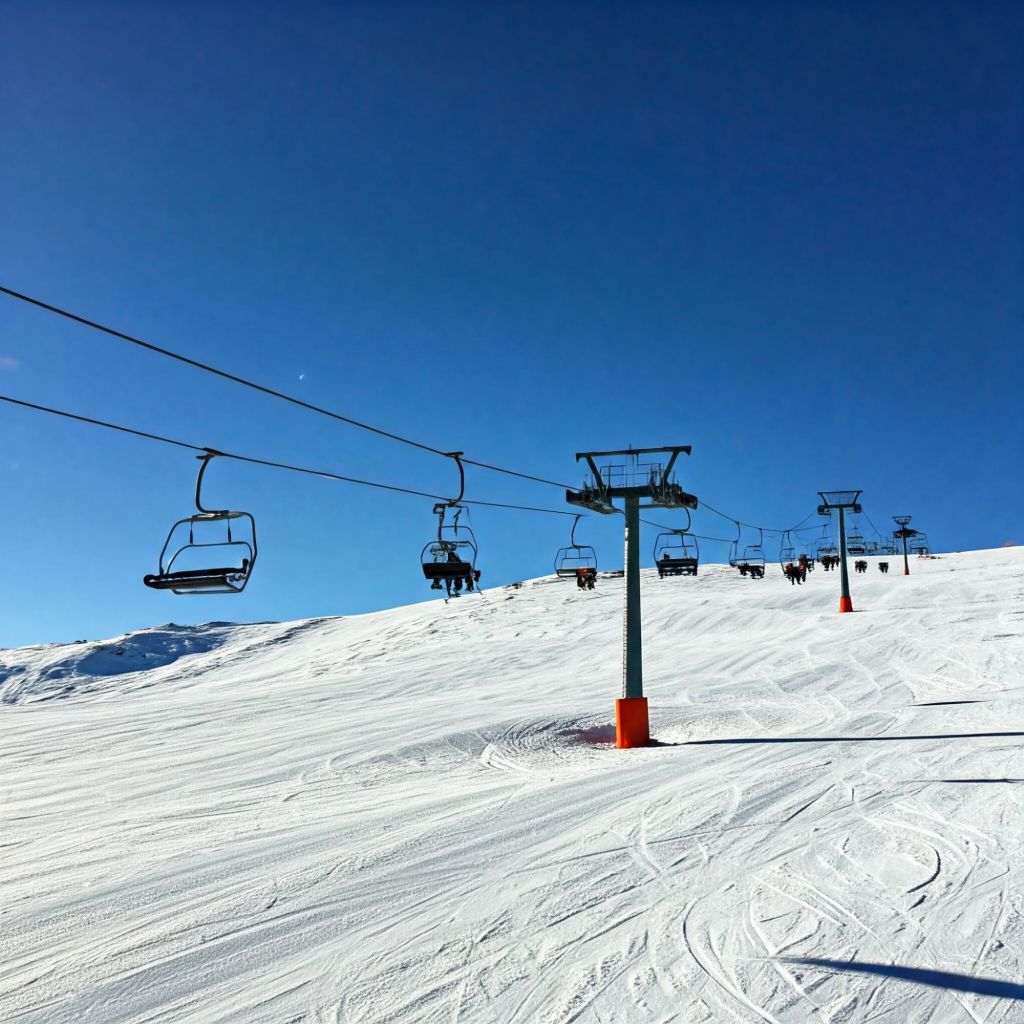
The joy of skiing is back for BC, while just at bay extreme weather and dangerous temperatures are muted and we hope not just a window.

Happy first day of 2025.

To maximize enjoyment and safety while downhill skiing in British Columbia, consider these factors:
Timing:
* Shoulder Seasons (November/Early December & March/April):
   * Pros: Fewer crowds, potentially better deals on accommodation and lift tickets, pleasant weather.
   * Cons: Snow conditions may be less consistent, some lifts/terrain might be closed.
* Peak Season (December-February):
   * Pros: Consistent snow, wide variety of open terrain, festive atmosphere.
   * Cons: Higher prices, longer lift lines, more crowded slopes.
Location:
* Whistler Blackcomb: World-renowned, diverse terrain, excellent snow record.
* Revelstoke Mountain Resort: Massive vertical drop, challenging terrain, incredible powder.
* Kicking Horse Mountain Resort: Steep and challenging, unique terrain, stunning scenery.
* Sun Peaks Resort: Family-friendly, good value, variety of terrain.
* Smaller Resorts: Often offer a more relaxed atmosphere, shorter lift lines, and unique charm.
Safety:
* Take a lesson: Even experienced skiers can benefit from a refresher or learn new techniques.
* Rent appropriate equipment: Make sure your skis/snowboard and boots fit properly.
* Ski within your ability: Don’t attempt runs that are too difficult for you.
* Be aware of your surroundings: Look uphill before merging onto the run.
* Control your speed: Adjust your speed to match the conditions and other skiers.
* Stay hydrated and nourished: Bring snacks and water to avoid fatigue and dehydration.
* Wear a helmet: Helmets are essential for safety.
Practical Tips:
* Book accommodations and lift tickets in advance, especially during peak season.
* Check the snow report and weather forecast before you go.
* Pack layers of clothing to adjust to changing temperatures.
* Bring sunscreen, sunglasses, and lip balm.
* Consider purchasing a season pass or multi-day lift ticket for significant savings.
* Take advantage of après-ski activities to relax and socialize.
By following these tips, you can enhance your enjoyment and ensure a safe and memorable downhill skiing experience in British Columbia.
Disclaimer: This information is for general guidance only and should not be considered professional advice. Always prioritize safety and consult with qualified instructors or guides for specific situations.

500 million dollars BC Hydro. This project is going to be done by BC Hydro. Although their name Hydro connotates the fact that they own every drop of water in British Columbia as a monopoly for power generation. They are expanding wind farms and power smart are in their resume.

New

Environmental assessment waived

The company has just been directed to do everything as efficiently as possible and they’re waiving the environmental assessment. Which may in one case be reasonable because of the wind and its passiveness. However, they are notorious for bird kills and I would think that would be part of the environment. More on this later we hope. Maybe we can get a quote from theNicola Naturalist Society Incorporated. Alan Berger president.

Good luck

MCC

Where else are you going to be?…

This is not an ad  it’s an opportunity to comment.

The Merritt and District Chamber of Commerce  is long in the tooth here in our South Central interior British Columbia town /city.

We have observed over time the effectiveness of this small organization + its worthiness by being linked to numbers of other organizations such as local government, provincial government hydro. And anybody? Trying to make a buck in a livelihood in our country, CC work.

Our life here above 600 m would not be the same without the hard-working volunteers and business people that come together in this medium.

We recall that the first bit of fiber optic cable came to the local chamber of Commerce office when it was located in the Grand hotel on Garcia and Nicola in Merritt.

Generations have come and gone and had their time and got their hands dirty in the Commerce and construction of the business community here.

Continue reading

Tanker traffic up…

The amount of tractor traffic off Vancouver is increasing exponentially with trans mountains, a new ability to move Alberta oil from the BC Coast. Recently a shipment. I left Vancouver for Alaska, the first in about a decade.

TMX

The recent completion of the Trans mountain expansion, another line going along the one from the 1950s has tripled the ability to move tarsands oil or Alberta oil to other markets.

So, it seems that the world is coming around a bit. The la Nina severe storm generator is working to bring up cooler water from deeper parts of the ocean and cause weather fronts to move it inland.

And, a carbon tax is taking up tariffs on carbon imiting oil reserves ( when burnt). So, we have been watching and waiting for the catastrophic sea level to rise.

Not terribly dramatic the drought is more of a sense of attention than sea levels. We know that the seas were about 300 m shallower at the top of the last ice age when a mile high or 2 mile high or more in some places sheets of ice covered North America. So did that translate into how the seas were going to rise with current global warming,? I watched as island states in the South seas were marked as going under. On examination it seems those things move regularly because of the sand that composes them.

Then I  thought back to when our family business partnered with a couple other drillers to do the preliminary exploration work  drilling on the site C project in British Columbia, Canada. My thoughts were tossed and since we finished decades ago and it’s been under construction for decades and now at this very moment is being filled with water. However, because of drought conditions, it’s not taking any water out of the system or the land, but it’s taking it from Williston lake. The WAC Bennett reservoir.

Although there is a greater efficiency with the new project, it’s a moot point about water because the drought is a concern that needs to be dealt with in a measured way and they certainly can do that. And we can cooperate when we are asked to preserve water and or be part of solutions for that sort of thing.

But, it raises in my mind questions about the abundance of water when it’s mixed with oil. We know oil doesn’t mix with water. We have as a society that with licensing through our government has given a lot of oil leases that have drilled lots of holes in the ground and pumped out lots of oil over the last few decades and guess what?

That oil was burned and put in the atmosphere. Some it was taken up again by trees but lots of interest to me is that nobody has ever raised the issue of what is taking its place in the ground. Of all that oil being pumped out.Yes we know that oil and water don’t mix but where there’s a hole there’s going to be water put down it and I presume that the oil will work its way to the top of it and the water will be underneath it in most respects. I’m not a geologist but I’m sure somebody must have studied that.

Then, the question of the carbon tax and its relationship to the availability to the market of tar sands oil. Now Tar sands  oil isn’t pumped from big holes in the ground. It is mined refined  and sands put  in back filled pits so that would preclude the loss of groundwater, we would take.

But we’re not experts, but we think that would make tar sands oil more attractive to be used in place of huge amounts of pooled oil?  It wouldn’t be pumped from the ground and replaced with groundwater, which it seems at this point we are suffering for.

Now, we are still not experts or giving you a lecture. It is somebody subjectively thinking what the hey; is it true, could have the environmental impact of tar sands been underlooked for this dynamic of groundwater disappearing and exacerbating drought conditions.

At any rate, the sight C project will be generating power this fall sometime and it’ll be using water from Williston lake that would have gone through the aging WAC Bennet  Dam . So dam  it anyway, what way  water. ( I am sure it goes through both) Double dipped, but will it be back?