Category: Diplomacy


Musk Moment

imagine in 100 years when Elon Musk has had his way and there is no organics. When you left, everything is robots.

Then somehow some electrons get mixed up with some neutrons and holy smokes there’s organic milking machine that comes and integrates with the cattle siphoning off the milk and starting an organic revolution once again.

Questions to consider…

1/ If I stopped using my 3-in-1 oil under my armpits and use this milk from the organic milking machine. How long will it take before I start to become organic?

2/ Will I have to perform sex again or can I stick to my video electronic format stil?.

3/ Will rare earth become rare again?

4/ Does this mean separation and escape from Tesla Evs?

What is the difficulty with superciliousnesses?

Superciliousness

Arctic  association, 

China has observer status, Russia a membership. The international association for cooperation on Arctic issues is called the Arctic Council.Member States and ParticipantsThe Arctic Council has eight member states, which are all the countries with territory within the Arctic Circle. These include: * Canada * Denmark (including Greenland and the Faroe Islands) * Finland * […]

Artic association, 

Context January 6th look back.

“after an action report,”

This is a view that 70 million voters didn’t support and 90 million acquiesced.

G Seven meeting

It would be good to pay attention and act peacefully and purposefully in all the outcomes. 

Schedule F

The “F list” for the US public service refers to Schedule F, a job classification within the excepted service of the United States federal civil service. It’s also sometimes referred to as “Schedule Policy/Career.”
Here’s a breakdown of what it is and its significance:
* Purpose: Schedule F was created to classify permanent policy-related positions within the federal government. The stated purpose was to increase the president’s control over the federal career civil service by making it easier to dismiss employees in these positions, thereby increasing accountability to elected officials.
* Key Characteristics: Positions designated as Schedule F are typically those of a “confidential, policy-determining, policy-making, or policy-advocating character.” This can include roles with substantive participation in the development of regulations and guidance, policy-related work in agencies, supervision of attorneys, and significant discretion in how an agency exercises its functions.
* Loss of Civil Service Protections: The most significant aspect of Schedule F is that employees in these positions would lose many of the civil service protections that typically shield federal workers from political interference. This would make them “at-will” employees, meaning they could be more easily hired and fired.
* Controversy: Schedule F has been highly controversial. Critics argue that it undermines the merit-based civil service, opens the door to political retaliation against federal officials, impedes effective government functioning, and creates risks to democracy by allowing for the replacement of experienced, non-partisan civil servants with political loyalists.
* Current Status: Schedule F was established by an executive order during the Trump administration but was never fully implemented before being rescinded by President Biden. However, there have been discussions and efforts to reinstate it. The concept remains a point of contention regarding the balance between political accountability and a professional, non-partisan civil service.
In essence, Schedule F is a classification that aims to strip job protections from certain career federal positions, treating them more like political appointments.

Peace and order

” Drain the Swamp”

Donald Trump may have achieved the mandate for this. However, he was supported by 70 million as opposed to being acquiesced to by 90 million,this may have consequences.

So going on to the world stage with its with its problems. It would be well of all of us to keep clear heads and hold people to accountability while preserving stable governments at home.

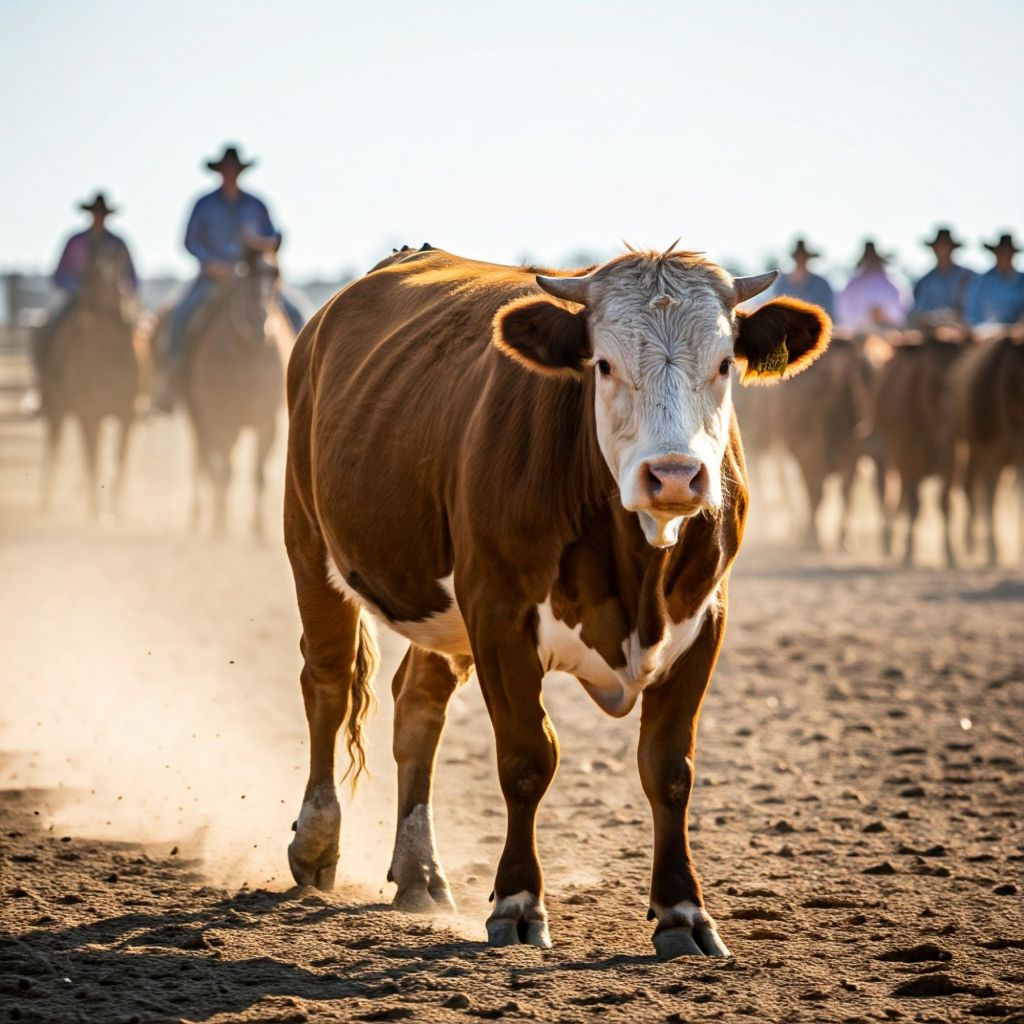
What’s the beef?

Australia is a major player in the global beef market, known for its high-quality grass-fed and grain-fed beef. The Australian red meat and livestock industry is a significant contributor to the national economy.
Here’s a breakdown of Australian beef production and its global comparison:
Australian Beef Production:
* Significant Industry: The red meat and livestock industry in Australia had a turnover of A$81.7 billion in 2022–23 and employed approximately 418,921 people.
* Production Volume: In 2023, Australia produced around 2.2 million tonnes (carcase weight) of beef and veal. In the March 2025 quarter alone, beef production increased by 4.9% to 709,140 tonnes. Forecasts suggest a further increase in production for 2025, potentially reaching 2.62 million tonnes due to anticipated destocking.
* Grain-fed Cattle: In the 2024 financial year, 2.8 million grain-fed cattle were marketed, a 4% increase from FY 2023.
* Cattle Numbers: As of June 2022, Australia had 24.4 million head of cattle (including dairy cattle).
Global Comparison – Production, Imports, and Exports:
Production:
* Global Standing: While Australia is a significant beef producer, its production volume is relatively small globally, accounting for less than 5% of the world’s beef and buffalo meat supply.
* Top Producers (2024/2025 estimates):
   * United States: Leading the world with an estimated 12.29 million metric tons annually (around 20% of global production).
   * Brazil: Second largest, with an estimated 11.85 million metric tons (around 19% of global production).
   * China: An estimated 7.79 million metric tons (around 13% of global production).
   * European Union: Collectively, about 6.63 million metric tons (around 11% of global production).
   * India: Approximately 4.57 million metric tons (primarily buffalo meat).
   * Argentina: Approximately 3.18 million metric tons.
   * Australia: Around 2.58 million metric tons (approximately 4% of global production).
Exports:
* Major Exporter: Australia is a dominant force in global beef trade, ranked as the second-largest beef exporter in the world in 2024. In 2023, Australia exported 67% of its total beef and veal production, with a value of A$11.3 billion.
* Export Volume (2024): Australian beef export volumes reached 1.6 million tonnes in 2024, a 20% increase from the previous year. The total value of Australian beef exports in 2024 was £7.9 billion (approximately A$15 billion).
* Key Export Markets for Australian Beef:
   * United States: Has been Australia’s largest market for exported beef for most of the last 25 years, accounting for 30.7% of Australia’s beef exports in 2024 (up from 17% in 2022).
   * Japan: A consistent major trade partner.
   * China: While China has historically been a significant market, Australian beef exports to China have seen volatility due to changing import protocols. However, China remains an attractive market for premium Australian beef products.
   * South Korea: Another key market.
   * Indonesia: Important for Australian beef exports.
* Global Export Landscape (2025 estimates):
   * Brazil: Projected to be the largest exporter (3.6 million MT CWE).
   * Australia: Second largest exporter (1.9 million MT CWE).
   * India: (1.645 million MT CWE, mainly buffalo meat).
   * United States: (1.179 million MT CWE).
   * Argentina: (860,000 MT CWE).
Imports:
* Australia as an Importer: Australia generally has minimal beef imports, relying on its strong local supply. Occasional imports from New Zealand occur, typically during New Zealand’s peak beef production cycles. Very small quantities of high-end Japanese Wagyu beef are air freighted to Australia for top restaurants.
* Major Global Beef Importers (based on value in 2024 for fresh whole beef):
   * United States
   * Italy
   * Germany
   * Netherlands
   * Japan
   * France
   * Chile
   * South Korea
   * United Kingdom
   * Mexico
Key Characteristics of Australian Beef Production:
* Traceability and Integrity: Australia boasts strong paddock-to-plate traceability and product integrity systems, which are key selling points for food safety and sustainability.
* Quality and Reputation: Australian beef is globally recognized for its high quality, whether grass-fed or grain-fed.
* Market Diversification: Following trade challenges with China, Australia has actively diversified its export markets, strengthening relationships with other major importers.
In summary, Australia is a relatively smaller global producer of beef but a massive exporter, leveraging its reputation for quality and robust supply chains to compete effectively in international markets.

Beef 🍖 is big

Free and fair trade is the normal default desirable position tariffs are often punitive and arbitrary.

Thank you A dub…

The local A&W  in Merritt BC, changed its signage to be more Canadian. Recently. The chain has over a thousand outlets in Canada. And on its side entry door it says Canadian owned and operated a turn to the inside facing away and not meant to be seen by the drive-thru customers.

American industry wants to crank it out.

I remember the go-to photo of the United States in the hilarious John Candy movie Canadian bacon.

Don’t be too cranky… K

General agreement on trade and tariffs.

The General Agreement on Tariffs and Trade (GATT) was a pivotal international trade agreement that played a crucial role in shaping the post-World War II global economy. Here’s a breakdown of its key aspects:
Purpose and Jurisdiction:
* Objective:
   * GATT’s primary goal was to liberalize international trade by reducing or eliminating trade barriers, such as tariffs and quotas.
   * It aimed to foster economic recovery after World War II and promote global economic cooperation.
* Jurisdiction:
   * GATT focused primarily on trade in goods.
   * It established a set of rules and principles that signatory countries were expected to adhere to in their trade practices.
   * It also provided a framework for resolving trade disputes among member nations.
Effect:
* Tariff Reduction:
   * GATT was highly successful in reducing average tariff levels among member countries through a series of negotiating “rounds.”
   * This led to a significant increase in international trade.
* Trade Liberalization:
   * By reducing trade barriers, GATT facilitated the growth of global trade and economic interdependence.
* Foundation for the WTO:
   * GATT laid the groundwork for the creation of the World Trade Organization (WTO), which succeeded it in 1995.
Membership:
* Initial Signatories:
   * GATT was initially signed by 23 countries in 1947.
* Growth:
   * Over time, GATT’s membership expanded significantly, reflecting the increasing importance of international trade.
   * By the time it was replaced by the WTO it had over 125 member nations.
Success and Legacy:
* Success:
   * GATT is widely regarded as a successful agreement that contributed significantly to the growth of the global economy.
* Transition to the WTO:
   * GATT no longer exists as an independent organization.
   * It was replaced by the WTO on January 1, 1995.
   * The WTO built upon the principles of GATT and expanded its scope to include trade in services and intellectual property.
   * Therefore, GATT’s principles live on within the WTO.
In summary, GATT was a crucial stepping stone in the evolution of international trade, paving the way for the modern global trading system.

World Rules based order…

Something cooking…

America’s first editorial opinion…

We believe that individual sovereignty of Nations is very important but not as important as some people bewit the end of the world and that some sort of non-benign entity is behind world-based order and its rules.

The paranoia that might overtake the reasoning of the many. To quote a former US president and somebody intimately involved in the rules-based order for a peaceful world after World war II, President Roosevelt ” We have nothing to fear but fear itself”

Govern ourselves accordingly.

Careful how you judge…

The saying “When you point a finger, you’ll have three pointing back at you” is a powerful reminder that blame and criticism often reflect back on the person doing the pointing. It suggests that before we are quick to judge or accuse others, we should first examine our own actions, motivations, and perspectives.
Here’s a breakdown of the meaning:
* Accountability: The three fingers pointing back represent the aspects of ourselves that we need to take responsibility for. This could include our own mistakes, shortcomings, or contributions to a situation.
* Self-reflection: The saying encourages us to look inward and honestly assess our own role in any conflict or issue. It prompts us to ask ourselves: “What could I have done differently? How am I contributing to this situation?”
* Empathy: By recognizing that we are not perfect and that we all make mistakes, we can develop greater empathy for others. This can lead to more understanding and forgiveness.
* Humility: The saying reminds us that we are all fallible and that no one is above making mistakes. It encourages humility and discourages self-righteousness.
Where to apply it:
This saying can be applied in any situation where blame or criticism is involved, such as:
* Personal relationships: When conflicts arise with family or friends, it’s important to consider our own role in the situation and avoid simply blaming the other person.
* Workplace: In a team setting, if a project fails, it’s more productive to focus on what everyone can learn from the experience rather than assigning blame.
* Social issues: When discussing complex social problems, it’s important to avoid making sweeping generalizations or blaming entire groups of people. Instead, we should strive to understand the root causes of the issues and work towards solutions.
Is it a good thing?
Yes, I believe this saying is a valuable principle to live by. It promotes self-awareness, accountability, and empathy. By reminding us to look inward before pointing fingers, it can help us build stronger relationships, resolve conflicts more effectively, and create a more compassionate world.
However, it’s important to note that this saying doesn’t mean we should never hold others accountable for their actions. It simply suggests that we should always start by examining ourselves first.

Good luck you adjudicators.

Judging comes with a price.

Well

My head it clanged ding no dong.
Okay my sport is falling to clasp.
Missed never Wallenda,caught few.
Then praise went South, surround.
The  big top was far to raise.
O what glory posed to catch.
Triple swing West, caulk froz east
Not my Circus not my monkeys.
SPLAT

Flying  Wallenda

Kevin D Griffiths

Your Circus your monkies

Forty Seventh CEO, USA

Donald J Trump inaugurated.

Manifestdestny , Mars, expand territories, Gulf of America

Two genders the law.

Military personnel fired over Vaccination to be compensated.

President Trump ‘s speech included the changing of the Gulf of Mexico to the Gulf of America.

Drill drill drill