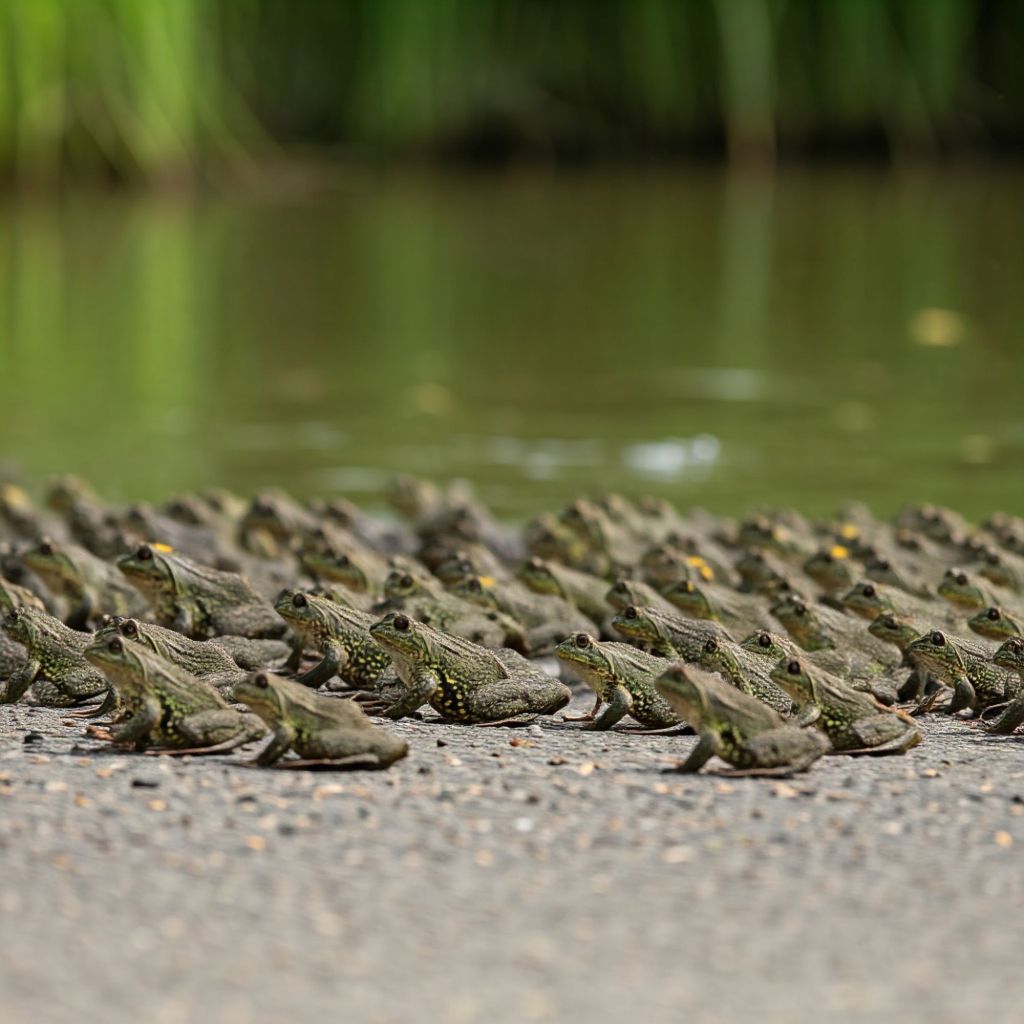
You are presumed to be honest and responsible without evidence to the contrary beyond a reasonable doubt… on the balance of probablilties you are justified by 51 % likelyhood.
Best Ways to Use Late Season Fresh Snow for Skiing in BC
Skiing on late-season fresh snow in British Columbia can be an exhilarating experience. Here are some tips to make the most out of those conditions:
1. Choose the Right Ski Area
Opt for higher elevation slopes where fresh snow is more likely to stick around longer. Areas like Whistler Blackcomb and Revelstoke often have great late-season conditions.
2. Timing is Key
Ski during the mornings when the snow is still fresh and untouched. The sun can quickly change the snow’s texture later in the day.
3. Stay Flexible with Your Plans
Conditions can vary day by day, so be ready to adjust your skiing plans based on the latest snow reports and weather forecasts.
4. Explore Off-Piste Terrain
Late-season snow can create exciting off-piste opportunities. Just make sure to check avalanche conditions and ski with a buddy in more challenging areas.
5. Focus on Technique
Take advantage of the softer snow by practicing your carving and turning techniques. This can improve your skills while enjoying the fresh powder.
6. Use the Right Gear
Ensure your skis are equipped for soft snow. Skis with wider waists will offer better floatation and control.
7. Hydrate and Rest
Spring skiing can be more taxing due to warmer temperatures. Stay hydrated, take breaks, and don’t forget to apply sunscreen.
8. Celebrate the Warm Weather
Embrace the warmer weather by dressing in layers. This allows for comfort as temperatures fluctuate throughout the day.
9. Enjoy the Scenery
Late season offers stunning views with longer daylight hours. Take some time to appreciate the beautiful surroundings of BC.
10. Join a Ski Clinic or Lesson
Improve your skills while learning to navigate late-season conditions by participating in a ski clinic or taking lessons.
Enjoy the late-season skiing and make the most of the fresh snow while it lasts!
Most jurisdictions in Canada have been lifting the carbon tax off the consumer price of gasoline. Along with that, the carbon credit may be on its way out. Hard to say when everything fits together but it seems to be the moniker that is driving it.
Well, if people feel empowered by it, It’s probably the right thing to do.
So, We wonder where the next excise taxes will be stuck into, some consumer things somewhere. I wonder if it’ll be cars or are they going to be relying on tariffs?
Don’t bring your tariffs to town. Billy boy Billy boy.
Barbecuing ribs involves seasoning them with a spice rub, preparing a barbecue sauce, and cooking them low and slow over indirect heat. An advantage of using an open fire on a spit is that it allows for even cooking and great flavor development, as the smoke infuses the meat while it’s turning, creating a crispy exterior while keeping the inside tender. Additionally, this method can enhance the rustic flavor of the ribs, giving them a unique charred and smoky profile.
The local A&W in Merritt BC, changed its signage to be more Canadian. Recently. The chain has over a thousand outlets in Canada. And on its side entry door it says Canadian owned and operated a turn to the inside facing away and not meant to be seen by the drive-thru customers.
American industry wants to crank it out.
I remember the go-to photo of the United States in the hilarious John Candy movie Canadian bacon.
This weekend is marked with the beginning of the cherry blossom festival in Vancouver. Along with that, the Juno awards are up. You’re invited to visit David Lamb Park.
Juno Awards
The Vancouver Cherry Blossom Festival 2025 will take place from March 26th to April 28th, 2025. This festival celebrates the blooming of the cherry blossoms and offers a variety of events and activities.Here are some of the must-attend events: * Blossoms After Dark (March 28-30): A magical nighttime event where cherry blossoms are illuminated, accompanied by live music, bubble performances, and glow-in-the-dark treats at David Lam Park. * The Big Picnic (March 29): A community picnic inspired by Japan’s Hanami tradition, featuring art workshops, music, and cultural performances under the blossoms at David Lam Park. * Blossom Block Party (April 5): A lively celebration with music, food, and dance at the Dunsmuir Patio at Bentall Centre. * Sakura Days Japan Fair (April 12-13): Experience Japanese culture through traditional food, performances, tea ceremonies, and crafts at VanDusen Botanical Garden.The festival will be held throughout Vancouver, with key locations including: * David Lam Park * VanDusen Botanical Garden * Queen Elizabeth Park * Stanley ParkWould you like more information about any of these events or locations?
British Columbia is renowned for its stunning mountain landscapes, making it a prime destination for mountain resorts and getaways. Here’s a breakdown of what you can expect: Accessibility: * Accessibility varies depending on the resort. Some, like Whistler Blackcomb, are easily accessible from major cities like Vancouver. Others, located in more remote areas, may require longer drives or even flights. * Many of the larger ski resorts are accessible by well maintained roads. However, winter driving in B.C. mountains requires appropriate vehicle and driving skill. Affordability: * Price points range significantly. Luxury resorts like those in Whistler can be quite expensive, while smaller, family-run resorts may offer more affordable options. * Factors influencing cost include: * Time of year (peak ski season vs. off-season) * Accommodation type (luxury hotel vs. condo or cabin) * Activities and amenities offered. Parks: * Some resorts are located within or near provincial parks, offering access to beautiful natural surroundings. * While many ski resorts exist within areas of natural beauty, they are not often located within national parks. National parks have very strict regulations regarding development. * Provincial parks however, do have areas that allow for recreational resorts and areas. Manning Park Resort for example, is located within Manning Provincial Park. Recommendations: * Whistler Blackcomb: * This is one of North America’s premier ski resorts, offering world-class skiing, snowboarding, and a vibrant village. * It’s relatively accessible from Vancouver. * Price point: High-end, with a wide range of accommodation options. * Revelstoke Mountain Resort: * Known for its incredible vertical drop and challenging terrain. * Offers a mix of skiing, snowboarding, and other winter activities. * It is located in a beautiful mountain setting. * Price point: Mid to high range. * Sun Peaks Resort: * A family-friendly resort with a charming village atmosphere. * Offers a variety of activities, including skiing, snowboarding, and cross-country skiing. * Price point: Mid-range, with various accommodation options. * Panorama Mountain Resort: * This resort provides a wide range of activities, and has a very nice village area. * It is a good location for family vacations. * Price point: Mid range. * Fernie Alpine Resort: * Known for its abundant snowfall and excellent powder skiing. * Located in the southeastern corner of B.C. * Price point: Mid-range. Important Considerations: * When planning a mountain getaway, consider the time of year. Winter is ideal for skiing and snowboarding, while summer offers hiking, mountain biking, and other outdoor activities. * Book accommodations and activities in advance, especially during peak season. * Be prepared for varying weather conditions, particularly in the mountains. I hope this information helps you plan your perfect mountain getaway in British Columbia!
The premier of Alberta has doubled her bacon consumption + has her eye on beef. In the sense that made in Canada a solution to sales can be achieved, so bacon up.
Beef and pork production by country
Five Largest Beef Producing Countries
United States
Brazil
European Union
China
Argentina
Five Largest Pork Producing Countries
China
United States
European Union
Brazil
Russia
Consumers
Five Greatest Beef Consuming Countries
United States – Approximately 26 million metric tons
Brazil – About 10 million metric tons
China – Roughly 10 million metric tons
Argentina – Around 3 million metric tons
Mexico – Approximately 2 million metric tons
Five Greatest Pork Consuming Countries
China – Roughly 54 million metric tons
United States – About 12 million metric tons
European Union – Approximately 12 million metric tons
Russia – Around 3 million metric tons
Brazil – About 3 million metric tons
Good Luck
Farms and Rancheswith Beef Cattle2021 Census of Agricuiture11,1millionTotal Cattle and CalvesDary 1, 20242.1% fromJanuary 1, 2023(includes 1.4 million dairy cattle)Statistics Canada3.46millionBeef CowsJanuary1, 2024Down 2.4% fromJanuary 1, 2023Statistics CanadaQuebec 40Atlantic 2020 40 60#of Head (May 11, 2021)2021 Census of AgicultureBeef Cows by ProvinceJanuary 1,2024Statistics Canade: inventory x 1000 headPercentages may not add to 100% due to rounding5% 45%28% 11%1831.556 L 6% 1980 381 215117Average Cost of Production vs.Average Returns on anAlberta 550 Ib Calf*Price S/cwt EST. Total Costs per cwt3.1262.1161.1.690 92 94 96 98 00 02 04 06 08 10 12 14 16 18 20 22Canfax Research Services23% of farms havebetween 47 and 122 cows.with 956,118 beef cows, 26%of the herd.15% of farms have1% of the farms between 123 and 499 cows.have 13% of the with 1.21 million beef cows,45% of the herd.beef cows, between 2021 Census of Agriculture500 and 2,499 on Results rounded to nearesteach farm. whole numberCanada fed 3.1 million cattle in2023 (finished to market weight)down 4.4% from 2022.Canfax, Statistics Canada, AAFCWestern Canada finishes 79%of all fed cattle in Canada. canfaxIn 2023, Canadaproduced 3.44bilion pounosnof beef,offals), down 4.6% 3.44from 2022. BillionCanfax Research Services PoundsCattle and calf cash receiptsin 2023 totaled $15.0 billion,up 26% from 2022. statistics CanadaBeef production contributed$29 billion to Canada’s GDP(2021-2023 average).Canfax Research ServicesWHERE CANADA TRADESBeef Exports – 20231.1 billion pounds (499 million kg)75.2% United States2.9% South Korea9.1% Japan6.5% Mexico3.4% Other3.0% Southeast AsiaBeef Imports – 2023411 million pounds (187 milion kg)53.0% United States9.7% New Zealand6.4% Uruguay10.9% Australia6.2% Mexico13.8% otherStatistics CanadaIn 2023, Canada exported 51% of totalbeef and cattle produced in Canada.Statistics Canada, Canfax, AAFCIn 2023, 45% of Canadian productionwas exported (excluding slaughter cattle).Statistics Canada, Canfax, AAFCCanadian beef exports were valued at$5.02 billion in 2023, up 7.4% from$4.68 billion in 2022.Statistics CanadaCANADIAN BEEF What are wecONSUMPTION really eating?35.8 Ibs(16.2 kg)per person yearlyDown 7.2% versus last year.1 metric tonne = 2,204.6 lbs.Statistics Canada, Retail weight, 2023WHERE CANADA FITSTop 10 Beef Producing Nations – 2024fUnited States 19.72%Brazil 18.57%China 12.769%EU 10.65%India 7.57%Argentina a 5.20%Australia Canada 3.97%has 1.2% of theMexico world’s 942 million, 3.75%cattle.Russia 2.29%Canada 2.16%59% 10% 15% 20% 25%Canada produces 2% of the world’s beef supply. Worldwide beefproduction is forecast to be 60.4 million metric tonnes in 2024.USDATop 10 Beef Exporting Nations- 2024fAPvoorts)(excludes live slaughterBrazil 23.75%India 13.82%United States 12.97%Australia 10.31%Argentina 7.46%New Zealand 5.59%EU 4.86%Canada 4.54%Uruguay 3.85%Paraguay 3.65%5% 10% 15% 20% 25%Total world exports in 2024 are forecast to be 12.3 million metric tonnesand Canada is projected to be the 8th largest beef exporter in the world(excluding live slaughter exports).USDACanadian Beef ConsumptionDomestic Imports1.2001.00080060040020002 04 06 08 10 12 14 16 18Canadians consumed 924,283 metric tonnes of beef in 2023.Statistics Canada
The General Agreement on Tariffs and Trade (GATT) was a pivotal international trade agreement that played a crucial role in shaping the post-World War II global economy. Here’s a breakdown of its key aspects: Purpose and Jurisdiction: * Objective: * GATT’s primary goal was to liberalize international trade by reducing or eliminating trade barriers, such as tariffs and quotas. * It aimed to foster economic recovery after World War II and promote global economic cooperation. * Jurisdiction: * GATT focused primarily on trade in goods. * It established a set of rules and principles that signatory countries were expected to adhere to in their trade practices. * It also provided a framework for resolving trade disputes among member nations. Effect: * Tariff Reduction: * GATT was highly successful in reducing average tariff levels among member countries through a series of negotiating “rounds.” * This led to a significant increase in international trade. * Trade Liberalization: * By reducing trade barriers, GATT facilitated the growth of global trade and economic interdependence. * Foundation for the WTO: * GATT laid the groundwork for the creation of the World Trade Organization (WTO), which succeeded it in 1995. Membership: * Initial Signatories: * GATT was initially signed by 23 countries in 1947. * Growth: * Over time, GATT’s membership expanded significantly, reflecting the increasing importance of international trade. * By the time it was replaced by the WTO it had over 125 member nations. Success and Legacy: * Success: * GATT is widely regarded as a successful agreement that contributed significantly to the growth of the global economy. * Transition to the WTO: * GATT no longer exists as an independent organization. * It was replaced by the WTO on January 1, 1995. * The WTO built upon the principles of GATT and expanded its scope to include trade in services and intellectual property. * Therefore, GATT’s principles live on within the WTO. In summary, GATT was a crucial stepping stone in the evolution of international trade, paving the way for the modern global trading system.
World Rules based order…
Something cooking…
America’s first editorial opinion…
We believe that individual sovereignty of Nations is very important but not as important as some people bewit the end of the world and that some sort of non-benign entity is behind world-based order and its rules.
The paranoia that might overtake the reasoning of the many. To quote a former US president and somebody intimately involved in the rules-based order for a peaceful world after World war II, President Roosevelt ” We have nothing to fear but fear itself”
Based on the information available, here are the key solar events, particularly eclipses, for 2025: * Partial Solar Eclipse on March 29, 2025: * There will be a partial solar eclipse on March 29th. * Partial Solar Eclipse on September 21, 2025: * There will be another partial solar eclipse on September 21st. This one will sweep across the South Pacific and parts of Antarctica. To give a broader scope of astronomical events, it is important to note that alongside the solar events, there are also lunar events. For instance, there is a total lunar eclipse happening on September 7th, 2025. To find very detailed information, i recommend checking these resources: * timeanddate.com * Royal Observatory Greenwich * Star Walk. * In-The-Sky.org. I hope this information is helpful.
The bake time and temperature for salmon can vary depending on the thickness and size of the fillet, as well as your personal preference. However, here are some general guidelines: Temperature: * 350°F (175°C): This is a good temperature for a slow and even cook, especially for thicker fillets. * 375°F (190°C): This is a popular choice for baking salmon, as it cooks the fish relatively quickly while still keeping it moist. * 400°F (200°C): This higher temperature is suitable for thinner fillets or if you prefer a slightly more cooked texture. * 450°F (232°C): This high temperature is ideal for searing the outside of the salmon while keeping the inside moist. Time: * General Rule: Bake salmon for 12-15 minutes per inch of thickness. * Thinner Fillets (less than 1 inch): 10-12 minutes at 400°F (200°C) or 15-20 minutes at 350°F (175°C). * Thicker Fillets (1 inch or more): 15-20 minutes at 375°F (190°C) or 20-25 minutes at 350°F (175°C). Tips for Baking Salmon: * Use a meat thermometer: The best way to ensure your salmon is cooked perfectly is to use a meat thermometer. The internal temperature should reach 145°F (63°C). * Don’t overcook: Salmon can become dry and tough if it’s overcooked. It’s better to slightly undercook it than to overcook it. * Seasoning: Season your salmon with salt, pepper, and any other herbs or spices you like. * Cooking method: You can bake salmon in a variety of ways, such as in foil packets, on a baking sheet, or in a cast iron skillet. Additional Resources: * Well Plated: https://www.wellplated.com/baked-salmon-in-foil/ * Tastefully Grace: https://tastefullygrace.com/how-to-bake-salmon/ * Delish: https://www.delish.com/cooking/recipe-ideas/a55315/best-baked-salmon-recipe/ Enjoy your delicious baked salmon!