You are presumed to be honest and responsible without evidence to the contrary beyond a reasonable doubt… on the balance of probablilties you are justified by 51 % likelyhood.
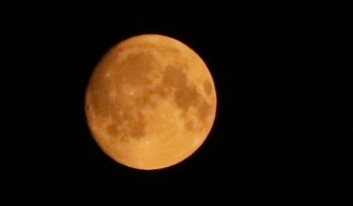
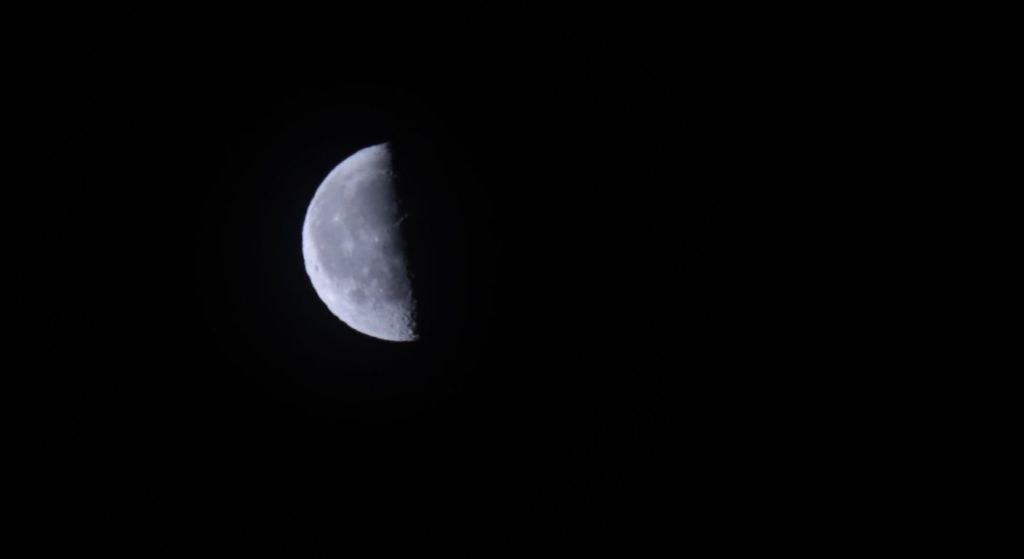
Photo KDG, April 1st 10:12 EDT will see a Pink Moon.
Paschal Moon
Makes the Easter work…
The moon will not be pink, Pink is for the color of the flowers that they’re expecting in the natural. It also has to do with fishing and a number of other things like growing grass.
Max illumination 7:12 source Pacific daylight Time…
Good Friday, Easter Sunday April 3rd and 5th….
Usually Easter Sunday is the first Sunday after the last full moon in March, That’s what makes this a Paschal Moon.
All the provinces and territories of statutory holidays for Easter in Canada.
The night sky from now through February 28, 2026, is particularly busy, featuring a rare “planetary parade” and a solar eclipse. While these events are spectacular to witness, their impact on Earth’s physical structure—geology, earthquakes, and tides—is often a mix of measurable physics and widespread myths.
Celestial Highlights: Feb 15 – Feb 28, 2026
February 17: New Moon & Annular Solar Eclipse: A “Ring of Fire” eclipse occurs today. It is primarily visible from Antarctica and the Southern Ocean, with partial views in South America and Southern Africa. * February 18–19: Moon-Mercury Conjunction: A thin crescent moon will appear very close to Mercury low in the western sky just after sunset. * February 24: First Quarter Moon: The moon will be high in the sky at sunset, appearing half-lit.
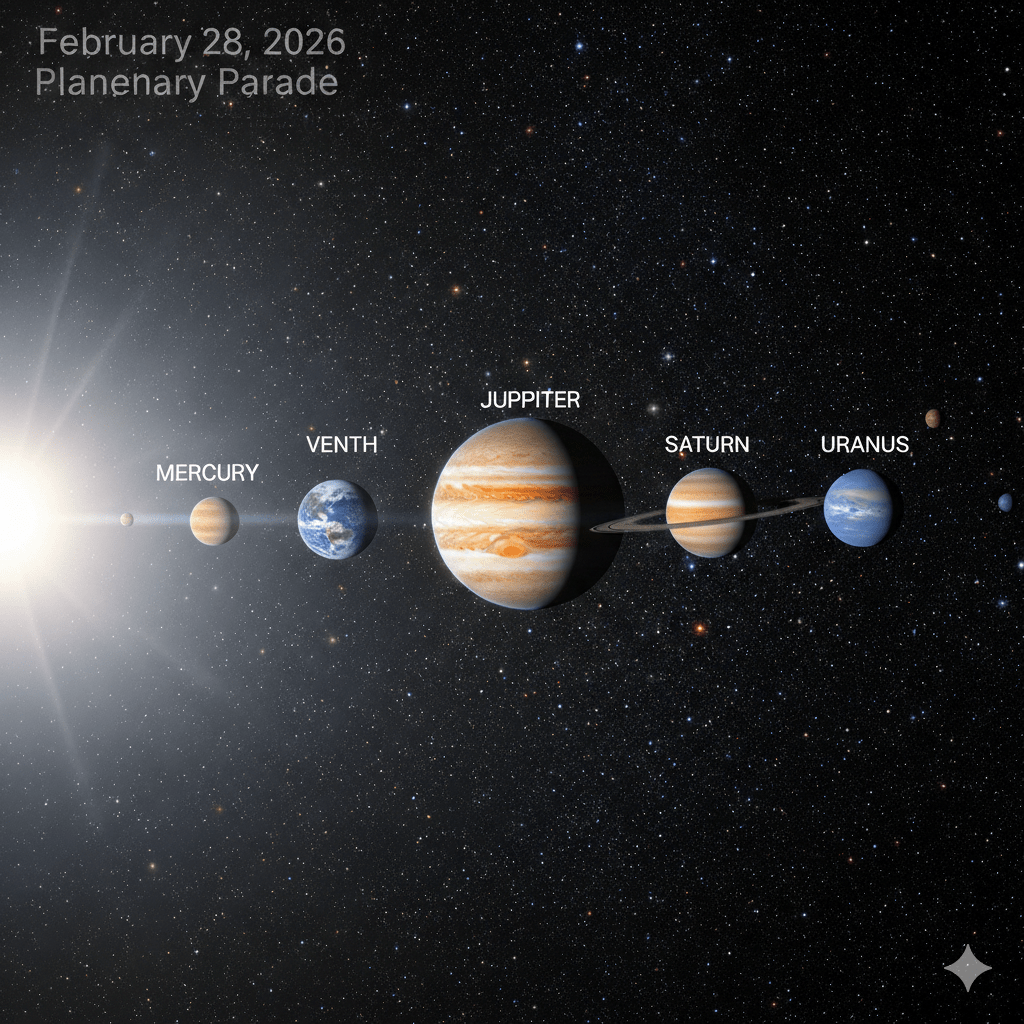
* February 28: The “Planetary Parade”:
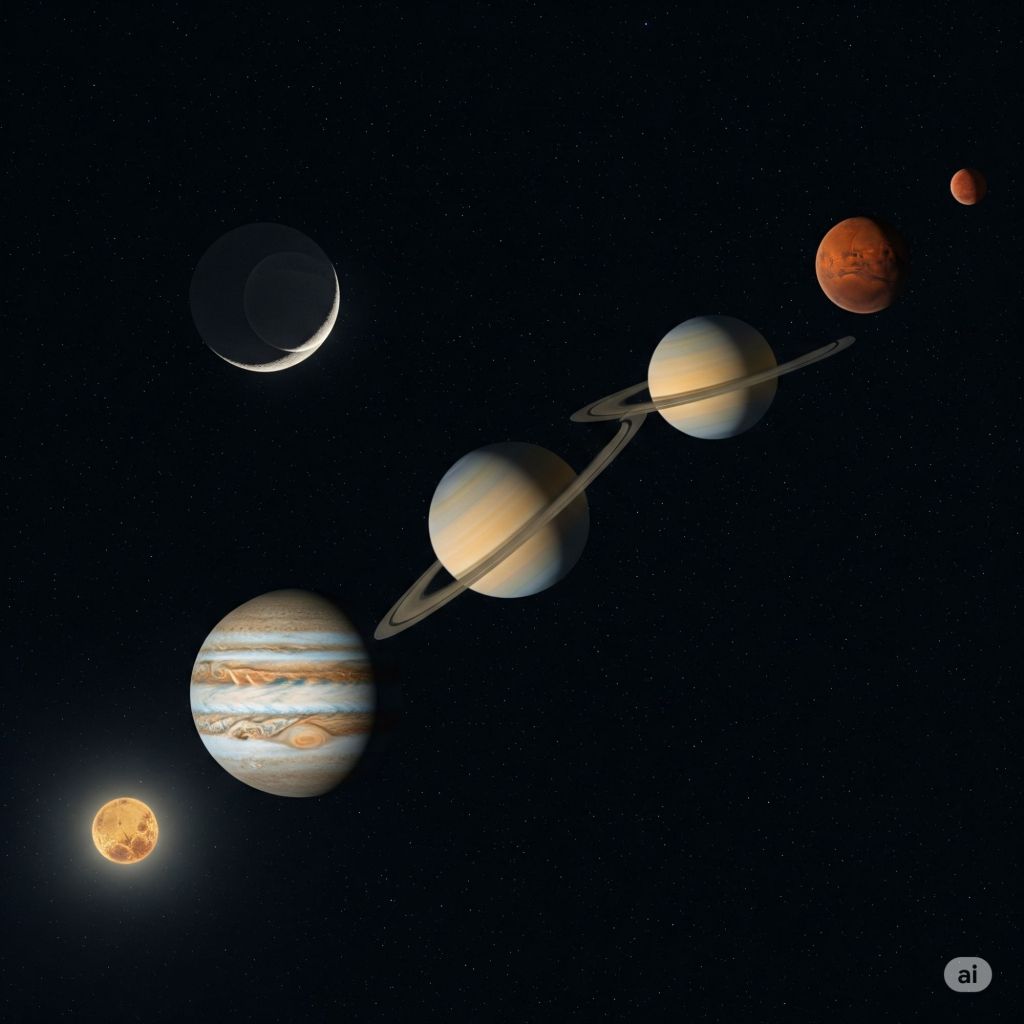
A rare alignment where six planets—Mercury, Venus, Jupiter, Saturn, Uranus, and Neptune—cluster in the same section of the sky.Impact on Earth’s Systems
1. Tidal Activity
(The “Spring Tide” Effect)
The most significant physical impact occurs around February 17. During a New Moon (and especially a Solar Eclipse), the Sun, Moon, and Earth align. * The Physics: The gravitational pull of the Sun and Moon combine, creating Spring Tides. These are not related to the season but refer to the “springing forth” of the water. * What to expect: You will see higher-than-average high tides and lower-than-average low tides globally for a few days surrounding the 17th.
2. Geological Structure and Earthquakes
There is often speculation that planetary alignments or eclipses “trigger” earthquakes. It is important to distinguish between tidal triggering and planetary myths:
* Tidal Triggering:
Scientific studies (such as those published in Nature Geoscience) have shown a slight statistical correlation between very large earthquakes and peak tidal stress (New/Full Moons). The extra “squeeze” from the tides can occasionally act as the “last straw” for a fault line that was already under extreme stress and ready to snap.
* Planetary Alignment Myth:
Despite the “Planetary Parade” on Feb 28, the gravitational influence of other planets on Earth’s crust is negligible. Even when aligned, the combined gravitational pull of all the planets is thousands of times weaker than the Moon’s daily pull.
* The Reality:
There is no scientific evidence that the Feb 28 alignment will cause a “surprise” earthquake. Earthquakes are driven by internal plate tectonics, which operate on a much more massive scale than planetary gravity.
3. Summary of Impacts|
Event | Primary Impact | Magnitude of Effect ||—|—|—|| New Moon (Feb 17) | High Tides (Spring Tides) | Moderate (Noticeable at coastlines) || Solar Eclipse (Feb 17) | Local temperature/wind changes | Minor (Only in path of totality) || Planet Parade (Feb 28) | Visual Beauty/Stargazing | None (No physical effect on Earth)
To view
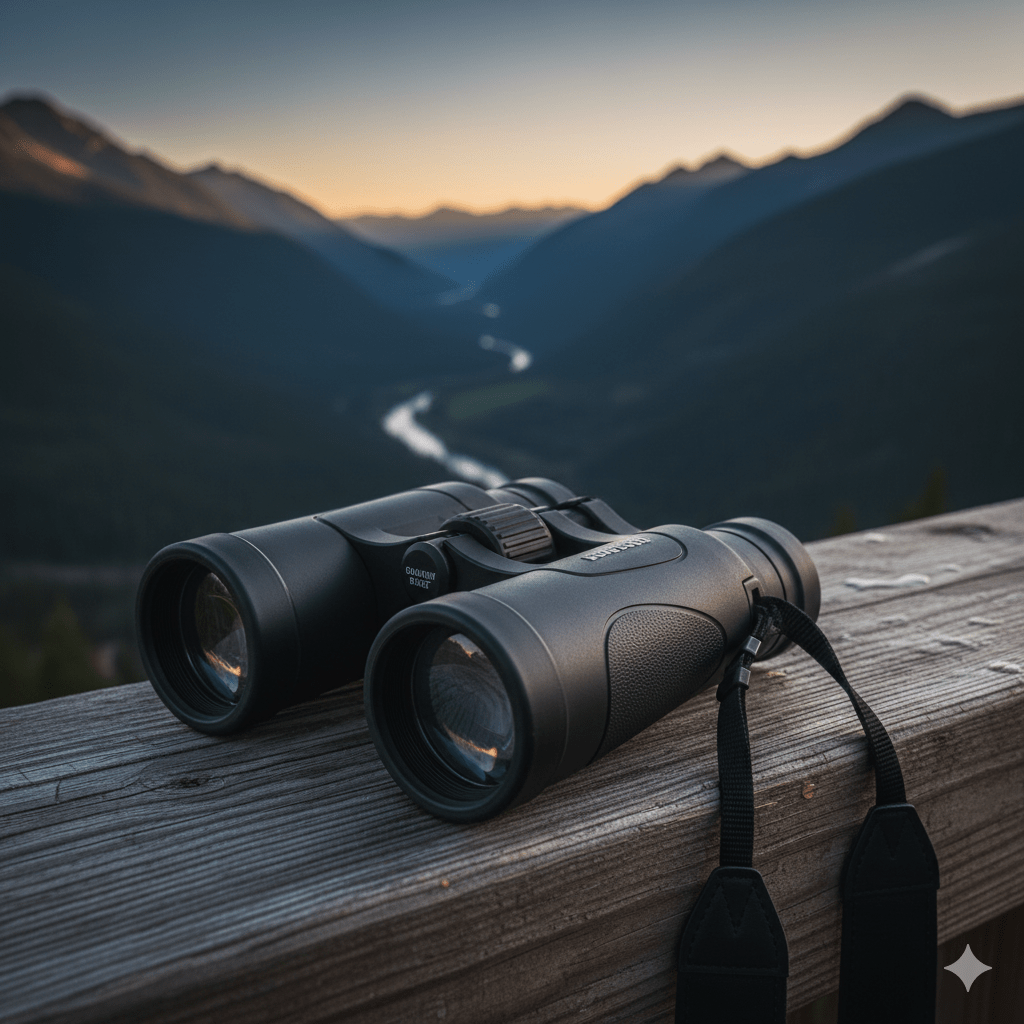
To witness the “Planetary Parade” on February 28 or the thin crescent moon following the solar eclipse on the 17th, you’ll want to find a spot away from the lights of Merritt. The Thompson-Nicola region offers some of the best dark skies in British Columbia due to its high elevation and low humidity.For the February 28 alignment, you should look toward the western horizon just after sunset. Most of the planets will be visible shortly after the sun goes down, though you’ll need a clear view of the horizon to catch Mercury and Saturn before they set.
Recommended Stargazing Spots
Monck Provincial Park is arguably your best local option, situated on the western shore of Nicola Lake. It is far enough from town to avoid significant light pollution while remaining easily accessible. * Offers wide-open views over the lake, which are ideal for spotting planets low on the horizon. * The large day-use area provides plenty of space to set up telescopes or blankets. * Its location in the Nicola Valley often benefits from clearer skies than the coastal regions.
Greenstone Mountain Provincial Park provides a much higher elevation for those willing to make a slightly longer drive toward Kamloops. The increased altitude puts you above much of the atmospheric haze, offering exceptionally sharp views. * Features “open 24 hours” access, which is perfect for late-night or early-morning celestial events. * The high-elevation plateau provides a panoramic 360-degree view of the sky. * It is a rugged location, so ensure you have a vehicle capable of handling the mountain roads.
Sagebrush Lakeside Retreat at Nicola Lake is a great alternative if you are looking for a more comfortable or private setting near the water. * Located directly on Nicola Lake, providing excellent visibility to the east and west. * The lakeside setting offers a peaceful atmosphere for long-duration viewing. * Its proximity to Merritt makes it a convenient choice for a quick evening trip.Overall,
Monck Provincial Park is the most reliable recommendation for most observers because it balances dark skies with a clear horizon over the water. If you are a serious photographer or observer, the trek to Greenstone Mountain will reward you with the darkest and clearest conditions in the immediate area.
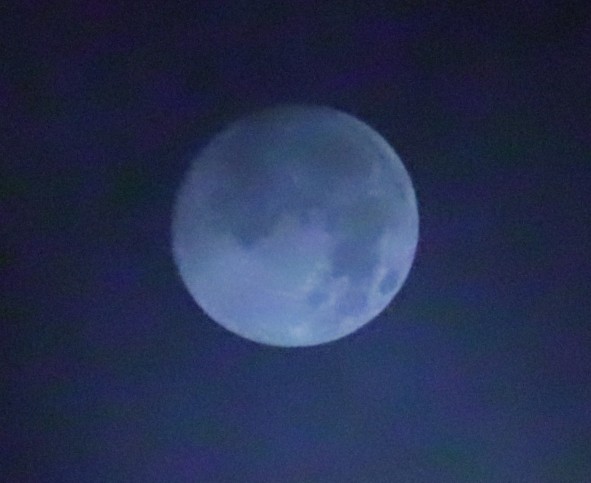
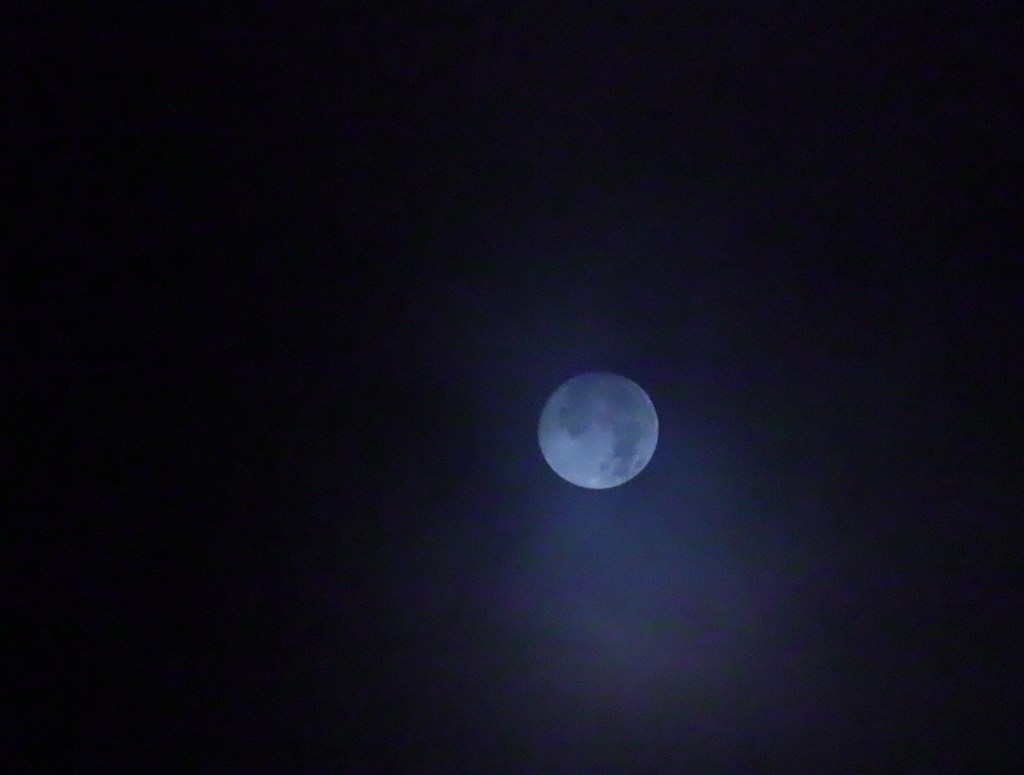
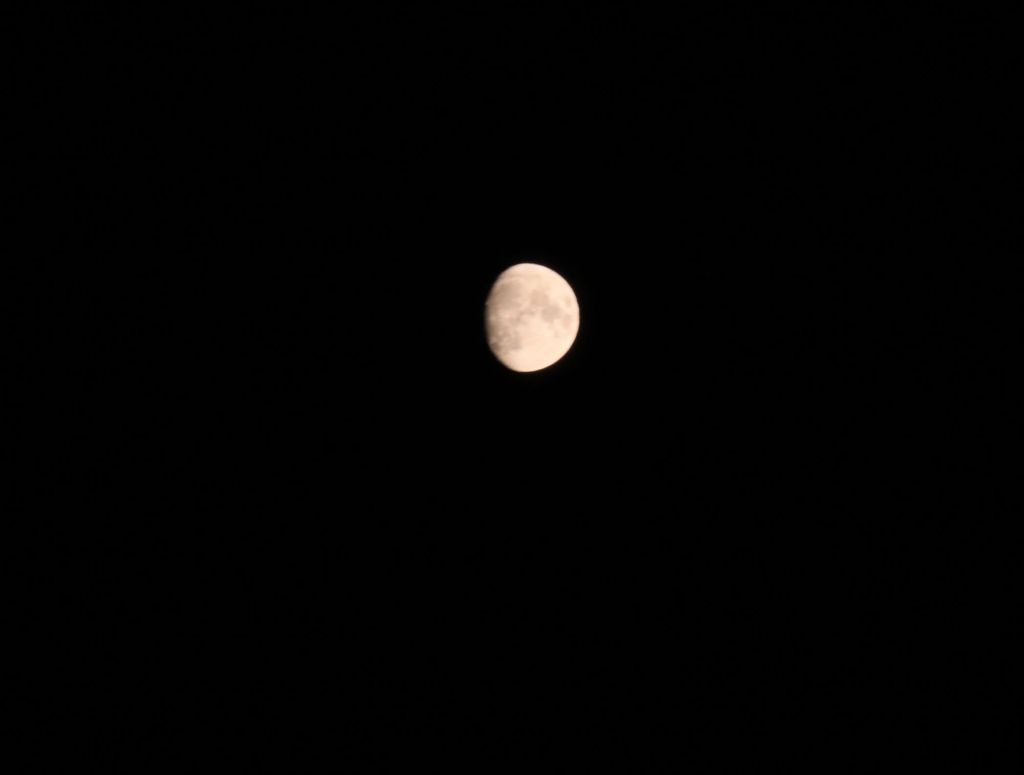
Moon photo KDG, Beaver Moon due on the 5th. Maybe a blue moon? As this photograph from the 1st of November is telling us, there’s also predictions of lots of snow coming in November so that’s the way it goes sometimes…
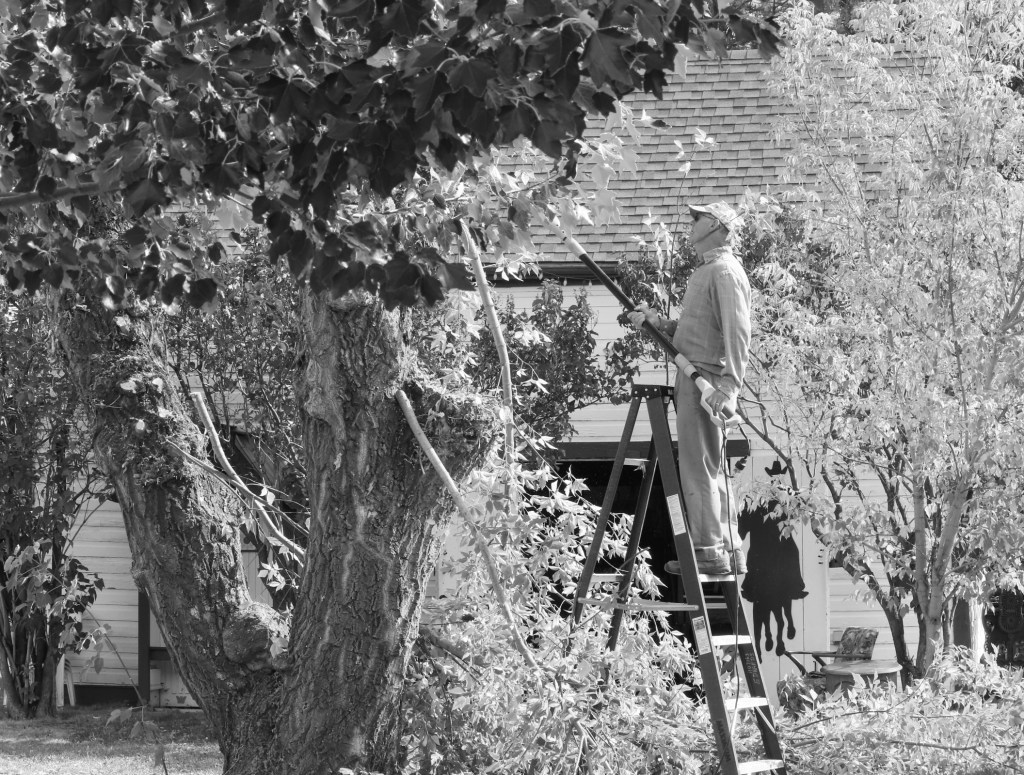
Tom Edwards prunes the tree at the Bailey house downtown information center on Voght Street in Merritt, BC. Somebody said careful that ladder don’t fall and guess what? In Merritt, there’s only a few leaves that have turned color.
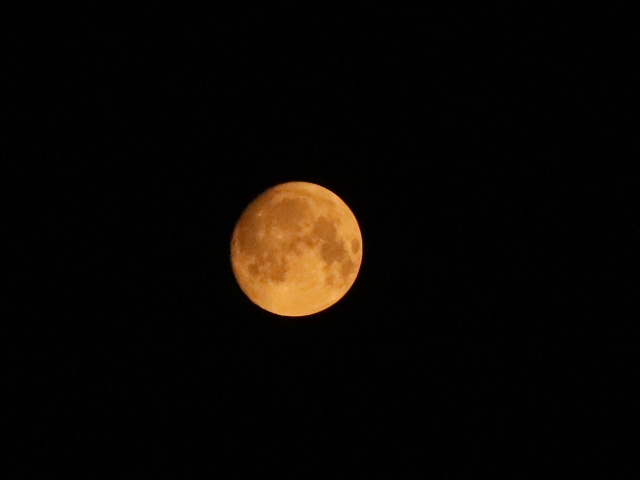
Moon October 2025
Photo KDG
Just to frost temperature over night October 6 forecast low 32f.
The full moon this October is a supermoon and on the 6th the forecast for the temperature in Merritt, 600 meters above sea level and in the BC Central South interior will experience another super hunter/harvest Moon.
When and wear
The full Harvest Moon on October 6, 2025, is a significant celestial event, as it is also a Supermoon.Harvest Supermoon DetailsTime of FullnessThe Moon will reach its moment of peak illumination (fullness) at 8:48 P.M. PDT on Monday, October 6, 2025, in Merritt, British Columbia.Moonrise and DirectionFor observers in Merritt, BC, the full Moon will: * Rise at 6:09 P.M. PDT on Monday, October 6, 2025. * Direction: It will rise generally towards the East, near the horizon, a characteristic of the full Moon around the autumnal equinox. The optimal time to view its golden-orange hue is shortly after it rises.The Supermoon EffectThe Harvest Moon on October 6, 2025, is the first of three consecutive Supermoons this year, meaning it occurs close to perigee (the Moon’s closest point to Earth in its orbit).Distance from EarthWhile the Moon’s exact distance is constantly changing, the full Moon phase on October 6 will be at a close distance. The closest point in the orbit (perigee) for this full moon period is around 226,250 miles (approximately 364,117 kilometers). This distance is significantly closer than the average Earth-Moon distance of about 239,000 miles.Why it’s a SupermoonA Supermoon is a full Moon that occurs near perigee. Due to this closer distance, it will appear slightly larger (about 6.6% larger) and noticeably brighter (about 13% brighter) than a typical full Moon.What makes it the Harvest MoonThe Harvest Moon is simply the full Moon that occurs closest to the autumnal equinox (the start of fall). Because the equinox in 2025 was on September 22, the full Moon on October 6 is the closest one to that date, earning it the title of Harvest Moon. This timing causes the Moon to rise relatively close to sunset for several nights, providing extra twilight illumination for farmers, which is how it got its name.
October’s night sky offers two excellent meteor showers and the best view of a giant ringed planet. Here are three worthy activities to look for this month:
Orionid Meteor Shower
1. The Orionid Meteor Shower ☄️| What & Why It’s Special | How & When to See It ||—|—|| What’s Special: The Orionids are the remnants of Comet 1P/Halley—yes, that Halley’s Comet! This makes them particularly notable. They are known for being fast and bright, occasionally producing brilliant, long-lasting trails (persistent trains) in the atmosphere. | Peak: The night of October 21–22. || Worthy of Seeing: Although it’s a modest shower (up to 10-20 meteors per hour), the link to one of history’s most famous comets makes it a must-see. The meteors are quick, adding excitement to the viewing. | Best Time: After midnight and before dawn on October 22. The radiant (where the meteors appear to originate) is highest in the sky just before sunrise. || | Viewing Conditions: Excellent in 2025 because the peak occurs near the New Moon (Oct 21), meaning minimal moonlight interference for the darkest skies. Look anywhere in the sky, but the shower radiates from the constellation Orion.
Draconid Meteor Shower
|2. The Draconid Meteor Shower 🐉| What & Why It’s Special | How & When to See It ||—|—|| What’s Special: The Draconids are debris from Comet 21P/Giacobini-Zinner. Unlike most showers, their radiant point is highest in the sky in the evening, making them a great option for early night watchers and kids. Most years, it’s a minor shower (around 5-10 per hour), but it’s famous for periodic outbursts that have delivered meteor storms (hundreds or thousands per hour) in the past. | Peak: The evening of October 8. || Worthy of Seeing: The possibility of an unpredictable outburst is the main draw. Comet 21P/Giacobini-Zinner was recently at perihelion in March 2025, which might increase the chance of a better-than-average display. | Best Time: Soon after dusk and before midnight on October 8. ||
| Viewing Conditions: Unfavorable due to a very bright Full Moon (Oct 6) that will significantly wash out fainter meteors. You’ll need to face away from the Moon or use a building/tree to block its light to have the best chance. The radiant is in the constellation Draco (the Dragon). |
Saturn
3. Planet Saturn 🪐| What & Why It’s Special | How & When to See It ||—|—|| What’s Special: Saturn, the beautiful ringed gas giant, reached its brightest and closest point to Earth (opposition) in late September 2025, meaning it remains a spectacular object throughout October. | Peak: Visible all month long in the night sky. || Worthy of Seeing: Saturn is one of the most stunning celestial bodies, even through a small telescope. Its distinct, massive ring system makes it instantly recognizable and a favorite for amateur astronomers. | Best Time: Saturn is visible almost all night long in October. Look for it to rise in the east/southeast around sunset. || | Viewing Conditions: You can easily spot Saturn as a steady, bright yellowish “star” visible to the naked eye. To see its rings, you will need a small telescope. You can also observe it passing near the Moon in the first week of October: on October 5, the Moon passes close to Saturn. |
The name “Wednesday” comes from Old English Wōdnesdæg, which means “Woden’s day,” named after the Germanic god Woden (or Odin in Norse mythology). This deity was associated with wisdom, war, and poetry, and played a significant role in the Germanic pantheon.
Cultural Origins and Influences:
Germanic and Norse Cultures:
The naming is directly linked to tribal Germanic names for days of the week, influenced by Roman culture. In Norse mythology, Woden is akin to the Roman god Mercury, which is reflected in other languages.
Latin Influence:
In Latin, Wednesday is dies Mercurii, or “day of Mercury,” representing the Roman god of commerce and communication. The influence of Roman culture substantially shaped the way days were named in various languages.
Subversion of Other Cultures:
Roman and Greek Practices:
The adaptation of “Wednesday” across Germanic languages shows a subversion of the original Latin systems by integrating local deities into the calendar, transforming a standard naming convention into one that reflects local beliefs and mythology.
Christian Influence:
In some Christian contexts, Wednesday is associated with the day of preparation for the weekend, which may contrast with earlier pagan practices.
Conclusion:
The evolution of the term “Wednesday” illustrates how local traditions can adapt and reframe elements of dominant cultures, leading to a unique blend of linguistic and cultural heritage.
Be a local Tradition today…
Maybe that recipe or quilt pattern will develop into an observance and a particular day.
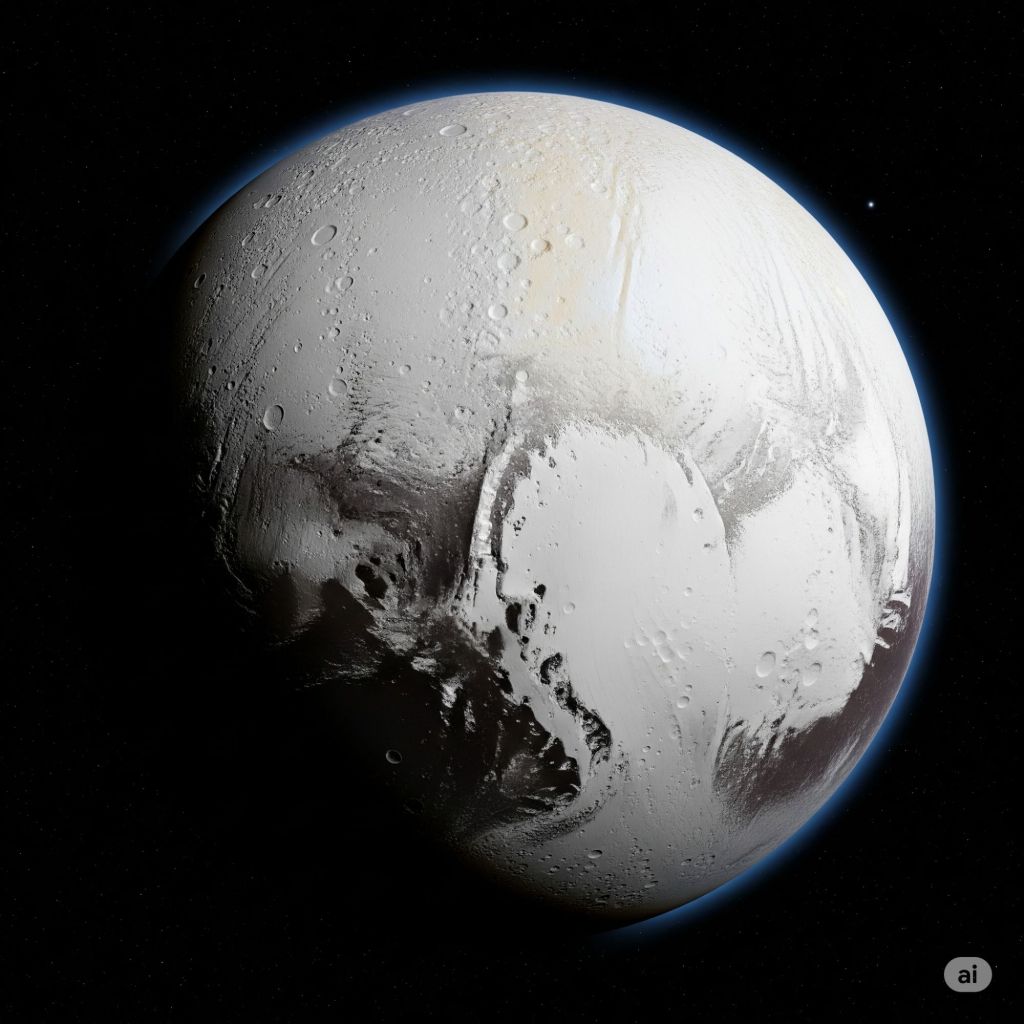
There were nine according to memorization versus now there are eight.
Pluto was discovered in 1930 and was immediately classified as the ninth planet in our solar system. However, its status was questioned over time as new discoveries were made, leading to its demotion to a dwarf planet in 2006. The Demotion of Pluto The International Astronomical Union (IAU), the official body for naming and classifying celestial objects, established a new, more specific definition of a planet in August 2006. To be considered a planet, a celestial body must meet three criteria: * It must be in orbit around the Sun. * It must have sufficient mass to be nearly round due to its own gravity. * It must have “cleared the neighborhood” around its orbit, meaning it has become gravitationally dominant and there are no other similarly-sized objects (other than its own moons) in its orbital path. Pluto satisfies the first two criteria, but it fails the third. It orbits in the Kuiper Belt, a region of icy objects, and its orbit is shared with many other celestial bodies. The discovery of Eris in 2005, a trans-Neptunian object that was initially thought to be larger and more massive than Pluto, was a major catalyst for the IAU to clarify its definition of a planet. Pluto’s Current View in the Solar System Pluto is now classified as a dwarf planet and a plutoid. It is considered a prototype for a new class of objects in the outer solar system. This reclassification reflects a more accurate understanding of Pluto’s nature as one of the largest members of the Kuiper Belt, rather than as a primary planet in the same category as Earth or Jupiter. This new classification doesn’t diminish Pluto’s importance; it simply places it in a different, more fitting category. The New Horizons mission in 2015 provided us with detailed images and data, revealing Pluto to be a complex world with mountains, glaciers, and a surprising atmosphere. Effect on Other Orbiting Bodies Pluto’s effect on other orbiting bodies is limited. Its small mass, roughly one-sixth of our moon’s, means its gravitational influence is not significant enough to affect the orbits of the primary planets. It does, however, have a unique orbital resonance with Neptune. Pluto completes two orbits around the Sun in the same amount of time that Neptune completes three orbits. This specific relationship prevents the two bodies from ever colliding and helps to stabilize Pluto’s orbit. Within its own system, Pluto has a significant effect on its largest moon, Charon. The two are so close in size that their center of mass lies in the space between them, causing them to orbit a point in space rather than Charon orbiting Pluto. This is a characteristic more common in binary systems and is a testament to the unique nature of the Pluto-Charon pair.
A planetary parade is a celestial event where multiple planets appear close together in the night sky. On August 23, 2025, there will be a morning planetary parade featuring six planets—Mercury, Venus, Jupiter, Saturn, Uranus, and Neptune—visible before sunrise. The new moon also occurs on this date, providing a darker sky for better viewing. When to Look The best time to view the alignment is in the two hours before dawn. The exact time will depend on your specific location, so checking a stargazing app or website is recommended for the most accurate timing. Where to Look The planets will appear stretched across the eastern sky, following the ecliptic (the path the Sun, Moon, and planets appear to follow). * Mercury, Venus, and Jupiter will be clustered low on the eastern horizon and are the brightest and easiest to spot. Venus and Jupiter will be particularly dazzling. * Saturn and Neptune will be higher in the sky, toward the southeast. Saturn is visible to the naked eye, while Neptune will require binoculars or a telescope. * Uranus will be in the southeastern sky, and similar to Neptune, you will likely need binoculars to see it. For the best viewing experience, find a location with an unobstructed view of the eastern horizon and minimal light pollution. A Rare Alignment of Six Planets is Happening. You Should Not Miss This. This video from YouTube explains the rare planetary alignment and why you should try to view it.
I’mTo photograph Jupiter and Saturn, you’ll need to work with a few key camera settings and pieces of equipment. Here’s a breakdown of what you can do to capture them, especially in the early morning. A great opportunity for this kind of photography is happening on August 12, as Jupiter and Venus will be in a close alignment, known as a conjunction. They will appear as a single bright “double star” in the eastern sky just before sunrise. While Jupiter and Venus are the main event, Saturn will also be visible, though farther away. Here are some general tips and settings to get you started: * Equipment: A camera with manual controls (like a DSLR or mirrorless camera) and a sturdy tripod are essential. A telephoto lens (300-400mm or more) is highly recommended to get a decent size image of the planets. * Camera Settings: Since the planets are very bright, you’ll need to use shorter exposure times. * Shutter Speed: Start with a fast shutter speed, such as 1 second or less, to prevent the planets from turning into streaks due to Earth’s rotation. If you have a telescope with a clock drive (which tracks the movement of the stars), you can use longer exposures. * Aperture: Try an aperture of around f/8. * ISO: Use a moderate ISO setting, such as 3200, as a starting point. You can experiment with different ISOs to find the best balance between brightness and image noise. * Focusing: Autofocus is not reliable for astrophotography. Turn it off and manually set your focus to infinity. Use your camera’s live view mode and zoom in on the planet to fine-tune the focus until it appears as small and sharp as possible. * Technique: Use a 2-second timer or a remote shutter release to avoid shaking the camera when you press the button. For a different approach, if you have a telescope, you can take a series of many short exposures, a technique known as “lucky imaging.” This involves using specialized software to stack the sharpest images and create a final, more detailed photo.







 Kevin Griffiths
 percypaschal
 The Proprietor Review