Category: -Photography


Wednesday Charm,Secrets of the universe October sky…

Triple view

October’s night sky offers two excellent meteor showers and the best view of a giant ringed planet. Here are three worthy activities to look for this month:

Orionid Meteor Shower

1. The Orionid Meteor Shower ☄️| What & Why It’s Special | How & When to See It ||—|—|| What’s Special: The Orionids are the remnants of Comet 1P/Halley—yes, that Halley’s Comet! This makes them particularly notable. They are known for being fast and bright, occasionally producing brilliant, long-lasting trails (persistent trains) in the atmosphere. | Peak: The night of October 21–22. || Worthy of Seeing: Although it’s a modest shower (up to 10-20 meteors per hour), the link to one of history’s most famous comets makes it a must-see. The meteors are quick, adding excitement to the viewing. | Best Time: After midnight and before dawn on October 22. The radiant (where the meteors appear to originate) is highest in the sky just before sunrise. || | Viewing Conditions: Excellent in 2025 because the peak occurs near the New Moon (Oct 21), meaning minimal moonlight interference for the darkest skies. Look anywhere in the sky, but the shower radiates from the constellation Orion.

Draconid Meteor Shower

|2. The Draconid Meteor Shower 🐉| What & Why It’s Special | How & When to See It ||—|—|| What’s Special: The Draconids are debris from Comet 21P/Giacobini-Zinner. Unlike most showers, their radiant point is highest in the sky in the evening, making them a great option for early night watchers and kids. Most years, it’s a minor shower (around 5-10 per hour), but it’s famous for periodic outbursts that have delivered meteor storms (hundreds or thousands per hour) in the past. | Peak: The evening of October 8. || Worthy of Seeing: The possibility of an unpredictable outburst is the main draw. Comet 21P/Giacobini-Zinner was recently at perihelion in March 2025, which might increase the chance of a better-than-average display. | Best Time: Soon after dusk and before midnight on October 8. ||

| Viewing Conditions: Unfavorable due to a very bright Full Moon (Oct 6) that will significantly wash out fainter meteors. You’ll need to face away from the Moon or use a building/tree to block its light to have the best chance. The radiant is in the constellation Draco (the Dragon). |

Saturn

3. Planet Saturn 🪐| What & Why It’s Special | How & When to See It ||—|—|| What’s Special: Saturn, the beautiful ringed gas giant, reached its brightest and closest point to Earth (opposition) in late September 2025, meaning it remains a spectacular object throughout October. | Peak: Visible all month long in the night sky. || Worthy of Seeing: Saturn is one of the most stunning celestial bodies, even through a small telescope. Its distinct, massive ring system makes it instantly recognizable and a favorite for amateur astronomers. | Best Time: Saturn is visible almost all night long in October. Look for it to rise in the east/southeast around sunset. || | Viewing Conditions: You can easily spot Saturn as a steady, bright yellowish “star” visible to the naked eye. To see its rings, you will need a small telescope. You can also observe it passing near the Moon in the first week of October: on October 5, the Moon passes close to Saturn. |

happy viewing
Recycle, for nature…

Plastic is as plastic does

Mark your recycle Nicola Naturalists and leave at depot

Nicola Naturalists fund raiser,

Site C… again,CBC

Camp

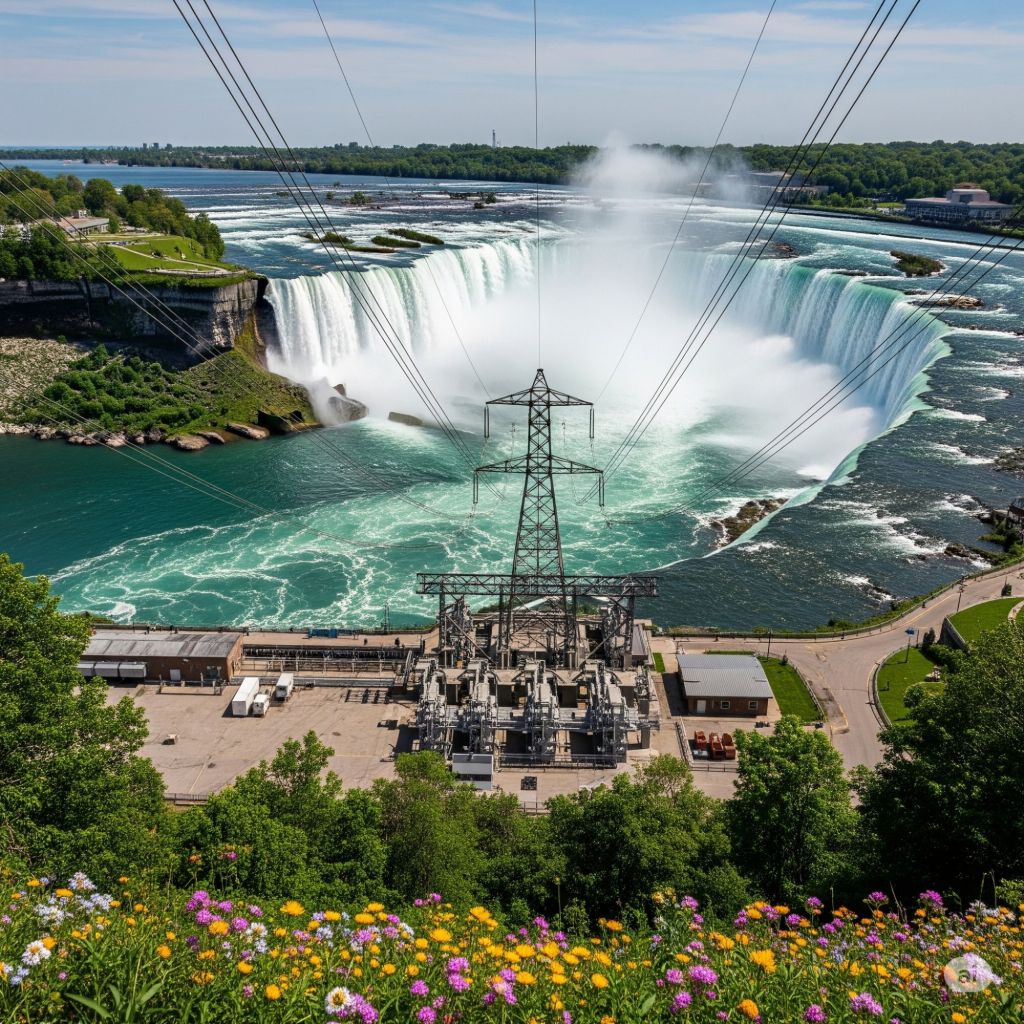
Random concept of electrical generation of water.

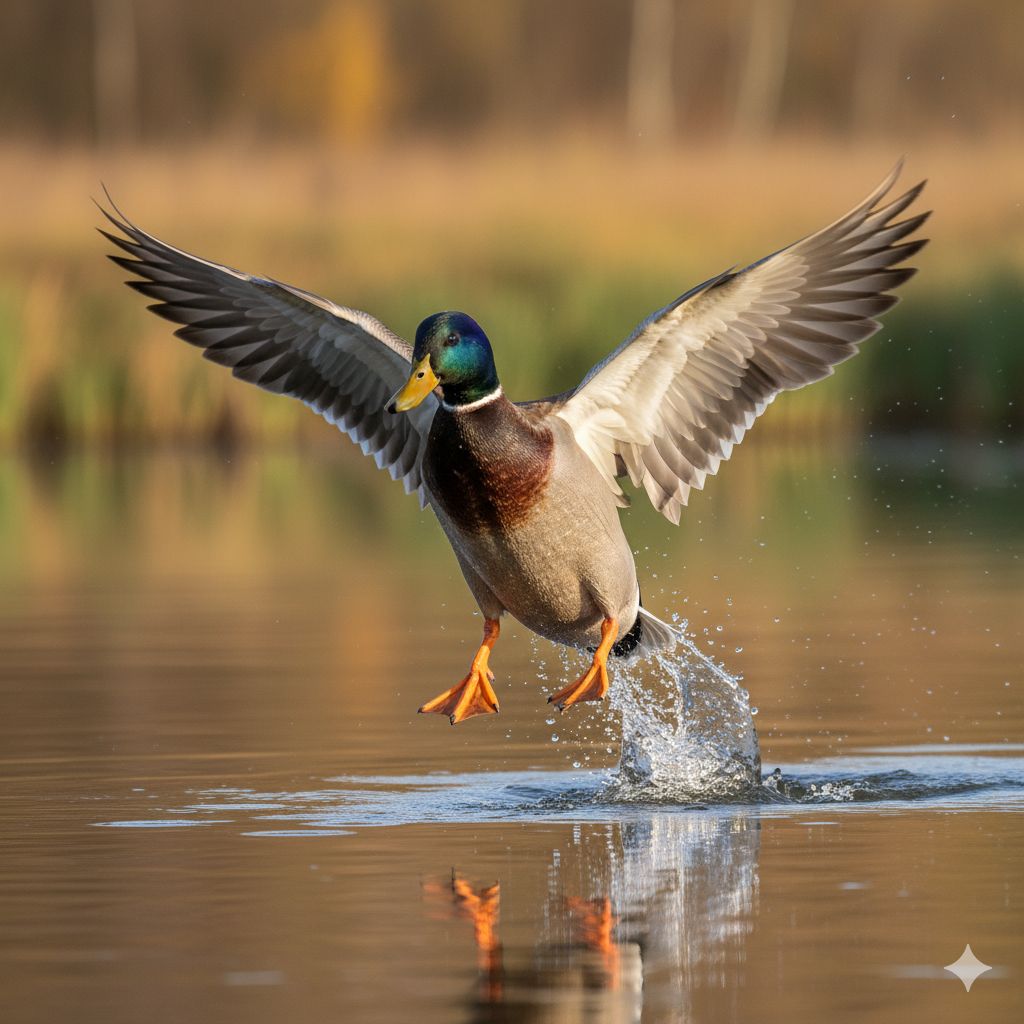
Mallards matter

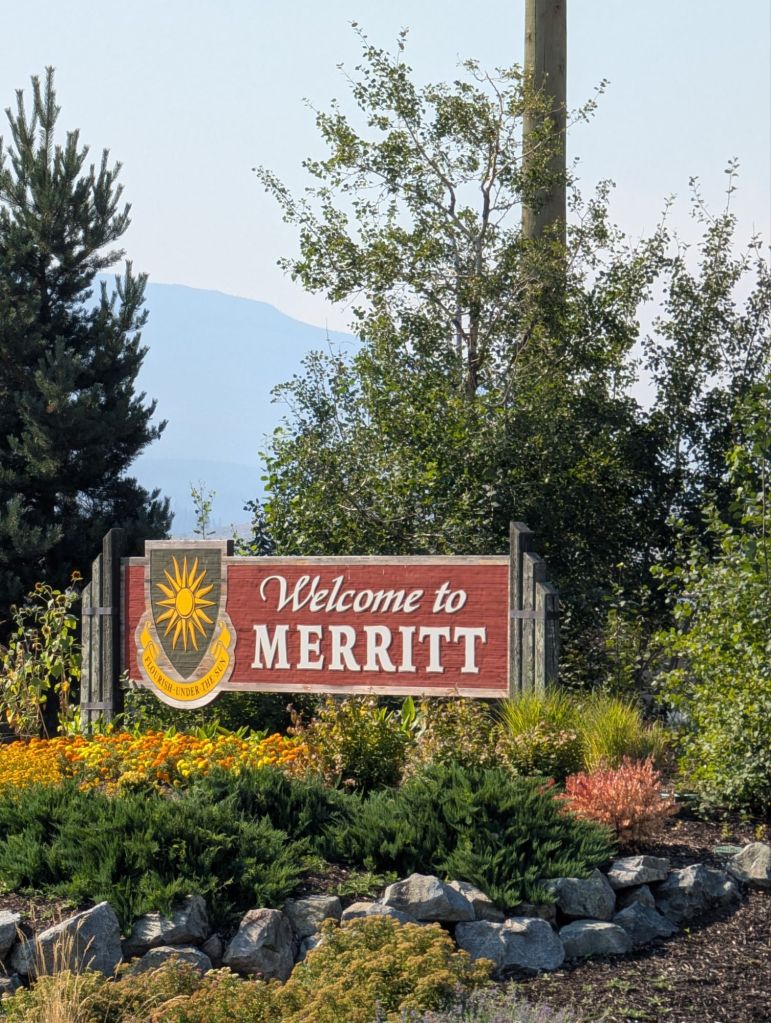
Mallard ducks are the most prevalent around our place, our neck of the woods here in Merritt, British Columbia. We love our Mallard ducks.

The local naturalist club will begin their regular weekend fall and winter schedule on the 18th. Their meetings are generally most months on the third Thursday at 7:00 at the Nicola Valley institute of technology, top of the hill Belshaw Avenue in Merritt.

Jeep, Nicola Valley classic car club…

Jeep by Willies, Barry Jackson restoration as  classic lover started “Last September”
  • Classic Car club meeting

The group of classic car club enthusiasts meet on Wednesdays  for supper, and talk and park at the Merritt A&W on Voght Street.

Deer,a habit…

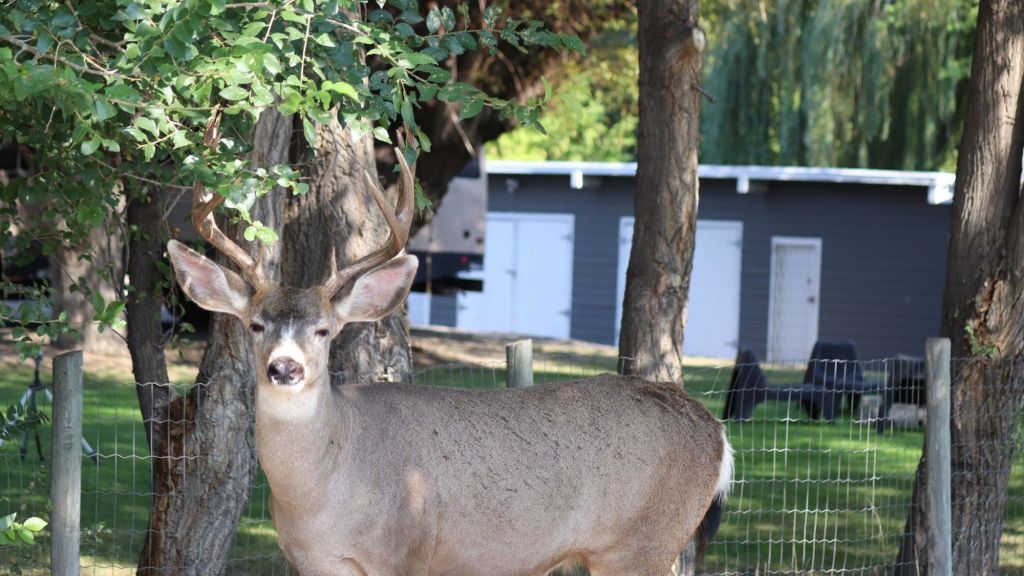
The picture is of a four-point mule deer buck. Near the corner of Garcia and Merritt Avenue in Merritt, British Columbia. Circus September 8th…

The deer was eating off the leaves of this tree to the left and was completely habituized meaning he had no fear of people. I took 10 pictures of him.

There is no velvet on his horns. Fall is coming and the rut will be coming.

Have a great fall!.

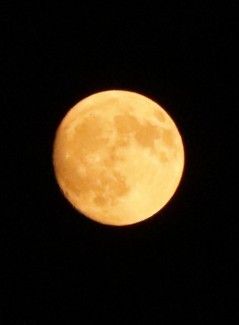
Corn,Moon

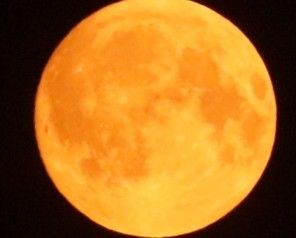
Photo KDG September 6 2025 circa

21: 40 hrs

Moon over Merritt tonight

Merritt BC Canada

Statement as of 9:53 PM Pacific,

Corn moon, September 5 th 2025….

The moon in September is 2 days away from maximum.

Photo KDG, September 5th Circa 22:30 hrs.

So, we’ve had a planetary alignment all September and August. There was a maximum of six planets lined up, the one’s missing of the eight eight were Mercury at times. Who is the messenger? God of antiquity and Mars the God of war in antiquity. So , So for your information, whether or not people are trying to be in sync with the universe or antiquity or the gods. The United States defense department just changed their name back to the war department, the next time I see Mercury I’ll ask  about it.

Omens passe

Mystical stuff is interesting, this full blood moon that’s coming up is pretty significant and considering the planetary alignment going along with it and last night I saw a deer with a mane. Now is nowhere near a unicorn but it struck me as being a spiritual instrument in somebody’s mind. We know some cultures. We don’t know them all but it seems to be in tune with the Earth and the solar system and the Sun and everything is an interesting distraction to some and the stabilizing virtue to many others it would seem. Good luck after the blood moon on the 7th.

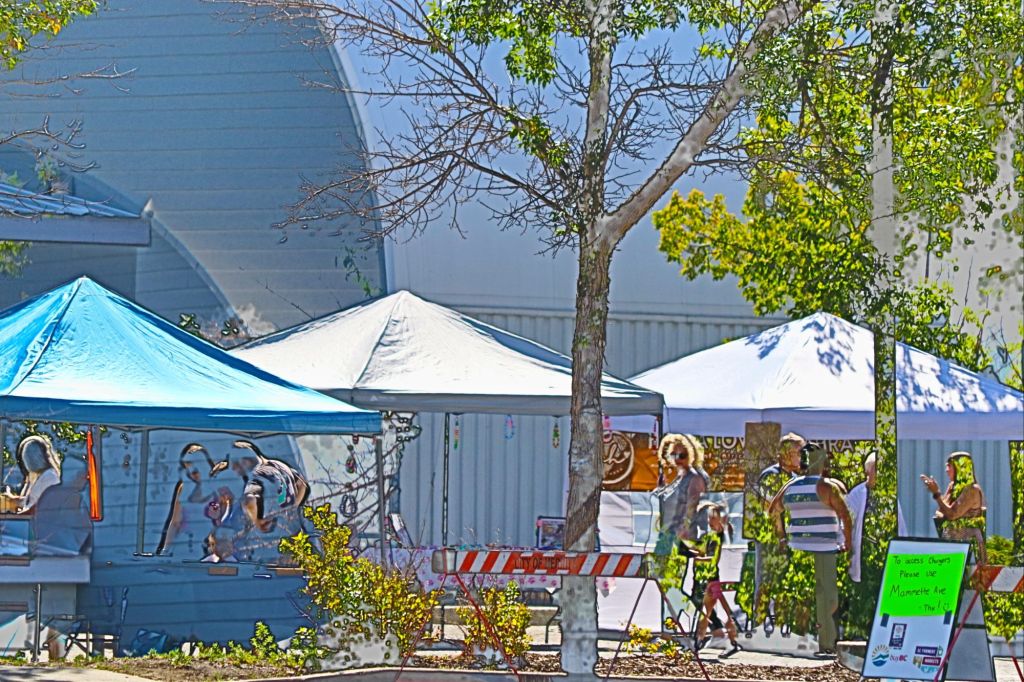
TGIF-Farmers Market

Saturday August 23 2025,2050 Voght St Merritt BC

August 30th

The Nicola Valley Farmers Market, is enjoying glorious weather through August. And the absence of forest fire smoke has been a particular boon. There is one more market in August, next Saturday then on to September and   October 12th.

The Markets times are Saturday’s 9 AM- 1 PM.

A flying bird turns into Dianna Grimshire.
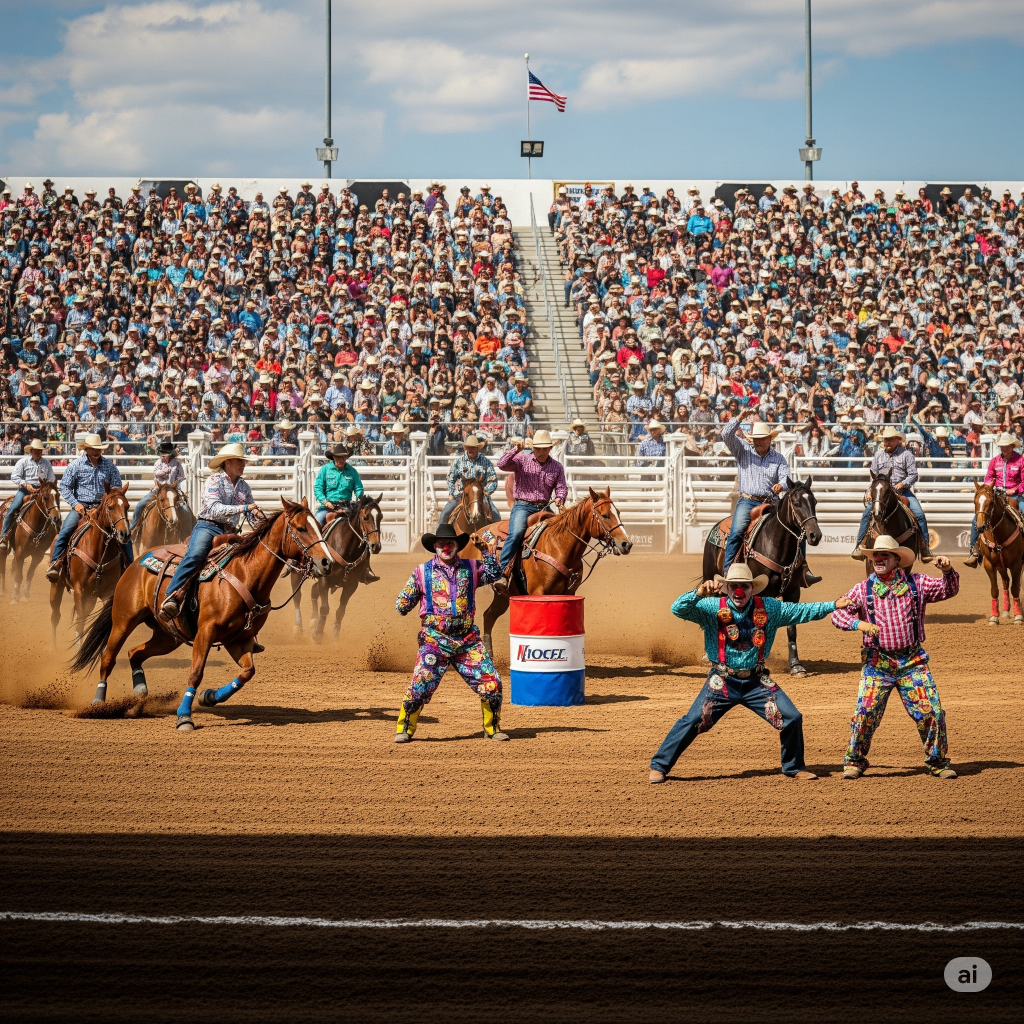
A concept photo of a rodeo with clowns-AI

The 65th Annual Nicola Valley Pro Rodeo will be held on Labour Day weekend, which falls on August 29-31, 2025. The event takes place at the Nicola Valley Rodeo Grounds in Merritt, British Columbia.
Here are some of the key details for this year’s rodeo:
Dates & Schedule
* **Friday, August 29th: The weekend kicks off with the Rodeo Parade at 6:30 PM, followed by a free music evening at the Rodeo Grounds at 8:00 PM.
* **Saturday, August 30th: Gates open at 8:30 AM. The day’s events include live music, the Rodeo Market with local vendors, a Kid Zone, and the main rodeo performance starting at 1:00 PM. In the evening, there will be a Rodeo Dance featuring the band Coquihalla Coyotes.
* **Sunday, August 31st: The rodeo continues with another full day of events.
Events and Attractions
The Nicola Valley Pro Rodeo is a professional-level event that is part of the Maple Leaf Circuit, featuring top cowboys and cowgirls from across North America. Events typically include:
* Bull Riding: A high-action event with a special bull riding memorial in honor of Ty Pozzobon.
* Bronc Riding: Both saddle bronc and bareback bronc competitions are featured.
* Steer Wrestling: A timed event showcasing the strength and skill of the contestants.
* Tie-Down Roping: A precision event where a cowboy on horseback ropes and ties a calf.
* Barrel Racing: A fast-paced, timed event for cowgirls.
* Team Roping: Two riders work together to rope a steer.
* Trick and Roman Riding: New for 2025, the rodeo will welcome back trick riders Noémy Coeurjoly and Keely Sutherland.
* Kids’ Zone: A dedicated area for children with activities like face painting, games, and balloon animals.
* Rodeo Market: A space for visitors to browse and shop from local vendors.
The event is a celebration of the Nicola Valley’s ranching and rodeo heritage and a popular attraction for the Labour Day weekend.

A Narrative close to the land

Pro Rodeo North America

🍁⭐⭐⭐🍁

In the world of professional rodeo, two of the most significant organizations are the Professional Rodeo Cowboys Association (PRCA) in the United States and the Canadian Professional Rodeo Association (CPRA) in Canada. While they operate as separate entities, they have a strong working relationship that allows for a unified North American rodeo circuit.
How They Interact
The PRCA and CPRA have a crucial co-approval system. This means that many rodeos sanctioned by the CPRA are also co-approved by the PRCA for world championship points. This arrangement is a win-win for rodeo athletes, as it allows them to compete in rodeos in both countries and have their earnings count towards their standings in both associations.
* World Championship Points: A key aspect of their cooperation is the declaration of World Champions. These champions are determined based on the total combined earnings from both CPRA and PRCA sanctioned events. This provides a clear pathway for a Canadian cowboy to become a PRCA World Champion and for an American cowboy to compete for the Canadian title.
* Membership: The PRCA is the largest and oldest rodeo-sanctioning body in the world, with events in the U.S., Canada, and Mexico. The CPRA, headquartered in Airdrie, Alberta, sanctions over 60 events a year in Canada. Many top-tier rodeo athletes hold memberships in both associations to maximize their competitive opportunities and earning potential.
Prizes and Salaries
Comparing prizes and salaries between the two associations can be complex, as earnings depend heavily on individual performance, the number of rodeos a cowboy enters, and the prize money at those specific events.
* Prize Money: Rodeo prize money is often referred to as a “purse,” which is a pooled amount of money from participants’ entry fees and sponsors. The total prize money for a rodeo can range from a few hundred dollars at local events to millions at major rodeos and finals.
* Economic Impact: The CPRA’s events have a significant economic impact on the towns and cities that host them. For instance, the Canadian Finals Rodeo (CFR) generates tens of millions of dollars for the local community, and with a prize purse of over $1.5 million, it is one of the largest in Canadian rodeo.
* Cowboy Salaries: Unlike team sports, professional rodeo athletes do not have a set salary. Their income is directly tied to their winnings and sponsorships. A cowboy’s earnings can fluctuate wildly from year to year. While a few elite athletes can make a comfortable living from their winnings and endorsements, many professional rodeo athletes have other careers, often in ranching or farming, and view rodeo as a passion or a part-time job.
* The Finals: The biggest paydays in rodeo come from the respective final events: the Canadian Finals Rodeo (CFR) and the Wrangler National Finals Rodeo (WNFR). The WNFR, held in Las Vegas, is widely considered the pinnacle of the sport and offers a massive prize pool, making it the most lucrative event for competitors. Winning a world championship at the WNFR is the ultimate goal for many professional cowboys.
In summary, the PRCA and CPRA work together to create a cohesive professional rodeo circuit across North America. While the prize money at the biggest events in the U.S. generally outstrips those in Canada, the co-approved system allows athletes to earn a living by competing on both sides of the border and vying for world championship titles. For most cowboys, rodeo earnings are not a guaranteed salary but are instead a reflection of their skill, dedication, and ability to win at events throughout the season.

Charming Wednesday

The name “Wednesday” comes from Old English Wōdnesdæg, which means “Woden’s day,” named after the Germanic god Woden (or Odin in Norse mythology). This deity was associated with wisdom, war, and poetry, and played a significant role in the Germanic pantheon.

Cultural Origins and Influences:

  1. Germanic and Norse Cultures:
    • The naming is directly linked to tribal Germanic names for days of the week, influenced by Roman culture. In Norse mythology, Woden is akin to the Roman god Mercury, which is reflected in other languages.
  2. Latin Influence:
    • In Latin, Wednesday is dies Mercurii, or “day of Mercury,” representing the Roman god of commerce and communication. The influence of Roman culture substantially shaped the way days were named in various languages.

Subversion of Other Cultures:

  • Roman and Greek Practices:
    • The adaptation of “Wednesday” across Germanic languages shows a subversion of the original Latin systems by integrating local deities into the calendar, transforming a standard naming convention into one that reflects local beliefs and mythology.
  • Christian Influence:
    • In some Christian contexts, Wednesday is associated with the day of preparation for the weekend, which may contrast with earlier pagan practices.

Conclusion:

The evolution of the term “Wednesday” illustrates how local traditions can adapt and reframe elements of dominant cultures, leading to a unique blend of linguistic and cultural heritage.

Be a local Tradition today…

Maybe that recipe or quilt pattern will develop into an observance and a particular day.

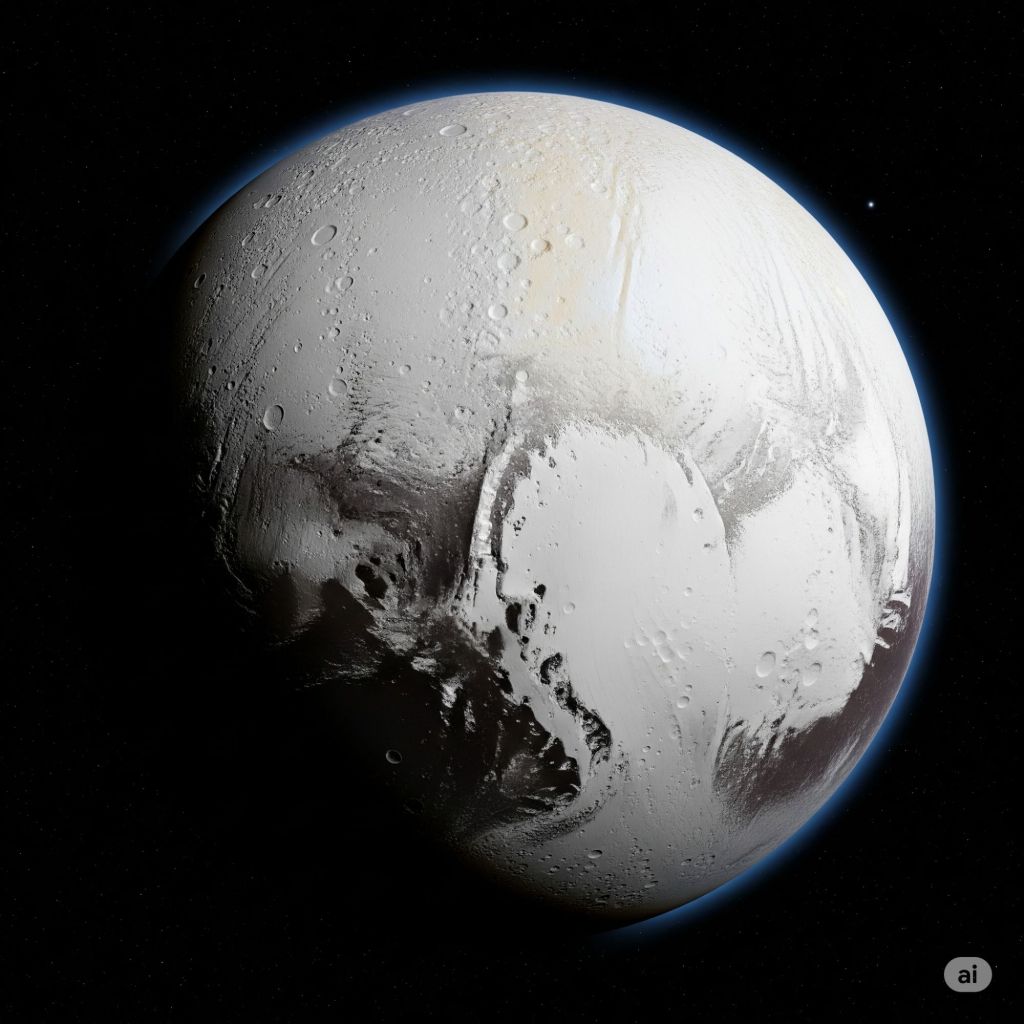
Happy Pluto demotion day.

August 24 Pluto Dwarfed

There were nine according to memorization versus now there are eight.

Pluto was discovered in 1930 and was immediately classified as the ninth planet in our solar system. However, its status was questioned over time as new discoveries were made, leading to its demotion to a dwarf planet in 2006.
The Demotion of Pluto
The International Astronomical Union (IAU), the official body for naming and classifying celestial objects, established a new, more specific definition of a planet in August 2006. To be considered a planet, a celestial body must meet three criteria:
* It must be in orbit around the Sun.
* It must have sufficient mass to be nearly round due to its own gravity.
* It must have “cleared the neighborhood” around its orbit, meaning it has become gravitationally dominant and there are no other similarly-sized objects (other than its own moons) in its orbital path.
Pluto satisfies the first two criteria, but it fails the third. It orbits in the Kuiper Belt, a region of icy objects, and its orbit is shared with many other celestial bodies. The discovery of Eris in 2005, a trans-Neptunian object that was initially thought to be larger and more massive than Pluto, was a major catalyst for the IAU to clarify its definition of a planet.
Pluto’s Current View in the Solar System
Pluto is now classified as a dwarf planet and a plutoid. It is considered a prototype for a new class of objects in the outer solar system. This reclassification reflects a more accurate understanding of Pluto’s nature as one of the largest members of the Kuiper Belt, rather than as a primary planet in the same category as Earth or Jupiter.
This new classification doesn’t diminish Pluto’s importance; it simply places it in a different, more fitting category. The New Horizons mission in 2015 provided us with detailed images and data, revealing Pluto to be a complex world with mountains, glaciers, and a surprising atmosphere.
Effect on Other Orbiting Bodies
Pluto’s effect on other orbiting bodies is limited. Its small mass, roughly one-sixth of our moon’s, means its gravitational influence is not significant enough to affect the orbits of the primary planets. It does, however, have a unique orbital resonance with Neptune. Pluto completes two orbits around the Sun in the same amount of time that Neptune completes three orbits. This specific relationship prevents the two bodies from ever colliding and helps to stabilize Pluto’s orbit.
Within its own system, Pluto has a significant effect on its largest moon, Charon. The two are so close in size that their center of mass lies in the space between them, causing them to orbit a point in space rather than Charon orbiting Pluto. This is a characteristic more common in binary systems and is a testament to the unique nature of the Pluto-Charon pair.