

Murphy Shewchuck is a freelance writer photographer. He is from Merritt BC and has published a number of books on the area and trails. he is going to present on his recent trip to the sub arctic on Thursday February 19th. The Nicola Naturalist Society meets monthly during the winter at he Local College NVIT, presentations start at 7PM in the lecture theater and finish at 9PM. The Society is chaired by Alan Burger from U Victoria and the society is a member of the BC Naturalists in good standing. The Nicola naturalists have been involved in trying to apologise the recent flap on bio solids in the Sunshine Valley area of Merritt. Murphy presentation is titled Driving the Dempster. The Society says all are welcome membership or donation requested. http://www.nicolanaturlists.com On this day: February 11 1978 China loosens up censorship on literature
Category: Social Activism

book sale,
file photo KDG
The local public library is going to have a book sale. The sale will be in the first week in March and will have 10,000 items of withdrawn or donated materials.
Coupons for one free item per visit will be seeing a return.
Mark your calendar to be part of this access to literacy event….
On this Day: January 29th 1936
The first inductees to the Baseball Hall Of Fame is announced.
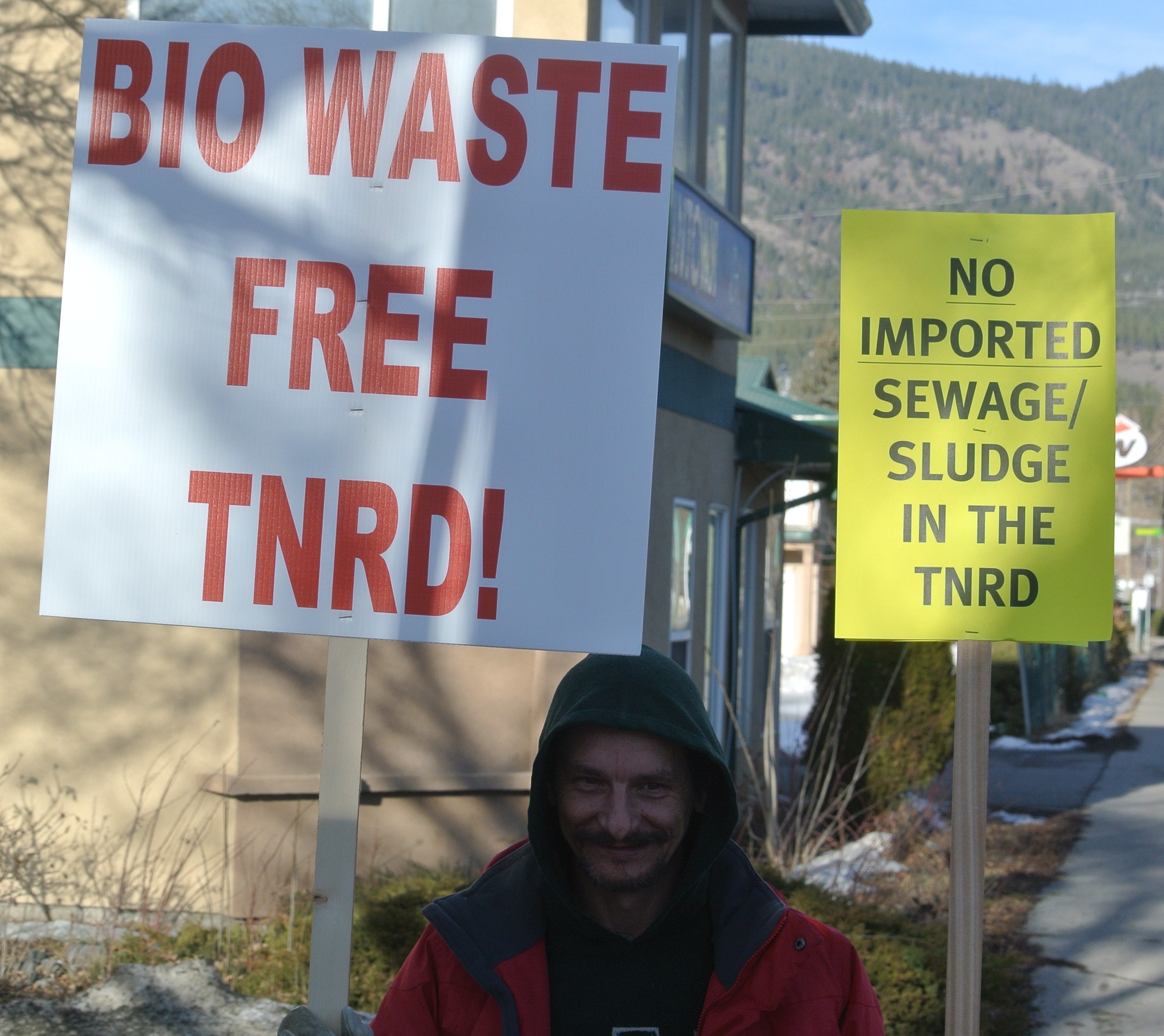
A demonstrator outside the public meeting for the information of waste dumping in the Sunshine valley
Photo KDG
Monday saw the Merritt Civic center with about 200 people listen to speakers talk of the Bio solids being dumped a the 300 acre Dry lake site in the Sunshine Valley area of Merritt. A trucking company has two five-year contracts to dump Class A and B bio solids from two municipality including Abbotsford in the lower mainland. The business has the use of a public access forestry road to the area that they improved from a four-wheel drive access to haulage truck.
An unincorporated association called Friends of the Nicola Valley ( a face book group) were on hand in an information room with information and a petition against the activity. The group says they have a lawyer to see to their interests. The biggest concerns were smell , the effect on property values and future demand for more such land.
The municipalities involved are not part of the local regional district and appear to have come in under the radar with the only regulatory obligation being to given notice to the environment ministry.
On this day: January 27th 1973
The Paris accord ends the American war in South East Asia.
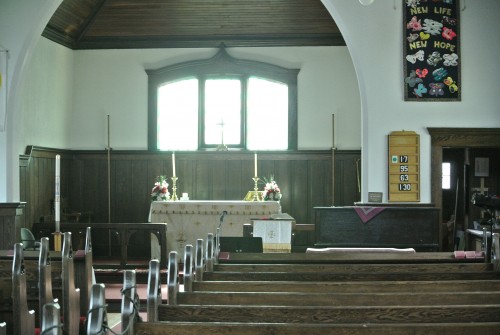
Anglican church interior, Merritt BC
Think about visiting a faith community this holiday season.
Today in history: December 19th 2001
Record barometric pressure of 1085.6 is recorded in Mongolia.
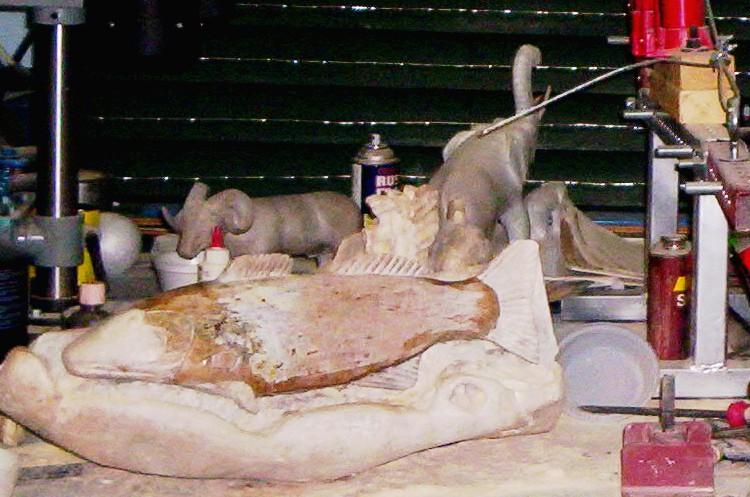
Ponderosa soapstone, one of the artiisan products produced in the Merritt store.
file Photo KDG
Ed Hendricks the owner of Ponderosa sports says that tonight there will be an offical of the local RCMP office on CBC saying that cutting locks on gates to ranch land is considered mischief. The broadcast is at 6:PM according to Hendricks. Ed is an advocate of access to lakes as it affects his interests in recreation and fishing access. He and others have published a brochure that shows a number of lakes the public have lost access to. The brochure is at his Merritt Sport shop on Voght Street downtown Merritt.
Editors note:
Locked gates can be an indication of a drive that is private and there is no right of way to anyone other then the land owner and their associates.
The Forestry and lands part of the government maintains many recreational sites on lakes in this area and ensures access to them for public enjoyment. The right to quiet enjoyment is also safe guarded by the government where lawful activities are carried out.
Right of way is a term used to describe “the legal right, established by usage or grant, to pass along a specific route through grounds or property belonging to another”, or “a path or thoroughfare subject to such a right”.[1] A further definition is that it is a type of easement granted or reserved over the land for transportation purposes, this can be for a highway, public footpath, railway, canal, as well as electrical transmission lines, oil and gas pipelines.[2]
As well this phrase describes “the legal right of a pedestrian, vehicle, or ship to proceed with precedence over others in a particular situation or place”,[3] and in hiking etiquette, where when two groups of hikers meet on a steep trail, a custom has developed in some areas whereby the group moving uphill has the right of way.[4]
The right of way may be limited. When one person owns a piece of land which is bordered on all sides by lands owned by others, a court will be obliged to grant that person a right of way.
In some countries, especially in Northern Europe, where the freedom to roam has historically taken the form of general public rights, a right of way may not be restricted to specific paths or trails. A similar right of access also exists on some public land in the United States and in Canada, Australia and New Zealand (where it is called Crown land). source Wikipedia
Merritt’s Chamber of Commerce in the past has had the theme A lake a day as long as you stay. Ed from the sport shop says that there are two roads in contention, the Raspberry and Loon lake roads, both roads received large cattle guards after the construction of the Coquihalla highway, he says they are public roads as they are both maintained by the government.Douglas Lake Cattle Company has locked the gates on them perhaps in anticipation of a decommissioning of public maintained status, Kim Robinson and a grazing rights holder still need access through them, says Hendricks. He also adds that he can see the other view points but would like the process to be more open as well as stay legal, and accountable.
We trust that Staff SGT White and SGT. Fleming will give a good accounting of the authorities duties in these situations on CBC news tonight.
Click to access DV03S%20-%20Site%20Aspen%20Grove%20-%2027-046NS%20-%20N%20on%2009-27-2006.pdf
Today in history: November 18th 2013
NASA launches its Maven probe to Mars.

A crane drives piles at the 200 million dollar cogen facility in Merritt BC
Photo KDG
A few years ago the provincial hydro authority wanted to add another generator to the Revelstoke Dam to fill the 4th bay of the five bay dam site, they could not get a contractor for the project so the billion dollar project went into a holding pattern. Since that time it has been resolved and that generator is on stream.
Today the hydro news letter is saying another increase in generating ability is being done on the 40 year old WAC Bennett dam on the Peace river in north eastern BC. The Gordon M. Shrum Generating Station is getting attention :
“There’s nothing else like it,” says Gammer. “There are lots of other dams and generating stations in the province, of course, but this is the biggest one we have.” Keeping GMS operational at all times is critical to maintaining provincial power reliability. That’s the thinking behind continual maintenance programs that aim to keep dam and generating station equipment in good working order. Staff work year-round to maintain the day-to-day reliability, but as with all facilities, the time comes when regular maintenance just isn’t enough. “GMS is more than 40 years old and large parts are starting to wear out and need replacement,” says Gammer. One way to think of it, he says, is to think of maintenance on your home. Good maintenance like repairing cracks, cleaning gutters and updating appliances is necessary all the time, but eventually, he says, you’re going to need to do major repairs, such as replacing your roof. “And we did that very thing at Peace Canyon.” There’s a lengthy and complex capital program underway at GMS and W.A.C. Bennett to complete these major repairs. Along with maintaining the critical reliability, these heritage facilities are benefiting from the improved technology and equipment available today. Just like you’ll get more out of a laptop manufactured today compared to a computer manufactured in the 1980’s, new equipment such as transformers and turbines perform more efficiently today compared to those installed when GMS first went into service.
-
Replacing transformers at GMS. Transformers increase the voltage at the station to 500,000 volts to efficiently carry electricity over long distances, and 12 of the 30 transformers at GMS have been replaced over the last five years.
-
Replacing five turbine runners at GMS. Through the power of falling water, the turbines rotate at 150 rpm, spinning the connected equipment in the generator to produce electricity. This multi-year project will wrap up in 2017.
-
Upgrading the control system for the generating station. The unit controls on all 10 generating units needs to be replaced. Work is already underway on the second unit in this multi-year project.
-
Rip-rap upgrade on the outside of the dam face. Large rock (rip-rap) protects the upstream face of the WAC Bennett Dam from wave erosion. The current plan is to start rip-rap replacement in the summer of 2016, after obtaining all permits and regulatory approvals.
-
Spillway Chute Upgrade. Upgrades and repairs are required to improve the condition of sections of the spillway, which is 680 metres long and 30 metres wide. source http://www.bchydro.com/news/conservation/2014/gm-shrum-generating-station.html?WT.mc_id=c-14-11_upgrades
Four and a half million people in BC get some power from the station and as a lot of hydro infrastructure, it needs attention, and hydro is going strong on projects about the province. Pick up trucks and crews are out and about all over here and from replacing cedar poles with pine treated poles with arsenic and copper to new 500 KV lines electricity is big stuff here. BC hydro power and authority has a legislated monopoly on every drop of water in the province for power generation and has had difficulty in recent years in licencing out some of that ability ( the run of the rivers sub licencing) and keeping the cost of that cogeneration down. A co generation project here in Merritt will see a green energy project ( burning green wood waste ) use the public electric grid to sent that recapture into the grid. But at what price we wonder. Missing here are wind turbines ( wrong kind of wind, to gusty) and solar energy capture. We are on the EV charging station grid and hope it is more then just public relations. The most successful public relations program Hydro ever had in our view was the `it works like a dam `conservation project and to the prudent it should still be in the mind of all rate payers in the province. The production of hydro power while attractive in its lack of smokestacks does not add to the nitrogen cycle as properly managed petro chemicals do. Fertilizer for crops and stirred up nutrients for food chain are important as well. Toxic substance should be removed and carbon sinks of large crop lands enhanced as well as conservation. Thrift in waste is an economic opportunity as shown in places like California in recent years.
Today in history: November 5th 2003:
Green River Killer, Gary Ridgeway pleads guilty to 48 murders.
Local ranchers are saying that their cattle have come home from summer grazing here in Merritt BC Canada. A local rancher says he is looking forward to the cycle again that will see him put his spring calf’s born in March and April out on some good grass grazing in some meadows he has on Iron Mountain. Iron Mountain is within sight of the city and has some residences on the south east side. He says his calf’s always do well on the grass lands there. Keeping calf’s and selling them as yearlings can be profitable but timing , weight and the length of time to keep them is a risk that needs some expertise. The Local ranchers voiced concerns about the return of wolfs in this area. as ” some where seen by some naturalists on the Thompson River side of Styoma mountain” in recent years. Bruno Mailloux, of Douglas lake agrees that loss of calf’s however it happens can be a hardship on ranchers.
Wolfs in British Columbia were hunted to near extinction under a bounty system by Government, in recent years their value to the overall ecology has been reinforced by science and in particular the health of Elk heards coexisting with wolfs in Yellowstone park in the US.
Merritt has recently seen a change to feed lots for dairy cattle. The dairy cows having a two year stay in feed lots before being returned to the lower mainland to produce milk. Grass grown here for feed lots puts grazing land in high pastures at a more interesting level of use.
Today in history: November 6th 1869
In new Brunswick the first American, intercollegiate Football game New England Rutgers College defeats Princeton University.



 Kevin Griffiths
 percypaschal
 The Proprietor Review