You are presumed to be honest and responsible without evidence to the contrary beyond a reasonable doubt… on the balance of probablilties you are justified by 51 % likelyhood.
Is this another taking advantage in a vicious circle?
Note: We neither endorse nor deny this institute’s work. We just share it from YouTube in good faith and ask for your comments.
Our (prop review) research
Trauma
Dealing with trauma and its physiological “imprints” requires understanding that trauma isn’t just a memory of the past; it is a physical reset of how your brain and body perceive safety in the present.1. Trauma, Triggers, and Imprints * Trauma: This is the emotional and physical response to an event that overwhelms your ability to cope. It shifts the nervous system into a chronic state of “survival mode.” * Imprints: This refers to how trauma is stored in the body. The “body keeps the score” through a hyper-sensitive Amygdala (the brain’s smoke detector) and a suppressed Prefrontal Cortex (the logic center). Even if you don’t “think” about the event, your muscles may tense, or your heart rate may spike when the body senses a familiar pattern. * Triggers: These are sensory inputs (a smell, a tone of voice, a specific date) that the brain associates with the original trauma. A trigger causes the “imprint” to activate, making you feel as though the danger is happening right now.2. Who Should You Avoid?When healing, “social safety” is paramount. You may need to distance yourself from: * Invalidators: People who tell you to “just get over it” or minimize your experience. This prevents the nervous system from de-escalating. * Chaos-Seekers: Individuals who thrive on high-conflict or unpredictable behavior. A traumatized nervous system needs predictability to heal. * The Original Source: If the trauma was caused by specific people, “no contact” or “low contact” is often a clinical necessity to allow the brain to stop scanning for threats.3. Legitimate TreatmentsTraditional “talk therapy” is often not enough because trauma is stored in the “primitive” parts of the brain that don’t use language. The most effective treatments focus on the mind-body connection: * EMDR (Eye Movement Desensitization and Reprocessing): Uses bilateral stimulation (like eye movements or tapping) to “unstick” traumatic memories so the brain can process them into normal past events. * Somatic Experiencing (SE): Focuses on the physical sensations in the body. It helps you “discharge” the frozen energy of the fight/flight/freeze response. * DBT (Dialectical Behavior Therapy): Highly effective for learning “distress tolerance”—the ability to handle a trigger without spiraling. * Neurofeedback: A non-invasive “gym for the brain” that helps retrain brainwave patterns that have been stuck in high-alert modes.4. Where Self-Care Fits InIn the context of trauma, self-care is not a “treat”; it is nervous system regulation. It is the daily “maintenance” that keeps your baseline stress level low enough that triggers don’t cause a total collapse. * Vagus Nerve Stimulation: Simple acts like humming, deep rhythmic breathing, or splashing cold water on your face can physically signal your body to “rest and digest.” * Establishing “The Nest”: Creating a living environment that is physically and visually calm. * Routine: Because trauma is rooted in the “unexpected,” having a rigid daily routine provides a mechanical sense of safety to the brain.A High-Value Next StepSince you mentioned taking the word “dive” under advisement in your saved information, I have kept this response grounded in clear, actionable pillars.Would you like me to provide a list of specific grounding techniques you can use the moment a trigger occurs to “bring yourself back” to the present?
Trigger
When a trigger occurs, your brain’s “smoke detector” (the amygdala) has hijacked your system, convinced that a past danger is happening in the present. The goal of grounding is to mechanically force your brain to acknowledge the current physical environment, which signals to your nervous system that you are safe.Here are three tiers of grounding techniques, ranging from mental distraction to physical “shocks” to the system.1. The 5-4-3-2-1 Sensory MethodThis is the “gold standard” for pulling your focus out of an internal emotional spiral and back into the room. * 5 things you can see: Look for small details (the grain in wood, a speck of dust). * 4 things you can feel: The texture of your shirt, the hard floor under your boots, the temperature of the air. * 3 things you can hear: Distant traffic, a humming fridge, your own breathing. * 2 things you can smell: Coffee, old books, or even just the “scent” of the air. * 1 thing you can taste: If you don’t have food, notice the lingering taste of toothpaste or simply the roof of your mouth.2. Physical “System Resets”When the “imprint” is causing a high-energy panic (racing heart, shaking), you need a physical stimulus to break the loop. * The Dive Reflex: Splash ice-cold water on your face or hold an ice pack to your eyes/cheekbones for 30 seconds. This triggers a biological response that slows the heart rate and redirects blood flow to the brain and heart. * Weighted Pressure: Press your back firmly against a wall or use a weighted blanket. The deep pressure input (proprioception) helps the brain “locate” the body in space. * The “Humm”: Gently hum a low-pitched note. The vibration stimulates the Vagus Nerve, which runs through the throat and is the primary “off-switch” for the stress response.3. Cognitive “Anchors”If your mind is racing, give it a low-stakes mechanical task to perform. * The Categories Game: Pick a category (e.g., types of dogs, brands of tools, planets) and name as many as you can in 60 seconds. * Inventory Tracking: Look around and count every blue object in the room. Then count every square object. * Backward Subtraction: Start at 100 and subtract 7 repeatedly (100, 93, 86…). This requires enough “processing power” from your prefrontal cortex that it can help dampen the emotional flare-up.Comparison of Grounding Types| Method | Best For… | Why it works ||—|—|—|| Sensory (5-4-3-2-1) | Feeling “spaced out” or numb. | Re-establishes connection to the environment. || Cold Water / Pressure | Intense panic or racing heart. | Triggers a biological “forced” slowdown. || Cognitive Tasks | Intrusive thoughts or memories. | Diverts energy to the logical brain. |> Pro-tip: Don’t wait for a crisis to try these. Practice the 5-4-3-2-1 method when you are calm—like when you’re out at Monck Provincial Park looking at the stars. This builds the “muscle memory” so your brain knows exactly what to do when things get heavy.> Would you like me to create a simple, printable checklist of these techniques that you can keep in a wallet or on your phone for quick access?
Treatment/selfcare
This checklist is designed to be high-contrast and easy to read, even if your vision is blurred or your focus is scattered during a high-stress moment. You can take a screenshot of this on your phone or print it out.GROUNDING TOOLKIT: EMERGENCY RESETFocus on the present. You are safe. You are here.1. THE SENSORY ANCHOR (5-4-3-2-1)Acknowledge your surroundings one by one: * [ ] 5 SEE: Name 5 things you see right now (even small details). * [ ] 4 FEEL: Name 4 things you feel (feet on floor, fabric of clothes). * [ ] 3 HEAR: Name 3 sounds you hear (humming, wind, traffic). * [ ] 2 SMELL: Name 2 things you can smell (or favorite scents). * [ ] 1 TASTE: Name 1 thing you can taste (or your last meal).2. THE BIOLOGICAL “OFF-SWITCH”Force the nervous system to slow down: * [ ] ICE WATER: Splash ice-cold water on your face for 15 seconds. * [ ] VAGAL HUM: Hum a low note loudly; feel the vibration in your throat. * [ ] WALL PRESS: Push your hands or back against a wall as hard as you can. * [ ] BOX BREATH: Inhale 4s, Hold 4s, Exhale 4s, Hold 4s. Repeat 3x.3. THE LOGIC RE-ENGAGEMENTDivert brain power away from the “panic center”: * [ ] MATH: Subtract 7 from 100 repeatedly (93, 86, 79…). * [ ] CATEGORIES: Name 5 types of tools, 5 planets, or 5 car brands. * [ ] COLOR SCAN: Find and name every GREEN object in the room.> Reminder: Triggers are just “old data” being replayed by a brain trying to protect you. These steps prove to your body that the “data” is outdated and you are in the present moment.> Since we’ve talked about the “Planetary Parade” coming up on the 28th, would you like me to find a specific stargazing app or tool that can help you use the night sky as a regular grounding practice?
Check list sup /soft fascination
Stargazing is more than just a hobby; it is a powerful form of “Soft Fascination”—a clinical term for effortless attention that allows your brain’s “fight or flight” system to rest while your “rest and digest” (parasympathetic) system takes over.For a grounding-focused experience on February 28, I recommend Stellarium Mobile. It is widely considered the best for mental clarity because its interface is “no-frills” and highly realistic.Why Stellarium for Grounding? * Night Mode: It turns your screen red, which preserves your natural night vision and keeps your nervous system calm (blue light from phones can spike cortisol). * Sensor Control: You can point your phone at the sky, and it matches what you see. This acts as a “digital anchor,” connecting your hands, eyes, and the physical world. * The “Dive” into Deep Space: If you use the zoom feature, you can “dive” into a nebula or galaxy. Research shows that witnessing this type of “Awe” reduces the brain’s focus on the self and internal trauma-loops, providing immediate perspective.How to Use the Night Sky as a Mental “Reset”To turn the February 28 planetary alignment into a grounding session, try this “Star Bathing” routine: * Preparation: Go to Monck Provincial Park or even your backyard. Put your phone in Night Mode (Red) in the app settings. * Sensory Acclimatization: Sit in the dark for 15 minutes before looking at your phone or the stars. Let your eyes adjust. This period of stillness is a “buffer” for your nervous system. * The Planetary Anchor: Use the app to find the alignment. Identify Jupiter first—it will be the brightest “star” in the western sky. * Perspective Shift: Remind yourself of the mechanical scale. That light from Jupiter took about 40 minutes to reach your eyes. The trauma you are processing is real, but in the context of the cosmos, your nervous system is allowed to take a break from being “on guard.” * Soft Focus: Use your peripheral vision (looking slightly to the side of a star). This actually activates a different part of the brain associated with relaxation and spatial awareness, rather than the “focused” brain used for problem-solving and anxiety.Quick Access Toolkit| App | Best For | Vibe ||—|—|—|| Stellarium Mobile | Accuracy & Realism | Calming, scientific, clean. || SkyView Lite | AR (Augmented Reality) | Immersive, “video-game” feel, fun. || Star Walk 2 | Visual Beauty | High-end graphics and soothing music. |Would you like me to set a reminder for you on February 27th to check the weather forecast for Merritt so you can plan your trip to the lake?
Labour does better when its trained and can reference.
A life to attain.
Plan pursue present:
Yes, March is an excellent time to apply for an apprenticeship in British Columbia.In the trades industry, timing your application with the “spring thaw” is a classic move. As the weather improves, the construction and resource sectors ramp up, making March a pivotal month for hiring and training registration.
Why March is a Strategic Choice
* The Spring Hiring Surge:
Most construction and outdoor-based companies (landscaping, roofing, heavy equipment) begin their peak season in April or May. By applying in March, you are hitting their desks just as they are finalizing their crews and looking for “green” apprentices to start on new projects.
* Academic Intake Alignment:
Many technical institutes (like BCIT, Camosun, or Okanagan College) have intake periods that start in late spring or early fall. Applying in March gives you enough lead time to secure a sponsor—a requirement for most apprenticeship registrations—before the next school term begins.
* Grant Deadlines:
March 31 is a significant date for provincial and federal fiscal years. While some grants have transitioned recently, keeping your paperwork aligned with this date ensures you don’t miss out on potential financial supports or tax credits that reset in April.
The Two-Step Application Process
In BC, “applying” for an apprenticeship isn’t a single form; it’s a two-part journey:
| Step | Action | Timing Note:
1. Find a Sponsor
| Get hired by an employer willing to “sponsor” your training. | March is peak season for this. ||
2. Register with Skilled Trades BC
Once hired, you and your employer register your apprenticeship online.
| Do this immediately after being hired.
|Key Industries Hiring in BC (Spring 2026)Based on current labor market outlooks, these sectors are particularly hungry for new apprentices right now:
* Construction:
Carpenters, Electricians, and Plumbers remain in high demand due to provincial housing initiatives.
* Motive Power:
Automotive Service and Heavy Duty Equipment Technicians..
* Industrial:
Millwrights and Welders, especially in the northern regions and the Interior.Tips for Success in March * Don’t just “dive” in—prepare: Before sending resumes, ensure you have your PPE (Personal Protective Equipment) ready. Mentioning in an interview that you already have your steel-toed boots and a valid driver’s license often moves you to the top of the pile.
* Use STEP:
The Skilled Trades Employment Program (STEP) is a free BC service that connects job seekers with employers. March is a busy month for them, so reach out early.
* Foundation Programs:
If you can’t find a sponsor immediately, look into “Foundation” programs at local colleges. These 6-month courses count toward your Level 1 technical training and make you much more hireable.Would you like me to look up the specific intake dates for a particular trade or college in your area?
Valentines day
Perhaps this year Valentine’s Day means something to you. It also means that we’re halfway through February and if you believe that March applications for step would be a benefit for you. Or the day reminds you that there is another person involved in your life that is special and a consideration. We wish you both good success in your life.
When it comes to the “Epstein files”—particularly the massive trove released in early 2026—the question of “belief” requires distinguishing between official records and unverified allegations.Because these files contain millions of pages from various sources (FBI reports, court depositions, and personal emails), they aren’t a single cohesive narrative.
Here is how to look at what’s coming out:
1. The “List” vs.
The Contact BookOne of the biggest sources of confusion is the idea of a “client list.” * The Reality: The Department of Justice (DOJ) stated in July 2025 and reaffirmed in 2026 that no official “client list” exists. * The Context: Most of the names appearing in the files are from Epstein’s personal address books or flight logs. Being “in the files” often just means Epstein had someone’s phone number or they sat on his plane. It does not automatically imply they participated in his crimes.
2. Verified vs. Unverified Content
The files are a “mixed bag” of evidence types: * Verified Documents: Things like flight logs, emails, and phone records are generally considered factual evidence of contact. For example, the 2026 release confirmed that Prince Andrew and Epstein remained in contact much later than previously admitted.
* Depositions and Allegations:
Many files contain testimony from victims (like Virginia Giuffre) or Epstein’s staff. While these are “real” legal documents, they contain unsworn statements or hearsay that were never tested in a criminal trial against the people mentioned. * FBI “302” Reports: These are summaries of interviews conducted by agents. They provide a “real” look at what people told the FBI, but they aren’t proof that those statements were 100% accurate.
3. Misinformation and “Fakes”
Since the Epstein Files Transparency Act was signed in late 2025, the internet has been flooded with doctored images and fake lists.
* The “Celebrity” Trap:
Many names seen on social media (like late-night hosts or certain actors) have been debunked as fabrications not found in the actual DOJ releases. *
The “Birthday Book”:
The 2025 release of a “birthday book” compiled by Ghislaine Maxwell contained crude jokes and drawings involving high-profile names. While the book itself is a real artifact, the “jokes” within it (like a fake receipt for a woman “sold” to a prominent figure) are often interpreted by investigators as dark humor or posturing rather than literal receipts of crimes.
How to Navigate the News
To avoid the “dives” into misinformation, it’s best to stick to reports from outlets that have actually sat down with the millions of pages—like the Associated Press or The Washington Post—which distinguish between a name appearing in an address book and a name appearing in a criminal allegation.>
Key Takeaway:
You can believe the files are authentic documents from the investigation, but you should not assume every allegation or name within them is proof of a crime.
Would you like me to look up the specific details regarding any particular person or event mentioned in the latest releases?
Reasons to not take literal.
Editors note:
Dark humour, Metaphor, Coding,discriptive language, sexual play…
Flip Wilson was noted as a comedian that always blamed things on the devil. Don’t get ahead of yourself or the FBI with physical verification. Nobody believed flip Wilson literally.
Well
That being said, until some of the missing people in British Columbia and Canada are accounted for,it would be good to warn young people and vulnerable people that they can’t take the luxury of doing that.
Stranger danger is one thing, double lives of authentic people is another you be the judge when you explain.
PS:
The movie the Wicker Man was out on the market in the early 2000s and even before. It would be reasonable to think that amongst celebrities and the nature available on these islands that conversations may have been scoped for excitement and not reality.
It could also be that play went too far, and some of it was true.
The United States president has recently stopped a construction of a bridge between Ontario and his country. Citing the fact that Ontario had curtailed some liquor sales or taken American liquor off Canadian shelves.
Reports also indicate that The premier of Ontario. Doug Ford was meeting with the Canadian prime Minister lately. Looking for a possible support mechanism that would make it possible for an election to be called in Canada to regain a government majority by the liberals.
This would be the minority government that was partially incurred by the recruitment of the former deputy prime Minister into the employment of the war engaged US supplied armed conflict of Ukraine President Zelinski against the alleged Russian aggression that saw the Russian state tried to protect Russian minorities within the boundaries of Ukraine.
So while they’re looking at the same Moon that we’re looking at, in Canada, their objectives are different and we must console ourselves for being used. We should all agree that the Epstein thing should not be moved on from because it’s relevance is made more and more clear and pertaining to a striking home at our nation everyday.
Exploitive behavior and a disdain for the explotable, with the greater good of intangible fame a farce and it’s sister regret… Lost in shuffles it will not pass easily,if it continues to exploit moving on while expedient in some minds, it is just more appetite for the same lust.
Normal people stay close to your vulnerables. We have no simple platitudes for you today. Good luck! Just signs us out of here. We hope you do create your own luck though. Good night…
That bridge is a bridge too far, when it’s pillars support such things.
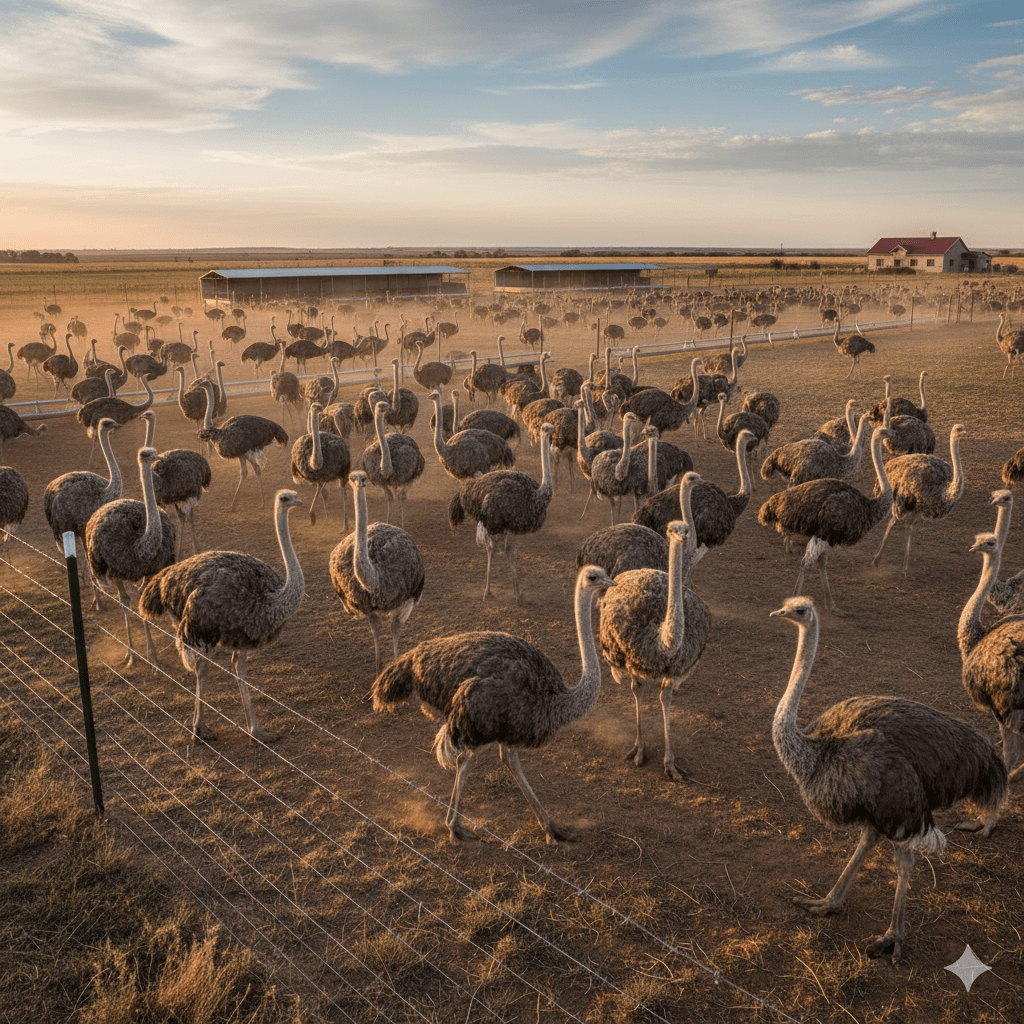
Ostriches are raised for meat, feathers and eggs and are commercial. However these bunch of hostages in the news of late were going away from that and we’re used for tourism. Coming endeared to some keepers. Wouldn’t have been, if it was just for meat.
Avian flu
This is a very serious condition that affects foul and gets into people it can be fatal to people and the closer they are the bigger population areas and more of a risk.
The cull that was ordered by the authorities has been stayed and there may be a presentation between the parties at the Supreme Court of Canada and there is a controversy over testing the remaining birds, 300 out of a possible 450 that had contacted the avian flu and are under scrutiny.
H5N1
The virus involved is H5N1, and could be a particularly concern at the start of the flu season and respiratory illness that could accompany it.
So, has anybody ever asked you? Did you notice that a formation of geese is usually longer on one side than the other, and asked yourself, why is that?
The reply is it’s “there are more geese on that side.”
So truth and reconciliation day begins with what is obvious first. The contentious next, then the punchline is “more work will be more productive than more obvious discoveries.”
Nicola river these salmon are 200 meters up stream from the Voght St bridge.
Spawning
The salmon in the photo seem to be very lively and actively spawning.
Salmon
Photo KDG, September 21 2025, Merritt BC…
Nicola River System
The Nicola River system, located in the Thompson-Nicola region of British Columbia, is a vital watershed for several species of Pacific salmon. The annual salmon runs are not only a spectacular natural event but also a crucial part of the ecosystem and hold deep cultural significance for local First Nations.The Salmon SpeciesThe Nicola River and its tributaries support runs of several salmon species, including: * Chinook Salmon: Considered a prized species, Chinook are one of the largest and most sought-after salmon. * Coho Salmon: These are known for being a bit more elusive, which makes them a challenge for anglers. * Pink Salmon: Pink salmon are the smallest species and are known for the distinctive hump that develops on the back of the males during their spawning migration. * Sockeye Salmon: Although their presence has been less consistent in recent years, sockeye were historically a significant part of the Nicola system.The timing of the salmon runs can vary by species, but generally, the main runs occur in the late summer and early fall, as the fish make their incredible journey from the ocean to their natal spawning grounds.Environmental ChallengesThe health of the salmon runs in the Nicola River is a significant concern due to various environmental pressures. The Thompson-Nicola region is particularly susceptible to the effects of climate change, which has led to: * Drought: Lower-than-average snowpack and reduced summer rainfall can lead to low stream flows and higher water temperatures. This can trap fish in isolated pools, increase their vulnerability to predators, and cause a loss of critical habitat. * Wildfires: The increasing frequency and severity of wildfires can damage the watershed, leading to increased sediment runoff that can smother salmon eggs and alter the river’s habitat.These factors, combined with historical impacts from logging and water withdrawals for agriculture, pose a serious threat to the persistence and recovery of salmon populations.Cultural SignificanceFor the First Nations of the Nicola Valley, particularly the Nlaka’pamux and Secwepemc peoples, salmon are far more than just a food source. Salmon are an integral part of their identity, culture, and social structure. * Sustenance and Trade: For thousands of years, salmon have been a foundational food source and a key item for trade, sustaining large and vibrant communities. * Spiritual and Cultural Connection: In many traditional beliefs, salmon are considered gift-bearing relatives and are treated with immense respect. The return of the salmon each year is a powerful symbol of life, endurance, and the cyclical nature of the world. Traditional stories, songs, and ceremonies celebrate this deep connection. * Stewardship: Indigenous knowledge and traditional practices have historically played a vital role in managing and protecting the salmon populations. This includes using methods like dipnetting and establishing agreements between communities to ensure the sustainability of the resource for all.Efforts are underway, often led by First Nations communities and conservation groups, to address the challenges facing the Nicola watershed and its salmon. These initiatives focus on habitat restoration, sustainable water management, and integrated decision-making to protect this irreplaceable resource for future generations.
The Nicola Naturalist Society Incorporated have begun their fall and winter program again since 2010 in Merritt, British Columbia, the group have been going out doing projects in association with some government and Nature BC.
Lichen outing:
On Saturday September 27 th 2025. With Christine, You need to be paid up member to go.















 Kevin Griffiths
 percypaschal
 The Proprietor Review