You are presumed to be honest and responsible without evidence to the contrary beyond a reasonable doubt… on the balance of probablilties you are justified by 51 % likelyhood.
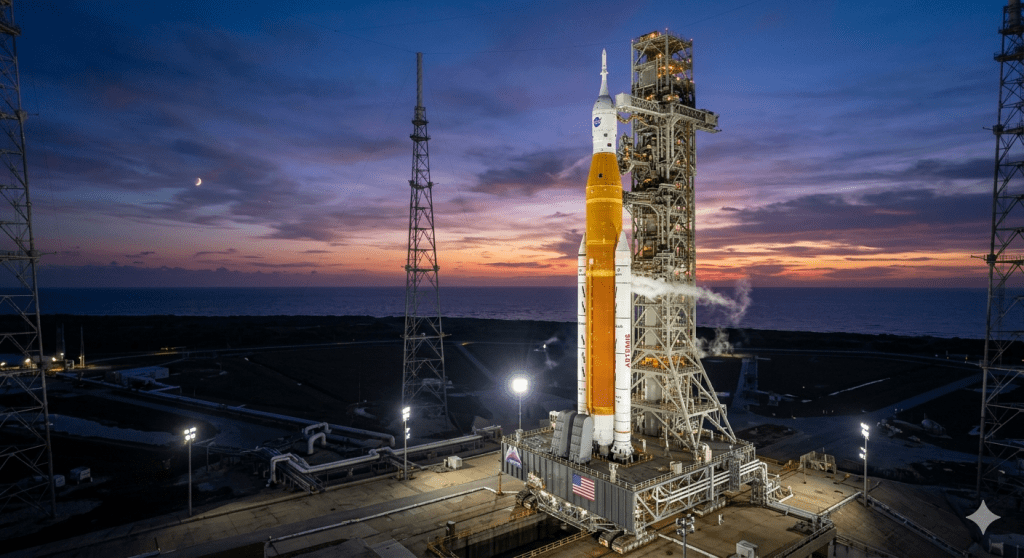
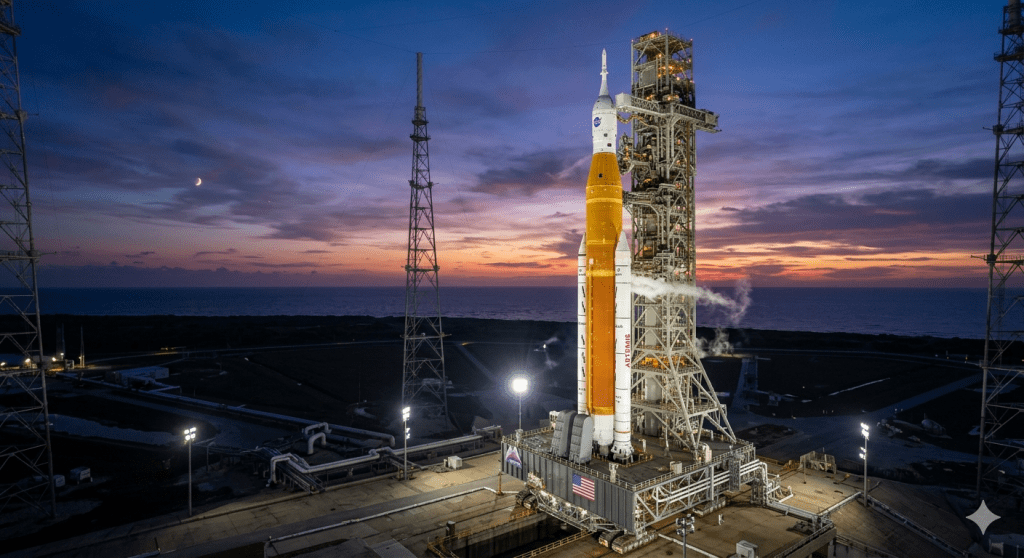
The countdown is officially on! As of today, Tuesday, March 31, 2026, Artemis II is scheduled to launch tomorrow, Wednesday, April 1, 2026.NASA and the Space Force are currently reporting an 80% chance of favorable weather for the launch. Here is the specific timing if everything stays on track:Launch Details * Target Date: Wednesday, April 1, 2026 * Launch Window Opens: 6:24 PM EDT (3:24 PM in Merritt) * Window Duration: 2 hours * Location: Launch Complex 39B, Kennedy Space Center, FloridaBackup OpportunitiesIf there is a “scrub” due to technical issues or local weather, NASA has several backup windows already lined up: * Daily backups: April 2 through April 6 * Extended backup: April 30The Mission at a GlanceThis is a historic 10-day mission that will send four astronauts—including Canadian astronaut Jeremy Hansen—on a trajectory around the far side of the moon. It’s the first time humans have left low Earth orbit since 1972.Since you’re in British Columbia, you can catch the live coverage on NASA’s YouTube channel or NASA+ starting around 9:50 AM PDT tomorrow if you want to watch the fueling process, with full broadcast coverage beginning at 9:50 AM PDT.Would you like me to find the specific streaming links or local TV listings for the launch?
NASA’s Artemis II mission, the first crewed flight in the Artemis program, is scheduled to launch next week from Launch Complex 39B at the Kennedy Space Center in Florida. The target launch date is Wednesday, April 1, 2026, with the launch window opening at 6:24 PM EDT. Therefore, the launch is scheduled for the evening.
If you are watching from other time zones, this corresponds to 10:24 PM UTC, or early Thursday morning, April 2, for locations such as India (3:54 AM IST). NASA has additional backup launch opportunities available through April if a delay is necessary.
The Earth has ocean currents and air currents. Every kind of vortex, wind, tunnels, wind shears and the whole kitt caboodle gives us predictable weather and most instances.
Gravity from a friend
Our moon stands solid withness and pulls on our oceans and our currents and gives us predictable weather
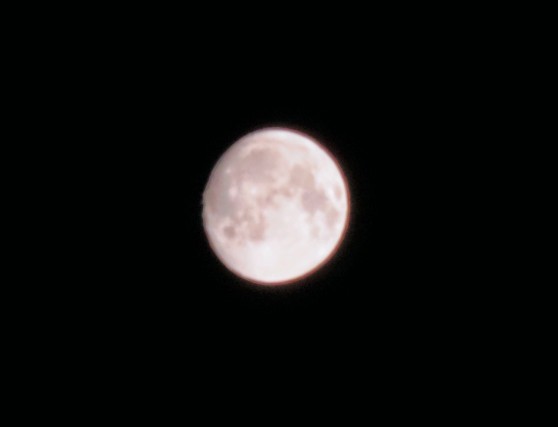
The Moon is not quite full yet. Apparently on the 6th or the 7th it will be. With a possible frost here.Merritt BC…
Moon Location?
That’s a great question! Since you’re in Merritt, BC, here is where the Moon is tonight, October 4, 2025.The Moon is in the Waxing Gibbous phase and is approximately 92.4% illuminated.Tonight’s Moon Schedule in MerrittThe Moon is visible in the sky this evening, setting in the early morning.| Event | Time (PDT) ||—|—|| Moonrise | The Moon rose in the afternoon, between noon and sunset, and is currently visible. || Sets | The Moon will set in the early morning hours (between midnight and sunrise). |The Moon is very close to its Full Moon phase, which will occur in a couple of days on October 6, 2025.
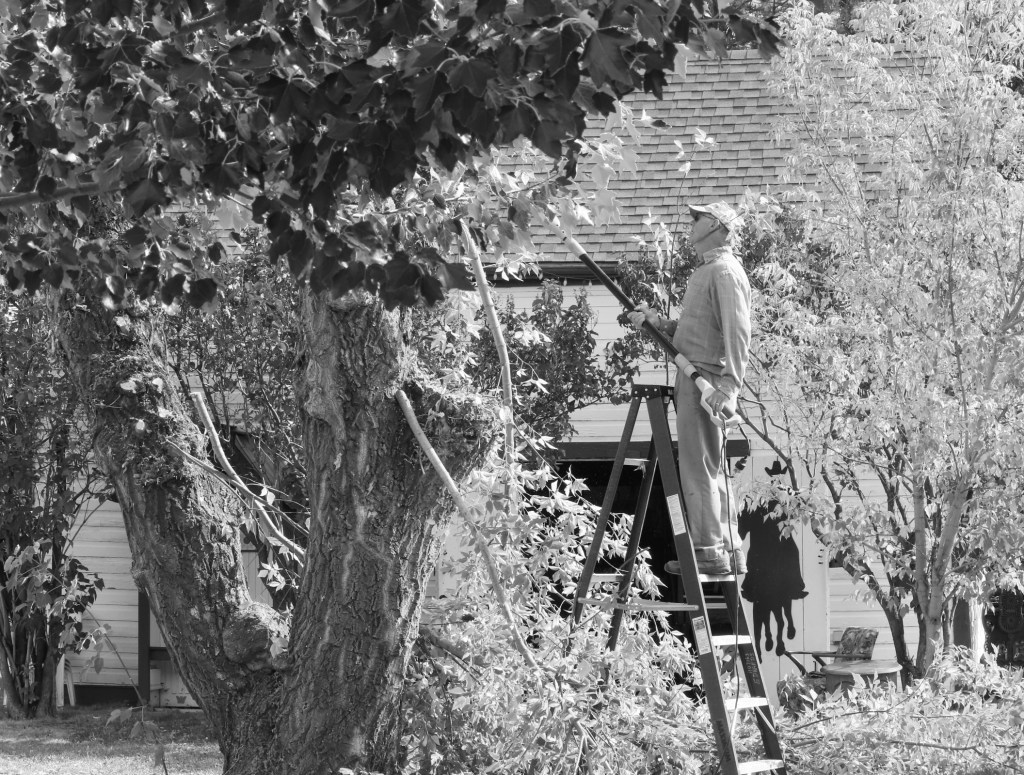
Tom Edwards prunes the tree at the Bailey house downtown information center on Voght Street in Merritt, BC. Somebody said careful that ladder don’t fall and guess what? In Merritt, there’s only a few leaves that have turned color.
Moon October 2025
Photo KDG
Just to frost temperature over night October 6 forecast low 32f.
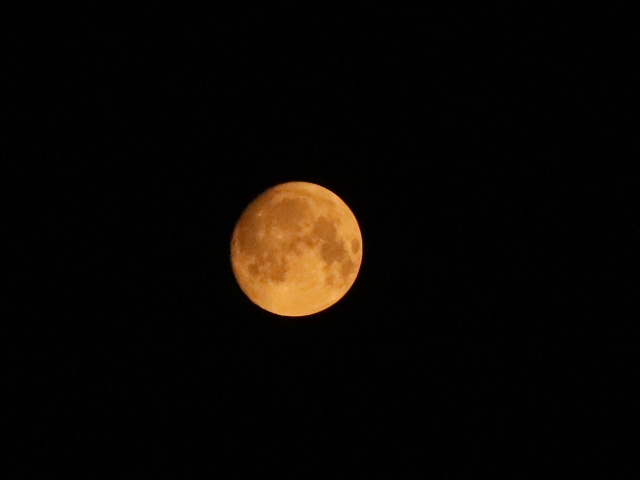
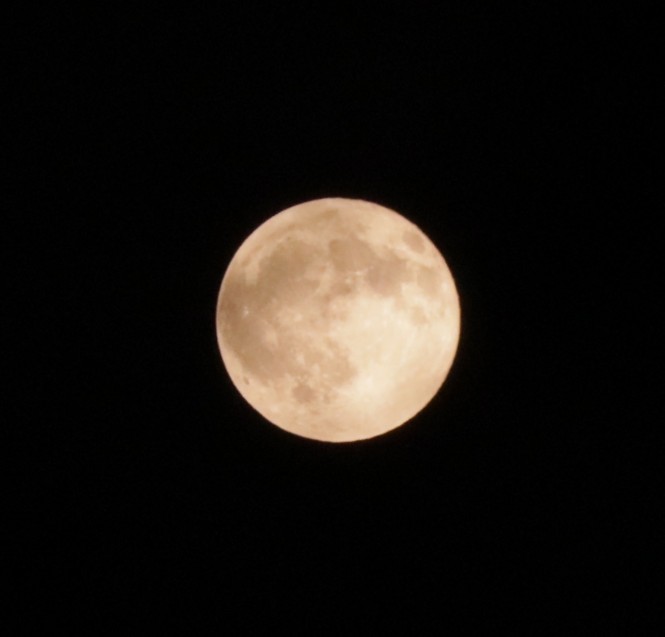
The full moon this October is a supermoon and on the 6th the forecast for the temperature in Merritt, 600 meters above sea level and in the BC Central South interior will experience another super hunter/harvest Moon.
When and wear
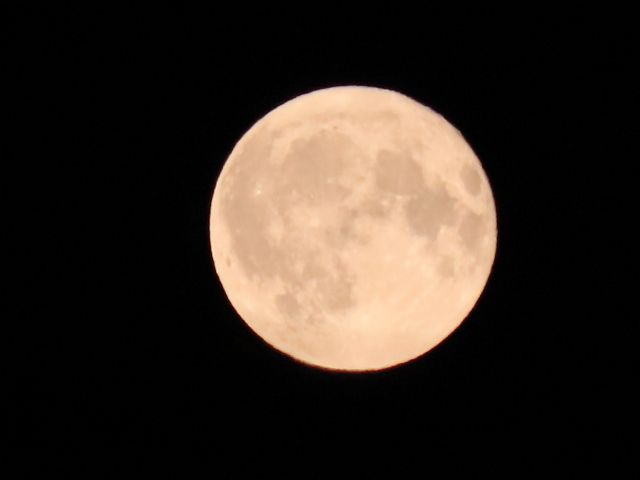
The full Harvest Moon on October 6, 2025, is a significant celestial event, as it is also a Supermoon.Harvest Supermoon DetailsTime of FullnessThe Moon will reach its moment of peak illumination (fullness) at 8:48 P.M. PDT on Monday, October 6, 2025, in Merritt, British Columbia.Moonrise and DirectionFor observers in Merritt, BC, the full Moon will: * Rise at 6:09 P.M. PDT on Monday, October 6, 2025. * Direction: It will rise generally towards the East, near the horizon, a characteristic of the full Moon around the autumnal equinox. The optimal time to view its golden-orange hue is shortly after it rises.The Supermoon EffectThe Harvest Moon on October 6, 2025, is the first of three consecutive Supermoons this year, meaning it occurs close to perigee (the Moon’s closest point to Earth in its orbit).Distance from EarthWhile the Moon’s exact distance is constantly changing, the full Moon phase on October 6 will be at a close distance. The closest point in the orbit (perigee) for this full moon period is around 226,250 miles (approximately 364,117 kilometers). This distance is significantly closer than the average Earth-Moon distance of about 239,000 miles.Why it’s a SupermoonA Supermoon is a full Moon that occurs near perigee. Due to this closer distance, it will appear slightly larger (about 6.6% larger) and noticeably brighter (about 13% brighter) than a typical full Moon.What makes it the Harvest MoonThe Harvest Moon is simply the full Moon that occurs closest to the autumnal equinox (the start of fall). Because the equinox in 2025 was on September 22, the full Moon on October 6 is the closest one to that date, earning it the title of Harvest Moon. This timing causes the Moon to rise relatively close to sunset for several nights, providing extra twilight illumination for farmers, which is how it got its name.
Strangely enough this happens to be published post number 4666. On this site. Just a coincidence… Ya think …
Moon all done with blood
So, the Moon is back 22:15 hrs approximately, and our moon is back without its blood colouring. I can’t help feeling that we miss something. It’s calm right now. You know getting on to 10:30 on Sunday night and the forest fire smoke is abated and it doesn’t seem 110° anymore. I think it only got to 100° f here something’s over with. I don’t know what it is. People kind of a emptiness in my spirit like something missed.
Well, if it was conflict we missed out on. Well that’s good. Peace and prosperity to all my friends and adherence people. I follow those that follow me. The world may have had some surgery, and recovery was just beginning. Enjoy!
The moon is said to go dark on the 22-23rd so the dark sky for viewing the planet parade will be enhanced.
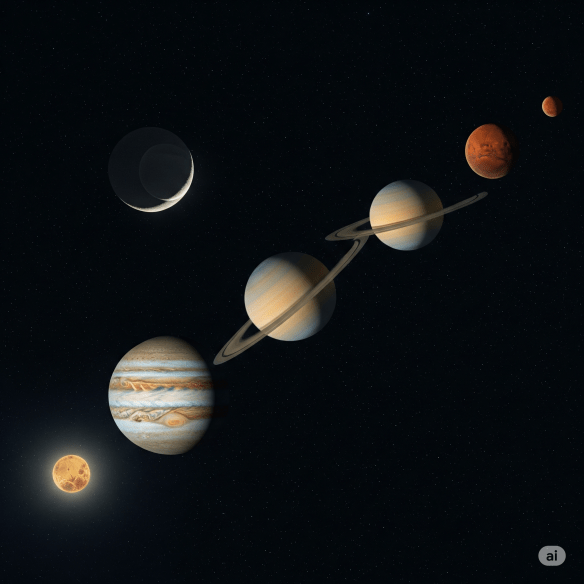
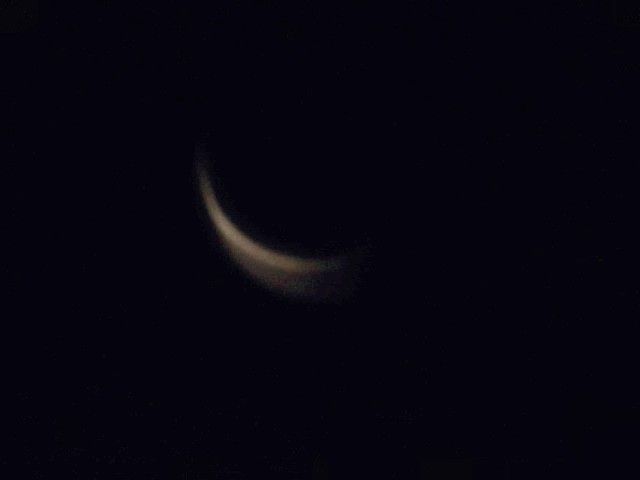
The new moon will occur on Friday, August 22, 2025, at 11:06 PM PDT in Vancouver, British Columbia, and is sometimes referred to as a Black Moon because it’s the third new moon in a single astronomical season. The new moon phase happens when the Moon is positioned between the Earth and the Sun, making its lit side face away from us. This results in the Moon becoming virtually invisible to the naked eye. This lack of moonlight creates an exceptionally dark sky, which is ideal for stargazing and viewing deep-sky objects like star clusters and the Milky Way. August 2025 Sky and Planet Positions 🔭 In August, a “planet parade” of six planets and the Moon is visible. On the mornings leading up to the new moon, you’ll be able to see Mercury, Venus, and Jupiter aligned in the eastern sky, while Saturn and Neptune will be in the southern sky. As the month progresses, Saturn will become more visible, and Neptune will still be in the same general area. For the best viewing, you should find a location away from city lights and with a clear view of the horizon. The best time to observe the planets would be in the early morning before sunrise. Rare Black Moon to Darken Skies in August 2025 This video is relevant because it discusses the August 2025 Black Moon event and its impact on the night sky.
YouTube video views will be stored in your YouTube History, and your data will be stored and used by YouTube according to its Terms of Service
The next Starship test flight, Flight 10, is scheduled for August 4th, 2025. This flight will be another uncrewed test to gather more data on the Starship’s performance.
Waiting for a crewed test launch, concerned about the Artemis Partner Program in the current geo political atmosphere it’s heartening to know a starship test is coming in August.
1000 Starships
Maintained by space x that 1000 Starships will bring 1 million colonists to Mars. This I
Is for permanent settlement.
The ambitious goal of making Mars a habitable planet and sending a million people there is primarily driven by SpaceX, led by Elon Musk. While other space agencies like NASA have plans for human missions to Mars, SpaceX has the most public and aggressive timeline for large-scale colonization. Here’s a breakdown of the key aspects of this program: SpaceX’s Vision for Mars Colonization: * Self-Sufficient City: The ultimate goal is to establish a self-sufficient, large-scale settlement and a democratic, self-governing colony on Mars. This means not just sending people, but building the infrastructure for them to live, work, and thrive independently of Earth. * Starship System: The core of SpaceX’s plan is the Starship spacecraft and Super Heavy rocket. This fully reusable transportation system is designed to carry both crew and massive amounts of cargo to Mars. * Massive Transportation: To achieve the goal of a million people, SpaceX envisions launching thousands of Starships during Mars launch windows (which occur approximately every 26 months). They talk about launching more than 10 times per day to maximize these windows. * Phased Approach: The plan involves initial cargo missions to deliver equipment, habitats, and supplies before any humans arrive. The first crewed missions would focus on setting up propellant plants (to produce fuel on Mars using local resources), power systems, and rudimentary bases. * Resource Utilization (ISRU): A crucial part of self-sufficiency is In-Situ Resource Utilization (ISRU). This involves using resources available on Mars, such as harvesting CO2 from the atmosphere and splitting it into its components to create oxygen and fuel. * Timeline: While highly ambitious and subject to change, Elon Musk has spoken about a first crewed mission as early as 2029 and the development of a self-sustaining colony by 2050. Terraforming Mars: “Terraforming” refers to the hypothetical process of transforming a planet hostile to life into one that can sustainably host humans and other lifeforms without protection. While SpaceX’s immediate focus is on establishing a base that uses local resources, the long-term vision of a truly Earth-like Mars involves terraforming. * Challenges: Terraforming Mars presents immense challenges with current technology. Key issues include: * Thin Atmosphere: Mars has a very thin atmosphere with extremely low surface pressure. * Lack of Magnetic Field: Mars lacks a global magnetic field, which makes its atmosphere vulnerable to erosion by solar winds. * Cold Temperatures: Mars is very cold. * Proposed Methods (Hypothetical): * Greenhouse Gases: Releasing greenhouse gases (like CO2, which is abundant in Mars’s atmosphere and polar caps) to thicken the atmosphere and warm the planet. * Artificial Magnetic Field: Creating an artificial magnetic field to protect the atmosphere from solar wind erosion. * Engineered Dust Particles: Some researchers have proposed releasing engineered dust particles into the atmosphere to trap heat. * Localized Habitats: A more achievable near-term approach might be creating localized habitable environments using materials like silica aerogel, which could provide shelter and warmth for small areas. NASA’s Role: While NASA doesn’t have a plan for colonizing Mars with a million people in the same way SpaceX does, they are actively working towards human exploration of Mars. Their goals include: * Scientific Discovery: Understanding whether life ever existed on Mars, characterizing its climate and geology, and preparing for human exploration. * Technology Development: Testing technologies for oxygen production (like MOXIE on the Perseverance rover), developing sustainable food and water systems, power generation, and advanced habitats. * Artemis Program: NASA’s Artemis program is laying the groundwork for long-term human presence on the Moon, which will serve as a stepping stone and testing ground for missions to Mars. In essence, SpaceX is the primary driver behind the “million people on Mars” goal, with their Starship system being the core technology. Terraforming, while a long-term aspiration, faces significant scientific and technological hurdles. NASA, meanwhile, is focused on incremental steps towards human exploration, scientific discovery, and developing the foundational technologies needed for future long-duration missions to the Red Planet.
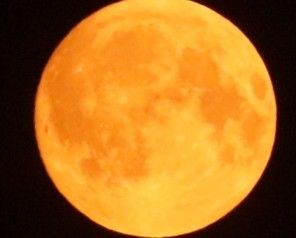
The full moon on July 10th, 2025 is known as the Buck Moon. Here’s a breakdown of what makes it special: Why “Buck Moon”? This traditional name comes from Native American folklore, as July is typically the time of year when male deer (bucks) begin to regrow their antlers, which shed annually. These new antlers symbolize strength, growth, and regeneration. Key Characteristics of the July 10th, 2025 Full Moon: * Peak Illumination: The Moon reaches its peak illumination around 4:37 PM EDT / 1:37 PM PST on July 10th. While it’s full during daylight hours for much of North America, the best viewing will be after sunset when it rises in the eastern sky. * Low-Riding Moon: This year, the Buck Moon will appear exceptionally low in the sky, particularly for observers in the Northern Hemisphere. This is due to a combination of factors: * Close to Aphelion: The Earth is near its aphelion (the point in its orbit farthest from the Sun) in July. * Major Lunar Standstill Effect: This full moon coincides with a “Major Lunar Standstill,” a phenomenon that occurs every 18.6 years and exaggerates how high or low the Moon appears in the sky. * Appearance: Because it’s so low on the horizon, the moon may appear larger and have a captivating orange or golden hue at moonrise due to atmospheric effects. * Astrological Significance: In astrology, this full moon falls in the sign of Capricorn. This alignment is said to bring a focus on grounding, purpose, and releasing old patterns to make way for new growth and transformation. It’s considered a time for reflection and connecting with one’s inner wisdom. * Other Names: Besides Buck Moon, it’s also known by other names in different cultures, including: * Thunder Moon: Due to the frequent thunderstorms during midsummer. * Salmon Moon: Reflecting the seasonal migration of salmon. * Hay Moon: As farmers gather animal feed. Viewing Tips: * Time: Begin observing 30-60 minutes after local sunset for the best visibility. * Location: Choose a spot with a clear view of the southeastern horizon, ideally away from city lights to minimize light pollution. Elevated areas, beaches, or rural locales are ideal. * Equipment: The Buck Moon is visible to the naked eye, but binoculars or a small telescope can enhance views of lunar details like craters. This July 10th full moon offers a unique opportunity for skywatchers to enjoy a truly spectacular celestial event, with its unusual low-riding appearance and traditional significance.
Viewing time
The moon will appear full for a couple of more days.







 Kevin Griffiths
 percypaschal
 The Proprietor Review