Tag Archive: Business and Economy


Christmas in July…..

July brings an enjoyable garden space to many properties in Merritt File Photo KDG

July brings an enjoyable garden space to many properties in Merritt
File Photo KDG

The Summer students have been busy setting up a tent at the downtown tourist info center ( Nicola Valley Heritage Society). When asked what it was for they replied that they were having a Christmas in July event on the coming weekend.
Fred at the house says they will be offering Christmas decorations and anything associated with Christmas for sale in the yard and the 2202 Voght street building, as well as books. The historical society operates on revenue from the house as well as donations.
The Baillie property is a City of Merritt Property and invites people to enjoy the common garden and historical house under the shade of maple trees.
Happy Holidays.

On this Day: July 19th 1976
Sagamatha National park is created in Nepal.

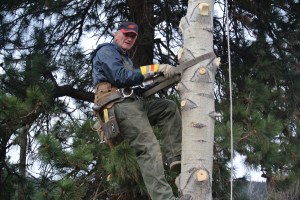
John Paul taking a tree down, bench area November File Photo KDG Photo KDG

John Paul taking a tree down, bench area November File Photo KDG

The forest service requires something called a pre-harvest siliva-culture prescription before logging plans can be approved by mills. Starting in May of most years some crews are about Merritt to plant trees. One time catch phrases such as Weyerhaeuser’s  We plant two trees for everyone one we harvest have not rung aloud as much as in previous decades. Regulation seems to have taken over a little from public relations.

There are tree-planters at work this summer in the Black Diamond Ranch area by Brookmere in the Coquihalla, one from Salmon Arm, an immigrant from eastern Europe  says that it is possible to plant 3000 a day at piece work rates. A long slender shovel blade distinguishes them from other forestry workers.

The Merritt Desert Inn is an annual venue for a Tree Planters Ball that sees many dress up in costume for a night of hilarity. The Ball was held in June this year and a management source at the Desert Inn said there were few planters this time and she knows of none at this writing.

Weyerhaeuser (pronounced “Warehouser[4]) is one of the world’s largest private owners of timberlands. It owns or controls more than 6 million acres of timberlands, primarily in the U.S., and manages another 14 million acres under long-term licenses in Canada. The company also manufactures wood and cellulose fiber products. Weyerhaeuser is a real estate investment trust.[2] source wikipedia 

A logger sports day in forestry week is on the agenda for Merritt this year, celebrating forestry week September 23rd-25th 2016. Billed as West Coast Lumberjack Show, it will feature a chainsaw carving competition. By two Carver Kings as seen on HGTV. The show will include will be forestry logging equipment displays and a big rig show and shine.

Forestry week was observed with a parade in recent years and the Fall Fair grounds sported two high spars for climbing competitions. Climbing with spurs was a skill that hydro, telephone and loggers practiced at work.

On this Day: July 12th 1971

The Australian Aboriginal flag flies for the first time.


Canoe quest to north west coast of BC

Canoe quest to north west coast of BC File Photo KDG

The Trans Mountain pipeline expansion approved in May/2016 had conditions, one was ongoing consultations .
The expansion will increase tanker traffic from Vancouver, something unattractive to many and in particular First Nations. Because the expansion is considered by the regulator as in the public interest, consideration must have been given to what this will cost us. Including ascetics and life style. The shirt and caricature above was made for a canoe trip by First Nations people up the coast of BC, and shows an attitude that we understand and appreciate.

Large tankers can only be really be appreciated by sailors,  double hulls by engineers,  natural beauty by most and the coast of BC best by the indigenous residents. This will cost us as paying for any necessity does. A consuming humanity awaits and a vigilance demands a balance and respect for the costs and commitment of watchers and attitude molders.


On this Day: June 24th 1938
A meteor weighing over 400 metric tons explodes in to pieces in the earths atmosphere, landing at Chicora Pennsylvania.

TGIF- Coffee promotion

100_2247

Coffee promotion starting November 20th

File photo KDG


The local Macs is participating in their chains coffee promotion starting today. The promotion is for a week and offers a free small coffee once a day one per customer.
There is an upgrade offer 50cents to a medium and 1 dollar to a large.
On this Day November 20th 1982
The labour union, The General Union of Ecuadoran Workers is founded.

Election done, onwards and upwards

Its been more then 5 years since stock markets had so much trouble, good luck to the newly elected and those running for office.

Animation of the blood moon September 28th photo KDG

Animation of the blood moon September 28th
photo KDG

Oil

On this day: October 20th 1970

The Nepal Stock exchange collapses.

Transformer

The Merritt Green Energy project s 40 megawatt electric steam generator is in progress. A worker on site says they are doing the transformer for kicking up voltage to transport. A security person says there is about 1 year left in the plants construction.

A huge bin  for the receiving and storage of Hog fuel ( chipped wood waste) is part of the plant construction. The bin,  made of vertical steel pipes with planking bolted to the inside is on the north side of the rising  generator building..

Electric toys were a happy result of Edisons electric File Photo KDG

Electric toys
were a happy result of Edison’s electric
File Photo KDG

On this day: October 15th 1878

The Edison Electric Light Company starts operations.

TGIF-PP

Pipeline politics are on again!  Has any one ever asked the question why is  oil not refined at sea and taken by tankers off rigs to retailers. Maybe the technologies are non existing. Why not? Can water also be desalinated  on off shore rigs cleaned up and taken away?  Possibly but the politics of oil is the politics of wealth and seems to be very guarded.

Locally hearing by January the recommendations a possible decision 0n if we will have a twinned line come through Merritt still makes us conflicted between knowing it is someone’s necessary evil and some else’s path way to wealth . We at this blog (royal we) hope that what ever the NEBs report is  that it mitigates and distributes the benefits closer to ordinary Canadians birth expectations and rights….Here’s what the responsible operator of the 60 year trans mountain line says of the countdown to decision.

It’s been nearly two years since the head of Kinder Morgan and the company behind the Trans Mountain Pipeline project addressed the local business community about the project, and it was at a time when any formal decision to proceed was a couple years away.

On Tuesday, Kinder Morgan president Ian Anderson was back in Coquitlam speaking to the Tri-Cities Chamber of Commerce to provide an update on the billion-dollar pipeline project.

He said the National Energy Board is expected to issue its recommendations to the federal government in January, which in turn has another 90 days to accept or reject the project.

In the meantime, he said the energy company still has a lot of work to do on the design of the project, the emergency response plans, and dialogue with First Nations communities.

Kinder Morgan is proposing to expand the 1,550-kilometre pipeline that carries oil from Edmonton to Burnaby.

The proposed pipeline route in Coquitlam would run east of the Port Mann Bridge through the Fraser River, hitting land near United Boulevard.

The line would follow the road west past the Eaglequest Golf complex before meeting up with the Lougheed Highway corridor to Burnaby.

The cities of Coquitlam and Port Moody along with the Village of Belcarra have been given intervener status, which allows the municipalities to ask questions and receive answers through the NEB process.

Anderson, who last spoke to the chamber in the fall of 2013, said the company has listened to some of the local concerns about the project, noting Trans Mountain originally intended to use the Colony Farm area as a work site, but opted not to after hearing from the community.

He also said the company has heard from businesses along United Boulevard about the disruptions from years of construction in the area, and are trying to mitigate the impacts from any pipeline construction.

– See more at: http://www.thenownews.com/news/kinder-morgan-exec-updates-local-stakeholders-on-pipeline-plan-1.2000611?utm_source=Trans+Mountain+Today+July+16&utm_campaign=TM+Today+7%2F16%2F15&utm_medium=email#sthash.MkeFlCVI.dpuf

The balance of the worlds wealth is important, and the use of income needs to be in responsible hands, lets not squander that or make the world worse but wealthier . The way these things  are done is as important as doing it. PP

Editors note: The decision remains in the hands of the people of Canada through responsible elected and the rule of law.

On this day: July 17th 1955
Disney land is dedicated in California

Convention

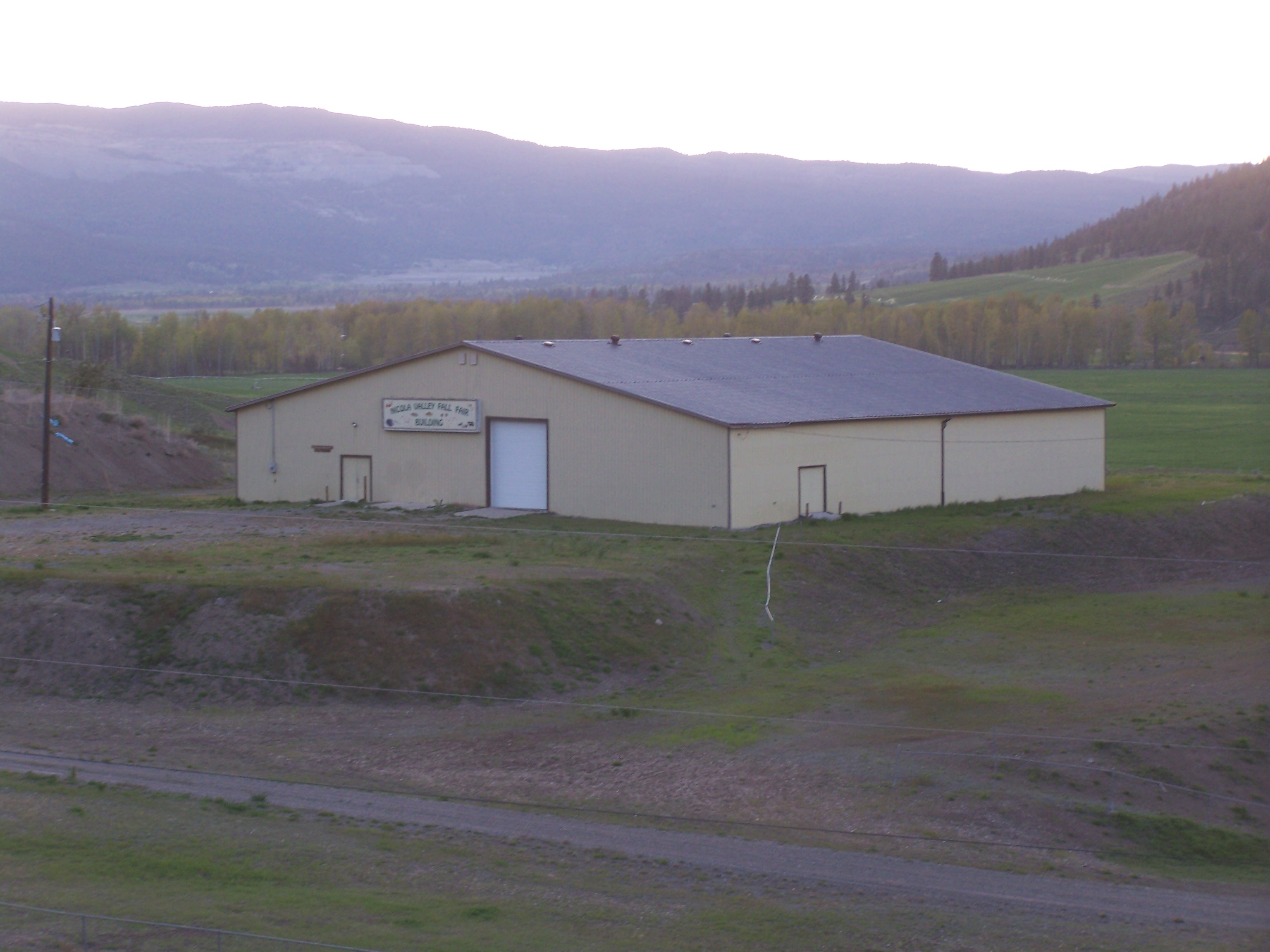
The local fall fair building brings the farming community together at  the end of summer every year.  KDG file photo.

The local fall fair building brings the farming community together at the end of summer every year.
KDG file photo.

Freedom of association was alive and well in Merritt BC, the provincial cattlemen association met here over the weekend. Douglas lake cattle company is about 40 minutes away from downtown and many smaller cattle operations are in the area.

In response to booming demand for beef in rapidly growing Vancouver, the Interior stock industry went into high gear in the wake of the railway’s opening, spurring on something of a golden age in BC ranching. In 1907 the Nicola branch line of the CPR was built into the Nicola Valley to serve the booming stock operation at Douglas Lake, which was already one of the country’s largest and for many years second only to the sprawling Gang Ranch on the west side of the Fraser, which has since shrunk in scale, leaving the Douglas Lake as the largest. The ranch includes leased grazing land as well as directly leased or titled lands, and extends to the edge of metropolitan Kamloops and towards Shuswap Lake, spanning most of the high country of the northeastern Thompson Plateau.

The Douglas Lake Cattle Company has faced many controversies. It has been claimed that early on, the ranch’s land holdings were expanded by pressing large amounts of cattle into the pastures of smaller neighbours. While the cattle would later be removed the damage was done. With their feed for the year consumed by Douglas Lake’s herd, the homesteaders would be forced to sell. Douglas Lake Cattle Company has also aggressively restricted access to both private and public lands. By buying up thin strips of land along major arteries they are able to control wide tracts of public range. In many cases locked gates were placed where Douglas Lake has no legal claim to the property.[citation needed] While this is claimed to preserve grasslands, some say it appears to be a business maneuver. Douglas Lake Cattle Company charges up to $100.00 a day to fly fish their private lakes (that they maintain by stocking, cleaning, aerating, etc.). There are public lakes that you can access for free (Douglas Lake is public) or pay an access fee (Salmon Lake).

Source Wikipedia.

The ranch has expanded by buying the Quilchena Cattle company for a said thirty five million dollars, and now operates the Quilchena hotel on highway 5A at Nicola Lake as well as its livestock operations.

On this Day: May 27th 1933
The century of progress worlds fair opens in Chicago.
,

Hail

Hail mocks the bloom outside the united church in Merritt Photo KDG

Hail surrounds the bloom outside the United Church in Merritt
Photo KDG

On Saturday there was a hail storm here followed by a 4 hour power outage. The hail was soft and smaller then the storm in the 1990s here that caused millions of dollars in damage to roofs and cars.

The storm followed the BC  cattleman’s convention and the power outage disrupted their dinner.

On this Day: May 26th 1897
Dracula, is published by Bram Stoker.

Truth is stanger then fiction

Most of as quite comfortable when attending the big screen and watching a story sometimes based on truth but usually enhanced with some fiction. However it is difficult to accept the bare un bridled truth especially when you are directly involved. The path to delusion is often lined with waypoints marked with unattractive truth. Since few of use get the opportunity to write our own scripts for our life a taste fro the truth and an ability to apply it in context with out damage is a good life-skill. Who wants to have to live the consequence of someone else’s delusion.

Below is a standard that journalists use in publication:

1. Journalism’s first obligation is to the truth

Democracy depends on citizens having reliable, accurate facts put in a meaningful context. Journalism does not pursue truth in an absolute or philosophical sense, but it can–and must–pursue it in a practical sense. This “journalistic truth” is a process that begins with the professional discipline of assembling and verifying facts. Then journalists try to convey a fair and reliable account of their meaning, valid for now, subject to further investigation. Journalists should be as transparent as possible about sources and methods so audiences can make their own assessment of the information. Even in a world of expanding voices, accuracy is the foundation upon which everything else is built–context, interpretation, comment, criticism, analysis and debate. The truth, over time, emerges from this forum. As citizens encounter an ever greater flow of data, they have more need–not less–for identifiable sources dedicated to verifying that information and putting it in context.

2. Its first loyalty is to citizens

While news organizations answer to many constituencies, including advertisers and shareholders, the journalists in those organizations must maintain allegiance to citizens and the larger public interest above any other if they are to provide the news without fear or favor. This commitment to citizens first is the basis of a news organization’s credibility, the implied covenant that tells the audience the coverage is not slanted for friends or advertisers. Commitment to citizens also means journalism should present a representative picture of all constituent groups in society. Ignoring certain citizens has the effect of disenfranchising them. The theory underlying the modern news industry has been the belief that credibility builds a broad and loyal audience, and that economic success follows in turn. In that regard, the business people in a news organization also must nurture–not exploit–their allegiance to the audience ahead of other considerations.

3. Its essence is a discipline of verification

Journalists rely on a professional discipline for verifying information. When the concept of objectivity originally evolved, it did not imply that journalists are free of bias. It called, rather, for a consistent method of testing information–a transparent approach to evidence–precisely so that personal and cultural biases would not undermine the accuracy of their work. The method is objective, not the journalist. Seeking out multiple witnesses, disclosing as much as possible about sources, or asking various sides for comment, all signal such standards. This discipline of verification is what separates journalism from other modes of communication, such as propaganda, fiction or entertainment. But the need for professional method is not always fully recognized or refined. While journalism has developed various techniques for determining facts, for instance, it has done less to develop a system for testing the reliability of journalistic interpretation.

4. Its practitioners must maintain an independence from those they cover

Independence is an underlying requirement of journalism, a cornerstone of its reliability. Independence of spirit and mind, rather than neutrality, is the principle journalists must keep in focus. While editorialists and commentators are not neutral, the source of their credibility is still their accuracy, intellectual fairness and ability to inform–not their devotion to a certain group or outcome. In our independence, however, we must avoid any tendency to stray into arrogance, elitism, isolation or nihilism.

5. It must serve as an independent monitor of power

Journalism has an unusual capacity to serve as watchdog over those whose power and position most affect citizens. The Founders recognized this to be a rampart against despotism when they ensured an independent press; courts have affirmed it; citizens rely on it. As journalists, we have an obligation to protect this watchdog freedom by not demeaning it in frivolous use or exploiting it for commercial gain.

6. It must provide a forum for public criticism and compromise

The news media are the common carriers of public discussion, and this responsibility forms a basis for our special privileges. This discussion serves society best when it is informed by facts rather than prejudice and supposition. It also should strive to fairly represent the varied viewpoints and interests in society, and to place them in context rather than highlight only the conflicting fringes of debate. Accuracy and truthfulness require that as framers of the public discussion we not neglect the points of common ground where problem solving occurs.

7. It must strive to make the significant interesting and relevant

Journalism is storytelling with a purpose. It should do more than gather an audience or catalogue the important. For its own survival, it must balance what readers know they want with what they cannot anticipate but need. In short, it must strive to make the significant interesting and relevant. The effectiveness of a piece of journalism is measured both by how much a work engages its audience and enlightens it. This means journalists must continually ask what information has most value to citizens and in what form. While journalism should reach beyond such topics as government and public safety, a journalism overwhelmed by trivia and false significance ultimately engenders a trivial society.

8. It must keep the news comprehensive and proportional

Keeping news in proportion and not leaving important things out are also cornerstones of truthfulness. Journalism is a form of cartography: it creates a map for citizens to navigate society. Inflating events for sensation, neglecting others, stereotyping or being disproportionately negative all make a less reliable map. The map also should include news of all our communities, not just those with attractive demographics. This is best achieved by newsrooms with a diversity of backgrounds and perspectives. The map is only an analogy; proportion and comprehensiveness are subjective, yet their elusiveness does not lessen their significance.

9. Its practitioners must be allowed to exercise their personal conscience

Every journalist must have a personal sense of ethics and responsibility–a moral compass. Each of us must be willing, if fairness and accuracy require, to voice differences with our colleagues, whether in the newsroom or the executive suite. News organizations do well to nurture this independence by encouraging individuals to speak their minds. This stimulates the intellectual diversity necessary to understand and accurately cover an increasingly diverse society. It is this diversity of minds and voices, not just numbers, that matters. source : http://www.journalism.org/resources/principles-of-journalism/


Please feel free to comment on any matter in our blog!

On this day: April 8th 1908

Harvard University votes to have Harvard Business School:


Free trade has been a world opener for us in Canada however it has also brought with it a lot of unpleasentness that we Canadians could have avoided. If it is not possible to get cooperation then perhaps a tarriff regime is once again the best course for Canada. PR

Compare and contrast.

Prime Minister Stephen Harper, recently in the House of Commons:

“Frankly, Mr. Speaker, under the current circumstances of the oil and gas sector, it would be crazy, it would be crazy economic policy to do unilateral penalties on that sector. We’re clearly not going to do that,” Harper told the House as Conservative MPs roared their approval.
“In fact, nobody in the world is regulating their oil and gas sector. I’d be delighted if they did. Canada will be there with them.”

Jim Prentice, then federal minister of the environment, not quite five years ago:

“For those of you who doubt that the government of Canada lacks either the willingness or the authority to protect our national interests as a ‘clean energy superpower,’ think again,” he warned darkly. “We do and we will. And, in our efforts, we will expect and we will secure the co-operation of those private interests which are developing the oil sands. Consider it a responsibility that accompanies the right to develop these valuable Canadian resources.”

Back then, it was possible to believe the federal government would impose regulations on the oil and gas industries. The government certainly said it would, often enough. (Peter Kent in February, 2013: “We are now well into, and very close to finalizing, regulations for the oil and gas sector.”) But, as Chris Turner reminds us in his book The War on Science, Prentice quit as environment minister in November 2010, and the Harper government’s periodic attempts to demonstrate environmental virtue, even at some hypothetical cost to the resource sector, pretty much came to an end.

Of course, it can be hard to tell where the notion of oil and gas regulations ended. Prentice himself has been sounding much like Harper since he became premier of Alberta:

“Environmental performance is important, but so, too, is our industrial competitiveness . . . I think this low-price environment is a reminder . . . that we have to be careful laying on costs, including regulatory costs, on our industry, because we need to remain competitive.”

But is even that new? From my 2010 article, linked above:

“We will only adopt a cap-and-trade regime if the United States signals that it wants to do the same. Our position on harmonization applies equally to regulation. Canada can go down either road—cap and trade or regulation—but we will go down neither road alone.”

So the paper trail on the government’s oil and gas policy is a bit of a mess. The feds will only impose regulations in concert with the Americans? Well, there are two problems with that story. First, as Bruce Cheadle points out:

An Environment Canada briefing memo revealed last month by the Globe and Mail shows that the United States, in fact, placed what were called “significant” limits on its oil and gas sector in 2012.

“For oil and gas, recent air pollution regulations are expected to result in significant greenhouse-gas reduction co-benefits, comparable to the reductions that would result from the approach being developed for this sector in Canada,” states the June 2013 memo obtained by Greenpeace under an Access to Information request.

Mcleans
Yep!
Today in history: December 12 1911
Deli replaces Calcutta as the Capital of India.

NMS_7565 ore

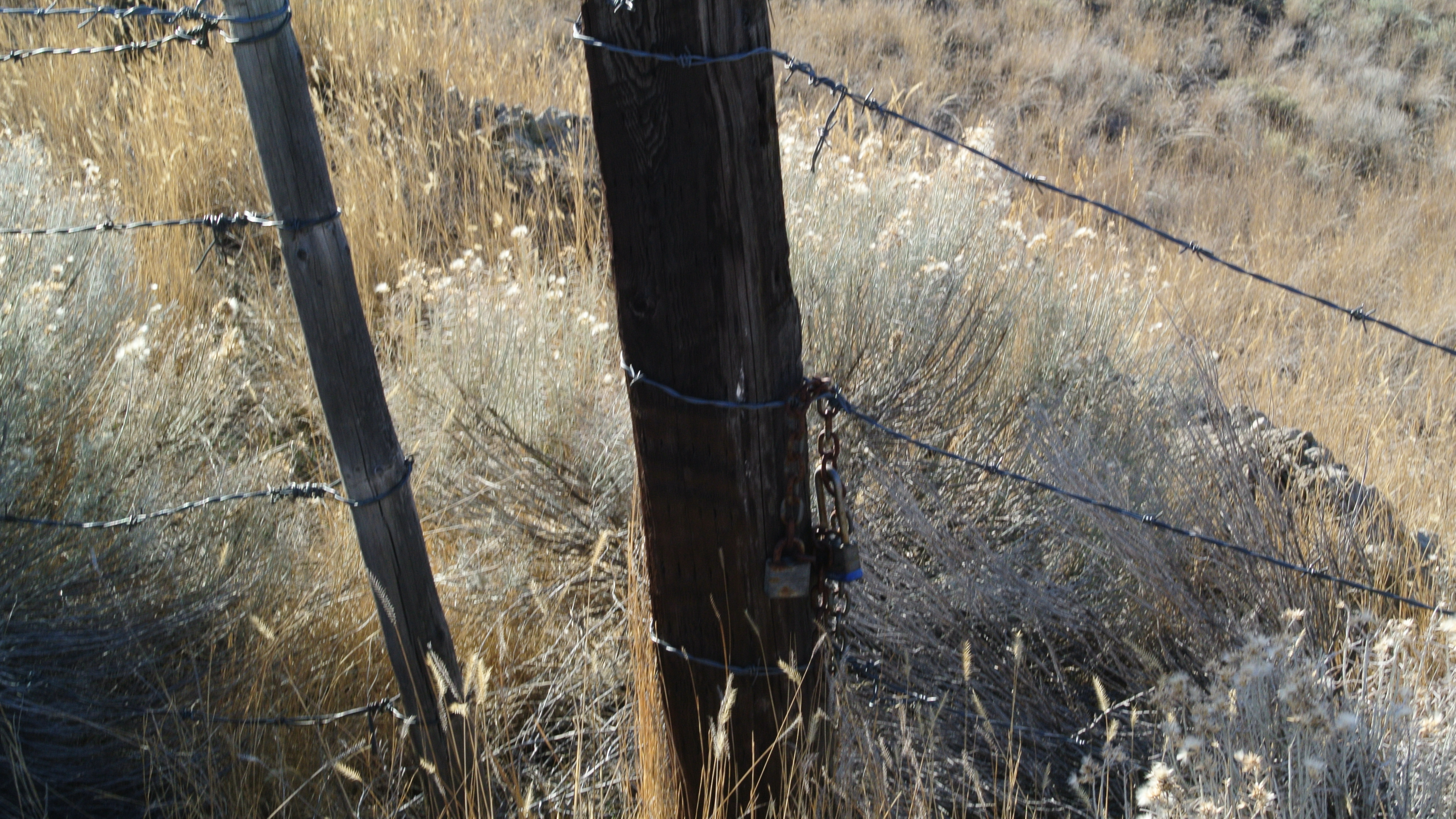
A couple  of locks and a chain left hanging on a gate to a ranchers property signals responsible invitation Photo KDG

A couple of locks and a chain left hanging on a gate to a ranchers property signals responsible invitation
Photo KDG


The hunting season has brought up issues of land access and the need for private property owners in rural areas to keep a check on damage and vandalism.
Locked gates can be the result especially for private e drives and areas that have more than one public road going through them Civic election time also causes people here that wish better access to speak up.
The pictures of an unlocked gate is beside a helicopter companies hanger the ditch with a culvert is filled with copper ore to stabilize the banks. Perhaps a message signaling responsible use or a coincidence.

Today in history: November 21 1953
Piltdown Man Skull determined a hoax