
Pressed slings
Some Jurstictions or job standards require pressed slings however I was never disappointed with any Molly Hogan I made and we used slip a little haywire through the dead horse part of it and then wrap it around with pliers tight and then put electrician’s tape over it.
We used it as well for the overshot particularly. But it wasn’t deep holes.
Some drillers would cut the seventh strand out for the unlikely event in case the tube stuck somehow and a release wasn’t working it would fail there at the overshot connection rather than ruin or break cable.
You could make a knot joining broken cable ends by adding two Hogan’s one inside the other then pulling them into a kind of reef, by squashing the reef with the hydraulic head it secured it.
KDG
Preview
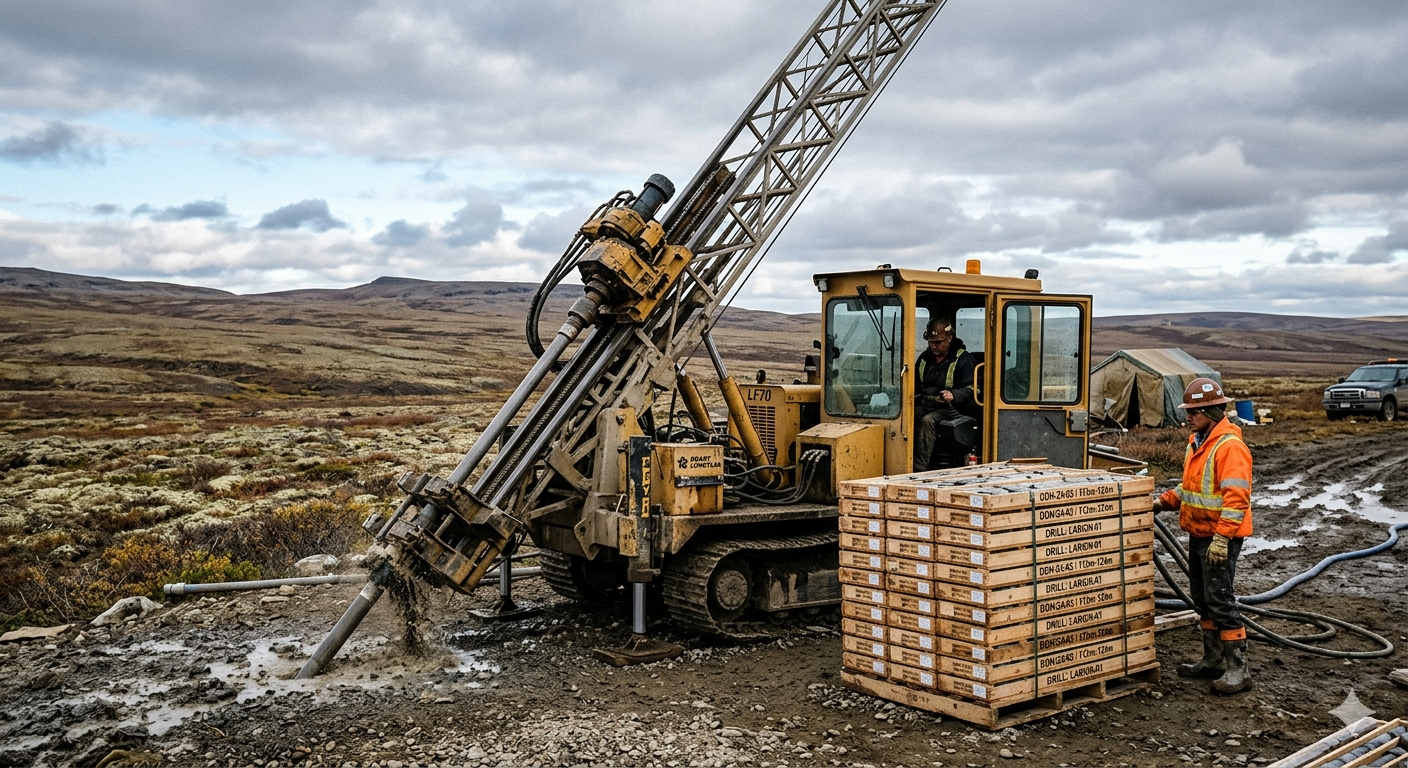
Water dynamics in oil production.
Drill Baby Drill
Paragraph 3:
Subsurface Hydrocarbon Extraction and Water Table Mechanics

Extracting hydrocarbons from geological formations alters the localized pressure, volume, and hydraulic equilibrium of surrounding aquifer systems. When oil is pumped from deep target reservoirs, the artificial drop in pore pressure creates a hydraulic head differential, drawing formation waters—and occasionally freshwater from shallower aquifers—downward or laterally to fill the newly created void space. In shallow unconfined aquifers or near-surface spills, the structural interaction depends strictly on phase boundaries and relative densities. Because light non-aqueous phase liquids (LNAPLs, or crude fractions lighter than water) possess a specific gravity less than 1.0, they float atop the saturated zone, resting directly on the capillary fringe above the water table. UNSATURATED ZONE (Vadose Zone)~~~~~~~~~~~~~~~~~~~~~~~~~~~~~~~~~~~~~~~~~~~~~~~~~~~~~~~~~~~~~ [ Oil Layer / LNAPL ] <– Floats on water table (Density < 1.0)============================================================= <– Water Table [ Shallow Fresh Aquifer ] <– Displaced downward by oil head————————————————————- [ Aquitard / Confining Layer ]~~~~~~~~~~~~~~~~~~~~~~~~~~~~~~~~~~~~~~~~~~~~~~~~~~~~~~~~~~~~~ [ Deep Saline Formation ] <– Moves upward as oil pressure drops
1. Density Dynamics & Displacement Mechanics
The physical interaction between subsurface oil and water is governed by density, capillary forces, and fluid immiscibility: * Floating Dynamics (LNAPL): Hydrocarbons with specific gravities below water (0.7 to 0.95\text{ g/cm}^3) will float. However, the oil layer exerts a downward vertical force (LNAPL head). This creates a depression in the water table directly beneath the hydrocarbon pool, displacing pure groundwater sideways and downward until capillary resistance and buoyant forces balance the weight of the oil column. * Sinking Dynamics (DNAPL): Heavy crude components, chlorinated solvents, or dense refine byproducts with specific gravities greater than 1.0 sink directly through the water table, migrating downward until they hit an impermeable aquitard layer at the base of the aquifer. * Volumetric Displacement during Extraction: As oil is removed from deep porous media, the void space must be occupied. In primary recovery, expanding formation water moves in to replace the oil. In secondary recovery, operators actively inject produced water or fresh surface water (waterflooding) to push residual oil toward production wellbores, permanently altering regional subsurface fluid distributions
.2. Worldwide Results & Global Projections|
Impact Scope | Observed & Estimated Effects | Projections ||—|—|—|| Land Subsidence | Extraction-driven pore pressure drops have led to ground compaction and surface sinking (e.g., Houston-Galveston basin lost over 3 feet of elevation historically; California’s San Joaquin Valley experienced widespread aquifer compaction). | Coastal oil-producing regions face compound flooding risks as land compaction accelerates alongside sea-level rise. || Aquifer Depletion via Injection | Worldwide, oil recovery operations inject billions of barrels of freshwater annually into deep formations to maintain field pressure. | In arid energy basins (e.g., Permian Basin, Middle East), energy-sector freshwater draw competes directly with agricultural groundwater reserves. || Inter-Aquifer Cross-Contamination | Casing failures or legacy unsealed wells create artificial conduits connecting deep saline brine formations to shallow freshwater tables. | Legacy extraction zones face rising risks of brine and hydrocarbon migration into domestic water supplies as well integrity degrades over decades. |
3. Emerging Projections & Forward Mechanics
1. The Carbon Storage
“Water Squeeze”As massive depleted oil fields transition into carbon capture and storage (CCS) reservoirs, injecting super-critical \text{CO}_2 under high pressure reverses the historical extraction flow. The injected gas displaces deep residual saline waters, potentially forcing hyper-saline plumes upward into shallow freshwater aquifers through dormant geological faults.
2. Induced Seismicity & Hydraulic Realignment
Massive injection of produced water into deep disposal wells alters effective stress along sub-surface faults. The resulting micro-seismic activity creates new fracture networks, permanently changing regional hydrogeological pathways and allowing deep formation fluids to cross into previously isolated freshwater tables.
3. Aquifer “Resurging” Post-Depletion
When mature oil fields reach the end of their production life and pumps are decommissioned, natural regional hydraulic heads begin to re-pressurize the depleted zones. This fluid resurgence can force residual hydrocarbons and volatile organic compounds upward into shallow water tables that were protected during active production by continuous extraction drawdown.



 Kevin Griffiths
 percypaschal
