You are presumed to be honest and responsible without evidence to the contrary beyond a reasonable doubt… on the balance of probablilties you are justified by 51 % likelyhood.
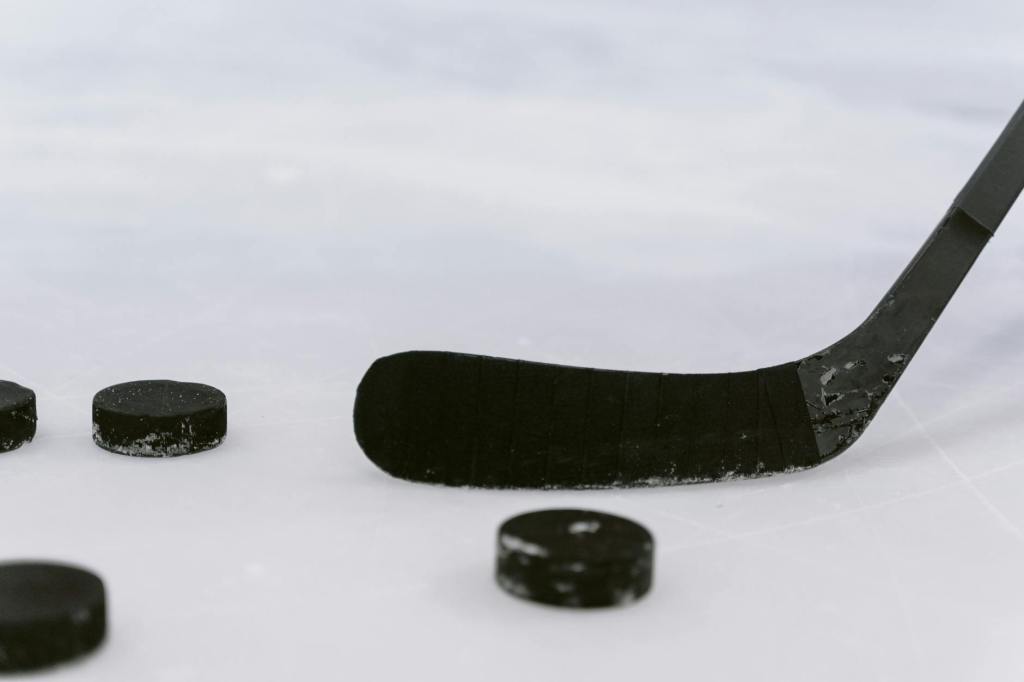
One notable figure with a connection to that date is Scotty Bowman, the legendary ice hockey coach. He was born on September 18, 1933, in Montreal, Quebec. He’s considered one of the greatest coaches in NHL history, winning a record nine Stanley Cup championships.
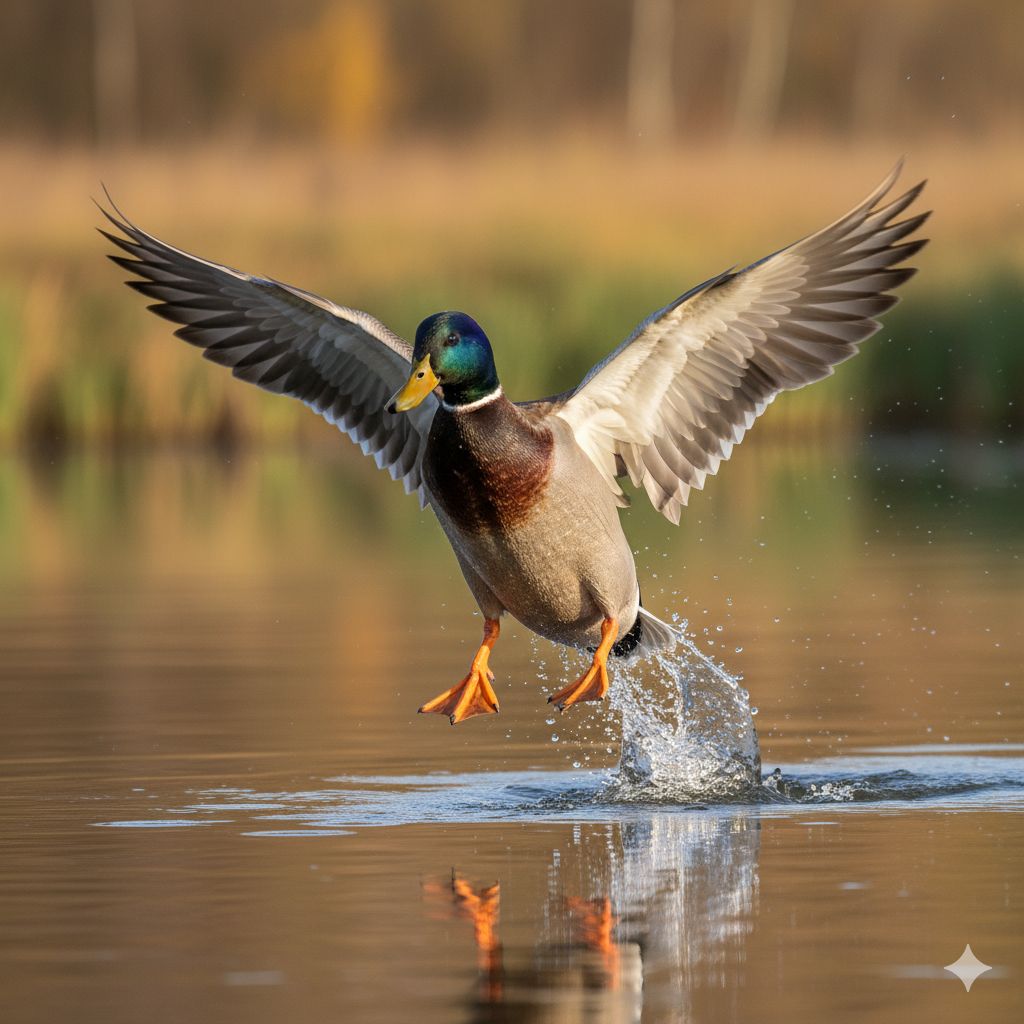
Mallard ducks are the most prevalent around our place, our neck of the woods here in Merritt, British Columbia. We love our Mallard ducks.
The local naturalist club will begin their regular weekend fall and winter schedule on the 18th. Their meetings are generally most months on the third Thursday at 7:00 at the Nicola Valley institute of technology, top of the hill Belshaw Avenue in Merritt.
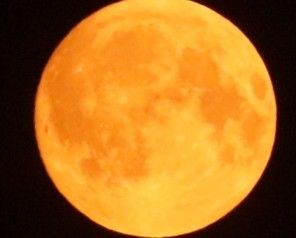
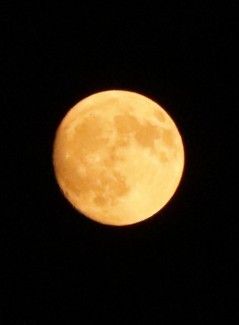
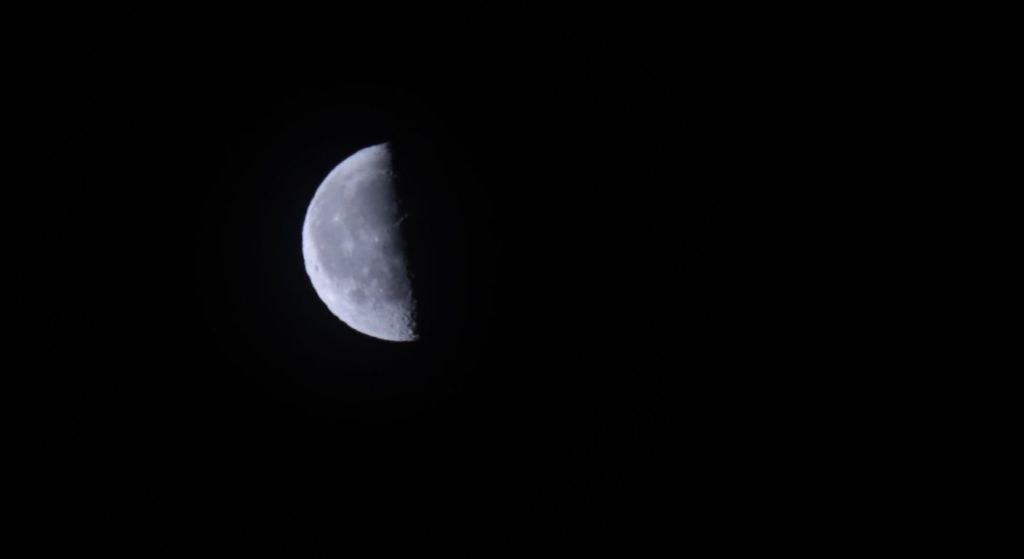
The moon in September is 2 days away from maximum.
Photo KDG, September 5th Circa 22:30 hrs.
So, we’ve had a planetary alignment all September and August. There was a maximum of six planets lined up, the one’s missing of the eight eight were Mercury at times. Who is the messenger? God of antiquity and Mars the God of war in antiquity. So , So for your information, whether or not people are trying to be in sync with the universe or antiquity or the gods. The United States defense department just changed their name back to the war department, the next time I see Mercury I’ll ask about it.
Omens passe
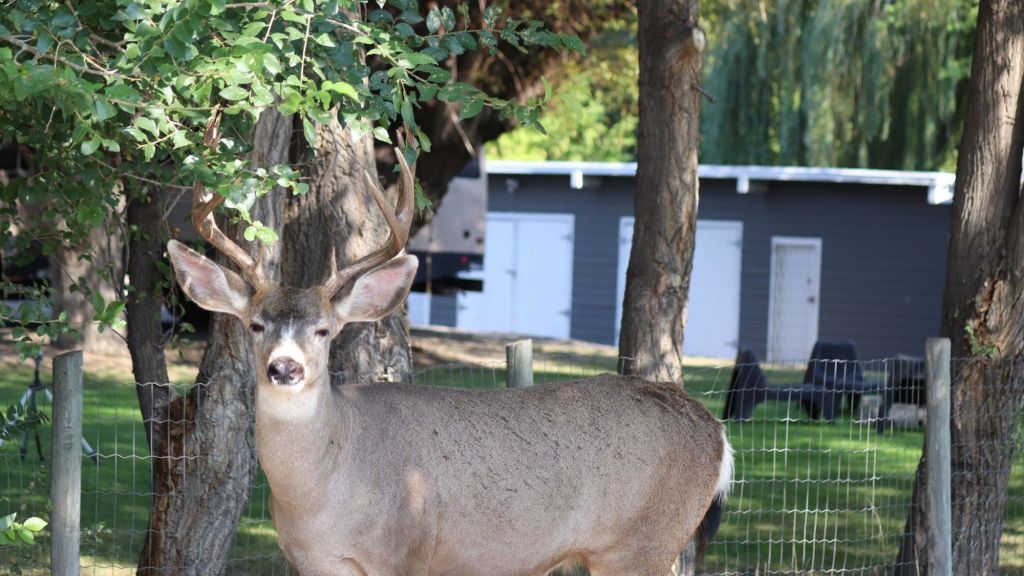
Mystical stuff is interesting, this full blood moon that’s coming up is pretty significant and considering the planetary alignment going along with it and last night I saw a deer with a mane. Now is nowhere near a unicorn but it struck me as being a spiritual instrument in somebody’s mind. We know some cultures. We don’t know them all but it seems to be in tune with the Earth and the solar system and the Sun and everything is an interesting distraction to some and the stabilizing virtue to many others it would seem. Good luck after the blood moon on the 7th.
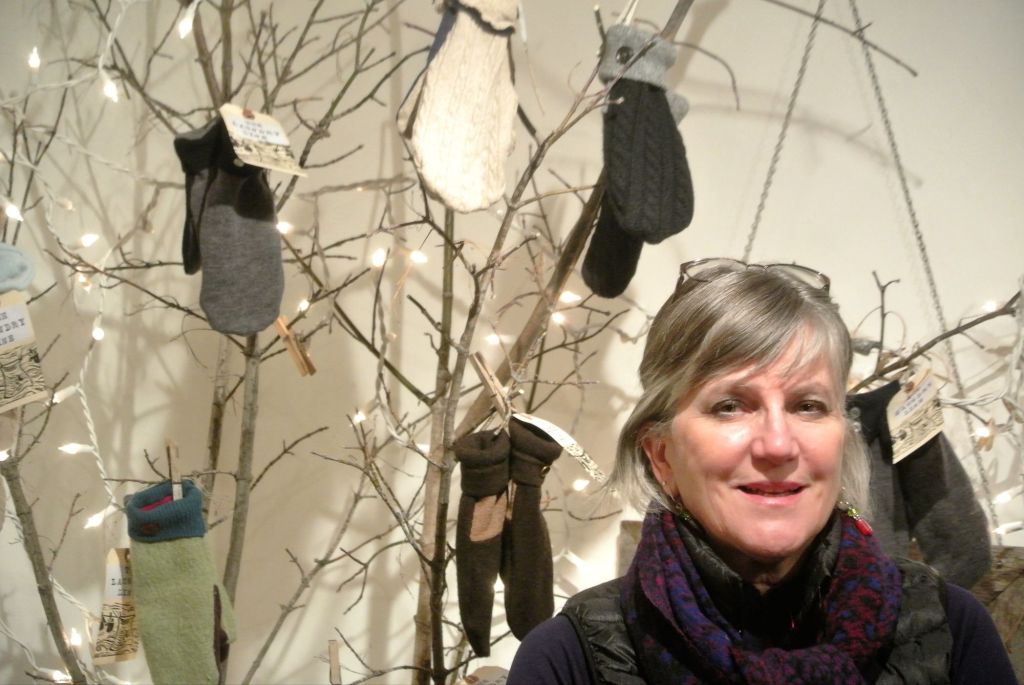
Our co council from the Nicola Valley Community Arts Council, Jackie. Recently passed from this life. photo KDG.
Fondly remembered and offered the chair to the incumbent president at the AGM she was instrumental in the preservation of arts and it’s orderly transition in the City of Merritt.
Complete with the amalgamation of the organizations, Visual artists of Merritt and the Community Arts Council. As she saw as a member, the groups moved from the courthouse gallery into their place of business now at the corner of Nicola and Voght.
Her quiet charm was always a comfort and her movements within the organization always generated a sense of wellness. She will be missed.
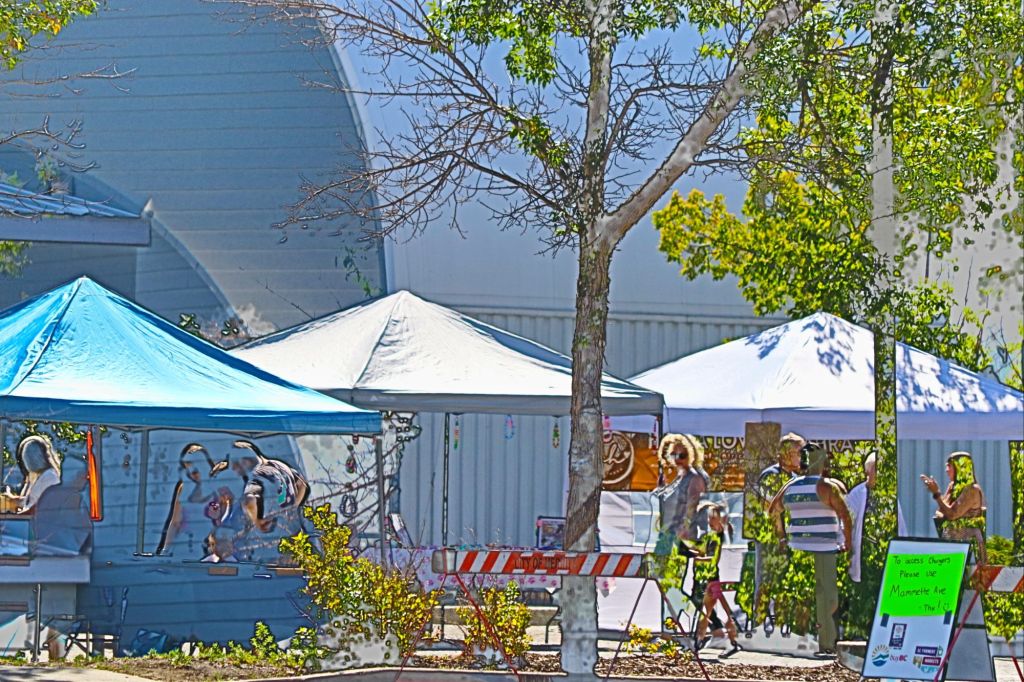
The Nicola Valley Farmers Market, is enjoying glorious weather through August. And the absence of forest fire smoke has been a particular boon. There is one more market in August, next Saturday then on to September and October 12th.
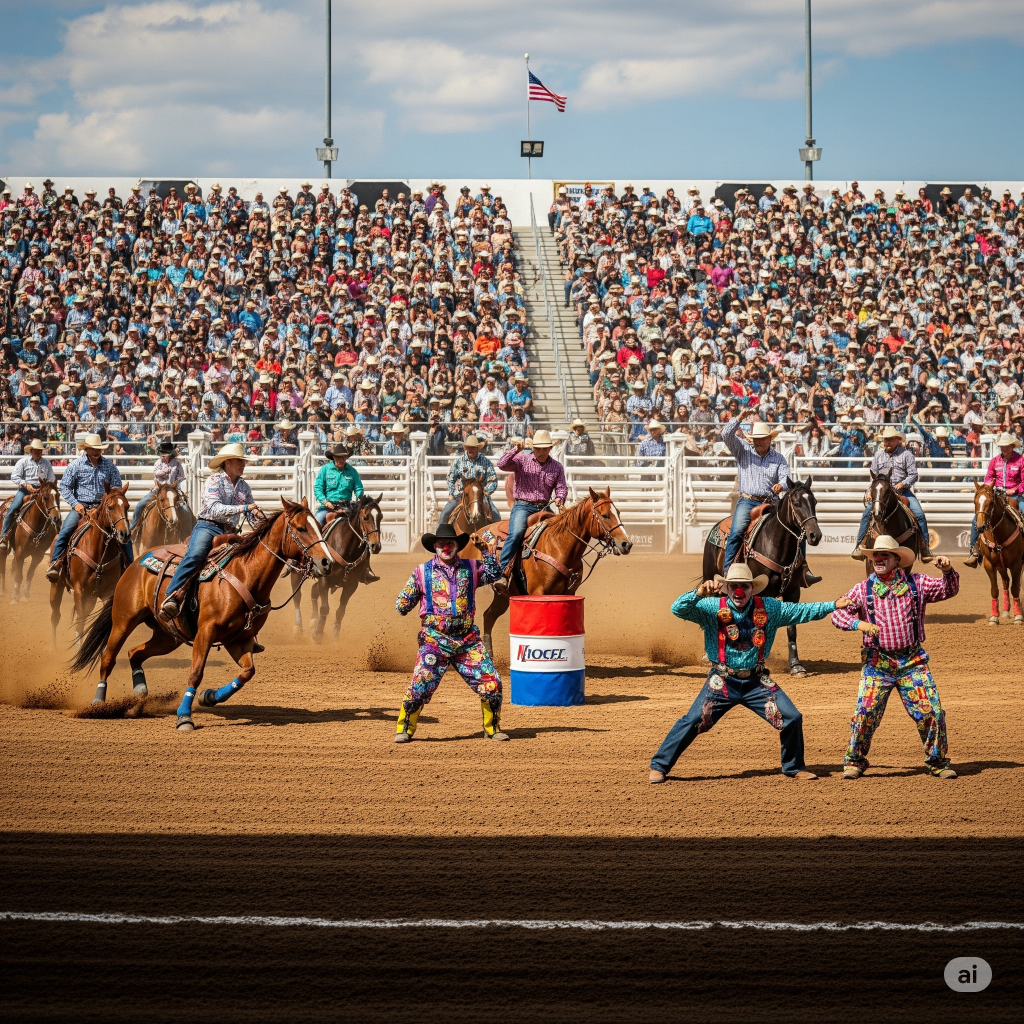
The 65th Annual Nicola Valley Pro Rodeo will be held on Labour Day weekend, which falls on August 29-31, 2025. The event takes place at the Nicola Valley Rodeo Grounds in Merritt, British Columbia. Here are some of the key details for this year’s rodeo: Dates & Schedule * **Friday, August 29th: The weekend kicks off with the Rodeo Parade at 6:30 PM, followed by a free music evening at the Rodeo Grounds at 8:00 PM. * **Saturday, August 30th: Gates open at 8:30 AM. The day’s events include live music, the Rodeo Market with local vendors, a Kid Zone, and the main rodeo performance starting at 1:00 PM. In the evening, there will be a Rodeo Dance featuring the band Coquihalla Coyotes. * **Sunday, August 31st: The rodeo continues with another full day of events. Events and Attractions The Nicola Valley Pro Rodeo is a professional-level event that is part of the Maple Leaf Circuit, featuring top cowboys and cowgirls from across North America. Events typically include: * Bull Riding: A high-action event with a special bull riding memorial in honor of Ty Pozzobon. * Bronc Riding: Both saddle bronc and bareback bronc competitions are featured. * Steer Wrestling: A timed event showcasing the strength and skill of the contestants. * Tie-Down Roping: A precision event where a cowboy on horseback ropes and ties a calf. * Barrel Racing: A fast-paced, timed event for cowgirls. * Team Roping: Two riders work together to rope a steer. * Trick and Roman Riding: New for 2025, the rodeo will welcome back trick riders Noémy Coeurjoly and Keely Sutherland. * Kids’ Zone: A dedicated area for children with activities like face painting, games, and balloon animals. * Rodeo Market: A space for visitors to browse and shop from local vendors. The event is a celebration of the Nicola Valley’s ranching and rodeo heritage and a popular attraction for the Labour Day weekend.
In the world of professional rodeo, two of the most significant organizations are the Professional Rodeo Cowboys Association (PRCA) in the United States and the Canadian Professional Rodeo Association (CPRA) in Canada. While they operate as separate entities, they have a strong working relationship that allows for a unified North American rodeo circuit. How They Interact The PRCA and CPRA have a crucial co-approval system. This means that many rodeos sanctioned by the CPRA are also co-approved by the PRCA for world championship points. This arrangement is a win-win for rodeo athletes, as it allows them to compete in rodeos in both countries and have their earnings count towards their standings in both associations. * World Championship Points: A key aspect of their cooperation is the declaration of World Champions. These champions are determined based on the total combined earnings from both CPRA and PRCA sanctioned events. This provides a clear pathway for a Canadian cowboy to become a PRCA World Champion and for an American cowboy to compete for the Canadian title. * Membership: The PRCA is the largest and oldest rodeo-sanctioning body in the world, with events in the U.S., Canada, and Mexico. The CPRA, headquartered in Airdrie, Alberta, sanctions over 60 events a year in Canada. Many top-tier rodeo athletes hold memberships in both associations to maximize their competitive opportunities and earning potential. Prizes and Salaries Comparing prizes and salaries between the two associations can be complex, as earnings depend heavily on individual performance, the number of rodeos a cowboy enters, and the prize money at those specific events. * Prize Money: Rodeo prize money is often referred to as a “purse,” which is a pooled amount of money from participants’ entry fees and sponsors. The total prize money for a rodeo can range from a few hundred dollars at local events to millions at major rodeos and finals. * Economic Impact: The CPRA’s events have a significant economic impact on the towns and cities that host them. For instance, the Canadian Finals Rodeo (CFR) generates tens of millions of dollars for the local community, and with a prize purse of over $1.5 million, it is one of the largest in Canadian rodeo. * Cowboy Salaries: Unlike team sports, professional rodeo athletes do not have a set salary. Their income is directly tied to their winnings and sponsorships. A cowboy’s earnings can fluctuate wildly from year to year. While a few elite athletes can make a comfortable living from their winnings and endorsements, many professional rodeo athletes have other careers, often in ranching or farming, and view rodeo as a passion or a part-time job. * The Finals: The biggest paydays in rodeo come from the respective final events: the Canadian Finals Rodeo (CFR) and the Wrangler National Finals Rodeo (WNFR). The WNFR, held in Las Vegas, is widely considered the pinnacle of the sport and offers a massive prize pool, making it the most lucrative event for competitors. Winning a world championship at the WNFR is the ultimate goal for many professional cowboys. In summary, the PRCA and CPRA work together to create a cohesive professional rodeo circuit across North America. While the prize money at the biggest events in the U.S. generally outstrips those in Canada, the co-approved system allows athletes to earn a living by competing on both sides of the border and vying for world championship titles. For most cowboys, rodeo earnings are not a guaranteed salary but are instead a reflection of their skill, dedication, and ability to win at events throughout the season.
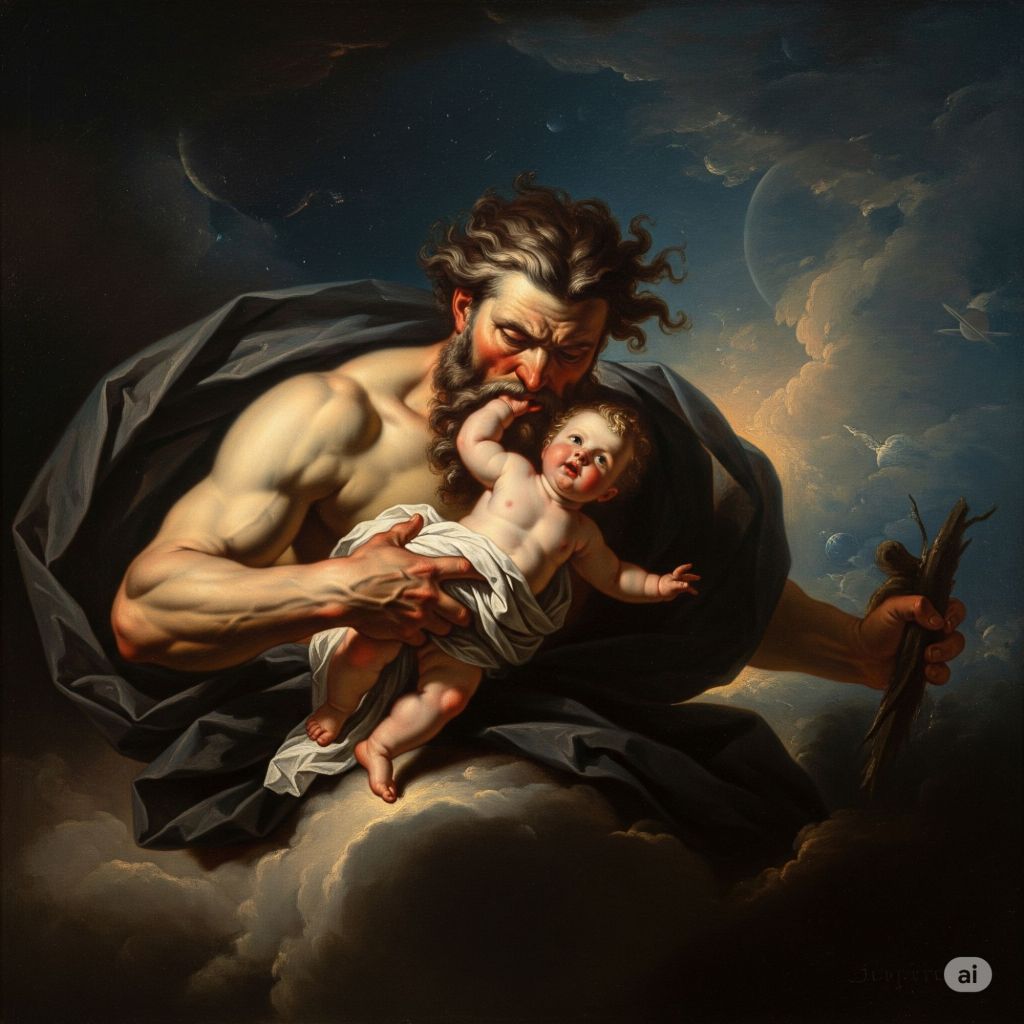
The myth of Jupiter eating his son is a Roman version of the Greek myth of Cronus (the Titan god of time) and his children. It’s a foundational story in ancient mythology, explaining the succession of power among the gods. Here is what the myth is about: The Prophecy and the Act The story begins with a prophecy that Cronus would be overthrown by one of his own children, just as he had overthrown his father, Uranus (the Sky). Driven by paranoia and a desire to retain his power, Cronus devoured each of his children as they were born. His wife, Rhea, was heartbroken and, when her sixth child, Zeus (Jupiter in Roman mythology), was born, she decided to save him. Rhea hid the infant Zeus in a cave on the island of Crete and, to deceive Cronus, she gave him a stone wrapped in swaddling clothes. Cronus, not noticing the deception, swallowed the stone, believing he had successfully consumed his final child. Zeus grew up in secret and, once he was an adult, he returned to confront his father. He forced Cronus to regurgitate his siblings—Hestia, Demeter, Hera, Hades, and Poseidon—who had been living inside him the whole time. The siblings, along with Zeus, then waged a ten-year war against Cronus and the other Titans, known as the Titanomachy. Zeus and the Olympians were victorious, and he became the ruler of the gods, fulfilling the prophecy. The Omen and its Meaning The myth was not an omen for a specific, future time. Instead, it was a symbolic story about the cyclical nature of power and the inevitability of change. It illustrates the idea of a “self-fulfilling prophecy,” where the very actions taken to prevent a fate from happening ultimately cause it to come to pass. Cronus’s fear and cruelty led directly to his downfall, as his attempt to avert the prophecy created the very enemy—his son Zeus—who would one day overthrow him. The myth is often interpreted as a commentary on a few different themes: * The passage of time: Cronus, who was also associated with the god of time (Chronos), devours his children, which can be seen as a metaphor for time consuming all things. * The conflict between generations: It reflects the struggle between the older, tyrannical generation and the younger, more dynamic one. * The triumph of a new order: The victory of the Olympians over the Titans represents a shift from a primal, chaotic world to a more civilized and orderly one, with Zeus establishing a new reign of justice.
A new rain, sounds good.
Tic
Rain or reign they both need to be timely to be effective.
The name “Wednesday” comes from Old English Wōdnesdæg, which means “Woden’s day,” named after the Germanic god Woden (or Odin in Norse mythology). This deity was associated with wisdom, war, and poetry, and played a significant role in the Germanic pantheon.
Cultural Origins and Influences:
Germanic and Norse Cultures:
The naming is directly linked to tribal Germanic names for days of the week, influenced by Roman culture. In Norse mythology, Woden is akin to the Roman god Mercury, which is reflected in other languages.
Latin Influence:
In Latin, Wednesday is dies Mercurii, or “day of Mercury,” representing the Roman god of commerce and communication. The influence of Roman culture substantially shaped the way days were named in various languages.
Subversion of Other Cultures:
Roman and Greek Practices:
The adaptation of “Wednesday” across Germanic languages shows a subversion of the original Latin systems by integrating local deities into the calendar, transforming a standard naming convention into one that reflects local beliefs and mythology.
Christian Influence:
In some Christian contexts, Wednesday is associated with the day of preparation for the weekend, which may contrast with earlier pagan practices.
Conclusion:
The evolution of the term “Wednesday” illustrates how local traditions can adapt and reframe elements of dominant cultures, leading to a unique blend of linguistic and cultural heritage.
Be a local Tradition today…
Maybe that recipe or quilt pattern will develop into an observance and a particular day.







 Kevin Griffiths
 percypaschal
