You are presumed to be honest and responsible without evidence to the contrary beyond a reasonable doubt… on the balance of probablilties you are justified by 51 % likelyhood.
June 2026 offers a rich night sky for observers. As summer begins in the Northern Hemisphere, the Milky Way starts to rise higher in the late evening, stretching from the southeastern horizon and arching overhead by midnight in darker locations. Look for the Summer Triangle—Vega in Lyra, Deneb in Cygnus, and Altair in Aquila—dominating the eastern sky after sunset. Scorpius and Sagittarius glow low in the south, marking the direction of the galaxy’s bright core. Early risers can spot brilliant Venus shining before dawn, while Mars and Jupiter make appearances in the evening sky during the month. With warmer nights and shorter darkness, June is ideal for relaxed stargazing sessions and watching for meteor activity from minor showers.
While we commonly think of water as having three stages (solid, liquid, and gas), the “fourth stage of water” often refers to plasma when discussing the fundamental states of matter. However, within the context of water specifically, it’s more nuanced. Here’s a breakdown: * Solid (Ice): Water molecules are rigidly bound in a crystal lattice. * Liquid (Water): Molecules are more loosely bound and can move past each other. * Gas (Steam/Water Vapor): Molecules are far apart and move randomly. When people talk about a “fourth stage of water,” they might be referring to a few different concepts: * Plasma: If you heat water vapor to extremely high temperatures, the molecules can break apart, and the atoms can become ionized (electrons are stripped from the nuclei). This superheated, ionized gas is plasma, which is indeed considered the fourth fundamental state of matter. This is not a common state for water under everyday conditions. * Supercritical Fluid: At very high temperatures and pressures (above its critical point), water can exist as a supercritical fluid. In this state, it has properties of both a liquid and a gas, diffusing like a gas but dissolving substances like a liquid. While distinct, it’s generally considered an extension of the fluid phase rather than a completely separate “stage” in the same way solid, liquid, and gas are. * Exclusion Zone (EZ) Water / Structured Water: This is a more controversial concept, primarily popularized by Dr. Gerald Pollack. He proposes that water adjacent to hydrophilic surfaces can form a structured, ordered layer with different properties than bulk water. He sometimes refers to this as “EZ water” or “structured water” and suggests it acts like a liquid crystal, having a more ordered hexagonal structure. While intriguing, this concept is still an area of active research and not universally accepted as a distinct “fourth phase” in the traditional scientific sense. In summary, if you’re looking for the generally accepted “fourth state of matter” in the scientific community that water can achieve under extreme conditions, it’s plasma. However, if you encounter the term in other contexts, it could refer to supercritical water or the more speculative “EZ water.”
Kootenay bike week move your bike for free Starting today.
PLAN YOUR TIME
Effective planning is crucial for achieving goals and reducing stress. Here are 5 key things you can do to enhance your planning: * Set Clear Goals: * Begin by defining what you want to achieve. Specific, measurable, achievable, relevant, and time-bound (SMART) goals provide a clear direction for your planning. * Prioritize Tasks: * Not all tasks are created equal. Identify the most important tasks and focus on them first. Tools like the Eisenhower Matrix (urgent/important) can help you prioritize effectively. * Break Down Large Projects: * Large projects can feel overwhelming. Break them down into smaller, manageable steps. This makes the project less daunting and allows you to track progress more easily. * Use Time Management Techniques: * Time blocking, for example, involves allocating specific time slots for different activities. This helps you stay focused and ensures that you dedicate time to important tasks. * Maintain Consistency and Flexibility: * Planning is an ongoing process. Regularly review and adjust your plans as needed. Be prepared to adapt to unexpected changes, but also strive to maintain consistency in your planning habits. By incorporating these strategies, you can improve your planning skills and increase your productivity.
The gravitational pull of the Moon pulls equally on the Earth’s surface as it goes around. However oceans move up with the pull and the Earth rotates underneath them giving title rises from continent to continent.KDG
It looks like this event was serious business,; planned compromise of business interests and assets. The only redeeming thing is it seems that it may not have been lethal for many. As victims were being developed as operatives and assets.
Well I guess they have to get to the core of the thing. Excuse my poetry; however one redeeming thing at this point is maybe opening the door for a better view of mainstream journalism.
The term fake news.
We hope it will become a term that is archaic we hope…
Dismissal is an adjective with few cousins. Impeachment an uncle with serious reserve. Privilege a Grandfather in recline, and conviction a tenant with a serious lease.
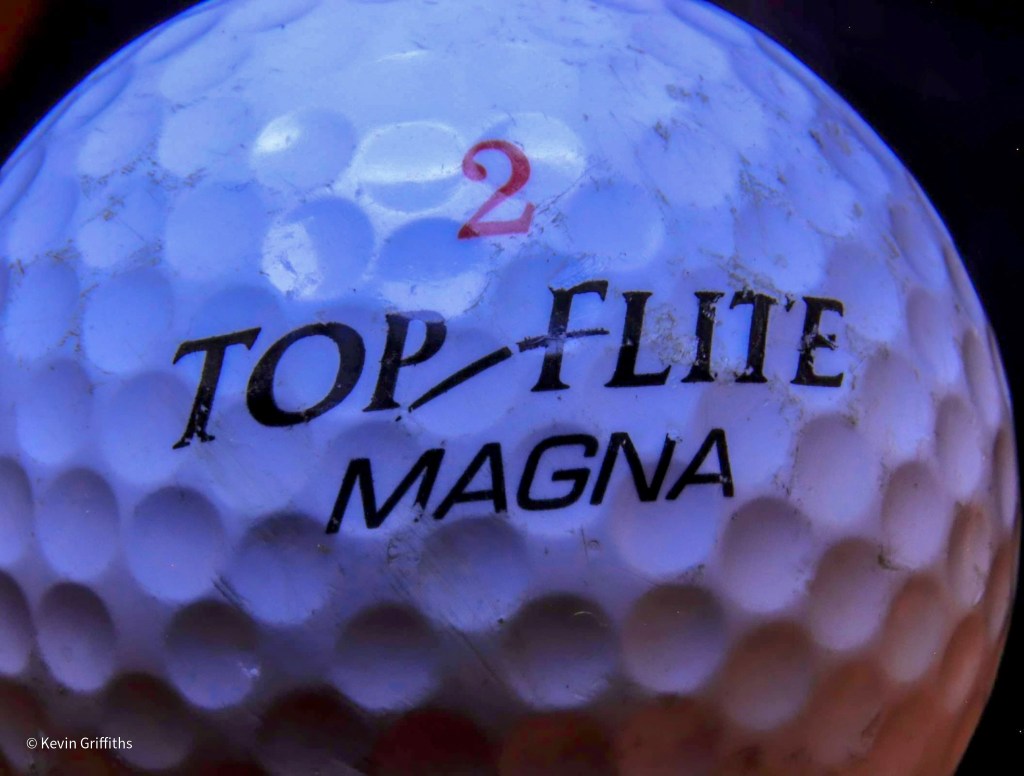
So, creek balls belong to everybody that finds them. Or at least it’s a transaction that is so small and that is not worth an argument. However, it’s a point of matter. If retrieving balls is a boon for the environment:
I can’t see them fertilizing anything so it’s probably good to pick them out of the water and keep them and replay them and keep the production down and the recycle it up.
Unless the ball is still playable…
Advise on balls
In British Columbia, the legal protocol for recovering golf balls centers on property rights and trespassing laws. Legally, a golf ball remains the personal property of the golfer who purchased it, even if it is lost in a water hazard or thick brush. When a golfer abandons the search, the property right generally transfers to the golf course owner rather than the public. Entering a course to “hawk” or hunt for balls without explicit permission from the club professional or owner is considered trespassing on private land. Engaging in unauthorized retrieval can lead to legal consequences, including fines or removal from the premises, as courses often have exclusive contracts with commercial recovery divers or use the balls for their own driving ranges.When golf balls land in creeks or streams that run through or exit a course, environmental protocols become the primary concern. Under BC’s
**Water Sustainability Act**
and the federal **Fisheries Act**, these waterways are often protected habitats, particularly in regions like the Nicola Valley where salmon and trout spawning are critical. Disturbing the substrate of a creek bed to rake or dig for balls can be classified as an “unauthorized change in and about a stream,” which carries heavy environmental penalties. Furthermore, modern stewardship programs in BC emphasize leaving lost balls in sensitive aquatic zones to avoid damaging banks or introducing silt into the water. If you are looking to recover balls from a creek, it is essential to ensure the area is not private property and that your activity does not disrupt the local ecosystem or violate provincial riparian protection regulations.
*Acrothesia** refers to a localized increase or abnormality in tactile sensitivity, often manifesting as an intense or heightened perception of touch in the extremities, such as the fingers or toes. Unlike general hyperesthesia, acrothesia specifically targets the distal portions of the limbs and is frequently linked to underlying peripheral nerve irritation or early-stage neuropathy. When the nervous system is compromised, the threshold for sensory input drops, causing ordinary contact—such as the brush of clothing or a cool breeze—to be interpreted by the brain as exaggerated or even uncomfortable sensations.
## The Role of Infections and Mold
In the context of systemic or localized infections, acrothesia often serves as a clinical indicator of **neurotropism**, where a pathogen or its metabolic byproducts affect nerve endings. Certain fungal infections, particularly those involving toxicogenic molds like:
*Stachybotrys chartarum*
(black mold)
or specific species of *Aspergillus*, can release **mycotoxins** that are potent neurotoxins. These toxins can trigger inflammatory responses or oxidative stress within the myelin sheath of peripheral nerves, leading to the sensory distortions characteristic of acrothesia.
In chronic inflammatory response syndrome (CIRS) caused by water-damaged buildings, the persistent exposure to these mold spores can result in sustained nerve hypersensitivity, making acrothesia a common, albeit distressing, neurological symptom of mold-related illness.







 Kevin Griffiths
 percypaschal
