Category: Academics


The times are a changing

There are 11 million people following the New York’s times, In our view. This is a good reserve of separate resources for comments and Discovery.

We support free and independent journalism.

Well this concept may not belong to anybody.

Can the free press mitigate conflict in the world or just present facts …

West of the Malaysian peninsula

Where is the Boeing 777-200 airliner missing since the beginning of the first week in March? We at the Proprietor Review have been following Media reports and having discussions with interested people in this area with disdain. Was it an accident or was it stolen? If it was stolen that is a thing that is troubling to us here and if it was an accident we can only give our sincere condolences to the victims survivors. That said here are some of the things we are relying on :

OUR VIEW: The Proprietor Review ( we have no experts and present an opinion from an institutional perspective.

Joy riding

The plane involved a Boeing 777 -200 is a heavily electronics operated plane, however there are full manual controls that operate in a safety envelope, meaning that the computer will ignore manual instructions that will bring it out of its safety operating range. A shaking stick is the most demonstrative in the line and lineage of these tools that date back to the Arvo Arrow the stick shakes when the aircraft is coming close to a stall speed. What is significant to this is it may just be that any one could manually fly flight 370 from the turn to the West and back across the Malaysian peninsula.
A report of a 45000 foot altitude and a descent to 23000 ft then could be explained as someone joy sticking the aircraft.
The system is a fly by wire this means that even if you wanted to it would be difficult to fly the plane to a crash.
So would a joy rider pilot fly the plane in a straight line? Not likely. They would probably be making circles after crossing the Malaysian Peninsula again, wider and narrower circles until it ran out of fuel, that means that, it is, on balance of probabilities, in the water off the west coast of where it crossed the Malaysian peninsula. This is our current view that is closest to nefarious action. It has eroded from the opening concern of theft for horrendous purpose that gave us a huge public safety fear. ( that concern we trust is always monitored by defence mechanisms)
Visual flying:
Known as VFR there are sometimes that aircraft fly on visual and not instruments, usually small planes at low altitudes , it is illegal to fly at Class A altitudes where heavy commercial aircraft fly unless it is because of an emergency Two way Radio Failure. This is for getting the best visual view of the sky, land and traffic in the air.
There numbers of backups on the 777 and the fly by wire system that overrides pilot errors when flying manually would logically be on a separate system then navigation or communications. Lets say flight 370 lost its communications and navigation systems one after the other maybe through a cargo hold caustic spill or an explosion. Then after turning the plane in the direction of another airfield and the course being put into the auto system, that system was lost. It would make sence for the plane to go up to 45000 feet for a visual and come down in stages for a possible landing to 23000 feet. At that point and on all, visual landmarks were lost and the plane began to circle manually looking for landmarks or cell phone transponders on the ground. Out over the water west of the Malaysian peninsula , having a compass is only good when you have a start point. The plane continued on untill running out of fuel.
We believe that the most credible sounding reports are the 5 altitude pings from the planes engines and since there was not a sixth it affirms the amount of fuel the plane had. This means the plane is in the sea west of its attempt to descend to land or over land with no landmarks or cell phone transponders. Why there was not a second attempt to go up high may be related to cloud conditions. PP
These are possible conclusions based on non expert opinion and are only ment to be helpful and close some of our concerns personally.

The new york times is reporting this:

WASHINGTON — The first turn to the west that diverted the missing Malaysia Airlines plane from its planned flight path from Kuala Lumpur to Beijing was carried out through a computer system that was most likely programmed by someone in the plane’s cockpit who was knowledgeable about airplane systems, according to senior American officials.

Instead of manually operating the plane’s controls, whoever altered Flight 370’s path typed seven or eight keystrokes into a computer on a knee-high pedestal between the captain and the first officer, according to officials. The Flight Management System, as the computer is known, directs the plane from point to point specified in the flight plan submitted before a flight. It is not clear whether the plane’s path was reprogrammed before or after it took off.

The fact that the turn away from Beijing was programmed into the computer has reinforced the belief of investigators — first voiced by Malaysian officials — that the plane was deliberately diverted and that foul play was involved. It has also increased their focus on the plane’s captain and first officer.

Tracking Flight 370

The sequence of events known by the authorities, in local times.

Mar. 8, 2014 12:41 a.m.

A Boeing 777-200 operated by Malaysia Airlines leaves Kuala Lumpur bound for Beijing with 227 passengers, of which two-thirds are Chinese, and a Malaysian crew of 12.

1:07 a.m.

The airplane’s Aircraft Communications Addressing and Reporting System, or Acars, which transmits data about the plane’s performance, sends a transmission. It is not due to transmit again for a half-hour.

1:19 a.m.

The cockpit crew acknowledges a message from ground control, saying, “All right, good night.” The Malaysian authorities say the voice belonged to the co-pilot. No further voice messages are received from the plane.

1:21 a.m.

Two minutes after the last voice transmission, the plane’s transponder, which signals its identity, altitude and speed to other aircraft and to monitors on the ground, is shut off or fails.

1:37 a.m.

The Acars system fails to send its scheduled signal, indicating that it has been shut off or has failed sometime in the past half-hour.

2:15 a.m.

An unidentified plane flying westward is detected by military radar. It ascends to 45,000 feet, above the approved limit for a Boeing 777, then descends unevenly to 23,000 feet and eventually flies out over the Indian Ocean. Investigators later conclude that it was Flight 370. It was last plotted 200 miles northwest of Panang.

6:30 a.m.

By now Flight 370 was scheduled to have landed in Beijing.

7:24 a.m.

Malaysia Airlines announces that it has lost contact with the aircraft.

8:11 a.m.

The last signal is received from an automated satellite system on the plane, suggesting that it was still intact and flying. The signal implies that the jet is somewhere in one of two areas, one stretching north between Laos and Kazakhstan and the other south from Indonesia into the Indian Ocean. The Malaysian authorities say it had enough fuel to keep flying for perhaps a half-hour after this.

March 15

The Malaysian authorities say the investigation has become a criminal matter because the jet appears to have been deliberately diverted. The plane’s first turn off course, to the west, was executed using an onboard computer, probably programmed by someone with knowledge of aircraft systems.
The authorities say two passengers were Iranians who boarded using stolen European passports, but no links to terrorist groups are found.

On Tuesday, the Chinese ambassador to Malaysia, Huang Huikang, told reporters that the Chinese government had ruled out suspicions of the Chinese on board, who made up about two-thirds of the 227 passengers, according to Chinese news organizations.

Prime Minister Najib Razak of Malaysia told reporters on Saturday that his government believed that the plane had been diverted because its transponder and other communications devices had been manually turned off several minutes apart. American officials were told of the new information over the weekend.

But the Malaysian authorities on Monday reversed themselves on the sequence of events they believe took place on the plane in the crucial minutes before ground controllers lost contact with it early on March 8. They said it was the plane’s first officer — the co-pilot — who was the last person in the cockpit to speak to ground control. And they withdrew their assertion that another automated system on the plane, the Aircraft Communications Addressing and Reporting System, or Acars, had already been disabled when the co-pilot spoke.

Flight 370’s Flight Management System reported its status to the Acars, which in turn transmitted information back to a maintenance base, according to an American official. This shows that the reprogramming happened before the Acars stopped working. The Acars ceased to function about the same time that oral radio contact was lost and the airplane’s transponder also stopped, fueling suspicions that foul play was involved in the plane’s disappearance.

The Search Area West of Australia

New computer models of possible flight paths suggested that the plane may have gone down in the southern Indian Ocean when it ran out of fuel.

PACIFIC OCEAN
South

China Sea

India
Arabian Sea
Last contact
SRI LANKA
Malaysia
SOMALIA
Kuala Lumpur
Indonesia
PAPUA

NEW GUINEA

INDIAN OCEAN
MADAGASCAR
A map released by the Australian government describes these two lines as possible flight paths.
Australia
Perth
Sydney
Melbourne
Australia’s planned search

area on March 18

India
South

China Sea

Last contact
SRI LANKA
Malaysia
Kuala Lumpur
Indonesia
A map released by the Australian government describes these two lines as possible flight paths.
INDIAN OCEAN
Australia
Perth
Australia’s planned search

area on March 18

  • More maps
  • Search Area Expanded Again
  • Search Areas in the First Week
  • Trying to Reconstruct the Path of the Plane
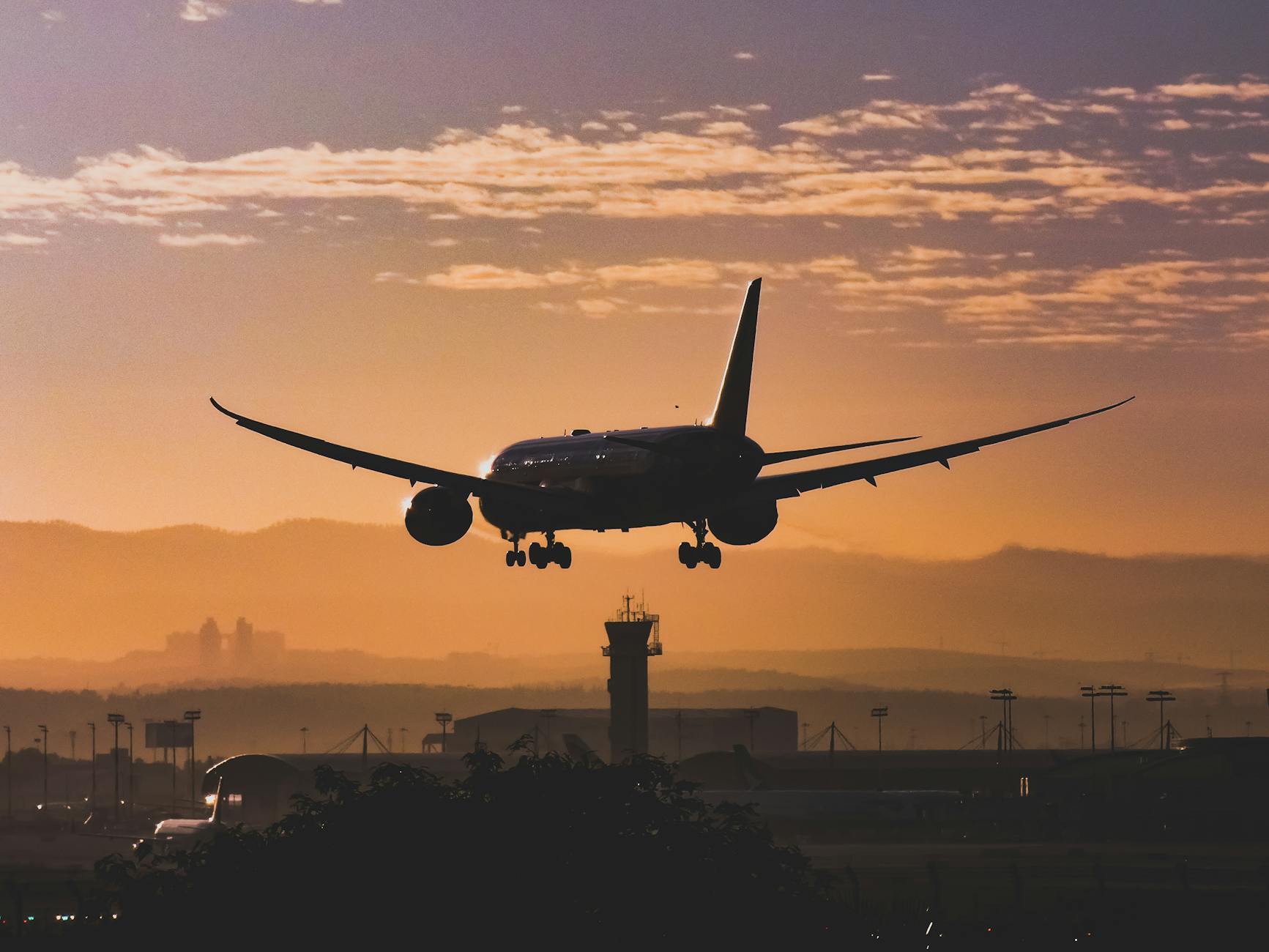
Investigators are scrutinizing radar tapes from when the plane first departed Kuala Lumpur because they believe the tapes will show that after the plane first changed its course, it passed through several pre-established “waypoints,” which are like virtual mile markers in the sky. That would suggest the plane was under control of a knowledgeable pilot because passing through those points without using the computer would have been unlikely.

According to investigators, it appears that a waypoint was added to the planned route. Pilots do that in the ordinary course of flying if air traffic controllers tell them to take a different route, to avoid weather or traffic. But in this case, the waypoint was far off the path to Beijing.

Whoever changed the plane’s course would have had to be familiar with Boeing aircraft, though not necessarily the 777 — the type of plane that disappeared. American officials and aviation experts said it was far-fetched to believe that a passenger could have reprogrammed the Flight Management System.

Normal procedure is to key in a five-letter code — gibberish to navigators — that is the name of a waypoint. A normal flight plan consists of a series of such waypoints, ending in the destination airport. For an ordinary flight, waypoints can be entered manually or uploaded into the F.M.S. by the airline.

Source yahoo/ new york times
Course change programmed into flight computer – As further confirmation that someone was still guiding the plane after it disappeared from civilian radar, airline pilots and aviation safety experts said an onboard computer called the flight management system would have to be deliberately programmed in order to follow the pathway taken by the plane as described by Malaysian authorities. Citing senior American officials, The New York Times reported that the course change was typed into a cockpit computer, rather than executed manually, by someone knowledgeable about airplane systems. Malaysia Airlines’ CEO, Tuesday, couldn’t confirm or deny those reports.Source yahoo ( this info has been reversed by Malaysian Authorities on March 23 /14 according to CNN broadcasts of that day.

Section 4. Two‐way Radio Communications Failure

6-4-1. Two‐way Radio Communications Failure

a. It is virtually impossible to provide regulations and procedures applicable to all possible situations associated with two‐way radio communications failure. During two‐way radio communications failure, when confronted by a situation not covered in the regulation, pilots are expected to exercise good judgment in whatever action they elect to take. Should the situation so dictate they should not be reluctant to use the emergency action contained in 14 CFR Section 91.3(b).

b. Whether two‐way communications failure constitutes an emergency depends on the circumstances, and in any event, it is a determination made by the pilot. 14 CFR Section 91.3(b) authorizes a pilot to deviate from any rule in Subparts A and B to the extent required to meet an emergency.

c. In the event of two‐way radio communications failure, ATC service will be provided on the basis that the pilot is operating in accordance with 14 CFR Section 91.185. A pilot experiencing two‐way communications failure should (unless emergency authority is exercised) comply with 14 CFR Section 91.185 quoted below:

1. General. Unless otherwise authorized by ATC, each pilot who has two‐way radio communications failure when operating under IFR must comply with the rules of this section.

2. VFR conditions. If the failure occurs in VFR conditions, or if VFR conditions are encountered after the failure, each pilot must continue the flight under VFR and land as soon as practicable.

NOTE- This procedure also applies when two‐way radio failure occurs while operating in Class A airspace. The primary objective of this provision in 14 CFR Section 91.185 is to preclude extended IFR operation by these aircraft within the ATC system. Pilots should recognize that operation under these conditions may unnecessarily as well as adversely affect other users of the airspace, since ATC may be required to reroute or delay other users in order to protect the failure aircraft. However, it is not intended that the requirement to “land as soon as practicable” be construed to mean “as soon as possible.” Pilots retain the prerogative of exercising their best judgment and are not required to land at an unauthorized airport, at an airport unsuitable for the type of aircraft flown, or to land only minutes short of their intended destination.

3. IFR conditions. If the failure occurs in IFR conditions, or if subparagraph 2 above cannot be complied with, each pilot must continue the flight according to the following:

(a) Route.

(1) By the route assigned in the last ATC clearance received;

(2) If being radar vectored, by the direct route from the point of radio failure to the fix, route, or airway specified in the vector clearance;

(3) In the absence of an assigned route, by the route that ATC has advised may be expected in a further clearance; or

(4) In the absence of an assigned route or a route that ATC has advised may be expected in a further clearance by the route filed in the flight plan.

(b) Altitude.At the HIGHEST of the following altitudes or flight levels FOR THE ROUTE SEGMENT BEING FLOWN:

(1) The altitude or flight level assigned in the last ATC clearance received;

(2) The minimum altitude (converted, if appropriate, to minimum flight level as prescribed in 14 CFR Section 91.121(c)) for IFR operations; or

(3) The altitude or flight level ATC has advised may be expected in a further clearance.

NOTE- The intent of the rule is that a pilot who has experienced two-way radio failure should select the appropriate altitude for the particular route segment being flown and make the necessary altitude adjustments for subsequent route segments. If the pilot received an “expect further clearance” containing a higher altitude to expect at a specified time or fix, maintain the highest of the following altitudes until that time/fix:
(1)  the last assigned altitude; or (2) the minimum altitude/flight level for IFR operations.
Upon reaching the time/fix specified, the pilot should commence climbing to the altitude advised to expect. If the radio failure occurs after the time/fix specified, the altitude to be expected is not applicable and the pilot should maintain an altitude consistent with 1 or 2 above. If the pilot receives an “expect further clearance” containing a lower altitude, the pilot should maintain the highest of 1 or 2 above until that time/fix specified in subparagraph (c) Leave clearance limit, below.

EXAMPLE- 1. A pilot experiencing two‐way radio failure at an assigned altitude of 7,000 feet is cleared along a direct route which will require a climb to a minimum IFR altitude of 9,000 feet, should climb to reach 9,000 feet at the time or place where it becomes necessary (see 14 CFR Section 91.177(b)). Later while proceeding along an airway with an MEA of 5,000 feet, the pilot would descend to 7,000 feet (the last assigned altitude), because that altitude is higher than the MEA.

2. A pilot experiencing two‐way radio failure while being progressively descended to lower altitudes to begin an approach is assigned 2,700 feet until crossing the VOR and then cleared for the approach. The MOCA along the airway is 2,700 feet and MEA is 4,000 feet. The aircraft is within 22 NM of the VOR. The pilot should remain at 2,700 feet until crossing the VOR because that altitude is the minimum IFR altitude for the route segment being flown.

3. The MEA between a and b: 5,000 feet. The MEA between b and c: 5,000 feet. The MEA between c and d: 11,000 feet. The MEA between d and e: 7,000 feet. A pilot had been cleared via a, b, c, d, to e. While flying between a and b the assigned altitude was 6,000 feet and the pilot was told to expect a clearance to 8,000 feet at b. Prior to receiving the higher altitude assignment, the pilot experienced two‐way failure. The pilot would maintain 6,000 to b, then climb to 8,000 feet (the altitude advised to expect). The pilot would maintain 8,000 feet, then climb to 11,000 at c, or prior to c if necessary to comply with an MCA at c. (14 CFR Section 91.177(b).) Upon reaching d, the pilot would descend to 8,000 feet (even though the MEA was 7,000 feet), as 8,000 was the highest of the altitude situations stated in the rule (14 CFR Section 91.185).

(c) Leave clearance limit.

(1) When the clearance limit is a fix from which an approach begins, commence descent or descent and approach as close as possible to the expect further clearance time if one has been received, or if one has not been received, as close as possible to the Estimated Time of Arrival (ETA) as calculated from the filed or amended (with ATC) Estimated Time En Route (ETE).

(2) If the clearance limit is not a fix from which an approach begins, leave the clearance limit at the expect further clearance time if one has been received, or if none has been received, upon arrival over the clearance limit, and proceed to a fix from which an approach begins and commence descent or descent and approach as close as possible to the estimated time of arrival as calculated from the filed or amended (with ATC) estimated time en route.

6-4-2. Transponder Operation During Two‐way Communications Failure

a. If an aircraft with a coded radar beacon transponder experiences a loss of two‐way radio capability, the pilot should adjust the transponder to reply on Mode A/3, Code 7600.

b. The pilot should understand that the aircraft may not be in an area of radar coverage

Editors Note: We hope that the mainstream media are being responsible and fulfilling the publics right to know and that they are aware of the sometimes authorities bend toward Manipulation run up big bills, put it in the media to prove a position or under report to draw out a perpetrator in a crime. ( ie need a determination of death for insurance claim)

Hurricane Oscar

Canada has issued a weather alert concerning hurricane Oscar that would affect possible people going to Cuba.

Weather is to be respected
Voting time in BC

This atmospheric River showed up around election day. Is the universe trying to tell somebody something? Not how to vote we don’t think. But we need to have a life and we have to be careful with our stuff 😔

What are you going to do?

Carbon Tax

In Canada we have the advantage of a tax tied to a tangible commodity. The carbon tax no matter how pie in the sky it is, it’s still based on a tanagable.

Fraud not withstanding risk is better underwritten by this vehicle. So, the bubble of hard assets (oil reserves) that we are beginning to enjoy is timely for we all. Don’t waste this moment… Use it to transform ideas to near tangibles that will endure to our children’s children. 

Update

Peak oil reached by 2030.

Brain Box

Well,only know outcomes…

We guess at causes, or science digs them out…

The federal government has restricted international student  employment to 24 hours a week .

The cut coming out of an increase to deal with labour shortages coming out of COVID. The restriction had been 20 hrs before COVID.

Anniversary

Congratulations to Self Design Learning Foundation on Forty years of productive nurture at a distance.

0 to 12 and beyond

Remote learning has become increasingly prevalent in recent times, allowing individuals to access education and training from a distance. This approach offers flexibility and convenience, enabling learners to engage with course materials and interact with instructors virtually. The evolution of remote learning has facilitated access to education for diverse demographics, contributing to the advancement of knowledge and skills across different fields and industries.

Photo by August de Richelieu on Pexels.com

This is strange…

Spooky

Infa red

Infrared light, also known as infrared radiation, is a type of electromagnetic radiation that is invisible to the human eye. It is commonly used in various applications, including night vision technology, remote controls, and thermal imaging. Infrared light has longer wavelengths than visible light, and it is often associated with heat. This type of light plays a crucial role in many scientific and technological fields, contributing to advancements in areas such as astronomy, medicine, and environmental monitoring.

Space telescopes

Space telescopes have revolutionized our understanding of the universe by providing unprecedented views of distant celestial objects and phenomena. Unlike ground-based telescopes, space telescopes are not affected by the Earth’s atmosphere, allowing them to capture clearer and sharper images of cosmic entities. They have enabled scientists to observe and study various astronomical phenomena, such as distant galaxies, nebulae, exoplanets, and other celestial bodies with remarkable precision.

Some of the most renowned space telescopes include the Hubble Space Telescope, which has delivered iconic images and made significant contributions to astrophysics, and the Spitzer Space Telescope, which specialized in infrared astronomy, unveiling cosmic mysteries hidden from visible-light observations. Additionally, the James Webb Space Telescope, set to launch in the near future, promises to further expand our cosmic horizons with its advanced infrared capabilities.

Space telescopes continue to fuel groundbreaking discoveries, deepen our understanding of the cosmos, and inspire a sense of wonder and fascination for the enigmatic vastness of space. Ai

Happy National Grammar Day…

Bright Red Book exchange 33 locations File Photo KDG

On this Day: March 4th 2020

Dare Devil Nick Wallenda walks a Volcano in Nigaragua.

Super computer on Burnaby mountain: BC Hydro.

There is a new bird on the perch at Burnaby Mountain, a state of the art academic computer. The project replaced transmission control center and is a asset in the quiver of Simon Fraser University as well as the country.

Simon Fraser University’s Cedar supercomputer is the most powerful of its kind in Canada, and it comes with some impressive green credentials.

“It’s one of the most energy-efficient data centres in North America, and in the world for that matter,” says former BC Hydro media spokesperson Geoff Hastings, now a CTV news anchor in Edmonton. “It’s an intellectual juggernaut that really puts SFU and the Lower Mainland on the map when it comes to research computing. And it’s an opportunity to really advance our civilization in a lot of ways.”

Data linked to CERN collider in Switzerland.

The project has a manager and is a partnership between BC Hydro and SFU.

On this Day: January 8th 1800

Victor of Aveyron is found wild after 7 years.

Three talks in November

Peter Clark from Kingvale south of Merritt BC Ca and the former pumping station manger home of Trans mountains only permanent employee here is giving three talks at the Public Library in Merritt.

Other library programs available.

Come and see programs for all ages as well as public borrowing of media items and lots of others.

Editors Note: Peters Clarks image is available at

On this Day: October 29th 1967

The worlds fair in Montreal closes.

TGIF-Computer Security Day

 Giving by those that have received File Photo KDG

Since 1988 today has been computer security day. Recommended day for updating malware etc.

On this Day: November 30th 1886

.Folies Bergere opens

.