You are presumed to be honest and responsible without evidence to the contrary beyond a reasonable doubt… on the balance of probablilties you are justified by 51 % likelyhood.
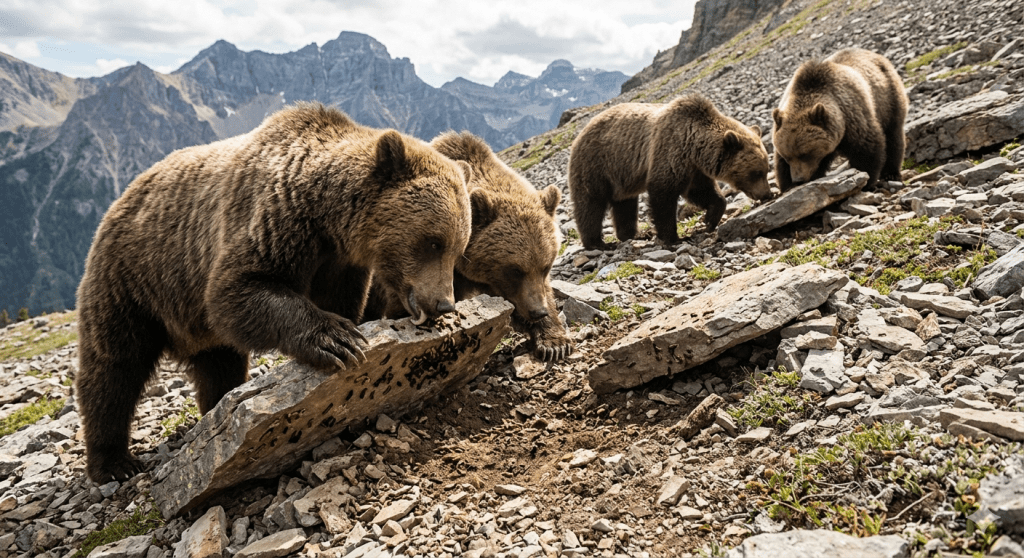
There have been numbers of bear related discourses over time through our local naturalist society registered or otherwise. One formal presentation in 2019 was billed in this writing below, thanks to Francis.
You can contact the registered society at this link. They are always interested in natural interlopers especially photos.
Everyone loves hearing about Grizzly Bears and the presentation by Francis Iredale is especially worth attending. He has been involved in research and radio-tracking of Grizzlies in the southern Chilcotins for many years. The population status and success of this marginal population of Grizzlies is of great concern. These bears spend much time in the high elevation alpine areas and have lifestyles that are somewhat different to those better-known Grizzlies on the BC coast. Not to be missed!
Source Nicola Naturalists
Editor’s Note: we are not the registered society our mandate at kevingriffiths.ca is broader than that…
Have a safe Canada Day.
And a Natural forth coming year in our confederation. 159 onto 160.
During Donald Trump’s first term (2017–2021), the administration’s interactions with the Republic of Haiti were primarily defined by strict immigration enforcement, the unwinding of humanitarian protections, diplomatic friction caused by controversial rhetoric, and navigating Haiti’s deep political instability.The key areas of interaction include:
### 1. The Attempt to Terminate Temporary Protected Status (TPS)
The most impactful policy interaction involved Temporary Protected Status (TPS), which had protected roughly 50,000–60,000 Haitian nationals from deportation following the catastrophic 2010 Haiti earthquake. * **The Directive:** In May 2017, the administration granted a brief six-month extension with explicit warnings for Haitians to prepare to leave. In November 2017, the Department of Homeland Security (DHS) officially announced the termination of Haiti’s TPS designation, arguing that the country’s post-earthquake conditions had sufficiently improved. * **The Legal Battle:** The termination was immediately met with lawsuits. In October 2018, a federal judge issued an injunction (*Ramos v. Nielsen*), blocking the administration from ending the protections. The judge cited potential violations of administrative procedures and raised questions about racial animus behind the decision. Though the 9th Circuit Court of Appeals eventually reversed this injunction in late 2020, ongoing legal maneuvers ensured that TPS protections for Haitians remained active throughout the entirety of Trump’s first term.
### 2. Diplomatic Friction and Rhetoric
Bilateral relations were heavily strained by private remarks from President Trump that leaked to the public. * **The 2018 Comments:** During an Oval Office meeting with lawmakers in January 2018 regarding immigration reform, Trump reportedly referred to Haiti, El Salvador, and certain African nations as “shithole countries” and questioned why the U.S. should accept more immigrants from Haiti. * **The Fallout:** The comments sparked an immediate international backlash. The Haitian government formally summoned the top U.S. diplomat in Port-au-Prince to protest the remarks, calling them “racist” and “insulting.” Domestically, a group of Haitian-American State Department diplomats authored an open letter expressing deep heartbreak and frustration. Trump denied using that exact derogatory language but maintained that Haiti was an undeniably poor and troubled country.
### 3. Diplomatic Relations and Political Instability
On the diplomatic front, the administration worked primarily with Haitian President Jovenel Moïse, whose term was marked by massive anti-corruption protests, economic collapse, and allegations of authoritarian overreach. * **The “America First” Approach:** The administration largely dialed back the heavy-handed, multi-billion-dollar nation-building and humanitarian aid frameworks of previous administrations, prioritizing regional stability, counter-narcotics enforcement, and containing migration waves. * **Support for Moïse:** Despite growing domestic calls within Haiti for Moïse to step down, the Trump State Department continued to recognize his legitimacy and pushed for parliamentary elections to resolve the political gridlock. However, the administration also issued sharp warnings to Moïse regarding his rule by decree after parliament dissolved in 2020.
### 4. Passing the Global Fragility Act (2019)
A significant legislative interaction occurred in late 2019 when President Trump signed the bipartisan **Global Fragility Act** into law. This initiative aimed to reshape how the U.S. deployed diplomatic, security, and development tools in conflict-prone regions. Haiti was later chosen as a primary target country under this framework, intended to bolster local civil society and prevent complete state collapse, though the actual implementation of the strategy fell to subsequent administrations.
Where earthquakes happen?
Earthquakes are sudden, violent shakes of the Earth’s surface caused by the release of built-up energy in the lithosphere—the planet’s rigid outer crust. This energy accumulates over long periods as massive slabs of rock, known as tectonic plates, continuously grind past, collide with, or pull away from each other. When the friction holding these plates in place is finally overcome, the rock fractures along a fault line, sending shockwaves called seismic waves radiating outward in all directions. It is these vibrations that trigger the ground rolling and violent jolts capable of bringing down modern infrastructure.Geographically, earthquakes are not distributed randomly; they overwhelmingly occur along the boundaries where these tectonic plates meet. The most seismically active zone on Earth is the Circum-Pacific Belt, frequently called the “Ring of Fire,” a horseshoe-shaped horse path looping around the Pacific Ocean where plates actively collide and subduct under one another. Another prominent danger zone is the Alpide Belt, which stretches from the Atlantic Mediterranean through southern Asia and into Indonesia. While earthquakes can technically occur anywhere if stress builds up within a stable plate interior, communities situated directly on active fault lines bear the highest risk of facing a catastrophic disaster.Over the last ten years (2016–2026), tectonic activity has claimed hundreds of thousands of human lives, with four specific disaster areas proving to be the absolute deadliest. The most devastating by far occurred along the **Turkey–Syria border** in February 2023, where a massive double-quake sequence killed over 60,000 people and destroyed entire cities. The second most lethal region was **Myanmar**, where a catastrophic magnitude 7.7 earthquake struck in March 2025, claiming over 5,400 lives. It is followed closely by **Sulawesi, Indonesia**, where a 2018 earthquake triggered a devastating localized tsunami and liquefaction that killed more than 4,300 people. Finally, the **Haitian Peninsula** suffered yet another humanitarian crisis in August 2021 when a magnitude 7.2 quake struck the southwestern region of the country, resulting in the loss of over 2,200 lives.
The Nicola Naturalist Society Incorporated was done in November of 2010 and has functioned under a stable and comprehensive membership for 16 years here in Merritt. Not to be confused with my naturalist blog. That reports a lot of the things from it or journalizes it.
The naturalists of Merritt are very industrious bunch.
As of this date of writing, the regular meetings are closed down until September and membership renewal or membership begins in September. And there’s a possibility that they will be meeting the second Thursday of the month instead of the 3rd.
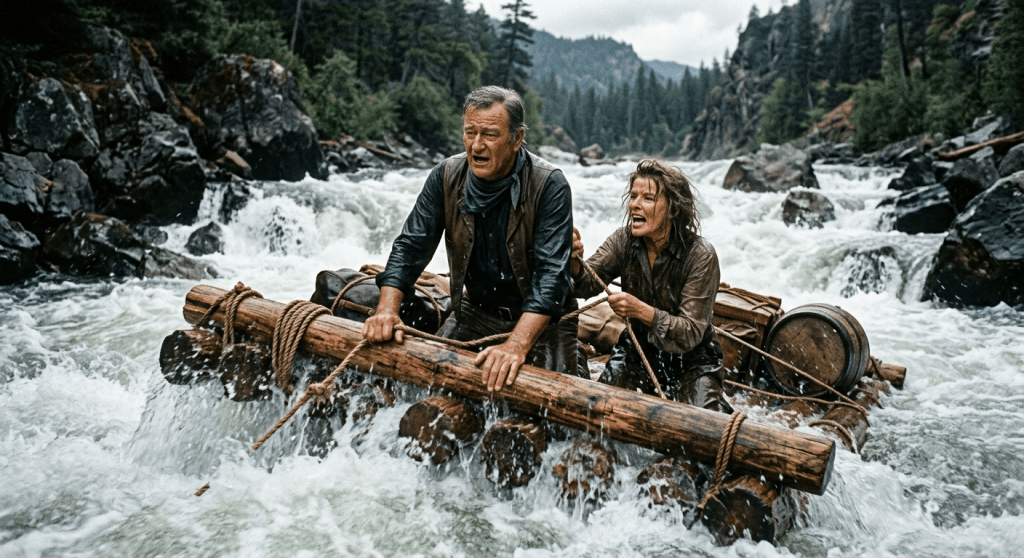
Rooster Cogburn was character. John Wayne played in his old age alongside another movie Mogul of of the same tenure. Catherine Hepburn there was a great conversation between the two that was followed by many people.
Well
The movie depicted in the scene is ***Rooster Cogburn* (1975)**, also promoted as *Rooster Cogburn (…and the Lady)*.Here is a breakdown of its theme, characterization, financial performance, and impact:### Theme and Characterizations * **The Theme:** The film is a classic odd-couple Western adventure heavily themed around redemption, justice, and the clashing of contrasting moral worlds. It deliberately mirrored the thematic framework of *The African Queen* (1951), trading a steamboat in Africa for a nitro-loaded log raft in the Pacific Northwest. * **The Characterization and Result:** John Wayne reprised his Oscar-winning role from *True Grit* (1969) as Reuben “Rooster” Cogburn, a whiskey-guzzling, one-eyed, relic of a U.S. Marshal whose badge is suspended due to excessive bloodshed. Katharine Hepburn played Eula Goodnight, a prim, fiercely independent, Bible-thumping missionary out to avenge her father’s death. * **The Result:** The characterizations relied entirely on the natural, affectionate chemistry between the two aging Hollywood titans. Critics felt the script itself was a bit recycled and full of forced, “phony theatricality,” but noted that the sheer charm of Wayne and Hepburn trading sharp dialogue and fondly looking at one another rescued the performances.### Financial Performance * **The Budget:** $10 million. * **The Box Office:** It grossed approximately **$17.6 million** globally. While technically profitable, it was considered a commercial disappointment compared to the massive success of *True Grit* (which made over $31 million in 1969 money). Its theatrical performance brought in only about 26% of the original film’s box office draw, which ultimately led to the cancellation of a planned third film in the series.### Impact and Legacy * **The Lone Pairing:** The most lasting impact of *Rooster Cogburn* is that it stands as the **only cinematic pairing** of John Wayne and Katharine Hepburn in their legendary careers. They were both 67 years old during filming and held completely opposite political views, yet they formed a profound mutual admiration on set. * **Historical Footnote:** Beyond being a nostalgic “Golden Age” crossover, it was the final film ever produced by legendary Hollywood producer Hal B. Wallis. It also marked the only time John Wayne ever played a sequel character across his 170+ film filmography. Today, it is remembered less for its plot and more as a beautifully shot, bittersweet twilight showcase for two of cinema’s greatest icons.
For a deeper look into the off-screen drama and trivia surrounding this historic pairing, you can watch this Rooster Cogburn Production History Deep Dive, which explores the health crises, political tensions, and secret screenwriters behind the 1975 film.
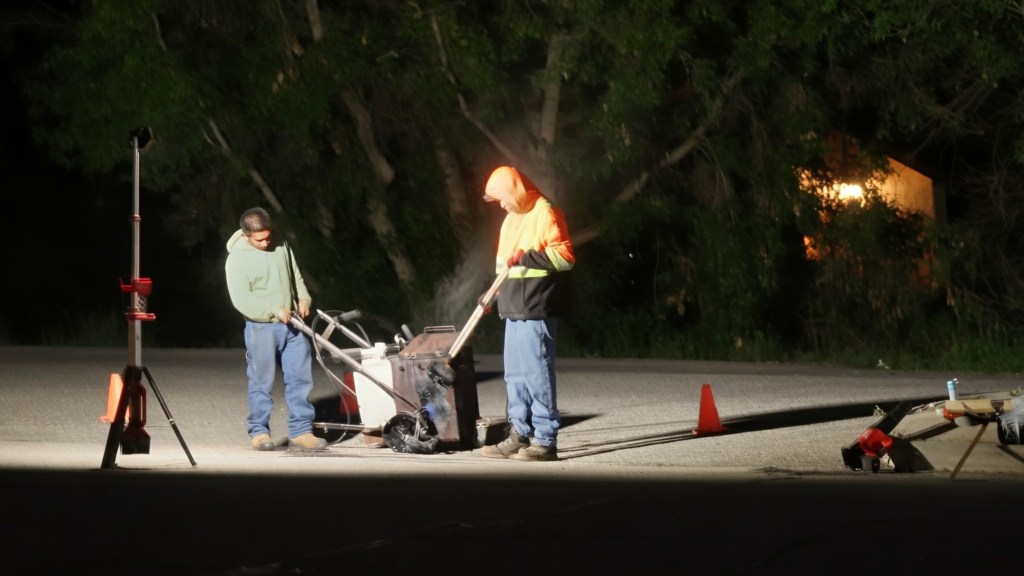
Not all cracks in life can be filled easily.
Photo KDG, spring 2026… Small crew at Night Merritt BC repair cracks in roads.
Bitter Sweet is the stuff of life, is not misreality. It is the natural result of living.
To all those suffering it today bon chance, your pain is yours and it is not unjust. You are normal.
The art of photography is a delicate dance between technical precision and emotional intuition. It transforms a fleeting fraction of a second into a permanent visual statement, using light as a raw medium to shape form, texture, and mood. A great photograph rarely just documents a subject; it reveals the photographer’s unique perspective, translating three-dimensional reality into a flat frame that can evoke deep memory, curiosity, or profound silence.
There are moments when a photographer must assert a high-status presence—not out of ego, but out of necessity for the craft. This overt command is essential during structured portraiture, commercial shoots, or complex historical documentation, where you must confidently direct subjects, manage light, and control the environment to execute a specific vision.
Stepping into this high profile establishes the professional trust and authority needed to orchestrate a chaotic scene into a cohesive, deliberate piece of art.Conversely, a lower profile is often infinitely better for building an authentic, cohesive body of work, particularly in street, documentary, or wildlife photography. Cultivating a quiet, unassuming presence allows you to blend into the background, stripping away the artificiality that occurs when subjects know they are being observed. By working with a low profile, you become an invisible observer rather than a disruptor, allowing the natural truth of a landscape, an animal, or a human moment to unfold organically before your lens.
Lifes work
Ultimately, the best body of work arises from knowing when to step into the light to command a frame, and when to recede into the shadows to let life speak for itself.
We don’t provide comprehensive warnings. We post information that we have. We’re looking for comments and offering a forum if discussion is required or recordings are suitable.
The British Columbia youth ambassador program that hung its hat on the Merritt Civic center here for a number of years or decades. “All dressed up and somewhere to go”
The local toastmasters club provided a ” Canned speachcraft program for more the a decade, we loved the life and livleyness of the mixed program. Terrias lost their place to Black Cowboy hats over time. As the male competitors were put on an even keel by the unisex stylelrsh hats.
Pronouns were not yet in vogue, but we would have appreciated the individual freedoms that choosing your own pronouns conintates if we would have only thought of it at the time.
So, The 2010 Olympics in Vancouver saw two experimental hydrogen buses. Powered by hydrogen fuel cells demonstrated for that event. They were put in service. Tags were half a million each. Never seen any for a while. Merritt DC had hydrogen service for fuel-celled powered trucks at the truck. Stop along the showers. They didn’t make shower water out of the hydrogen after they burned it. Sorry but that was a good stretch.
Merrit “positioned for freight”
If you’re looking for a history of hydrogen fueling stations operating over decades in Merritt, you might be chasing a bit of a ghost story—or perhaps thinking of early alternative fuels like propane and compressed natural gas (CNG). In reality, there were no historical hydrogen outlets for trucks in Merritt. For decades, the heavy flow of commercial freight and logging trucks moving through the Nicola Valley relied strictly on traditional diesel cardlocks. The technology to use hydrogen as a commercial heavy-duty trucking fuel simply didn’t exist in a viable way in the 20th century, so the infrastructure was never built.That said, hydrogen-powered trucks *are* finally becoming a reality on the highways around Merritt today. Over the last couple of years, companies have begun running commercial pilot projects with Class 8 hydrogen fuel cell trucks, specifically putting them to the test on the steep, grueling climbs of the Coquihalla Highway up to Merritt. Since there isn’t local fueling infrastructure yet, these trucks fuel up at modern stations in the Lower Mainland or Kelowna. They use those single fills to haul massive payloads up the mountain, proving that zero-emission transport can handle B.C.’s demanding interior grades without the severe weight penalties associated with battery-electric trucks.The ultimate outcome here is that Merritt is perfectly positioned for the *future* of freight, rather than having a hidden history of it. While the town doesn’t have a decades-old legacy of dispensing hydrogen, its strategic location at the junction of the Coquihalla, Highway 5, and the Okanagan Connector makes it an inevitable, critical node for B.C.’s emerging commercial hydrogen corridors. You won’t find any vintage hydrogen pumps hidden around town, but you are absolutely going to see more of these high-tech, water-emitting trucks pulling through the valley in the years to come.
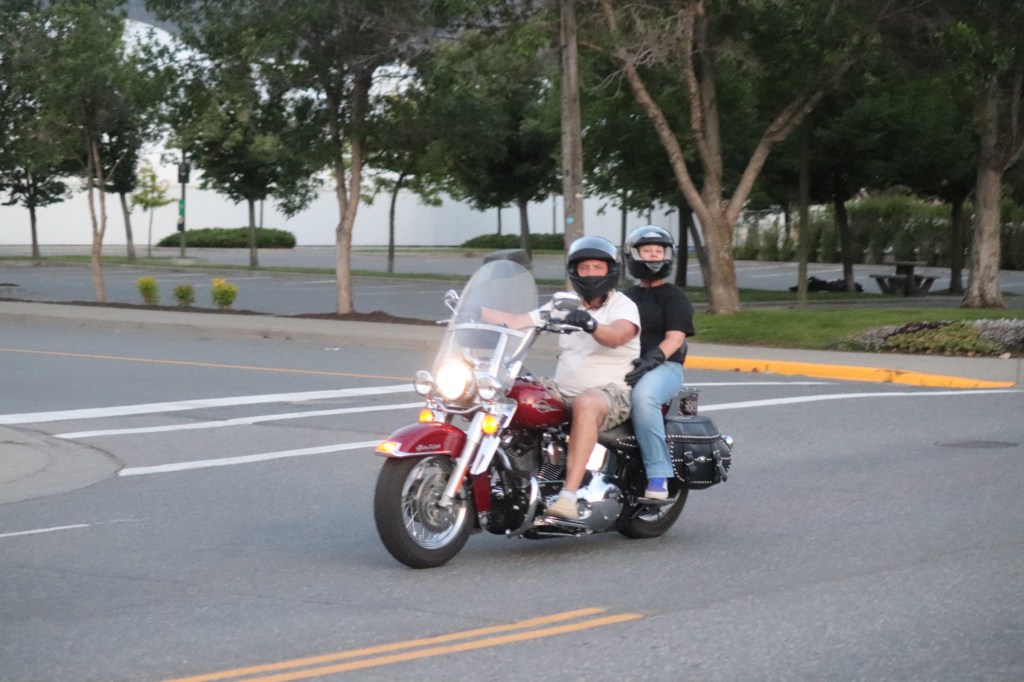
Fashion statement
Photo: KDG
So, this in the first week of June or so we’re making statements of propriety diligence enjoyment fashion. Just having a cruise through Merritt BC beside the arena parking lot.
That small gas tank is as telling as anything, their enjoyment is a testimony against the unwise of this life that somehow thrive on strife, disruption and conflict.
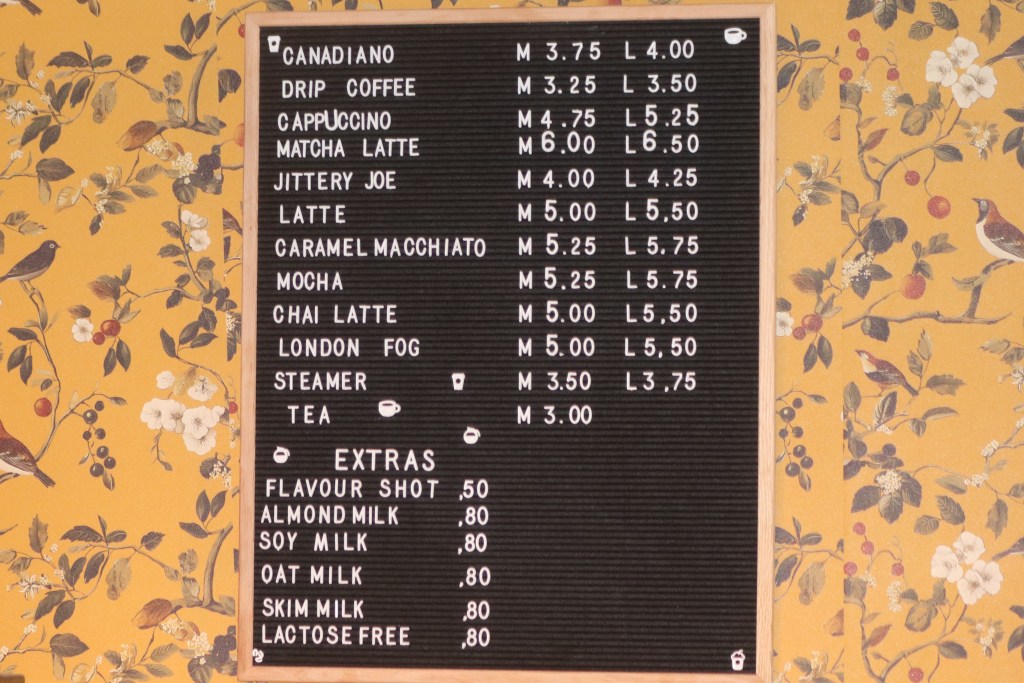
So, here’s a photo of the coffee menu at the local Valley Graze eatery and social hub. The restaurant is located off Nicola avenue with city parking on Garcia it is a cozy and bright place rum by locals with a cowboy demeanor or (Conservative Rural).
Genetated bio
**Valley Graze** (also known as the Valley Graze Box) is a highly regarded local café, restaurant, and artisanal catering business in Merritt that has quickly become a community hub for fresh, wholesome food. Located at **2114 Nicola Avenue**, the café features an inviting “Makers Collective” atmosphere that frequently hosts local seniors’ social gatherings and community markets. While it began with a focus on beautifully arranged, colorful grazing boxes and charcuterie trays for events, the storefront menu showcases a broad variety of fresh café and breakfast cuisine. This includes elevated options like their ultimate breakfast sandwiches, wraps, house-made salads, and specialty artisanal pastries and focaccias brought in fresh from the local Petit Creek Bakery. Operating primarily on daytime hours—typically opening early at **7:00 AM until 2:00 PM** (though closed on Mondays and featuring shorter weekend hours)—it provides an ideal morning or midday stop.
Convenient parking is easily accessible right out front along Nicola Avenue and in the immediate vicinity, making it a highly accessible destination whether you are stopping in for a quick espresso or picking up an individual lunch box on the move.
Editors note:
This is not a paid ad this is journalism editorial, and we’re looking for comments, would be great to hear from you…













 Kevin Griffiths
 percypaschal
