You are presumed to be honest and responsible without evidence to the contrary beyond a reasonable doubt… on the balance of probablilties you are justified by 51 % likelyhood.
Help others that Don’t know were they are going as well.
Tour operator, no knows Canada better than Canadians.
Government Compliance
For a new entrepreneur in British Columbia, the landscape in 2026 is shifting away from “general” cash grants toward targeted support for specific industries (like tech, agriculture, and manufacturing) and demographic-based funding.Here are the most relevant programs and routes currently available in BC
:1. The WorkBC Self-Employment ProgramIf you are currently unemployed or under-employed (working fewer than 20 hours a week), this is one of the most comprehensive “entry points.”
* What it offers:
Financial financial support (a living allowance) while you spend 10 weeks developing a business plan and 38 weeks launching your business. * Best for: People who have a solid idea but need a safety net and expert coaching to transition from “worker” to “owner.”
2. Community Futures
(Rural & Regional Support)Since you are in a regional area like the Nicola Valley, Community Futures Nicola Valley (located right in Merritt) is often more accessible than big provincial bodies. * Programs: They offer small business loans (often with more flexible terms than big banks), one-on-one business counseling, and specialized programs for entrepreneurs with disabilities or Indigenous youth. * 2026 Focus: They are currently emphasizing “Business Resilience” and “Digital Transformation,” helping older businesses or new startups integrate AI and modern tools.3. Innovate BC & Tech-Based GrantsIf your venture involves any level of innovation or technology (including specialized manufacturing), Innovate BC has several active “micro-grants.” * Go-To-Market Microgrants: These provide up to $50,000 (covering 75% of costs) for sales and marketing to help a new product get traction.
* BC Employer Training Grant:
If you do plan to hire even one person, this grant covers 80% of training costs (up to $10,000 per employee) to help them gain the skills your new company needs.4. New 2026 Tax IncentivesThe recent BC Budget 2026 introduced a few “hidden” benefits that act like grants by saving you cash immediately:
* Manufacturing Investment Credit:
A new 15% refundable tax credit for businesses investing in buildings, machinery, or equipment. * Small Business Venture Capital Tax Credit: The budget for this was increased to $53.5 million this year, which encourages local investors to put money into your startup by giving them a 30% tax credit.
Summary Table of Funding Types
| Type | Program Name | Best For ||—|—|—|| Living Support | WorkBC Self-Employment | Unemployed individuals starting a first business. || Startup Loan | Community Futures | Rural entrepreneurs needing capital and mentorship. || Growth Grant | Innovate BC Go-To-Market | Scaling a product or service into new markets. || Training Grant | BC Employer Training Grant | Upskilling yourself or a new hire in specialized tech/trades.
Entrepreneurship in Canada currently exists in a state of cautious optimism rather than full capacity. While Canada ranks highly (4th globally) for early-stage activity—meaning many people are starting new ventures—the “established business” rate is significantly lower. This suggests a latent potential where the spirit of innovation is high, but the ability to scale and sustain businesses is hampered by narrow profit margins, rising operational costs, and a complex regulatory environment. As of early 2026, many business owners are shifting from “survival mode” toward strategic growth, though they remain constrained by labor shortages and inflation.Becoming an entrepreneur is often a choice driven by a desire for independence rather than a lack of traditional jobs. In the Canadian context, there are no formal “degrees” required to be an entrepreneur, but the functional qualifications include high financial literacy, risk tolerance, and the ability to navigate provincial and federal regulations. Legally, the Canada Revenue Agency (CRA) distinguishes an entrepreneur (self-employed) from a worker based on control and financial risk. If you provide your own tools, have the chance to make a profit or suffer a loss, and decide how the work is done, you are technically an entrepreneur.
Key Comparisons: Entrepreneur vs. Worker
| Feature | Entrepreneur (Self-Employed) | Worker (Employee) ||—|—|—|| Income | Variable; unlimited upside but includes risk of loss. | Stable salary or hourly wage with a “ceiling.” || Control | You decide the “how, when, and where.” | The employer directs the work and methods. || Tools | You provide and maintain your own equipment. | The employer typically provides all necessary tools. || Benefits | Responsible for own insurance, CPP, and taxes. | Entitled to paid vacation, EI, and health plans. || Liability | Personally or corporately liable for errors. | Generally protected by the employer’s liability. |When to Make the SwitchTransitioning from a worker to an entrepreneur is typically recommended when:
* The “Specialization Gap” Closes:
You have gained enough niche expertise that your skills are more valuable as a service to multiple clients than to a single employer.
* Risk Capacity is High:
You have a financial buffer to handle the “startup phase” where income is often non-existent or negative.
* Market Opportunity:
You identify a specific problem (especially in high-growth areas like clean energy or AI-driven services) that existing companies are not solving.
* Autonomy Over Security:
You value the freedom to steer your own ship more than the “safety net” of a corporate paycheck.
Driven people do better at this then others “See a need and fill it” has been the most credible motivation for these sorts of things in the past.
Opinion
Help is available, local community futures organization or work BC. These organizations are doing these things often and will help somebody that has a ambition.
Do not feed the animals. Do not leave food around.
When exploring the lush forests of British Columbia, your primary responsibility is to minimize your impact on these delicate ecosystems by strictly adhering to Leave No Trace principles. This means more than just packing out your trash; it involves staying on marked trails to prevent soil erosion and avoiding the removal of any natural features like rocks, plants, or fossils. Equally important is the directive to never feed the wildlife. While a squirrel or bird might seem harmless, human food disrupts their natural foraging behaviors and can lead to dangerous habituation. In BC’s “bear country,” an animal that associates humans with food often becomes a safety risk and, unfortunately, is frequently destroyed by conservation officers as a result.The Priority: Fire Safety and PreparednessWhile cleanliness and wildlife respect are vital, the protocol of wildfire prevention and emergency preparedness is arguably of the greatest importance. BC’s forests are increasingly susceptible to devastating fires, so checking current fire bans and ensuring any permitted campfires are fully extinguished—until the ashes are cool to the touch—is a non-negotiable duty. Furthermore, the rugged terrain of the Pacific Northwest is notoriously unforgiving. Visitors must always carry the “Ten Essentials” (such as a light source, navigation, and extra water) and leave a detailed trip plan with someone reliable.
In the vast wilderness of the province, being prepared for a sudden change in weather or a navigation error is the difference between a successful hike and a search-and-rescue operation.
Ten Essentials
Checklist of the “Ten Essentials” specifically tailored for a day hike in the BC coastal mountains?
Building on your 10 Essentials, here are some excellent beginner-to-intermediate trails. I’ve selected a mix of coastal and interior routes that showcase the diverse landscapes of BC.Lower Mainland (Coastal Mountains)These trails are perfect for getting a feel for coastal humidity, mossy terrain, and sudden fog. * Dog Mountain (Mount Seymour, North Vancouver): * Level: Beginner. * The Vibe: A local favorite for a reason. It’s relatively flat but very rooty (watch your footing!). The reward is a spectacular panoramic view of Vancouver and the Burrard Inlet. * Lindeman Lake (Chilliwack Lake Provincial Park): * Level: Intermediate. * The Vibe: A bit of a “hustle” up a rocky path, but it leads to a stunning turquoise sub-alpine lake. It’s a great place to practice your “Insulation” essential, as the air temperature drops significantly once you reach the water. * Quarry Rock (Deep Cove, North Vancouver): * Level: Beginner. * The Vibe: A classic wood-and-rock trail through lush rainforest. It offers a great view of Indian Arm and is a perfect spot to test out your “Sun Protection” even under the canopy.The Interior (High Plateau & Grasslands)The Interior offers a completely different “vibe”—drier air, sagebrush, and expansive views. Your “Hydration” and “Sun Protection” essentials are the MVPs here. * Kentucky Lake Loop (Kentucky-Alleyne Provincial Park, near Merritt): * Level: Beginner. * The Vibe: An easy, mostly flat 4km loop around a lake with water so turquoise you’d swear you were in the Caribbean. It’s very exposed, so that wide-brimmed hat is a must. * Tower Trail (Kenna Cartwright Park, Kamloops): * Level: Intermediate. * The Vibe: This park is the largest municipal park in BC. The Tower Trail involves a steady climb through sagebrush and ponderosa pines, leading to a “dive” into a 360-degree view of the Kamloops city and the junction of the North and South Thompson Rivers. * Myra Canyon Trestles (Kettle Valley Rail Trail, Kelowna): * Level: Beginner (Length is the only challenge). * The Vibe: While technically a rail trail, the 12km section through Myra Canyon takes you over 18 historic trestle bridges and through 2 tunnels. It’s flat but provides an incredible “Interior” mountain experience with massive canyon drops.Note: If you are heading into the Interior during the summer, always check the BC Wildfire Service map before you go. The “Fire” essential is for emergencies only—Interior BC often has strict campfire bans due to the dry climate.
suggested starts
Building on your 10 Essentials, here are some excellent beginner-to-intermediate trails. I’ve selected a mix of coastal and interior routes that showcase the diverse landscapes of BC.Lower Mainland (Coastal Mountains)These trails are perfect for getting a feel for coastal humidity, mossy terrain, and sudden fog. * Dog Mountain (Mount Seymour, North Vancouver): * Level: Beginner. * The Vibe: A local favorite for a reason. It’s relatively flat but very rooty (watch your footing!). The reward is a spectacular panoramic view of Vancouver and the Burrard Inlet. * Lindeman Lake (Chilliwack Lake Provincial Park): * Level: Intermediate. * The Vibe: A bit of a “hustle” up a rocky path, but it leads to a stunning turquoise sub-alpine lake. It’s a great place to practice your “Insulation” essential, as the air temperature drops significantly once you reach the water. * Quarry Rock (Deep Cove, North Vancouver): * Level: Beginner. * The Vibe: A classic wood-and-rock trail through lush rainforest. It offers a great view of Indian Arm and is a perfect spot to test out your “Sun Protection” even under the canopy.The Interior (High Plateau & Grasslands)The Interior offers a completely different “vibe”—drier air, sagebrush, and expansive views. Your “Hydration” and “Sun Protection” essentials are the MVPs here. * Kentucky Lake Loop (Kentucky-Alleyne Provincial Park, near Merritt): * Level: Beginner. * The Vibe: An easy, mostly flat 4km loop around a lake with water so turquoise you’d swear you were in the Caribbean. It’s very exposed, so that wide-brimmed hat is a must. * Tower Trail (Kenna Cartwright Park, Kamloops): * Level: Intermediate. * The Vibe: This park is the largest municipal park in BC. The Tower Trail involves a steady climb through sagebrush and ponderosa pines, leading to a “dive” into a 360-degree view of the Kamloops city and the junction of the North and South Thompson Rivers. * Myra Canyon Trestles (Kettle Valley Rail Trail, Kelowna): * Level: Beginner (Length is the only challenge). * The Vibe: While technically a rail trail, the 12km section through Myra Canyon takes you over 18 historic trestle bridges and through 2 tunnels. It’s flat but provides an incredible “Interior” mountain experience with massive canyon drops.Note: If you are heading into the Interior during the summer, always check the BC Wildfire Service map before you go. The “Fire” essential is for emergencies only—Interior BC often has strict campfire bans due to the dry climate.
Harry Sanders, was bit of a legend about Merritt. We remember him as hosting the social credit party at his home in lower Nicola for their AGM’s. But Harry was a contractor with equipment. Lots of male sons. And a penchant for opportunities. One of them he saw at one point was an ability to bridge a small Creek or area and a temporary but more permanent way that would be easy in and easy out without much damage so as to protect the environment and also to expedite doing work in the forests and streams.
Innovation
By cutting apart large pieces of pipeline pipe, and that was in surplus. He managed to make a small portable bridge, he could cross a stream with a similarly to the Roman concept of using Stone arches for their bridging. The value of these is self-evident.
So I don’t know how many prototypes he made but this one was in the industrial area sitting for numbers of years. So I took a picture of it as I went by knowing Harry or more to the point I knew his sons. I know more of Harry than I did him.
But darn and be gosh if he didn’t, long past his departure from this life. The legacy in that piece was laying. There and now seems to have been revived as some very nice advertising is online about enviro bridge and some of them are being sold and being manufactured again here in Merritt British Columbia.
Perhaps the most memorable trade sanctions for us in Canada or British Columbia. Any time, were the countervailing duties Americans put on us when they began to feel the pressure of the modernization by numbers of sawmills and logging operations in British Columbia in particular.
These innovations cut local workforces down considerably. A milling operations such as one planer in Merritt,was once started in the home of a single entrepreneur; Bud Woodford, in the center of the town; Merritt had grown to being able to have 300 working people there at the birth of free trade . Some just very unskilled labour. All making livelihoods and used to having good jobs and skilled jobs at the height of markets.
Log port out of Stewart BC ended raw logs export when hydro power came for milling.
Inovation
The soft wood countervailing taxes Americans put on were mitigated by the fact that value added escaped it. We remember that the Mills here then became complimented by smaller Mills that did value-added, that was anything that wasn’t a 2×4 a 2×6 and other dimensional lumber (good reputation in the US Canadian blue) and had value added in it, including door jambs made of short pieces of cut offs, they were put into finger joints and were marketable in with attitude of value grown contribution rather then exploitation.
Opportunity meets ambition…
Innovation shouldn’t be stifled by heavy taxes it should be discovered in its trail of test.
According to sources they are happy with the data collected however it’s another space rocket exploded after the test, on landing, in the water, not unexpected.
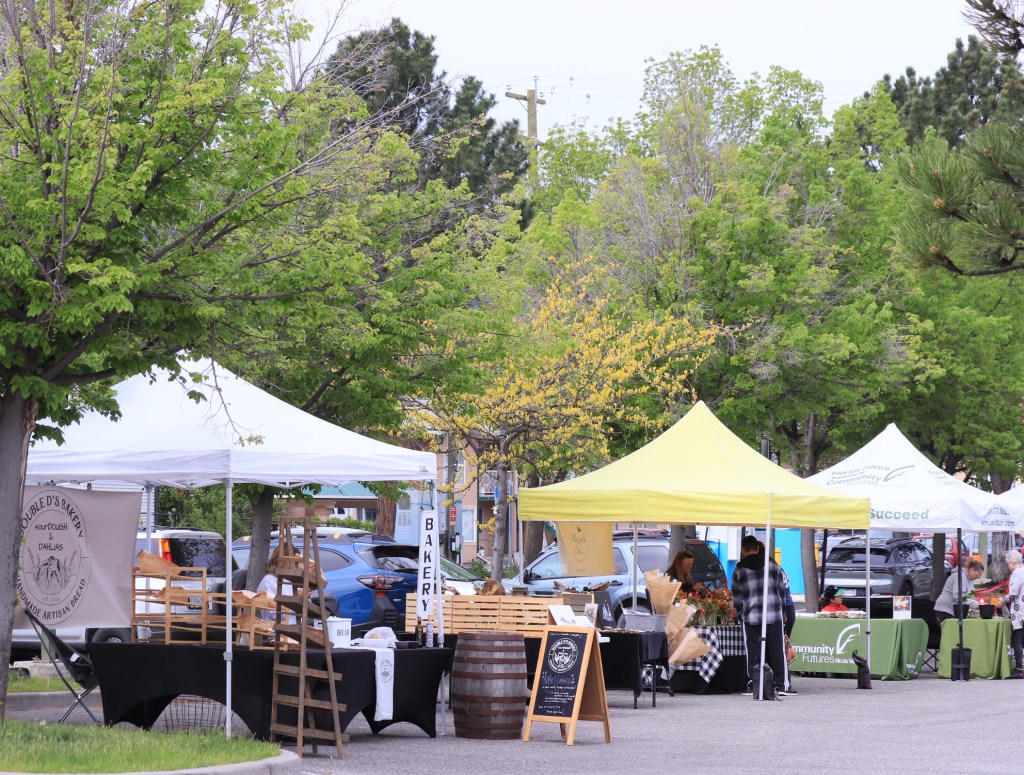
The last day for the the farmers market in Merritt for this season. The group sets up every Saturday from 9:00 to 1:30 PM in the paved lot at 2250 Voght Street.
The Nicola Valley Community Farmers Market is a vibrant hub for local agriculture and artisanal goods, typically held weekly during the warmer months. It brings together farmers, craftspeople, and community members, fostering connections and promoting the benefits of eating local. Visitors can find a variety of fresh produce, baked goods, handmade crafts, and unique food items, offering a delightful experience filled with the rich flavors and talents of the Nicola Valley region. The market also often features live music, workshops, and family-friendly activities, making it a cherished gathering place that supports local economy and sustainability.

















 Kevin Griffiths
 percypaschal
 The Proprietor Review