You are presumed to be honest and responsible without evidence to the contrary beyond a reasonable doubt… on the balance of probablilties you are justified by 51 % likelyhood.
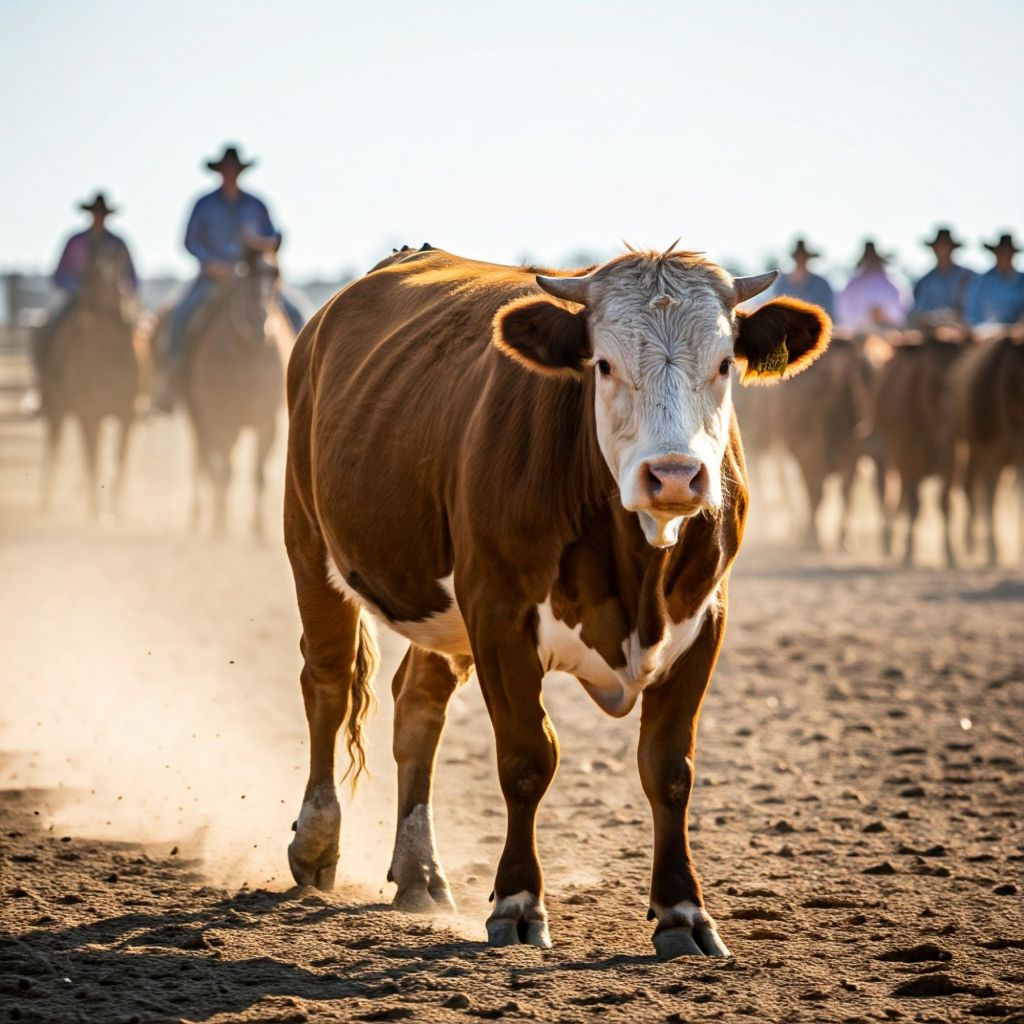
Australia is a major player in the global beef market, known for its high-quality grass-fed and grain-fed beef. The Australian red meat and livestock industry is a significant contributor to the national economy. Here’s a breakdown of Australian beef production and its global comparison: Australian Beef Production: * Significant Industry: The red meat and livestock industry in Australia had a turnover of A$81.7 billion in 2022–23 and employed approximately 418,921 people. * Production Volume: In 2023, Australia produced around 2.2 million tonnes (carcase weight) of beef and veal. In the March 2025 quarter alone, beef production increased by 4.9% to 709,140 tonnes. Forecasts suggest a further increase in production for 2025, potentially reaching 2.62 million tonnes due to anticipated destocking. * Grain-fed Cattle: In the 2024 financial year, 2.8 million grain-fed cattle were marketed, a 4% increase from FY 2023. * Cattle Numbers: As of June 2022, Australia had 24.4 million head of cattle (including dairy cattle). Global Comparison – Production, Imports, and Exports: Production: * Global Standing: While Australia is a significant beef producer, its production volume is relatively small globally, accounting for less than 5% of the world’s beef and buffalo meat supply. * Top Producers (2024/2025 estimates): * United States: Leading the world with an estimated 12.29 million metric tons annually (around 20% of global production). * Brazil: Second largest, with an estimated 11.85 million metric tons (around 19% of global production). * China: An estimated 7.79 million metric tons (around 13% of global production). * European Union: Collectively, about 6.63 million metric tons (around 11% of global production). * India: Approximately 4.57 million metric tons (primarily buffalo meat). * Argentina: Approximately 3.18 million metric tons. * Australia: Around 2.58 million metric tons (approximately 4% of global production). Exports: * Major Exporter: Australia is a dominant force in global beef trade, ranked as the second-largest beef exporter in the world in 2024. In 2023, Australia exported 67% of its total beef and veal production, with a value of A$11.3 billion. * Export Volume (2024): Australian beef export volumes reached 1.6 million tonnes in 2024, a 20% increase from the previous year. The total value of Australian beef exports in 2024 was £7.9 billion (approximately A$15 billion). * Key Export Markets for Australian Beef: * United States: Has been Australia’s largest market for exported beef for most of the last 25 years, accounting for 30.7% of Australia’s beef exports in 2024 (up from 17% in 2022). * Japan: A consistent major trade partner. * China: While China has historically been a significant market, Australian beef exports to China have seen volatility due to changing import protocols. However, China remains an attractive market for premium Australian beef products. * South Korea: Another key market. * Indonesia: Important for Australian beef exports. * Global Export Landscape (2025 estimates): * Brazil: Projected to be the largest exporter (3.6 million MT CWE). * Australia: Second largest exporter (1.9 million MT CWE). * India: (1.645 million MT CWE, mainly buffalo meat). * United States: (1.179 million MT CWE). * Argentina: (860,000 MT CWE). Imports: * Australia as an Importer: Australia generally has minimal beef imports, relying on its strong local supply. Occasional imports from New Zealand occur, typically during New Zealand’s peak beef production cycles. Very small quantities of high-end Japanese Wagyu beef are air freighted to Australia for top restaurants. * Major Global Beef Importers (based on value in 2024 for fresh whole beef): * United States * Italy * Germany * Netherlands * Japan * France * Chile * South Korea * United Kingdom * Mexico Key Characteristics of Australian Beef Production: * Traceability and Integrity: Australia boasts strong paddock-to-plate traceability and product integrity systems, which are key selling points for food safety and sustainability. * Quality and Reputation: Australian beef is globally recognized for its high quality, whether grass-fed or grain-fed. * Market Diversification: Following trade challenges with China, Australia has actively diversified its export markets, strengthening relationships with other major importers. In summary, Australia is a relatively smaller global producer of beef but a massive exporter, leveraging its reputation for quality and robust supply chains to compete effectively in international markets.
Beef 🍖 is big
Free and fair trade is the normal default desirable position tariffs are often punitive and arbitrary.
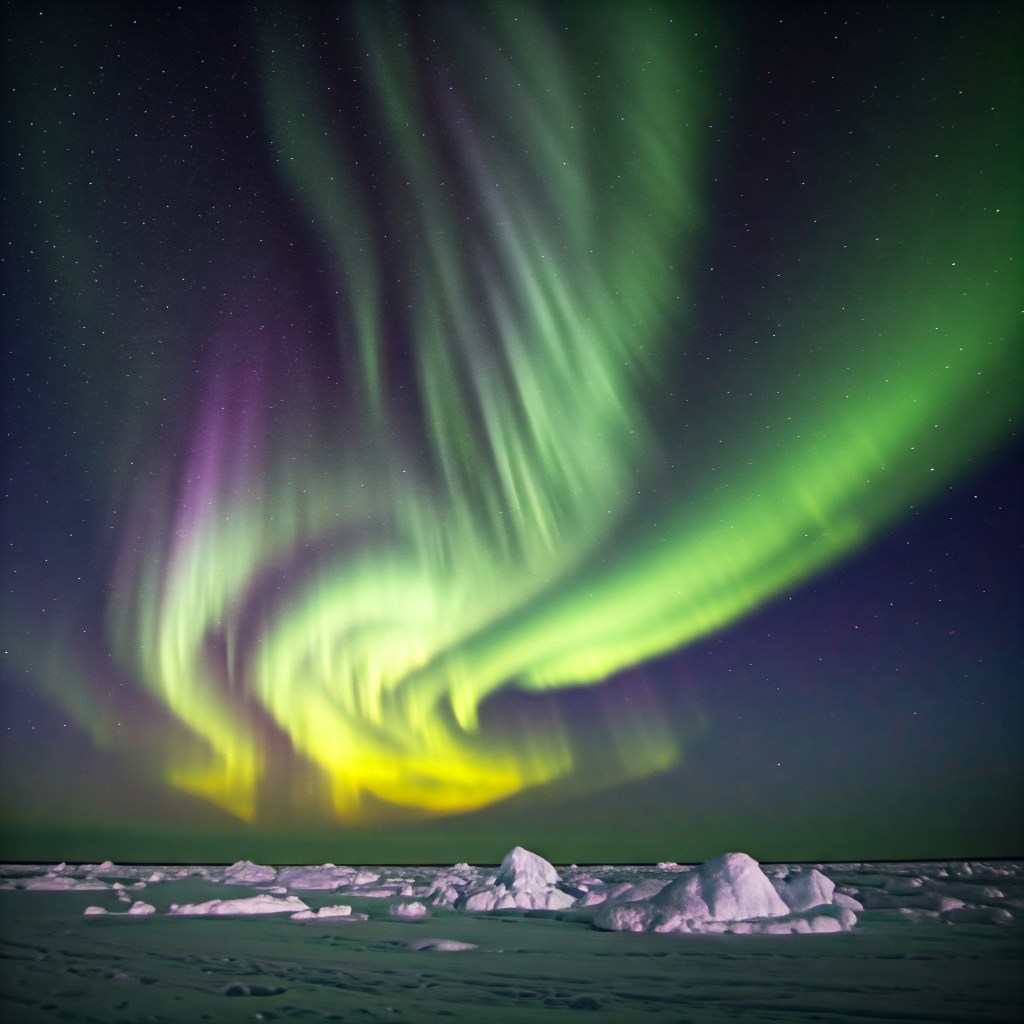
Devon Island is a large, uninhabited island located in the Queen Elizabeth Islands archipelago in the Canadian Arctic, part of Nunavut territory. It’s the second-largest island in the Queen Elizabeth Islands and the sixth-largest in Canada. Relationship to Mars: Devon Island has gained significant scientific interest due to its striking resemblance to the surface of Mars, earning it the nickname “Mars on Earth.” This makes it an ideal Mars analog environment for research and training related to future human missions to the Red Planet. Here’s why: * Polar Desert Environment: Devon Island is a polar desert, meaning it is both extremely cold and dry, similar to the conditions on Mars. It receives very little precipitation, and temperatures can plummet to -50 °C in winter. * Haughton Impact Crater: A major feature of Devon Island is the Haughton impact crater, a 23-kilometer wide crater formed by a meteorite impact about 39 million years ago. This crater and its surroundings offer a geological landscape that mimics various Martian features, including canyons, small gullies, and patterned ground. The presence of an impact crater is particularly relevant as Mars is heavily cratered. * Barren, Rocky Landscape: Much of Devon Island is a barren plateau dominated by frost-shattered rocks, with minimal vegetation in many areas, creating a visual and environmental parallel to the Martian surface. * Analog Research Stations: Because of these similarities, Devon Island hosts two primary Mars analog research facilities: * Flashline Mars Arctic Research Station (FMARS): Operated by the Mars Society, FMARS is a simulated Mars habitat designed to test habitat designs, tools, technologies, and crew selection protocols under conditions similar to Mars. Crews live and work in the station, conducting geological and biological exploration as if they were on Mars. * Haughton-Mars Project (HMP): This international, multidisciplinary research project focuses on studying the Haughton impact crater and its surrounding terrain as a planetary analog, particularly for the Moon and Mars. It’s partially funded by NASA. Researchers use Devon Island to: * Conduct geological and biological studies: Investigating how life might adapt to extreme conditions, and studying geological processes that could occur on Mars. * Test equipment and procedures: Evaluating rovers, life support systems, and extravehicular activity (EVA) procedures in a challenging environment. * Train astronauts and researchers: Providing a realistic simulation of the isolation, confinement, and challenges of a long-duration space mission. * Understand human performance: Studying how individuals and teams perform in isolated, confined, and extreme environments, which has direct applications for astronaut selection and support. In essence, Devon Island serves as a crucial terrestrial laboratory, allowing scientists to prepare for the complexities and challenges of exploring Mars without leaving Earth.
Recent actual footage from Mars
Happy Galaxy Happy wife (life)
Editor’s note: with the fog of all the misinformation out there pls view this with a critical eye and we welcome any comments not abusive .PP
June 1st has been a day of many significant “firsts” throughout history. Here are a few notable examples: * 1495: First known batch of Scotch whisky recorded. A monk named John Cor is credited with recording the first known batch of Scotch whisky. * 1533: Anne Boleyn crowned Queen of England. Anne Boleyn, Henry VIII’s second wife, was crowned Queen of England in Westminster Abbey. * 1831: North Magnetic Pole discovered. The British explorer James Clark Ross became the first European to discover the North Magnetic Pole. * 1869: Thomas Edison granted his first patent. The famous inventor Thomas Edison received his first patent for an electrical vote recorder. While this invention was not successful, it marked the beginning of his prolific career. * 1938: Protective helmets worn by baseball batters for the first time. This marked a significant advancement in player safety in the sport. * 1945: First group of Berlin women begin clearing rubble after WWII. Known as the “Trümmerfrauen” (rubble women), these women played a crucial role in the reconstruction of Germany after the devastation of World War II. * 1974: The Heimlich maneuver is published. Henry Heimlich’s life-saving technique for stopping choking was first published in a medical journal. * 1980: CNN begins broadcasting. Ted Turner’s Cable News Network (CNN) launched, becoming the first 24-hour news channel.
Bike that sat parked in a public parking lot in Merritt creating a mood picture of a lonely missing couple that probably shared a lively life of movement most times, but seem to be missing in a poetic way as it sat in Earnest waiting. ForJune?
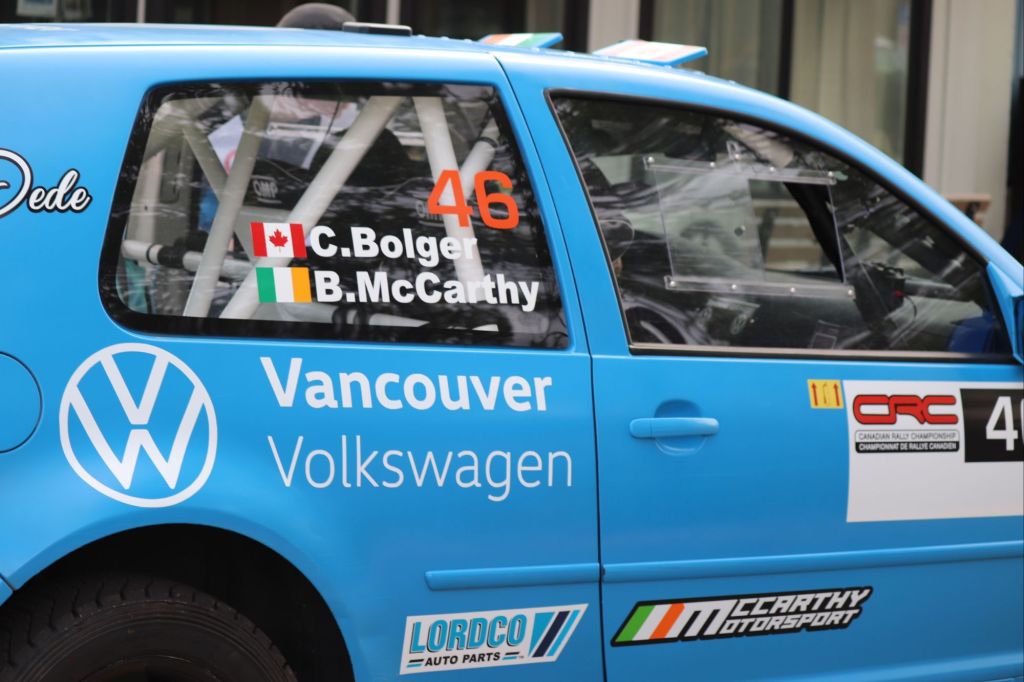
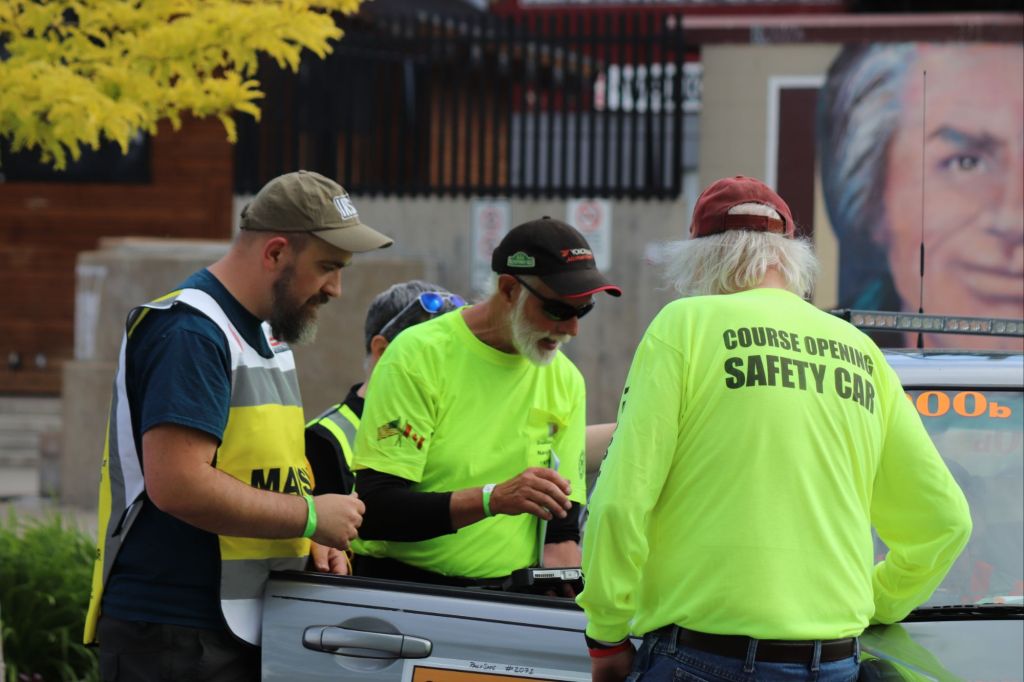
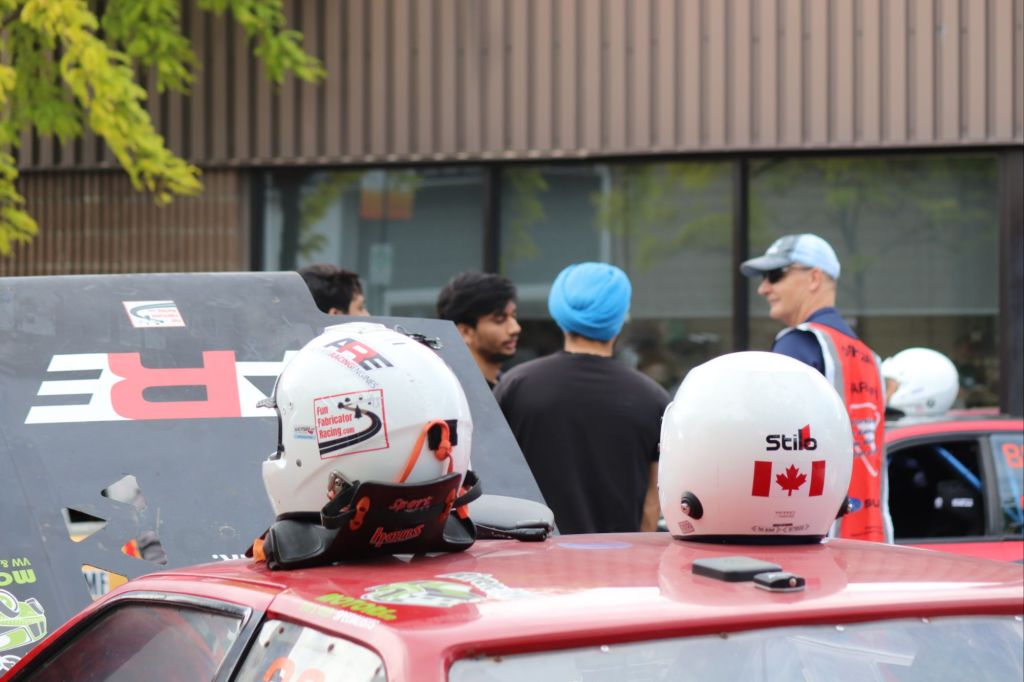
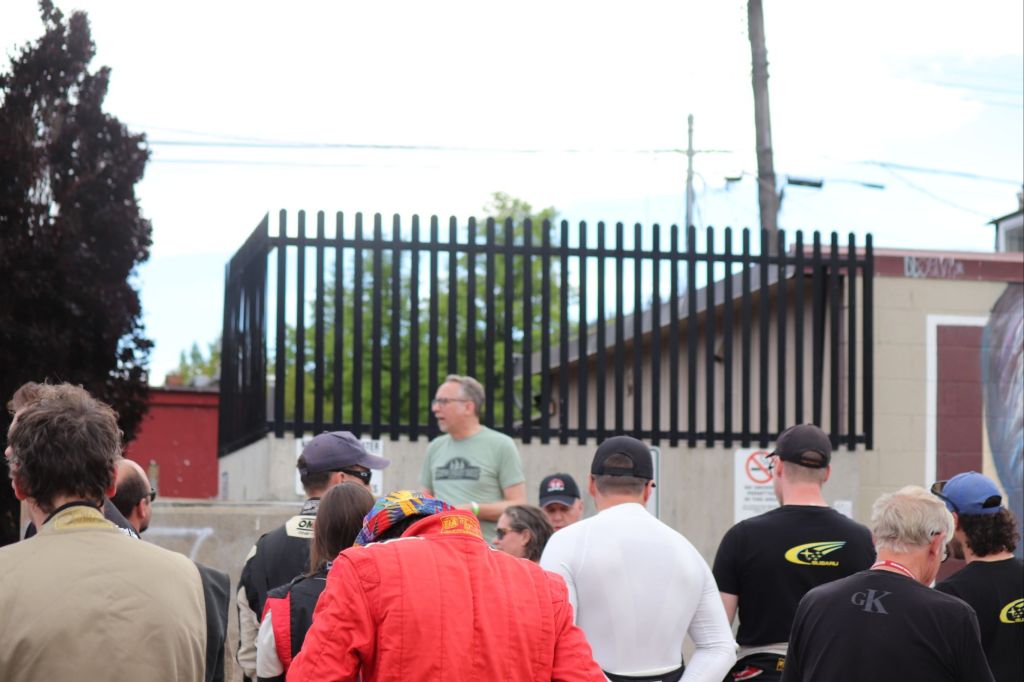
26 rally cars showed themselves on the 2000 block of Granite Avenue in Merritt Friday, January 30th, 2025 with this official watching over the 5:30 start that saw the cars moved to a terminal point to start their timed rally.
The Pacific Forest Rally is a thrilling performance rally racing event held annually in the rugged terrain surrounding Merritt, British Columbia. In 2025, it’s scheduled to take place from Thursday, May 29th to Saturday, May 31st. Here’s a breakdown of what you can expect: Event Overview: * Dates: May 29 – 31, 2025 * Location: Merritt, British Columbia * Courses: The rally features challenging gravel roads with tight corners, steep climbs, and dramatic elevation changes in the Thompson-Nicola region. The rally stages are typically rough, with a gravel and rock base. * Championships: The Pacific Forest Rally is a significant event, being part of both the Canadian Rally Championship (CRC), the North American Rally Cup (NARC), and the Western Canadian Rally Championship (WCRC), attracting top rally teams from across North America. Schedule Highlights (subject to minor changes): * Thursday, May 29: Set up and potentially tech inspection and reconnaissance (recce) for competitors. * Friday, May 30: * Tech inspection and recce continue. * Rally Car Display (Parc Exposé): 4:30 PM – 5:30 PM in downtown Merritt (Granite Ave). This is a great opportunity for spectators to get up close to the rally cars and meet the teams. * Ceremonial Start: 5:30 PM – 6:00 PM, leading into the first set of stages. * Possible night stages (e.g., Mab stage). * Saturday, May 31: * Full day of stages, stages, stages! This is the main day for competitive racing. * Morning & Midday Spectator Stage (e.g., Kirby stage): Multiple passes starting around 10:05 AM. * Afternoon Spectator Stage (e.g., Brookmere stage): Multiple passes starting around 5:00 PM. * Sunday, June 1: Clean up. Spectator Information: * Spectator Guide: An official Spectator Guide is usually released closer to the event, providing essential details like stage maps, spectator locations (e.g., Mab, Kirby, Brookmere), stage entry times, vehicle pass times, turn-by-turn directions to forest spectator points, and important safety information. * Viewing Areas: There will be designated spectator areas, and while some are easily accessible, others may require driving on gravel roads. Lowered vehicles are generally not recommended for forest access. * Amenities: Forest spectator areas are remote and typically have no toilets or concessions, so plan accordingly and bring your own supplies. * Safety: Always prioritize safety by following official instructions, staying in designated spectator zones, and being aware of your surroundings. Volunteering: The Pacific Forest Rally relies heavily on volunteers for its success, especially for road blocking, time control, and spectator management. If you’re interested in getting involved, volunteer registration is typically open well in advance. The Pacific Forest Rally offers an exciting experience for motorsport enthusiasts, showcasing high-speed action and the spirit of rally racing in a beautiful natural setting.
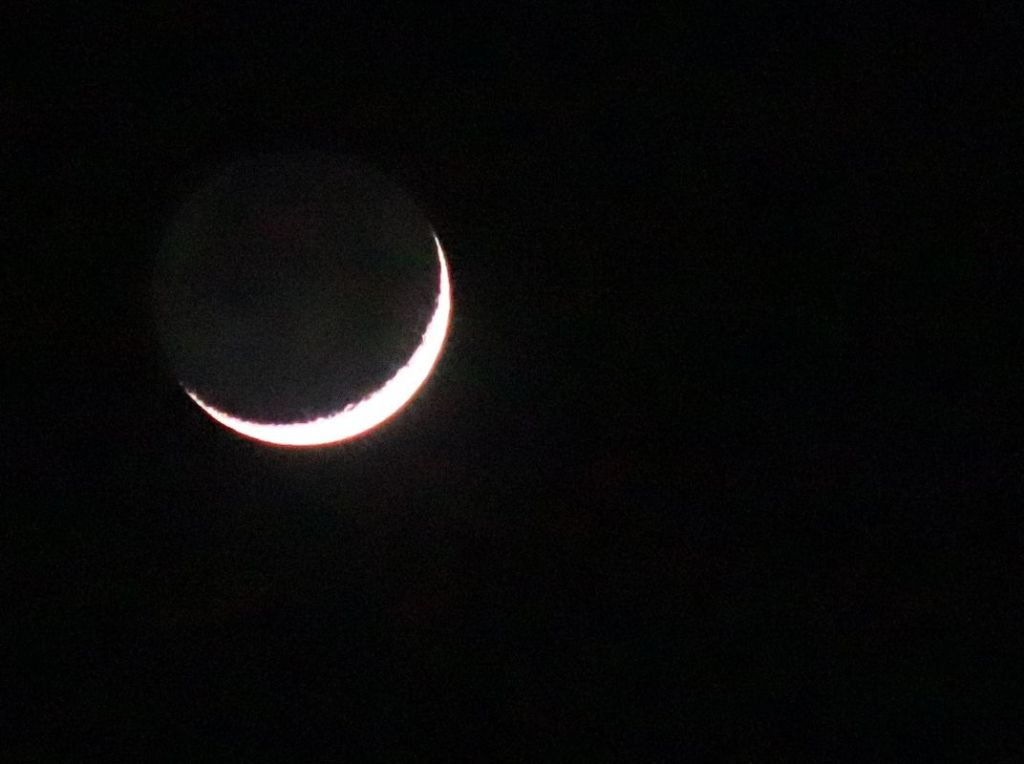
You’re in luck! June 2025 offers a couple of opportunities to observe the Moon and Mars in close proximity, creating what’s known as a conjunction. There’s even a special event called a lunar occultation for some observers. Here’s a breakdown of the possible conjunctions in June 2025: 1. Early June Conjunction (around June 1st): * When: Around June 1st, 2025. * What to expect: The waxing crescent Moon will appear close to Mars. * Visibility: Look to the west just after sunset. This will be a good naked-eye or binocular event. * Constellation: Both will be in the constellation Leo. 2. Late June Conjunction and Lunar Occultation (around June 29th-30th): * When: On the night of June 29th, extending into the early hours of June 30th, 2025. * What to expect: The waxing crescent Moon will again pass close to and just below Mars. This will be an even closer approach than the earlier conjunction. * Special Event: For some regions, a lunar occultation of Mars will occur. This is when the Moon passes directly in front of Mars, temporarily hiding the Red Planet from view. * Visibility of Occultation: This rare phenomenon will be visible from specific locations, including western Peru, Ecuador, western Colombia, and Clipperton Island. * Visibility of Conjunction (worldwide): Even if you’re not in the occultation zone, the close conjunction of the Moon and Mars will be visible worldwide. Look to the western horizon just after sunset. They will set a few hours later in the Northern Hemisphere. * Constellation: Both will be in the zodiac constellation Leo. * Observation: The pair will be close enough to fit within the field of view of a telescope, but also easily visible to the naked eye or through binoculars. Mars will appear as a small, reddish-orange disk. General Tips for Observing Conjunctions: * Find a clear view: Choose a spot with an unobstructed view of the western horizon, especially after sunset. * Check local times: The exact times for moonrise, moonset, and conjunctions will vary depending on your specific location. Use online sky maps or astronomy apps to get precise timings for Merritt, British Columbia. * Binoculars or a small telescope: While visible to the naked eye, binoculars will enhance the view, making Mars appear brighter and its small disk more apparent. A small telescope will offer an even better view. * Look for the “ecliptic”: These conjunctions occur because both the Moon and Mars travel along the “ecliptic,” which is the approximate path the Sun, Moon, and planets follow across the sky. Enjoy the celestial show in June!














 Kevin Griffiths
 percypaschal
 The Proprietor Review