You are presumed to be honest and responsible without evidence to the contrary beyond a reasonable doubt… on the balance of probablilties you are justified by 51 % likelyhood.
By physical definition, a solar eclipse cannot occur at night because it requires the Sun to be above the horizon so that the Moon can block its light relative to an observer on Earth. If you were witnessing a dramatic celestial alignment overhead in the night sky over Merritt, British Columbia, it was actually a lunar eclipse—where the Earth passes directly between the Sun and the Moon, casting a deep reddish shadow across the lunar surface. While daytime observers in the Nicola Valley most recently caught a minor partial solar eclipse on the morning of August 12, 2026, any nocturnal eclipse seen locally is always lunar in nature. For a fascinating look into how visual shadows behave during solar alignments, check out The LAST Eclipse in History, which explains the unique twilight lighting conditions caused by moon shadows.
By the By
British Columbia has moved on to a permanent daylight saving time, meaning November 1st will not be a time change. We will stay on this particular Pacific time for one more time change on March 8th 2027 and that’ll be it.
March 8th 2026 will be the last spring ahead. The government of BC has decided to synchronize with permanent PDT time.
As pacific daylight comes on March 8th 2026, it is the intention of the British Columbia government that it retain retain it yearly. Also known as UTC 7,
[British Columbia](https://www.google.com/search?kgmid=/m/015jr&q=British+Columbia+adopting+permanent+daylight+time+after+one+final+change) is officially moving to permanent daylight time following a final “spring forward” on Sunday, March 8, 2026. [1, 2] Starting on this date, clocks in most of the province will move ahead by one hour and will never change again. This shift ends the twice-yearly ritual of seasonal time changes that B.C. has observed since 1918. [1, 3, 4, 5, 6] Key Details of the Transition* Final Change: Clocks move forward one hour at 2 a.m. on Sunday, March 8, 2026.* The “Fall Back” Cancellation: On November 1, 2026, when clocks would typically be turned back, no change will occur.* New Time Zone Name: The province’s year-round time zone will simply be called “Pacific Time”.* Time Offset: The new permanent time will be set at UTC-7, which is the same offset currently used during daylight saving time.* Affected Areas: The change applies to most of B.C. However, some communities in eastern B.C. that already observe Mountain Time or do not currently change their clocks (such as Dawson Creek and Fort St. John) will continue their existing practices. [1, 2, 3, 7, 8, 9]
Why B.C. is Making the Move NowWhile B.C. passed legislation for this change in 2019, the government previously stated it would wait for alignment with Washington, Oregon, and California. Premier David Eby announced on March 2, 2026, that the province is “done waiting” for U.S. federal approval, which remains stalled in Congress.
[3, 10, 11, 12] The decision is aimed at:
* Health and Safety: Reducing disruptions to sleep patterns, which have been linked to increased car accidents and health issues.* Family and Lifestyle: Providing an extra hour of evening light during winter months and simplifying schedules for families and pets.* Business Stability:
Removing the administrative burden and operational friction caused by twice-yearly adjustments. [2, 3, 7, 13, 14, 15]
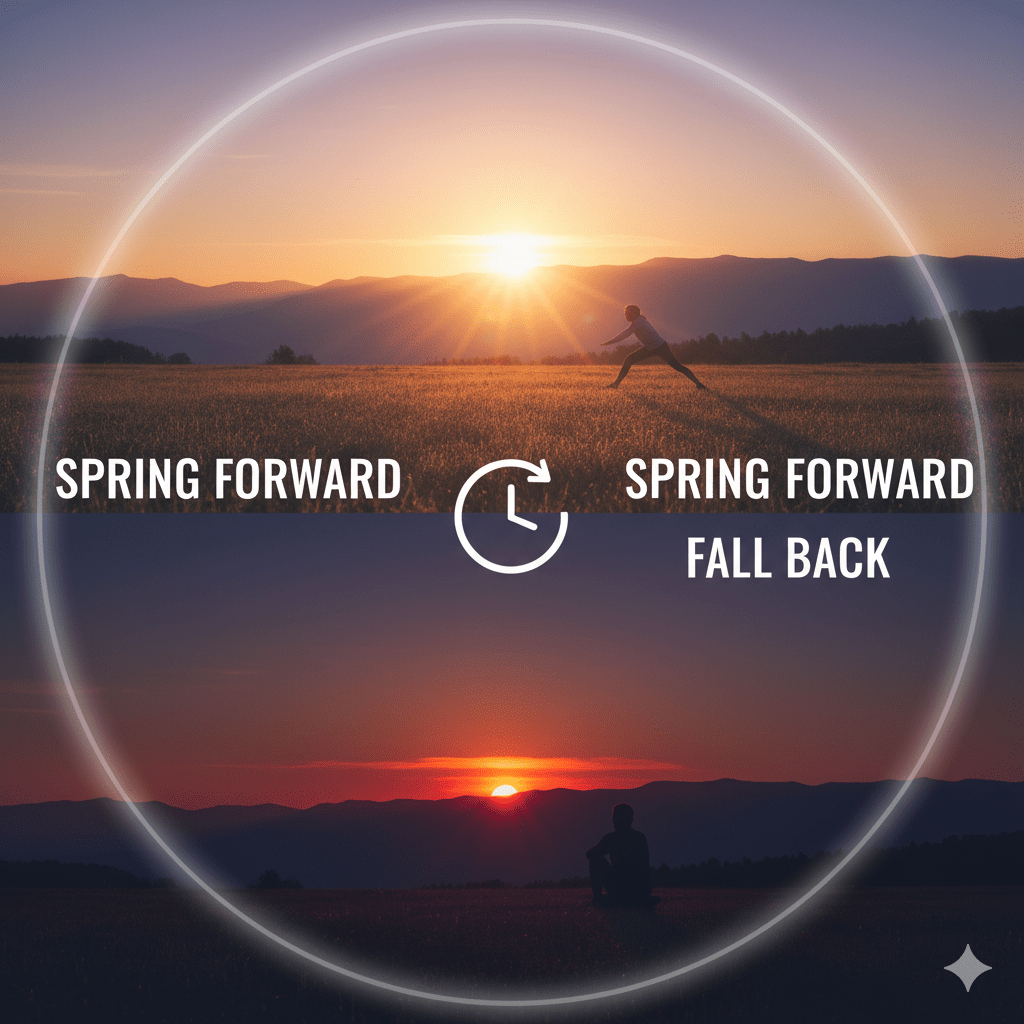
☀️ Daylight Saving Time (DST) Overview * DST is the practice of advancing clocks, usually by one hour, during the summer months. * The goal is to extend daylight into the evening, making better use of natural light. * A common mnemonic is “spring forward, fall back” to remember which way to change the clocks.
When to act
Hint:set your clocks back this evening when retiring.
Editors:note
The legislation waiting to go to permanent standard time when our large trading partner to the south does maybe coming moot soon or at least doesn’t have the attraction it did.
Time change is coming, on November the 3rd 2024,1am local time.
Pacific time will fall back to standard time from Daylight time for most of us in most parts of BC. Some areas do not change and are already on standard time such as all of Saskatchewan and the Yukon, parts of BC and pockets on the eastern coast, check your local area.
Take time to adjust
Always continue your diligence for safety when things like driving a routine route suddenly are seen in a different light than the previous day.
Time goes ahead an hour at 2 AM on Sunday March 11th 2018. Daylight savings time returns to the clocks of British Columbia and will stay ahead until standard time returns November 4rth 2018.
On this Day: March 9th 1974
The Mars 7 flyby fails and misses Mars with lander.








 Kevin Griffiths
 percypaschal
