You are presumed to be honest and responsible without evidence to the contrary beyond a reasonable doubt… on the balance of probablilties you are justified by 51 % likelyhood.
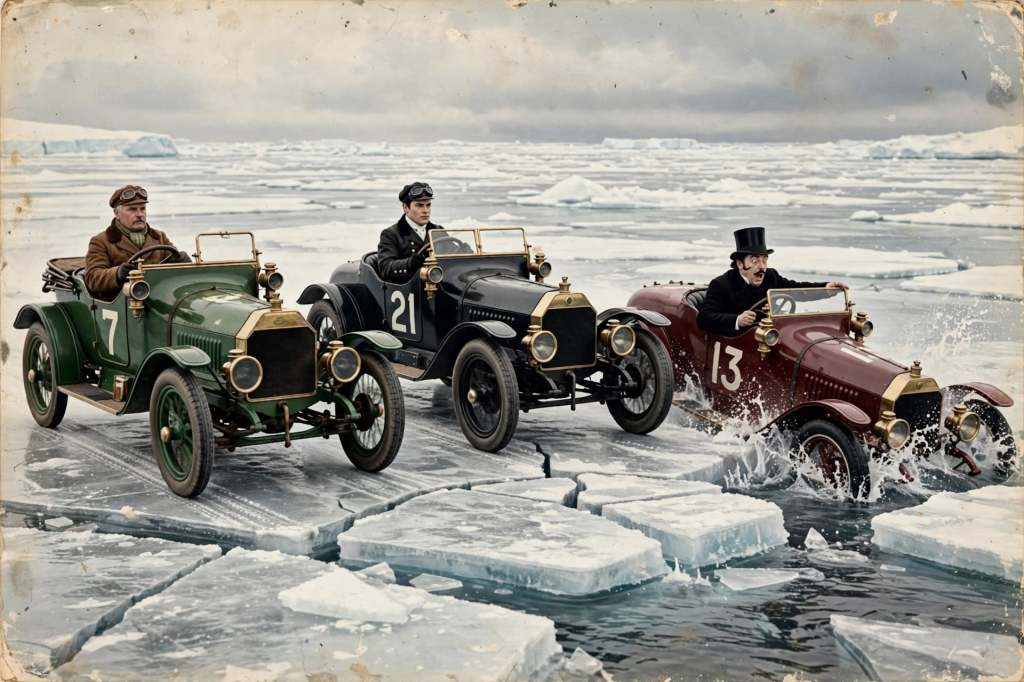
Here you go, Kevin — you in car #7 battling Tony Curtis in #21, right on the ice with the floes closing in behind you, just like the Great Race finale.Want to refine it further?
Not every body makes it, but everyone that tries redeems himself.
Perfect — classic slapstick justice. You and Tony sailing clean across the solid plates in #7 and #21, while old #13 with the top-hat villain goes down nose-first through the cracking floe, mouth wide open.That’s the exact beat the Great Race always played — the good guys race on, the villain gets the icy bath
Many thanks to Amber Papou who’s sneaker bottoms I admired for decades as her tanasity that ran her clear to being CEO of the Tourist Industry Association of British Columbia. Was every step an inspiration.
By physical definition, a solar eclipse cannot occur at night because it requires the Sun to be above the horizon so that the Moon can block its light relative to an observer on Earth. If you were witnessing a dramatic celestial alignment overhead in the night sky over Merritt, British Columbia, it was actually a lunar eclipse—where the Earth passes directly between the Sun and the Moon, casting a deep reddish shadow across the lunar surface. While daytime observers in the Nicola Valley most recently caught a minor partial solar eclipse on the morning of August 12, 2026, any nocturnal eclipse seen locally is always lunar in nature. For a fascinating look into how visual shadows behave during solar alignments, check out The LAST Eclipse in History, which explains the unique twilight lighting conditions caused by moon shadows.
By the By
British Columbia has moved on to a permanent daylight saving time, meaning November 1st will not be a time change. We will stay on this particular Pacific time for one more time change on March 8th 2027 and that’ll be it.
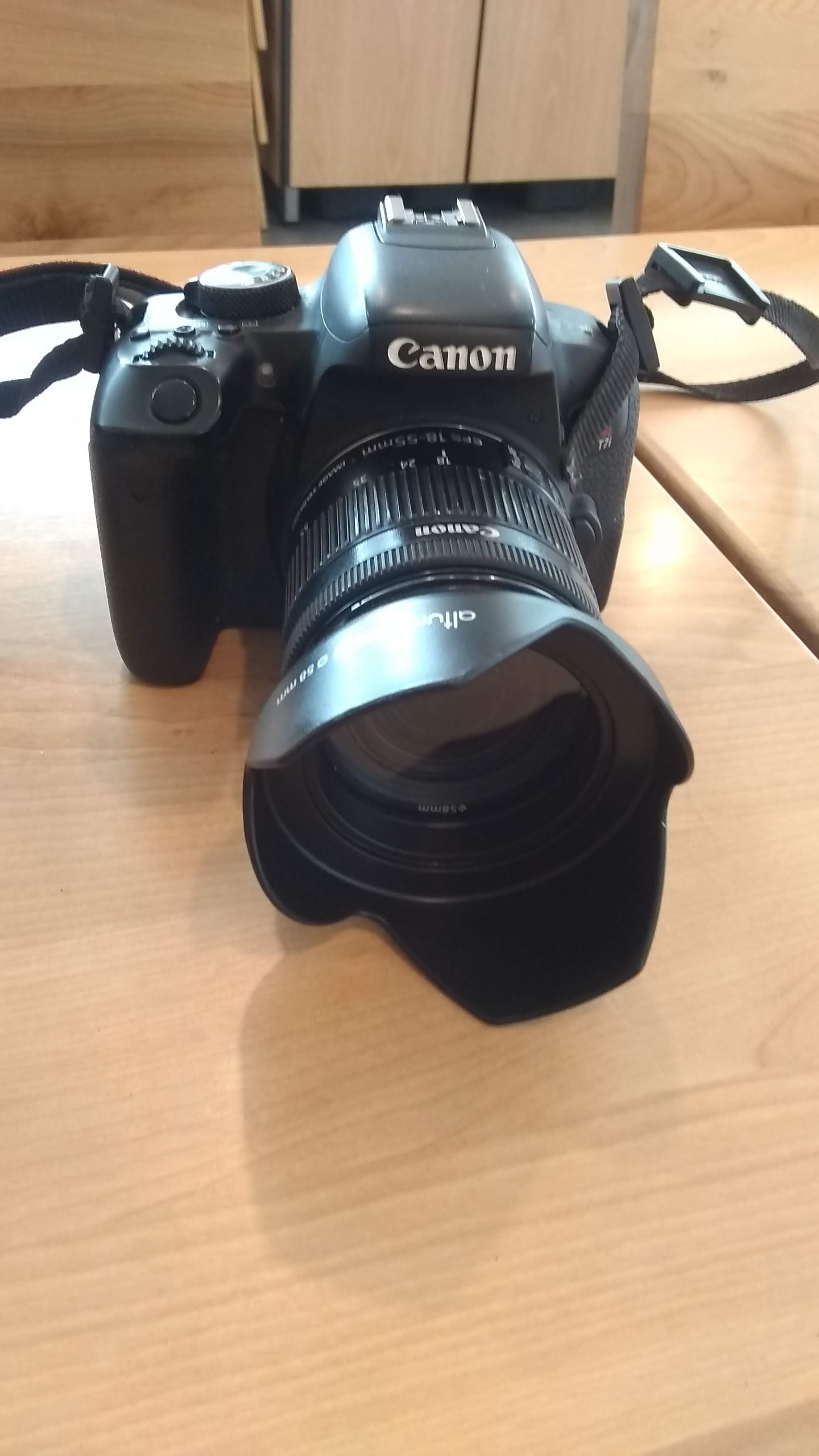
Today 46 Percent of global market belongs to Canon…
Canon roots
In November 1933, a small group of visionary tinkerers ****—Goro Yoshida, Saburo Uchida, and Takeo Maeda—came together in a rented room in Tokyo’s Azabu district to establish the Precision Optical Instruments Laboratory. Yoshida, a skilled self-taught technician who repaired motion picture equipment, had disassembled a high-end Leica camera out of curiosity and realized its internal components were made of standard brass, iron, and aluminum, rather than precious metals. Convinced that Japan could produce a world-class 35mm rangefinder camera locally at a fraction of the cost of imported German models, he partnered with his brother-in-law, Uchida, who managed the business and financing alongside Maeda, who brought crucial organizational expertise.Together, the team built Japan’s first 35mm camera prototype with a focal-plane shutter in 1934, naming it the Kwanon after the Buddhist goddess of mercy. While Yoshida drove the early mechanical innovations, bringing the camera to full commercial viability required scaling up operations and navigating complex German patents. Uchida secured key backing from Dr. Takeshi Mitarai—an obstetrician who later took over management—and arranged a partnership with Nippon Kogaku (later Nikon) to supply high-quality Nikkor optics. By 1935, the team refined the brand name to “Canon”—a word signifying precision standards—and launched their first production model, the Hansa Canon, in late 1935, successfully laying the foundation for modern global camera manufacturing.
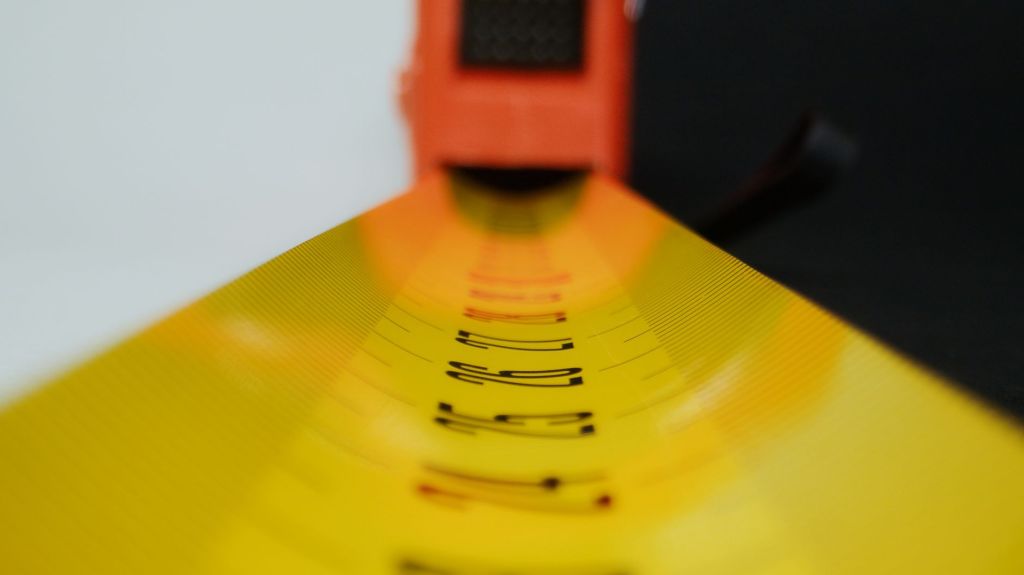
Canada is at a disadvantage with the trading and tariff situation by being so integrated with the United States. The United States is one of three countries that don’t use the metric system and it is an economic lever or the value that is preferred. Preferred by over 90% of the world’s population.
Well
The modern landscape of the metric system (officially the International System of Units, or SI) is defined by global standardisation everywhere except in a tiny fraction of the world. Global Metric Adoption Only three countries in the world have not officially adopted the metric system as their primary standard: * The United States (uses U.S. Customary units) * Liberia (currently transitioning) * Myanmar (currently transitioning) Virtually every other nation (roughly 95% of the world’s population) operates officially under the metric system. Even within non-metric nations, scientific research, international trade, military supply chains, and high-tech manufacturing operate predominantly in metric units. Impact on Global Trade, Tariffs, and Building Codes The metric dynamic creates distinct trade efficiencies—and friction points—where non-metric standards exist.
Kids level, you got kids?
* Trade & Supply Chains: Dual-inventory costs are a major burden. Manufacturers that produce goods for global markets must either manufacture dual line items (e.g., metric bolts vs. imperial bolts) or standardize to metric. Operating on a unified system eliminates conversion errors, simplifies logistics, and lowers manufacturing costs globally. * Tariffs & Custom Controls: Tariffs themselves are levied based on weight, volume, or unit counts. When cross-border trading involves non-metric systems, custom entries require strict volumetric and weight conversions (e.g., converting short tons or U.S. gallons to metric tonnes or liters). Mismatched metric and non-metric declarations can cause compliance delays, extra auditing, or miscalculated tariff brackets. * Building Codes & Construction: Building codes dictate structural design, electrical load calculations, and material dimensions. * Most global codes mandate metric dimensions (e.g., 400 mm structural spacing). * Standardizing building codes to metric streamlines architectural plans across international borders. However, in North America, construction remains heavily tied to imperial dimensions (e.g., 2×4 studs spaced 16 inches on center) because the massive U.S. building supply market dictates the manufacturing defaults for raw materials. Canada: Is Canada a Leader in Metric Efficiency? No, Canada is not a leader in metric efficiency. Canada operates in a hybrid, dual-system reality—often referred to by logistics experts and engineers as a “half-metric” or “metric-in-name-only” dynamic. Canada initiated formal metrication in 1970 under Pierre Trudeau. While the transition succeeded at the government and public level (weather, speed limits, road signs, gas sales, and food labeling are exclusively metric), the process stalled in 1985 when compulsory metrication enforcing agencies were dismantled. Because Canada shares the world’s longest land border and an integrated supply chain with the United States, Canadian industries often revert to imperial units to remain compatible with U.S. trade partners: * Construction: Blueprints for commercial projects may be drafted in metric, but workers on job sites routinely use feet, inches, and imperial material sizes (drywall, lumber, piping) because the materials originate from or cross the U.S. supply chain. * Manufacturing & Trade: Canadian exporters must maintain dual-standard machinery or produce imperial products exclusively for the American market while using metric for domestic and European exports. * Everyday Life: Canadians measure body height in feet/inches, weight in pounds, oven temperatures in Fahrenheit, and real estate in square feet, despite buying fuel in liters and measuring outdoor temperatures in Celsius. While Canada is officially a metric nation, its heavy economic integration with the United States prevents it from achieving true metric efficiency.
Having Cancer is not an experience you would want. The suffering of the patient and the suffering of the family with the attention of others, combined with the loss of productive lives is worth your attention. Register today at the link.
This is not a paid advertisement.
If we were paid for this. We would clearly put “sponsored or paid add” at the bottom of the piece.
“Who you are and what you are, don’t make no difference to me”
The essence of the 1960s, was not in particular rebellion but rejection of other peoples conventions for the ability to choose your own. This was the USA. And their music proclaims that dynamic often, as well as in the titles of the groups “The Grateful Dead” eg.
You should always bring this awareness of this to the negotiating table with still dealing with Americans. Not despairing. Just understandingly.
Charting their own path has been an intrinsic value for them. And still abides as well as the spirit of fair play. The tension is worth noteing.












 Kevin Griffiths
 percypaschal

