You are presumed to be honest and responsible without evidence to the contrary beyond a reasonable doubt… on the balance of probablilties you are justified by 51 % likelyhood.
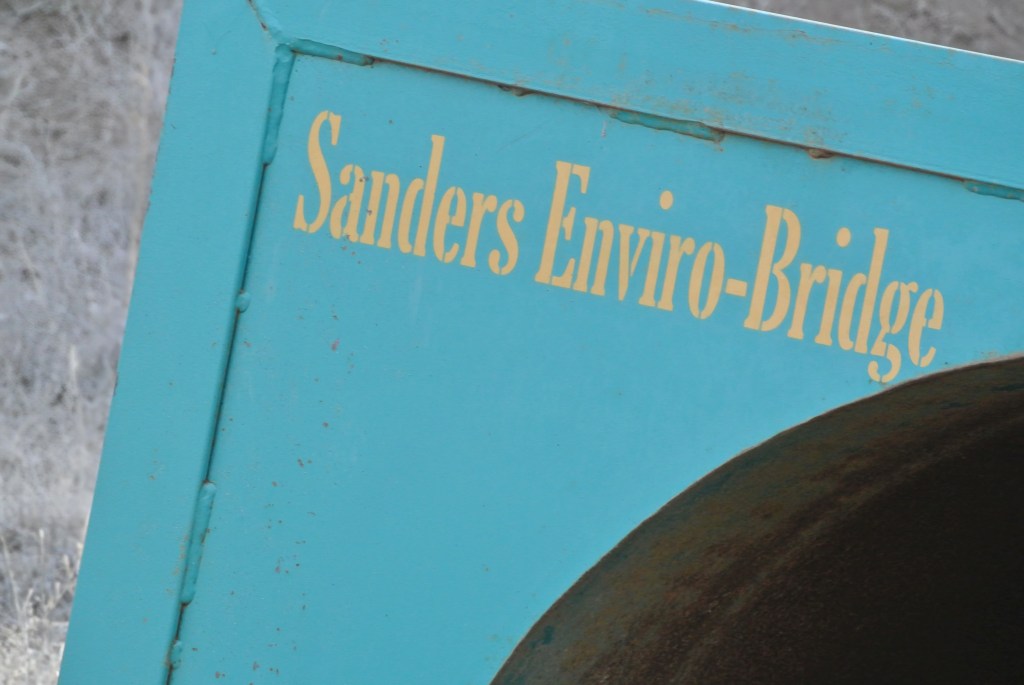
Harry Sanders, was bit of a legend about Merritt. We remember him as hosting the social credit party at his home in lower Nicola for their AGM’s. But Harry was a contractor with equipment. Lots of male sons. And a penchant for opportunities. One of them he saw at one point was an ability to bridge a small Creek or area and a temporary but more permanent way that would be easy in and easy out without much damage so as to protect the environment and also to expedite doing work in the forests and streams.
Innovation
By cutting apart large pieces of pipeline pipe, and that was in surplus. He managed to make a small portable bridge, he could cross a stream with a similarly to the Roman concept of using Stone arches for their bridging. The value of these is self-evident.
So I don’t know how many prototypes he made but this one was in the industrial area sitting for numbers of years. So I took a picture of it as I went by knowing Harry or more to the point I knew his sons. I know more of Harry than I did him.
But darn and be gosh if he didn’t, long past his departure from this life. The legacy in that piece was laying. There and now seems to have been revived as some very nice advertising is online about enviro bridge and some of them are being sold and being manufactured again here in Merritt British Columbia.
Perhaps the most memorable trade sanctions for us in Canada or British Columbia. Any time, were the countervailing duties Americans put on us when they began to feel the pressure of the modernization by numbers of sawmills and logging operations in British Columbia in particular.
These innovations cut local workforces down considerably. A milling operations such as one planer in Merritt,was once started in the home of a single entrepreneur; Bud Woodford, in the center of the town; Merritt had grown to being able to have 300 working people there at the birth of free trade . Some just very unskilled labour. All making livelihoods and used to having good jobs and skilled jobs at the height of markets.
Log port out of Stewart BC ended raw logs export when hydro power came for milling.
Inovation
The soft wood countervailing taxes Americans put on were mitigated by the fact that value added escaped it. We remember that the Mills here then became complimented by smaller Mills that did value-added, that was anything that wasn’t a 2×4 a 2×6 and other dimensional lumber (good reputation in the US Canadian blue) and had value added in it, including door jambs made of short pieces of cut offs, they were put into finger joints and were marketable in with attitude of value grown contribution rather then exploitation.
Opportunity meets ambition…
Innovation shouldn’t be stifled by heavy taxes it should be discovered in its trail of test.
According to sources they are happy with the data collected however it’s another space rocket exploded after the test, on landing, in the water, not unexpected.
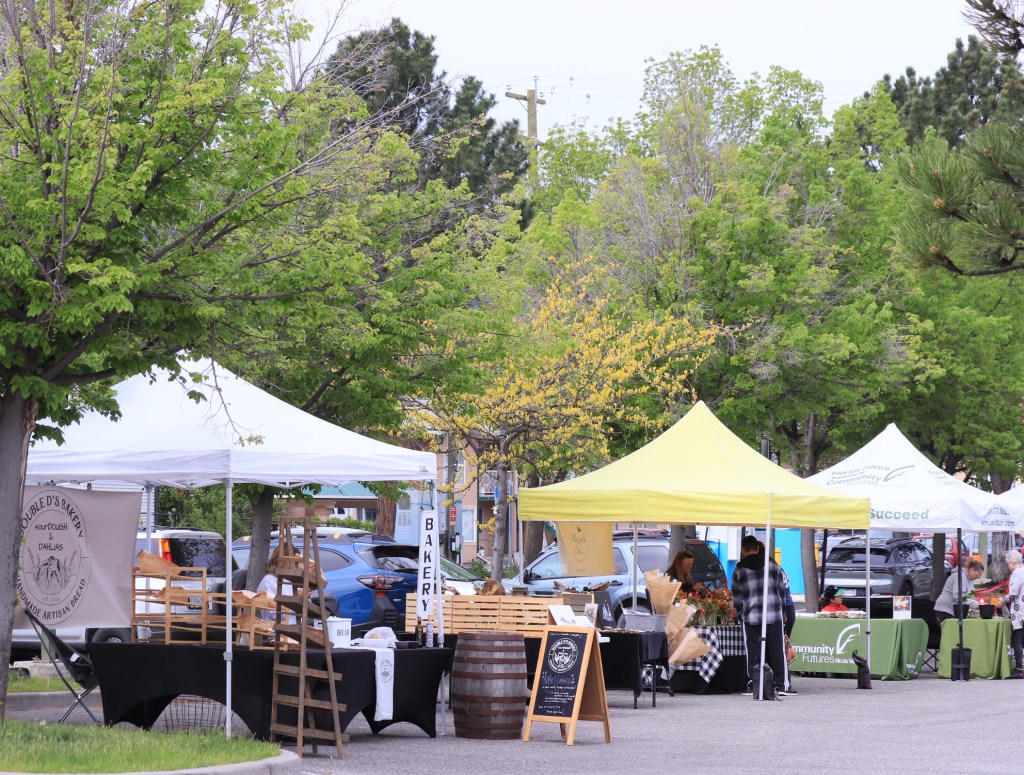
The last day for the the farmers market in Merritt for this season. The group sets up every Saturday from 9:00 to 1:30 PM in the paved lot at 2250 Voght Street.
The Nicola Valley Community Farmers Market is a vibrant hub for local agriculture and artisanal goods, typically held weekly during the warmer months. It brings together farmers, craftspeople, and community members, fostering connections and promoting the benefits of eating local. Visitors can find a variety of fresh produce, baked goods, handmade crafts, and unique food items, offering a delightful experience filled with the rich flavors and talents of the Nicola Valley region. The market also often features live music, workshops, and family-friendly activities, making it a cherished gathering place that supports local economy and sustainability.
Just next door to 2202 Voght Street in Merritt, Saturdays from 9:00 to 1:30 p.m. there is a farmers market. In the curling parking lot. Preferred access off Merritt Avenue. There are recreational opportunities with the Nicola Valley aquatic Center. Within walking distance is also the Merritt A&W and block and a half away. There is a new Valley graze for artisan prepared meals.
Welcome to Merritt.
A sign in the curling rink parking lot, Market venue…
The next Starship test flight, Flight 10, is scheduled for August 4th, 2025. This flight will be another uncrewed test to gather more data on the Starship’s performance.
Waiting for a crewed test launch, concerned about the Artemis Partner Program in the current geo political atmosphere it’s heartening to know a starship test is coming in August.
1000 Starships
Maintained by space x that 1000 Starships will bring 1 million colonists to Mars. This I
Is for permanent settlement.
The ambitious goal of making Mars a habitable planet and sending a million people there is primarily driven by SpaceX, led by Elon Musk. While other space agencies like NASA have plans for human missions to Mars, SpaceX has the most public and aggressive timeline for large-scale colonization. Here’s a breakdown of the key aspects of this program: SpaceX’s Vision for Mars Colonization: * Self-Sufficient City: The ultimate goal is to establish a self-sufficient, large-scale settlement and a democratic, self-governing colony on Mars. This means not just sending people, but building the infrastructure for them to live, work, and thrive independently of Earth. * Starship System: The core of SpaceX’s plan is the Starship spacecraft and Super Heavy rocket. This fully reusable transportation system is designed to carry both crew and massive amounts of cargo to Mars. * Massive Transportation: To achieve the goal of a million people, SpaceX envisions launching thousands of Starships during Mars launch windows (which occur approximately every 26 months). They talk about launching more than 10 times per day to maximize these windows. * Phased Approach: The plan involves initial cargo missions to deliver equipment, habitats, and supplies before any humans arrive. The first crewed missions would focus on setting up propellant plants (to produce fuel on Mars using local resources), power systems, and rudimentary bases. * Resource Utilization (ISRU): A crucial part of self-sufficiency is In-Situ Resource Utilization (ISRU). This involves using resources available on Mars, such as harvesting CO2 from the atmosphere and splitting it into its components to create oxygen and fuel. * Timeline: While highly ambitious and subject to change, Elon Musk has spoken about a first crewed mission as early as 2029 and the development of a self-sustaining colony by 2050. Terraforming Mars: “Terraforming” refers to the hypothetical process of transforming a planet hostile to life into one that can sustainably host humans and other lifeforms without protection. While SpaceX’s immediate focus is on establishing a base that uses local resources, the long-term vision of a truly Earth-like Mars involves terraforming. * Challenges: Terraforming Mars presents immense challenges with current technology. Key issues include: * Thin Atmosphere: Mars has a very thin atmosphere with extremely low surface pressure. * Lack of Magnetic Field: Mars lacks a global magnetic field, which makes its atmosphere vulnerable to erosion by solar winds. * Cold Temperatures: Mars is very cold. * Proposed Methods (Hypothetical): * Greenhouse Gases: Releasing greenhouse gases (like CO2, which is abundant in Mars’s atmosphere and polar caps) to thicken the atmosphere and warm the planet. * Artificial Magnetic Field: Creating an artificial magnetic field to protect the atmosphere from solar wind erosion. * Engineered Dust Particles: Some researchers have proposed releasing engineered dust particles into the atmosphere to trap heat. * Localized Habitats: A more achievable near-term approach might be creating localized habitable environments using materials like silica aerogel, which could provide shelter and warmth for small areas. NASA’s Role: While NASA doesn’t have a plan for colonizing Mars with a million people in the same way SpaceX does, they are actively working towards human exploration of Mars. Their goals include: * Scientific Discovery: Understanding whether life ever existed on Mars, characterizing its climate and geology, and preparing for human exploration. * Technology Development: Testing technologies for oxygen production (like MOXIE on the Perseverance rover), developing sustainable food and water systems, power generation, and advanced habitats. * Artemis Program: NASA’s Artemis program is laying the groundwork for long-term human presence on the Moon, which will serve as a stepping stone and testing ground for missions to Mars. In essence, SpaceX is the primary driver behind the “million people on Mars” goal, with their Starship system being the core technology. Terraforming, while a long-term aspiration, faces significant scientific and technological hurdles. NASA, meanwhile, is focused on incremental steps towards human exploration, scientific discovery, and developing the foundational technologies needed for future long-duration missions to the Red Planet.
Farm gate pricing can be a crucial component for supporting a family in British Columbia or Canada, but it’s often not sufficient on its own. Here’s a breakdown of the factors involved: Farm Gate Pricing and Family Income: * Potential for Higher Returns: Selling directly to consumers (farm gate sales) generally allows farmers to capture a larger share of the retail price, as they cut out intermediaries like wholesalers and retailers. This can lead to better margins per unit of product. * Challenges to Viability: * Scale and Volume: To generate enough income to support a family, a farm needs to produce and sell a significant volume of products. This requires substantial labor, land, and capital investment. * Market Access and Demand: While direct sales offer better prices, farmers need consistent customer demand. This often means being located near population centers, investing in marketing, and building customer relationships. * Off-Farm Income: A significant number of small-scale family farms in Canada, including BC, rely on off-farm income to supplement their farm gate sales and cover living expenses. This indicates that farm income alone is often not enough. * Rising Costs: Farmers face increasing input costs (feed, fertilizer, fuel, equipment), high land values (especially in BC), and fluctuating market prices, which can squeeze profit margins even with direct sales. * Labor and Time Commitment: Operating a successful farm with direct sales requires a huge time commitment, including production, processing, marketing, and sales. This can be challenging to balance with family life and other employment. * Government Regulations: In BC, there are specific “Farmgate” and “Farmgate Plus” licenses for meat producers, allowing certain slaughter volumes for direct sales. This shows an attempt to support direct marketing, but there are still volume limits and other regulations to navigate. Economies of Scale and Small Farms/Cooperatives: * Traditional Economies of Scale: Historically, “economies of scale” in agriculture have favored large farms that can produce massive quantities at lower per-unit costs due to specialized machinery, bulk purchasing, and efficient distribution networks. This often puts small farms at a disadvantage. * How Small Farms Can Achieve “Economies of Scope” or “Network Economies”: While true “economies of scale” (simply growing bigger to reduce per-unit costs) might be harder for individual small farms, they can achieve similar benefits through different strategies: * Diversification (Economies of Scope): Small farms often diversify their crops and products. This allows them to spread risk, utilize resources more efficiently, and cater to diverse market demands, effectively creating multiple revenue streams from a similar asset base. * Direct Marketing: Selling directly to consumers at farmers’ markets, farm stands, CSAs (Community Supported Agriculture), or online platforms helps small farms capture more of the retail dollar, effectively increasing their “scale” of profitability per unit. * Value-Added Products: Processing raw agricultural products into higher-value goods (e.g., making jams from fruit, baked goods from grains, or prepared meals) can significantly boost revenue. * Cooperatives and Economies of Scale: This is where cooperatives truly shine for small family farms. Cooperatives allow individual farms to achieve many of the benefits of larger-scale operations by: * Bulk Purchasing: Buying inputs like seeds, fertilizers, and equipment collectively at discounted rates. * Shared Equipment: Investing in expensive machinery that individual farms couldn’t afford on their own. * Collective Marketing and Distribution: Pooling products to access larger markets, negotiate better prices, and streamline logistics (e.g., shared transportation, centralized storage facilities). * Processing and Value-Adding: Establishing shared processing facilities to create value-added products that individual farms might not have the capacity for. * Risk Management: Sharing risks associated with crop failure or market fluctuations. * Knowledge Sharing: Members can share expertise and best practices, leading to improved efficiency and productivity. * Access to Financing: Cooperatives may have better access to loans and grants than individual small farms. * Increased Bargaining Power: Cooperatives give small farmers a stronger voice in the marketplace and with suppliers. In Conclusion: While farm gate pricing offers potential for higher returns, it’s often not enough on its own to support a family in British Columbia or Canada given the high costs and challenges of farming. However, when combined with strategies that mimic economies of scale, particularly through cooperatives and diversified direct marketing, small family farms have a much better chance of achieving economic viability and supporting a family. Cooperatives, in particular, empower small farms to collectively leverage resources and market power, providing a pathway to sustainable livelihoods in agriculture.














 Kevin Griffiths
 percypaschal
