Stay alert rely on Environment Canada.
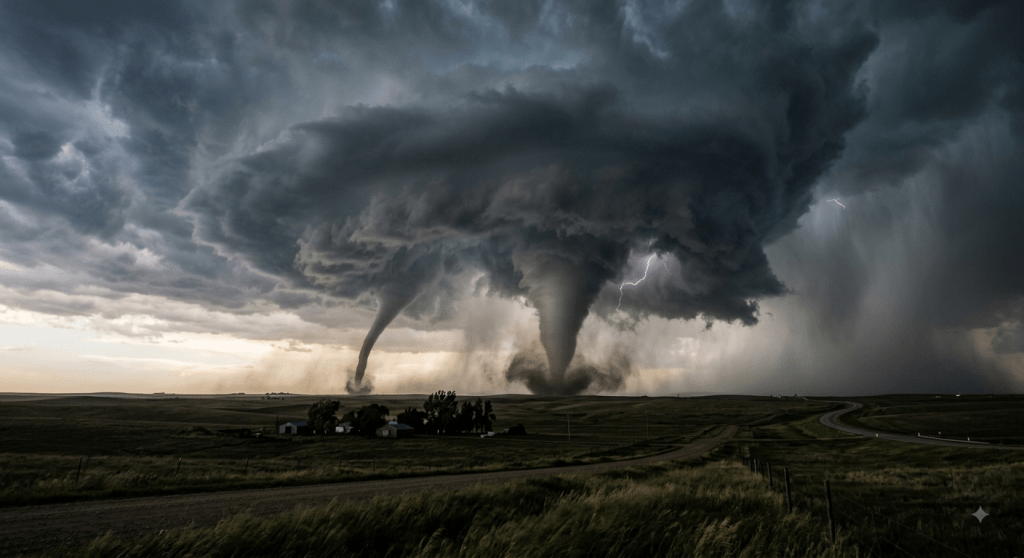
Concept Photo
Predicts more accurately that severe part of a large storm warning…
Good luck, There is a link above to ECs new Alert for severe storms…

To the seasons of life
Stay alert rely on Environment Canada.
Concept Photo
Predicts more accurately that severe part of a large storm warning…
Good luck, There is a link above to ECs new Alert for severe storms…
Moderate impact to current Yellow level warning.
Recent updated to Environment Canada.
Strategic oil distribution…
So, as covid was starting 2019 in the back and forth about pipeline expansion to the West Coast was still in flux but not so much. At that time executive of Canada bought back from the Americans so the pipeline so that they could double it twin it + bring the oil to the West Coast. To be shipped.
So the Americans in their hegemony, had strategically relied on this. The new administration that came in found out about Canada’s was short of the recommended goal for NATO. That the 2% of the GDP for the countries in that collective security agreement should be spent on defense and that would be at the availability of the resolution # 5 That gave us collective security.
The original trans mountain pipeline in the 1950s was done by an act of the parliament of Canada. It was paid for by taxpayers to some measure,this providing security to Canadians for energy. However, at some point the Americans acquired it + before the twinning the Trudeau government had to pay them and buy it from them in the billions of dollars.
There may have been bad faith there’s you know let’s let him build it and then we can get it away from them again. So at this point we’re considering another pipeline to the coast. We have brought our defense spending up to 5%. So we are not as prone to give “Friend Discounts” now..
The Americans all through their hegemony hovered around 3.6% of their “world’s biggest GDP”. They paid out produceing nearly 800 military bases around the world.
Let’s play and not just get played.
Because Americans will:
Plays to make:
Sell them stock
Short ours..
Create a digital reserve fund as the only pay vehicle for oil.
Accuse the accuser.
Get a security discount for our role.
Play sectors against each other…
Offer governorships to make rivals.
Start wars to make it National security for us to want…
“That’s all I want to say bout dat” Forest Gump
Blah..
This is data, that’s different…

Cloud nine has joy after a tough week..
So, the smoke tariff is a thing of the past, as we go into August 2026. But here’s an idea, create a narrative in your garden over August before you harvest in September with garden totems. Tell the the story in gli🌨️phs of nick nacs and surviving images that may have perished except for your pluck and presence.

Happy day on your way…
Editor’s: Note Smoke is back going into the weekend…
Forty percent chance for rain Saturday. (Today).
Environment Canada Weather Merritt
Tarot what is it?
To understand Tarot, it helps to start with what it physically is: a standardized deck of 78 cards featuring symbolic imagery.
Originally created in 15th-century Northern Italy, Tarot began not as a mystical tool, but as a parlor game for wealthy nobles called *Tarocchi* (similar to modern bridge). It wasn’t until the late 18th century that French occultists reinterpreted the vivid, allegorical pictures as a tool for divination and introspective reflection.
Here is how Tarot aligns with the categories you asked about:
**No.** Tarot has no dogma, central deity, scriptures, or required system of worship.
People of virtually any religious background—or none at all—use Tarot. While some modern pagan, Wiccan, or esoteric spiritual practices incorporate the cards into their rituals, the deck itself is simply a medium, much like a journal or an art collection.
**Yes, in a practical and psychological sense.**
Learning Tarot requires study and structured practice. A reader must memorize the foundational meanings of all 78 cards (split into the 22 “Major Arcana” representing big life lessons, and 56 “Minor Arcana” dealing with daily events) and learn how various visual motifs interact.
In modern psychology—starting with Carl Jung—Tarot is studied as a **system of archetypes**. Many readers use it non-mystically as a introspective tool. Because the cards represent universal human experiences (grief, transition, ambition, balance), looking at a random card prompt can help a person organize their thoughts, mirror their subconscious feelings, or view a problem from a new perspective.
**It depends on how it is used.**
* **If used for fortune-telling:** If someone believes the cards hold supernatural power to predict precise, literal future events (e.g., “This card proves you will win the lottery on Tuesday”), mainstream science and logic treat that as a superstition. The physical order of a shuffled deck is purely random.
* **If used for reflection:** If viewed instead as a set of visual storytelling prompts to trigger self-reflection, there is no superstition involved—just visual metaphor and creative interpretation.
**In terms of modern astronomy, no.** Tarot has no scientific or observational value for studying outer space, celestial mechanics, or physical star movements. Astronomy is an empirical science; Tarot is symbolic art.
In the late 19th and early 20th centuries, occult societies (like the Hermetic Order of the Golden Dawn) mapped standard astrological symbols—such as the 12 zodiac signs and classical planets—onto individual Tarot cards.
July 8th, 2026
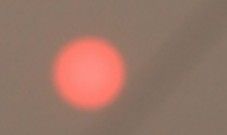
There is a yellow warning in effect from Environment Canada for air quality. Impact is expected to be moderate and they’re so high level of confidence in this warning.
Disclaimer: We post these on an ad-hoc basis and do this in anticipation of that. We would have comments and discussions. Perhaps come out of them. As well as a bit of data for us.
Official information. Visit environment canada’s site the link above or in your address bar search.
Always obey orders from authorities And we advise that you register for official warnings with relevant government agencies.
Forecast for some 🌧️ today. Relief from smoke is great…
There are no alerts for the Merritt area in British Columbia as of 11:00 a.m today September 10th, 2025.
Concept photo
Have a wonderful day!.
One of some BC fires contributing to air quality degradation.
Special Air quality statement, environment Canada, 8:11 p.m. September 4th, 2025.
Stay Safe
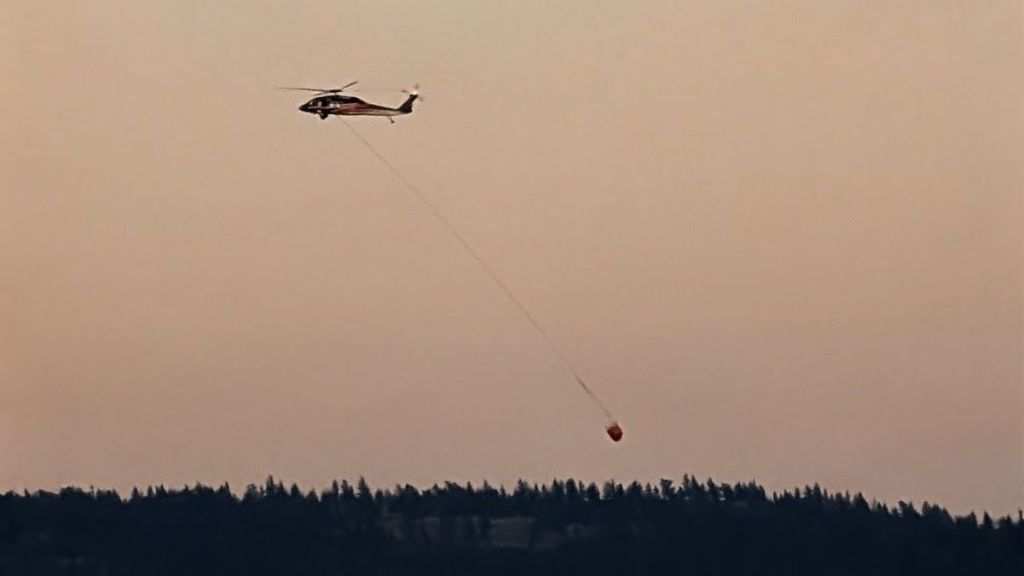
Helicopter over Merritt slinging water for fires highway number 3 out of Princeton and the Britton lake fire. September 3rd, 2025. Photo KDG
” air quality can change quickly”
As of 9:20 or 9:17, more precisely there are no extreme alerts for Merritt British Columbia according to Environment Canada.. check your locations

One thought, make it home to…

The black Swift is under Federal protection.
The Black Swift (Cypseloides niger) is a fascinating and somewhat mysterious bird, particularly in its Canadian range.
Range in British Columbia, Canada
The Black Swift’s breeding range in Canada is primarily restricted to southern British Columbia and southwestern Alberta. In BC, they are distributed from the southern portion of the province, including Vancouver Island, north to Prince George and Hazelton in the upper Skeena Valley. They are common throughout Vancouver Island, though not yet reported from the Queen Charlotte Islands.
Despite their large range extent in BC, their numbers have declined significantly, with at least 50% experienced over the last three generations.
Favorite Nesting Areas
Black Swifts are known for their highly specialized nesting habits. They prefer to nest in inaccessible, high cliff faces, often behind or near waterfalls and in sea caves. These locations provide them with cool temperatures, shade, and high humidity, while also protecting their nests from terrestrial predators.
Key characteristics of their preferred nesting sites include:
* Near waterfalls or sea caves: The spray from waterfalls helps maintain a cool and moist environment.
* Dark and inaccessible ledges: They choose niches that remain cool, moist, and dark all day, hidden from light and predators.
* Moss available for nesting material: Their nests are typically made of twigs and moss glued together with mud. They will also use ferns and seaweed if available.
* Unobstructed aerial access: They need clear flyways immediately in front of the nests.
* High relief: Nests are often in a commanding position above the surrounding terrain, allowing birds to fly out horizontally and directly reach feeding altitudes.
Some known nesting sites in British Columbia are found in national parks like Kootenay National Park (Marble Canyon has the largest known population in the mountain national parks) and potentially in Yoho National Park (e.g., Hamilton Falls, Laughing Falls, Twin Falls).
Test for a Nest
Black Swift nests are notoriously difficult to locate due to their remote and often hidden locations. However, a nest can be identified by:
* Its location: On a cliff face, often behind a waterfall or in a sea cave, in a cool, moist, and dark niche.
* Construction: A cup-shaped nest made of twigs and moss, possibly with mud, ferns, or seaweed.
* Single egg: Black Swifts lay only one egg per breeding season.
* Behavior of adults: Adults will return to the nest at dusk to feed their nestling. Surveys for Black Swifts are often conducted in the two hours before sunset until dark, as this is when they return to their roosting and nesting sites.
Federally Protected?
Yes, the Black Swift is federally protected in Canada.
* It was assessed as Endangered by the Committee on the Status of Endangered Wildlife in Canada (COSEWIC) in 2015.
* In 2019, the species became federally protected under the Species at Risk Act (SARA).
* It is also protected under the Migratory Birds Convention Act, 1994.
* Within national parks, it is additionally protected under the National Parks Act.
It is illegal to disturb Black Swifts and their occupied or unoccupied nests, with significant penalties for violators.
How Long Can a Black Swift Fly Without Coming Down?
While there’s a related common swift that holds the record for continuous flight (up to 10 months), information specific to how long a Black Swift can fly without coming down isn’t as readily available or definitively documented.
However, like other swifts, Black Swifts are highly aerial birds. They spend most of their time in the air, foraging for insects on the wing, and only land at their nest site or roost. They are known to fly with steady and shallow wingbeats, covering vast distances during migration. While they may not have the documented 10-month flight record of their European common swift cousins, they are certainly built for prolonged periods in the air.

On this Day: August 26th 2002
The Earth summit 2002 begins in Johannesburg South Africa.


Hey Merit what do you say?


![Light Show [Explored 2026-10-09]](https://live.staticflickr.com/65535/55578539818_958ce4fa9c_s.jpg "Light Show [Explored 2026-10-09]")


 Kevin Griffiths
 percypaschal
